Chickenpox is a highly contagious viral infection with the varicella-zoster virus that causes a characteristic itchy rash, consisting of small, raised, blistered, or crusted spots.
Chickenpox most often affects children, but the vaccine has greatly decreased the number of cases.
Before the rash appears, children have a mild headache, moderate fever, loss of appetite, and a general feeling of illness.
The diagnosis is based on symptoms, particularly the rash.
Most children recover completely, although some children get very sick and can even die.
Usually, only the symptoms need to be treated.
Routine vaccination can prevent chickenpox.
Chickenpox is an infection that mostly affects children. It is caused by the varicella-zoster virus, which is a type of herpesvirus (herpesvirus type 3).
Prior to the introduction of the varicella vaccine, chickenpox epidemics occurred in winter and early spring in 3- to 4-year cycles.
A person with chickenpox is contagious from 2 days before the rash appears and remains contagious until the last blisters have crusted.
Did You Know...
|
In children with a normal immune system, chickenpox is rarely severe. Most people with chickenpox simply have sores on the skin and in the mouth. However, the virus sometimes infects the lungs, brain, heart, or liver. Such serious infections are more common among newborns, adults, and people with a weakened immune system (such as people living with HIV or who are taking medications that suppress the immune system or high doses of steroids [sometimes called glucocorticoids or corticosteroids]).
A person who has had chickenpox develops immunity and cannot contract it again. However, the varicella-zoster virus remains inactive (dormant) in the body after an initial infection with chickenpox, sometimes reactivating in later life, causing shingles. A shingles vaccine is available for older adults. This vaccine decreases the risk of developing shingles in later life.
Transmission of chickenpox
Chickenpox is spread in the following ways:
Through airborne droplets of moisture containing the varicella-zoster virus
Through contact with the rash caused by chickenpox or shingles
From a pregnant person to the fetus or newborn
Symptoms of Chickenpox
Symptoms of chickenpox begin on average 14 to 16 days (full range 10 to 21 days) after exposure occurs. They include
Mild headache
Moderate fever
Loss of appetite
A general feeling of illness (malaise)
Younger children often do not have these symptoms, but symptoms are often severe in adults.
Chickenpox is contagious from 2 days before the first spots appear until the last set of sores have crusted. After the first symptoms begin, a rash of small, flat, red spots appears. The spots usually begin on the trunk and face, later appearing on the arms and legs. Some people have only a few spots. Others have them almost everywhere, including on the scalp and inside the mouth.
Within 6 to 8 hours, each spot becomes raised. It forms an itchy, round, fluid-filled blister against a red background and finally crusts. Spots continue to develop and crust for several days. A hallmark of chickenpox is that the rash develops in crops so that the spots are in various forms of development at any affected area. Very rarely, the spots become infected by bacteria, which can cause a severe skin infection (cellulitis or necrotizing fasciitis).
New spots usually stop appearing by the fifth day, the majority are crusted by the sixth day, and most disappear in fewer than 20 days.
Sometimes children who have been vaccinated develop chickenpox. In these children, the rash is typically milder, fever is less common, and the illness is shorter. However, contact with the sores can spread the infection.
Spots in the mouth quickly rupture and form raw sores (ulcers), which often make swallowing painful. Raw sores may also occur on the eyelids and in the upper airways, rectum, and vagina. The worst part of the illness usually lasts 4 to 7 days.

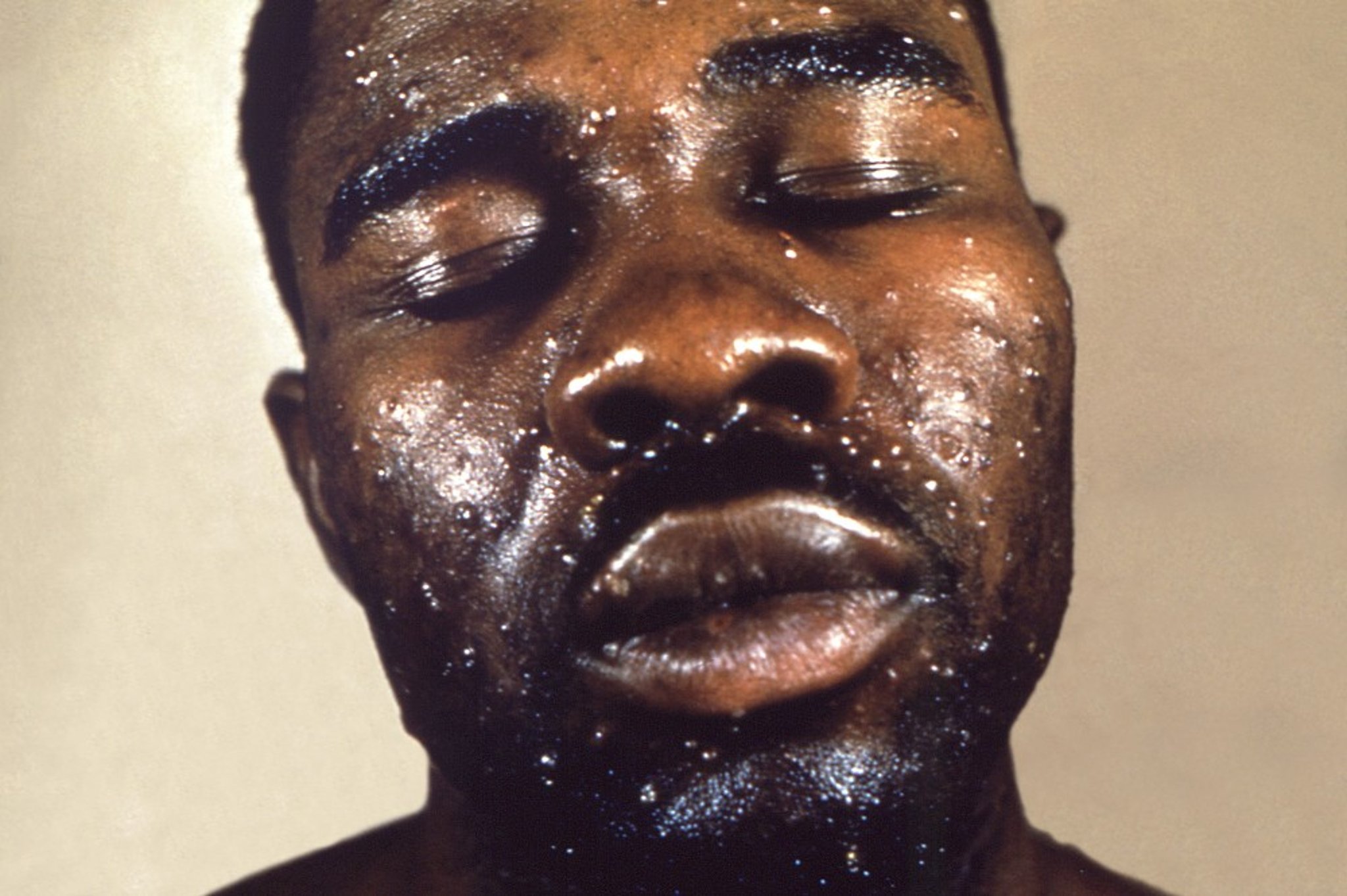
This photo shows round, fluid-filled blisters caused by chickenpox affecting the face.
Image courtesy of Renelle Woodall via the Public Health Image Library of the Centers for Disease Control and Prevention.

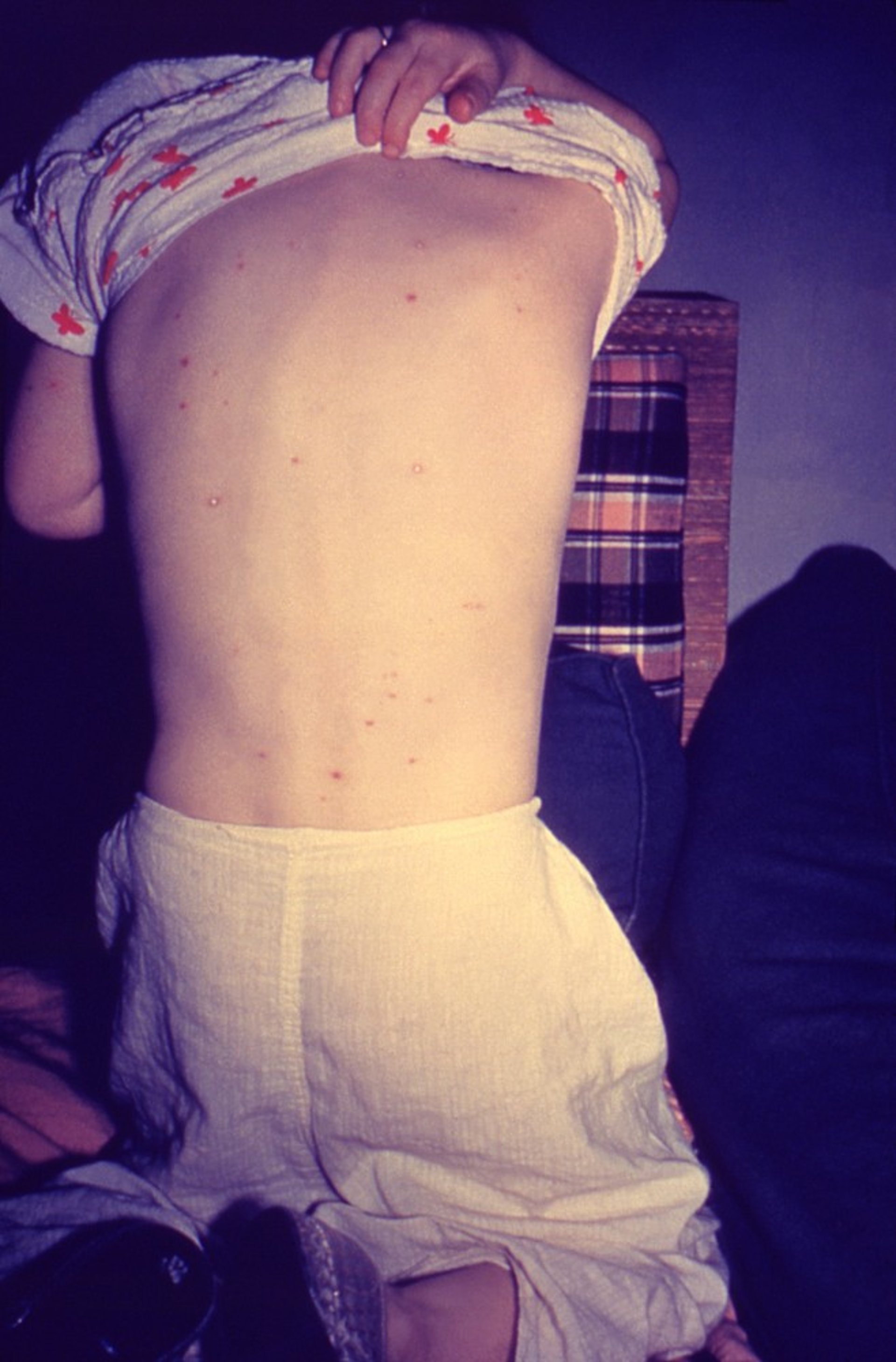
This photo shows the back of a person with a chickenpox rash.
Image courtesy of Ann Cain via the Public Health Image Library of the Centers for Disease Control and Prevention.
Complications
Risk of complications from chickenpox is increased for newborns, adults, and people who have a weakened immune system or certain disorders.
Lung infection (pneumonia) resulting in cough and difficulty breathing may complicate severe chickenpox in adults, infants, and people of all ages who have a weak immune system. Pneumonia rarely develops in young children who have a normal immune system.
Brain infection (encephalitis) is less common and causes unsteadiness in walking, headache, dizziness, confusion, and seizures. In adults, encephalitis can be life threatening.
Inflammation of the liver and bleeding problems may also occur.
Reye syndrome is a rare but very severe complication that occurs almost only in those younger than 18 following the use of aspirin. Therefore, aspirin should not be given to children with chickenpox. Reye syndrome may begin 3 to 8 days after the rash begins. is a rare but very severe complication that occurs almost only in those younger than 18 following the use of aspirin. Therefore, aspirin should not be given to children with chickenpox. Reye syndrome may begin 3 to 8 days after the rash begins.
People who get varicella while pregnant are at risk of serious complications, such as pneumonia, and may die as a result. Chickenpox can also be transmitted to the fetus, especially if chickenpox develops during the first or early second trimester, or to the newborn during or after birth. Such an infection can result in scars on the skin, birth defects, low birth weight, or illness in the newborn.
Diagnosis of Chickenpox
A doctor's evaluation
Rarely blood tests or testing of a sample (such as by PCR) taken from a sore
A doctor is usually certain of the diagnosis of chickenpox because the rash and the other symptoms are so typical.
Blood tests to measure levels of antibodies in the blood and laboratory tests to identify the virus (usually using a sample scraped from the sores) are rarely needed. (Antibodies are produced by the immune system to help defend the body against a particular attacker, such as the varicella-zoster virus.)
Treatment of Chickenpox
For people with mild cases, measures to relieve symptoms
For people at risk of moderate to severe symptoms, antiviral medications
Mild cases of chickenpox in children require only the treatment of symptoms. Wet compresses on the skin help soothe itching, which may be intense, and prevent scratching, which may spread the infection and cause scars. Because of the risk of bacterial infection, the skin is bathed often with soap and water, the hands are kept clean, the nails are clipped to minimize scratching, and clothing is kept clean and dry. If the itching is severe, medications that relieve itching, such as antihistamines, may be given by mouth. Taking colloidal oatmeal baths may also help.
If a bacterial infection develops, antibiotics may be needed.
Doctors usually prescribe antiviral medications, such as acyclovir, valacyclovir, and famciclovir (see table , such as acyclovir, valacyclovir, and famciclovir (see table), by mouth to certain healthy people at risk of moderate to severe disease, including people
12 years of age or older who are not vaccinated (18 years of age or older for famciclovir)12 years of age or older who are not vaccinated (18 years of age or older for famciclovir)
With skin disorders such as eczema
With chronic lung disease
Taking salicylates (a type of medication, for example, aspirin) for a long timeTaking salicylates (a type of medication, for example, aspirin) for a long time
Taking steroids or other therapies that suppress the immune system
Who contracted chickenpox from someone they live with, because these cases are usually more severe than primary cases
For people who have a weakened immune system, doctors may prescribe acyclovir given by vein (IV).For people who have a weakened immune system, doctors may prescribe acyclovir given by vein (IV).
Antivirals can reduce the severity and duration of symptoms and should be given within 24 hours of the start of disease, if possible.
Because pregnant people are at high risk of severe complications from chickenpox, some experts recommend treating pregnant people who have chickenpox with acyclovir or valacyclovir.Because pregnant people are at high risk of severe complications from chickenpox, some experts recommend treating pregnant people who have chickenpox with acyclovir or valacyclovir.
Prognosis for Chickenpox
Healthy children nearly always recover from chickenpox without problems. Before routine immunization, about 4 million people developed chickenpox annually in the United States, and about 100 to 150 of them died each year because of complications of chickenpox.
In adults, chickenpox is more severe, and the risk of dying is higher.
Chickenpox is particularly severe in people with a weakened immune system.
When people who have been vaccinated develop chickenpox, the disease is less severe, and fewer of these people die.
Prevention of Chickenpox
Vaccination
Sometimes immune globulin
Vaccination
All healthy children should receive 2 doses of the varicella vaccine, which contains weakened, live varicella virus (see Varicella Vaccine).
Older children and adults (particularly those of childbearing age and adults with chronic disorders) who have not had chickenpox and have not been vaccinated should also be vaccinated since they are at higher risk for severe disease. They are given two doses 4 to 8 weeks apart.
Vaccination is particularly important for women of child-bearing age, those at high risk for exposure, and those who have contact with individuals at higher risk for severe disease. These include health care professionals, teachers, child care workers, and residents and staff of nursing homes or other institutional settings (for example, correctional institutions), particularly if they cannot produce evidence of immunity. Anyone in this group who has been exposed to the varicella virus should be vaccinated as soon as possible and kept off duty for 21 days.
People who have compromised immune systems, as well as those who are pregnant or planning to be pregnant within 3 months, should not be vaccinated.
Preventing spread of chickenpox
Isolation of an infected person helps prevent the spread of infection to people who have not had chickenpox. Children should not return to school and adults should not return to work until the final blisters have crusted.
After exposure to chickenpox
Susceptible people who are at high risk of complications and who have been exposed to someone with chickenpox may be given antibodies against the varicella virus (varicella-zoster immune globulin). These people include
Those with leukemia or a weakened immune system without evidence of immunity
Those who are pregnant and have not had chickenpox or the vaccine
Newborns whose mother developed chickenpox 5 days before or 2 days after delivery
Treatment with varicella-zoster immune globulin may prevent the infection or reduce its severity.
If healthy people have been exposed to chickenpox and have not already been vaccinated, vaccination within 3 to 5 days of exposure can help prevent chickenpox or reduce its severity.
Drug Information for the Topic