Search
SectionsIndexFirst Aid
  • Blood Disorders
  • Bone, Joint, and Muscle Disorders
  • Brain, Spinal Cord, and Nerve Disorders
  • Cancer
  • Children's Health Issues
  • Digestive Disorders
  • Disorders of Nutrition
  • Drugs
  • Ear, Nose, and Throat Disorders
  • Eye Disorders
  • Fundamentals
  • Heart and Blood Vessel Disorders
  • Hormonal and Metabolic Disorders
  • Immune Disorders
  • Infections
  • Injuries and Poisoning
  • Kidney and Urinary Tract Disorders
  • Liver and Gallbladder Disorders
  • Lung and Airway Disorders
  • Men's Health Issues
  • Mental Health Disorders
  • Mouth and Dental Disorders
  • Older People's Health Issues
  • Skin Disorders
  • Special Subjects
  • Women's Health Issues
ABCDEFGHI
JKLMNOPQR
STUVWXYZ
  • Emergencies
  • Cardiac Arrest
  • Choking
  • Drowning
  • Injuries
  • Altitude Illness
  • Bee Stings
  • Bites, Animal
  • Bites, Human
  • Bites, Snake
  • Burns
  • Electrical Injuries
  • Eye, Blunt Injury to
  • Eye, Chemical Burns of
  • Fractures
  • Frostbite
  • Head Injury
  • Heatstroke
  • Hypothermia
  • Lightning Injuries
  • Shock
  • Sprains and Strains
  • Wounds
In This Topic
Digestive Disorders
Anal and Rectal Disorders
Rectal Prolapse
Treatment
Back to Top
Resources
  • About The Merck Manual Home Health Handbook Online Version
  • Anatomical Drawings
  • The One-Page Merck Manual of Health
  • Multimedia
  • Pronunciations
  • Selected Links
  • Weights and Measures
  • Common Medical Tests
  • Drug Names: Generic and Trade
  • Resources for Help and Information
Manuals available online
'/professional/index.html' + bookPageLink
 
'/home/index.html'
These and other Manuals available
in print, online, and as mobile applications.

See more at MerckManuals.com
Sections in Patients & Caregivers
  • Blood Disorders
  • Bone, Joint, and Muscle Disorders
  • Brain, Spinal Cord, and Nerve Disorders
  • Cancer
  • Children's Health Issues
  • Digestive Disorders
  • Disorders of Nutrition
  • Drugs
  • Ear, Nose, and Throat Disorders
  • Eye Disorders
  • Fundamentals
  • Heart and Blood Vessel Disorders
  • Hormonal and Metabolic Disorders
  • Immune Disorders
  • Infections
  • Injuries and Poisoning
  • Kidney and Urinary Tract Disorders
  • Liver and Gallbladder Disorders
  • Lung and Airway Disorders
  • Men's Health Issues
  • Mental Health Disorders
  • Mouth and Dental Disorders
  • Older People's Health Issues
  • Skin Disorders
  • Special Subjects
  • Women's Health Issues
Chapters in Digestive Disorders
  • Biology of the Digestive System
  • Symptoms of Digestive Disorders
  • Diagnosis of Digestive Disorders
  • Esophageal Disorders
  • Peptic Disorders
  • Gastroenteritis
  • Hiatus Hernia, Bezoars, and Foreign Bodies
  • Pancreatitis
  • Malabsorption
  • Inflammatory Bowel Diseases (IBD)
  • Clostridium difficile-Induced Colitis
  • Diverticular Disease
  • Irritable Bowel Syndrome (IBS)
  • Anal and Rectal Disorders
  • Tumors of the Digestive System
  • Gastrointestinal Emergencies
Topics in Anal and Rectal Disorders
  • Overview of the Anus and Rectum
  • Anal Fissure
  • Anal Itching
  • Anorectal Abscess
  • Anorectal Fistula
  • Foreign Objects in the Rectum
  • Hemorrhoids
  • Levator Syndrome
  • Pilonidal Disease
  • Proctitis
  • Rectal Prolapse
 
  • Merck Manual
  • >
  • Patients & Caregivers
  • >
  • Digestive Disorders
  • >
  • Anal and Rectal Disorders
  • 4
 
Rectal Prolapse

Share This

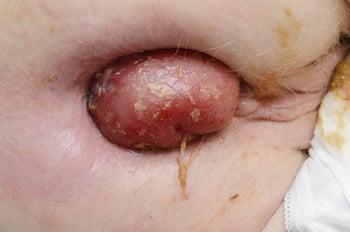
Rectal prolapse is a painless protrusion of the rectum through the anus.

  • A rectal prolapse is often caused while straining, such as during a bowel movement.
  • The diagnosis is based on an examination and various viewing and imaging tests.
  • Rectal prolapse in infants and children usually heals without surgery.
  • Rectal prolapse in adults is treated surgically.

Rectal prolapse causes the rectum to turn inside out, so that the rectal lining is visible outside the body as a dark red, moist, fingerlike projection from the anus. Bleeding from the rectum can occur, and an uncontrolled loss of urine (urinary incontinence) is a frequent symptom. Less commonly, the rectum protrudes into the vagina (rectocele—see Pelvic Floor Disorders: Rectocele).

A temporary prolapse of only the rectal lining (mucosa) often occurs in otherwise healthy infants, probably when the infant strains during a bowel movement, and is rarely serious. In adults, prolapse of the rectal lining tends to persist and may worsen, so that more of the rectum protrudes. A complete prolapse of the rectum is called procidentia. This condition occurs most often in women older than age 60.

To determine the extent of a prolapse, a doctor examines the area while the person is standing or squatting and straining. By feeling the anal sphincter with a gloved finger, a doctor often detects diminished muscle tone. A sigmoidoscopy, colonoscopy, or barium enema x-rays (see Diagnosis of Digestive Disorders: Endoscopy) of the large intestine may reveal an underlying disease.

Treatment

In infants and children, a stool softener eliminates the urge to strain. Strapping the buttocks together between bowel movements usually helps the prolapse heal on its own.

In adults, surgery is usually needed to correct the problem. Surgery often cures procidentia. During one kind of abdominal operation, the entire rectum is lifted, pulled back, and attached to the sacral bone in the pelvis. In another, a segment of the rectum is removed, and the remainder of the rectum is stitched to the sacral bone.

For people who are too weak to undergo surgery because of extreme old age or poor health, surgery on the rectum is preferred to surgery on the abdomen. One type of surgery on the rectum is done by inserting a wire or plastic loop to encircle the sphincter in a technique called the Thiersch procedure. Alternatively, a segment of the rectum or the excess lining of the rectum may be cut out (excised).

Last full review/revision May 2012 by Parswa Ansari, MD

Buy the Book

Mobile Versions

Pronunciations

colonoscopy

procidentia

sigmoidoscopy

Back to Top

Previous: Proctitis

Next: Esophageal Tumors That Are Noncancerous

Audio
Figures
Photographs
Pronunciations
Sidebar
Tables
Videos

Copyright     © 2010-2013 Merck Sharp & Dohme Corp., a subsidiary of Merck & Co., Inc., Whitehouse Station, N.J., U.S.A.    Privacy    Terms of Use