E. coli gastroenteritis is a type of gastroenteritis in which certain strains of the bacterium Escherichia coli infect the large intestine and cause diarrhea and sometimes other serious complications.
Organisms that cause E. coli gastroenteritis are usually acquired from contaminated ground beef or water or unpasteurized milk.
Abdominal cramps and diarrhea that may be bloody are the usual symptoms.
The diagnosis is based on a doctor's evaluation and sometimes on the results of stool tests.
Treatment involves drinking plenty of fluids.
Preventive measures include thorough cooking of meat and thorough washing of hands.
(See also Overview of Gastroenteritis.)
There are many strains of Escherichia coli (E. coli) that cause diarrhea or bloody diarrhea (hemorrhagic colitis). In North America, the most common strain that causes bloody diarrhea is E. coli O157:H7. These bacteria naturally occur in the intestines of about 1% of healthy cattle. Outbreaks can be caused by eating undercooked ground beef or by drinking unpasteurized milk or juice. Consuming food or water contaminated with cow manure or raw ground beef can also spread the infection. People can become infected after touching animals in a petting zoo. The infection can be transmitted from person to person, particularly from children in diapers to other people. Inadequately chlorinated recreational water parks can be a source of infection.
E. coli sometimes leave the intestines and cause infections in other parts of the body, such as the kidneys and urinary tract (see Escherichia coli infections).
Types of E. coli gastroenteritis
E. coli occur naturally and harmlessly in the digestive tract, but some strains have acquired genes that enable them to cause intestinal infection. The following subtypes of E. coli can cause diarrhea:
Enterohemorrhagic (also called Shiga toxin-producing E. coli) is the most significant subtype of E. coli in the United States. It causes bloody diarrhea (hemorrhagic colitis) and, in some people, a serious complication called hemolytic-uremic syndrome. O157:H7 is the most common strain of this subtype in the United States. Undercooked ground beef, unpasteurized milk and juice, and contaminated water are possible sources. Person-to-person transmission is common in day care centers. Outbreaks have occurred among people who have gone swimming in pools or lakes or at water parks (called recreational water illness). Hemolytic-uremic syndrome can occur in people of all ages but is most severe among children and older adults.
Enterotoxigenic produces two toxins that cause watery diarrhea. This subtype of E. coli bacteria is the most common cause of traveler’s diarrhea in people visiting low- and middle-income countries.
Enteropathogenic also causes watery diarrhea. It was once a common cause of diarrhea outbreaks in nurseries but is now rare.
Enteroinvasive causes bloody or nonbloody diarrhea, primarily in low- and middle-income countries. It is rare in the United States.
Enteroaggregative causes diarrhea that is not as severe but lasts longer than the other subtypes. As with some of the other subtypes, it is more common in low- and middle-income countries and can be a cause of traveler’s diarrhea.
Symptoms of E. coli Gastroenteritis
The most common symptoms of gastroenteritis are diarrhea and abdominal cramps. Although usually mild, the infection also can cause abdominal pain, abdominal expansion (distention) from gas, severe diarrhea, and dehydration.
Hemorrhagic colitis due to E. coli infection causes severe abdominal cramps that begin suddenly along with watery diarrhea, which may become bloody within 24 hours. The diarrhea usually lasts 1 to 8 days. Fever is usually absent or mild but occasionally can exceed 102° F (39° C).
About 5 to 10% of people, mostly children under 5 years of age and adults over 60 years of age, who have hemorrhagic colitis develop a severe complication called hemolytic-uremic syndrome. Symptoms of hemolytic-uremic syndrome include a low red blood cell count (anemia, characterized by fatigue, weakness, and pale skin color) caused by the destruction of red blood cells (hemolytic anemia), a low platelet count (thrombocytopenia), and sudden kidney failure.
Diagnosis of E. coli Gastroenteritis
Sometimes stool tests
Stool tests are not done in most people who have diarrhea because most infectious diarrhea goes away on its own, and the symptoms are treated the same regardless of the cause.
However, stool tests are done to look for strains of E. coli bacteria or the toxins they produce in certain people, including those who have the following:
Bloody stool (hemorrhagic colitis) or blood in the stool that is too small to see
Fever
Moderate to severe diarrhea
Diarrhea lasting more than 7 days
A weakened immune system caused by a disorder such as HIV/AIDS or who are taking a drug that can weaken the immune system such as chemotherapy drugs
Inflammatory bowel disease
Age 70 years or older
High risk of spreading the infection to others (for example, health care, day care, or food service workers)
Stool tests are also done during known or suspected outbreaks.
If E. coli O157:H7 is suspected, doctors do a stool test for Shiga toxins, which are produced by these bacteria. This test provides results quickly.
Other tests, such as sigmoidoscopy, may be done if a doctor suspects that other diseases may be causing the bloody diarrhea.
Treatment of E. coli Gastroenteritis
Drinking fluids
Sometimes fluids by vein
Sometimes antibiotics
Usually the only treatment needed for E. coli gastroenteritis is getting bed rest and drinking an adequate amount of fluids.
If diarrhea is prolonged or the person becomes severely dehydrated,fluids and electrolytes are given by vein (intravenously).
Because children can become dehydrated more quickly, they should be given fluids with the appropriate mix of salts and sugars. Any of the commercially available solutions designed to replace lost fluids and electrolytes (called oral rehydration solutionsbreastfeeding should continue.
Antibiotics are not given to people who have hemorrhagic colitis caused by strain E. coli O157:H7 because they do not lessen symptoms, they do not prevent spread of the infection, and they actually increase the risk of developing hemolytic-uremic syndrome. Antibiotics may be given, however, to people who have diarrhea caused by the other subtypes of E. coli. For example, antibiotics are given to people who have diarrhea caused by enterotoxigenic E. coli, which is the most common cause of traveler’s diarrhea. But doctors do not know what the cause of the diarrhea is until results of stool tests are available, typically after the first doctor evaluation. Therefore, they estimate a person's risk of the various types of E. coli gastroenteritis when deciding whether to prescribe antibiotics before test results are available.
Hemorrhagic colitis eventually goes away on its own. However, people who develop complications such as hemolytic-uremic syndrome are likely to require intensive care in the hospital and may need kidney dialysis and other specific treatment.
Did You Know...
|
Prevention of E. coli Gastroenteritis
Thorough cooking of meat
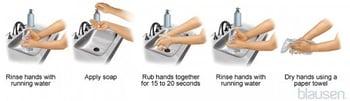
Handwashing
Improved meat-processing procedures in the United States have helped reduce the rate of meat contamination with E. coli. Despite these measures, ground beef can still be contaminated. Thus, ground beef should be cooked to an internal temperature of 160° F (71° C) or until juices run clear. People should drink only pasteurized milk and milk products.
People should properly dispose of the stool of infected people, practice good hygiene, and wash their hands with soap and water to limit the spread of infection. If soap and clean water are unavailable, an antibacterial hand sanitizer should be used.
Children should not have diarrhea and should have two negative stool tests before they are allowed to return to the day care center.

People should report outbreaks of bloody diarrhea to a local public health departments, because intervention can prevent infection in other people.