Celiac disease is a hereditary intolerance to gluten (a protein found in wheat, barley, and rye) that causes characteristic changes in the lining of the small intestine, resulting in malabsorption.
The intestinal lining becomes inflamed after a person ingests the protein gluten.
Symptoms in adults include diarrhea, undernutrition, and weight loss.
Symptoms in children include abdominal bloating, bulky, very foul-smelling stools, and failure to grow.
The diagnosis is based on typical symptoms and examination of a tissue specimen removed from the lining of the small intestine.
Most people do well if they maintain a gluten-free diet.
Celiac disease is a hereditary disorder that usually affects people of northern European heritage. Celiac disease may affect 1 out of 150 people in Europe, especially in Ireland and Italy, and perhaps 1 out of 250 people in some parts of the United States, yet it is extremely rare in Africa, Japan, and China. About 10 to 20% of close relatives of people with celiac disease are also affected. The disease affects about twice as many women as men.
Causes of Celiac Disease
In celiac disease, gluten, which is a protein found in wheat and, to a lesser extent, in barley and rye, stimulates the immune system to produce certain antibodies. These antibodies damage the inner lining of the small intestine, resulting in flattening of the villi (small projections along the lining of the small intestine that absorb nutrients). The resulting smooth surface leads to malabsorption of nutrients. However, the small intestine's normal brushlike surface and function are restored when the person stops eating foods containing gluten.
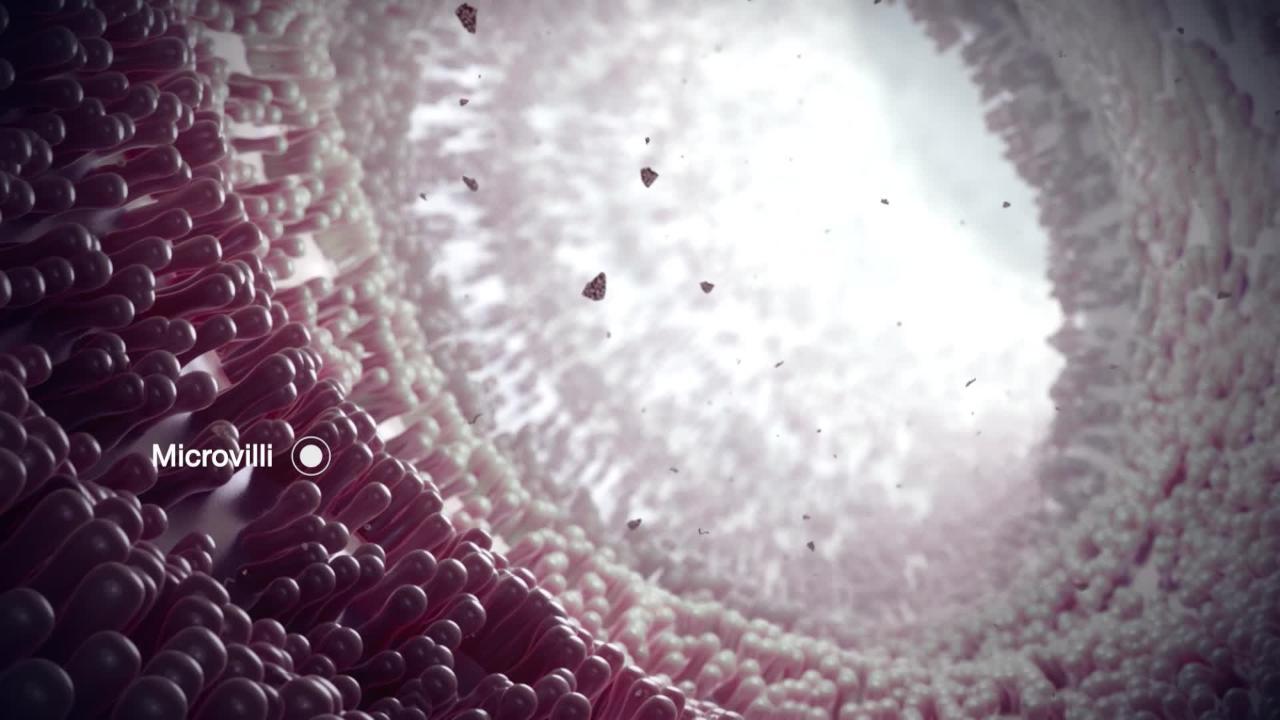
Symptoms of Celiac Disease
Some people develop celiac symptoms as children. Other people do not develop symptoms of celiac until adulthood. The severity of symptoms depends on how much of the small intestine is affected.
Adults
Adults may have digestive symptoms or other symptoms. Many adults have no digestive symptoms at all.
Most affected adults have weakness and loss of appetite. Diarrhea, often with oily or greasy-appearing stool, is common. Some people are undernourished, have mild weight loss and anemia, or have mouth sores and an inflamed tongue.
People commonly have thinning bones (osteoporosis or osteopenia).
About 10% of people with celiac disease develop a painful, itchy rash with small blisters—a disease called dermatitis herpetiformis.
Both men and women may have fertility problems.

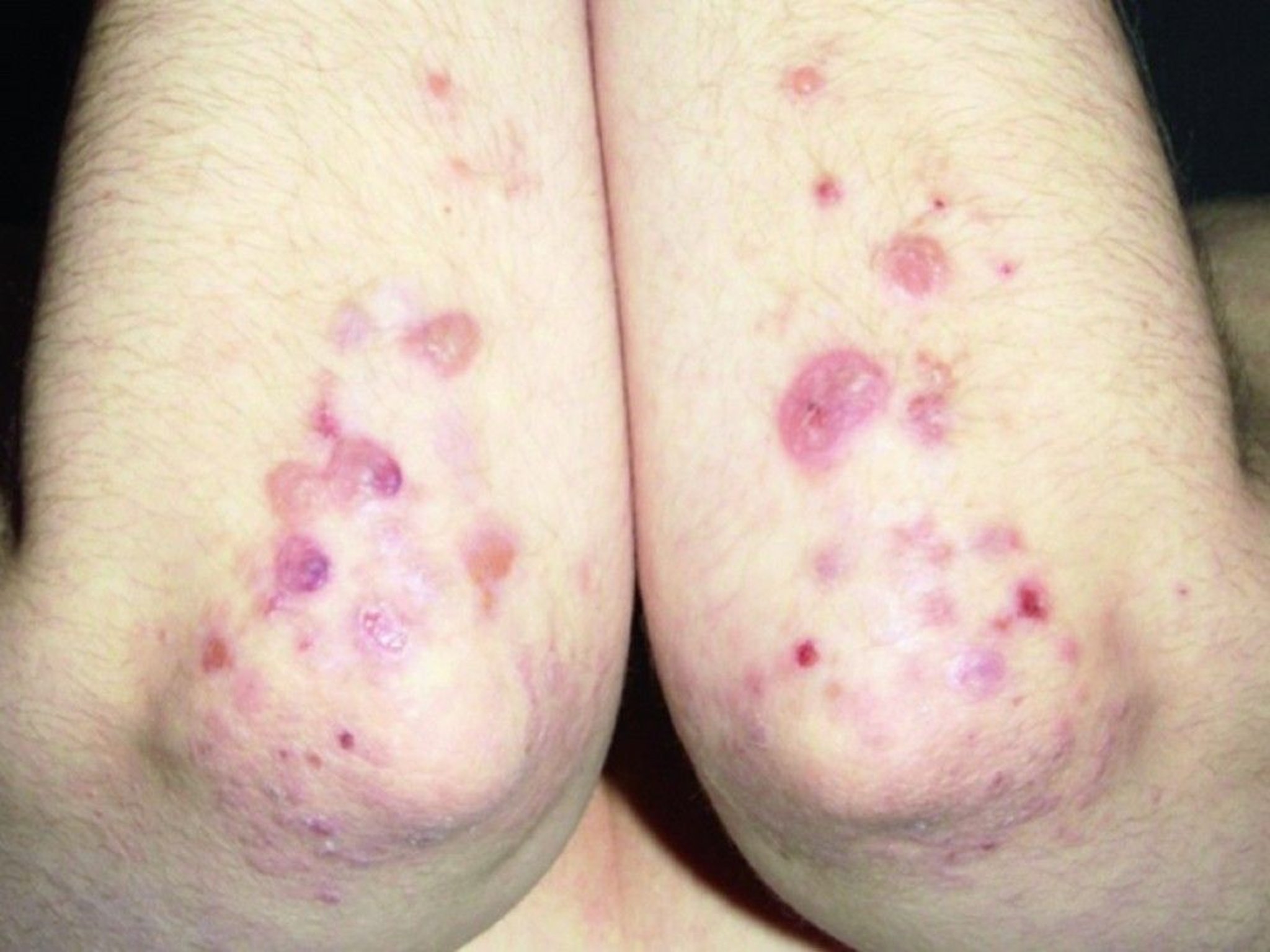
© Springer Science+Business Media
Children
In children, symptoms can begin in infancy or early childhood after cereals (most of which contain gluten) are introduced. Some children have only mild upset stomach, whereas others develop painful abdominal bloating and have light-colored, unusually foul-smelling, bulky stools (steatorrhea). Children typically fail to grow at a normal rate and appear weak, pale, and listless.
The nutritional deficiencies resulting from malabsorption in celiac disease can cause additional symptoms, which tend to be more prominent in children. Some children develop growth abnormalities, such as short stature. Anemia (low blood count), causing fatigue and weakness, develops as a result of iron deficiency. Low protein levels in the blood can lead to fluid retention and tissue swelling (edema). Malabsorption of vitamin B12 can lead to nerve damage, causing a pins-and-needles sensation in the arms and legs. Poor calcium absorption results in abnormal bone growth, a higher risk of broken bones, and painful bones and joints. Lack of calcium can also cause tooth discoloration and greater susceptibility to painful tooth decay. Girls with celiac disease may not have menstrual periods because of a low production of hormones, such as estrogen.
Diagnosis of Celiac Disease
Levels of antibodies
Biopsy
Tests for certain vitamin deficiencies
Doctors suspect the diagnosis of celiac disease when a person has the previously mentioned symptoms.
Measurement of the level of specific antibodies produced when a person with celiac disease consumes gluten is a helpful test.
To help confirm the diagnosis of celiac disease, doctors remove a sample of tissue from the person's lining of the small intestine and examine it under a microscope (biopsy). The diagnosis is confirmed if the biopsy shows the intestinal villi are flattened and if the lining of the small intestine subsequently improves after the person stops eating foods containing gluten.
A blood test that determines whether people have certain genes may be done because people without those genes are very unlikely to have celiac disease. However, a positive test does not confirm celiac disease, because many people without celiac disease have these genes.
Treatment of Celiac Disease
Gluten-free diet
Vitamin and mineral supplements
People with celiac disease must exclude all gluten from their diet because eating even small amounts may cause symptoms. The response to a gluten-free diet is usually rapid, and symptoms resolve in 1 to 2 weeks. Once gluten is avoided, the brushlike surface of the small intestine and its absorptive function return to normal. Gluten is so widely used in food products that people with celiac disease need detailed lists of foods to be avoided and expert advice from a dietitian. Gluten is present, for example, in commercial soups, sauces, ice cream, and hot dogs. Doctors encourage people to consult a dietitian and join a celiac support group.
Doctors give most people with celiac disease supplements to replace vitamins (such as folate) and minerals (such as iron). Another biopsy is done 3 to 6 months after a gluten-free diet has been started. Sometimes children are seriously ill when first diagnosed and need a period of intravenous feeding before starting a gluten-free diet.
Some people continue to have symptoms even when gluten is avoided. In such people, either the diagnosis is incorrect or the disease has progressed to a condition called refractory celiac disease
Prognosis for Celiac Disease
Without diagnosis and treatment, celiac disease is ultimately fatal in some people. Currently, such outcomes are rare, and most people do well if they avoid gluten.
Celiac disease does increase the risk of certain cancers of the digestive tract. The most common cancer is lymphoma of the small intestine. Such lymphomas affect about 6 to 8% of people who have had celiac disease for a long time (typically more than 20 to 40 years). People are also at increased risk of developing other cancers of the digestive tract. Strictly adhering to a gluten-free diet significantly decreases the risk of cancer.
More Information
The following English-language resources may be useful. Please note that THE MANUAL is not responsible for the content of these resources.
Gluten Intolerance Group: A resource that helps people establish and maintain a gluten-free lifestyle
The following sites provide information about celiac disease, including how to live with it, what to eat, treatment options, and clinical trials: