Noncancerous (benign) and cancerous (malignant) growths can form on the eyelids.
Xanthelasma

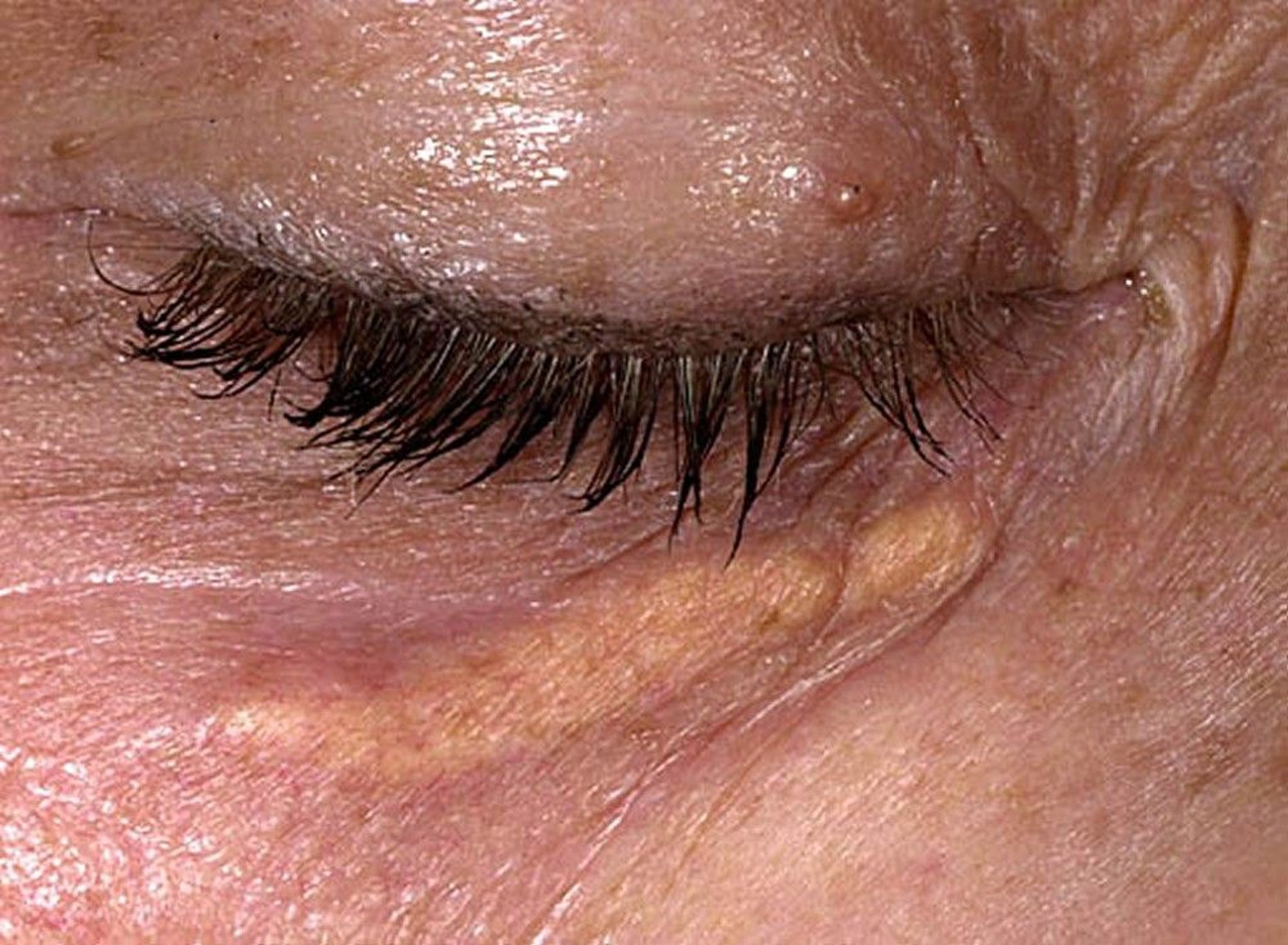
Image provided by Thomas Habif, MD.
One of the more common benign eyelid growths is xanthelasma, a yellow-white, flat lump of accumulated fatty material. It is not a true tumor because it is not an abnormal growth of new tissue. Because xanthelasmas may indicate elevated cholesterol levels, especially in young people, a doctor may check the person’s cholesterol level by taking a blood sample. Xanthelasmas do not need to be removed unless their appearance becomes bothersome.
Basal cell carcinoma of the eye

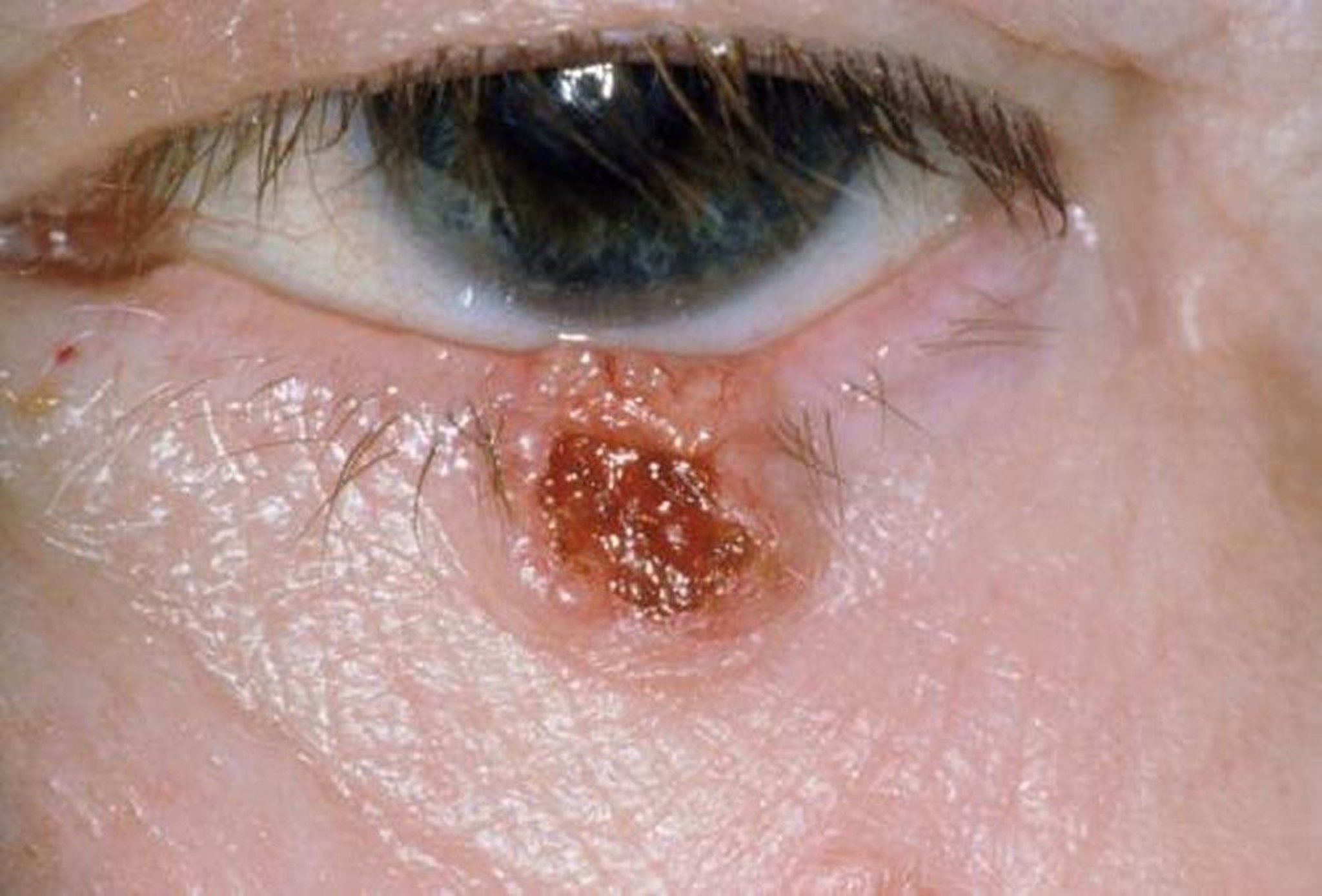
RALPH C. EAGLE, JR/SCIENCE PHOTO LIBRARY
Basal cell carcinoma is a type of skin cancer that frequently occurs at the eyelid margins, at the inner corner of the eyes, and on the upper cheeks. A doctor bases the diagnosis on the results of a biopsy (removal of a tissue sample for examination under a microscope). The growth is usually removed surgically.
Did You Know...
|
Other cancerous growths of the eyelids
Although less common, squamous cell carcinoma, meibomian (sebaceous) gland carcinoma (cancer of oil glands in the eyelid), and melanoma can develop on the eyelid. If a growth on the eyelid does not disappear after several weeks, a doctor may do a biopsy. The growth is usually removed surgically. Eyelid tumors sometimes mimic other eye disorders (such as blepharitis and chalazion), so a doctor usually biopsies any growths that do not respond to initial treatments.