Search
SectionsIndexFirst Aid
  • Blood Disorders
  • Bone, Joint, and Muscle Disorders
  • Brain, Spinal Cord, and Nerve Disorders
  • Cancer
  • Children's Health Issues
  • Digestive Disorders
  • Disorders of Nutrition
  • Drugs
  • Ear, Nose, and Throat Disorders
  • Eye Disorders
  • Fundamentals
  • Heart and Blood Vessel Disorders
  • Hormonal and Metabolic Disorders
  • Immune Disorders
  • Infections
  • Injuries and Poisoning
  • Kidney and Urinary Tract Disorders
  • Liver and Gallbladder Disorders
  • Lung and Airway Disorders
  • Men's Health Issues
  • Mental Health Disorders
  • Mouth and Dental Disorders
  • Older People's Health Issues
  • Skin Disorders
  • Special Subjects
  • Women's Health Issues
ABCDEFGHI
JKLMNOPQR
STUVWXYZ
  • Emergencies
  • Cardiac Arrest
  • Choking
  • Drowning
  • Injuries
  • Altitude Illness
  • Bee Stings
  • Bites, Animal
  • Bites, Human
  • Bites, Snake
  • Burns
  • Electrical Injuries
  • Eye, Blunt Injury to
  • Eye, Chemical Burns of
  • Fractures
  • Frostbite
  • Head Injury
  • Heatstroke
  • Hypoithermia
  • Lightning Injuries
  • Shock
  • Sprains and Strains
  • Wounds
In This Topic
Eye Disorders
Retinal Disorders
Hypertensive Retinopathy
Back to Top
Resources
  • About The Merck Manual Home Health Handbook Online Version
  • Anatomical Drawings
  • The One-Page Merck Manual of Health
  • Multimedia
  • Pronunciations
  • Selected Links
  • Weights and Measures
  • Common Medical Tests
  • Drug Names: Generic and Trade
  • Resources for Help and Information
Manuals available online
'/professional/index.html' + bookPageLink
 
'/home/index.html'
These and other Manuals available
in print, online, and as mobile applications.

See more at MerckManuals.com
Sections in Patients & Caregivers
  • Blood Disorders
  • Bone, Joint, and Muscle Disorders
  • Brain, Spinal Cord, and Nerve Disorders
  • Cancer
  • Children's Health Issues
  • Digestive Disorders
  • Disorders of Nutrition
  • Drugs
  • Ear, Nose, and Throat Disorders
  • Eye Disorders
  • Fundamentals
  • Heart and Blood Vessel Disorders
  • Hormonal and Metabolic Disorders
  • Immune Disorders
  • Infections
  • Injuries and Poisoning
  • Kidney and Urinary Tract Disorders
  • Liver and Gallbladder Disorders
  • Lung and Airway Disorders
  • Men's Health Issues
  • Mental Health Disorders
  • Mouth and Dental Disorders
  • Older People's Health Issues
  • Skin Disorders
  • Special Subjects
  • Women's Health Issues
Chapters in Eye Disorders
  • Biology of the Eyes
  • Symptoms of Eye Disorders
  • Diagnosis of Eye Disorders
  • Refractive Disorders
  • Eyelid and Tearing Disorders
  • Conjunctival and Scleral Disorders
  • Corneal Disorders
  • Cataract
  • Uveitis
  • Glaucoma
  • Retinal Disorders
  • Optic Nerve Disorders
  • Eye Socket Disorders
Topics in Retinal Disorders
  • Overview of Retinal Disorders
  • Age-Related Macular Degeneration
  • Epiretinal Membrane
  • Detachment of the Retina
  • Retinitis Pigmentosa
  • Blockage of Central Retinal Veins and Branches
  • Blockage of Central Retinal Arteries and Branches
  • Hypertensive Retinopathy
  • Diabetic Retinopathy
  • Endophthalmitis
  • Cancers Affecting the Retina
 
  • Merck Manual
  • >
  • Patients & Caregivers
  • >
  • Eye Disorders
  • >
  • Retinal Disorders
  • 4
 
Hypertensive Retinopathy

Share This

Hypertensive retinopathy is damage to the retina (the transparent, light-sensitive structure at the back of the eye) caused by high blood pressure.

When blood pressure is high (hypertension—see High Blood Pressure), the retina may become damaged. Hypertension damages the small blood vessels in the retina, causing their walls to thicken, which decreases the amount of blood that can flow through them. As a result, the blood supply to the retina is reduced. Patches of the retina may become damaged because the blood supply is inadequate. As hypertensive retinopathy progresses, blood may leak into the retina. These changes lead to a gradual loss of vision, particularly if they affect the macula, the central part of the retina. Even mild hypertension may damage the retinal blood vessels if it goes untreated for years.
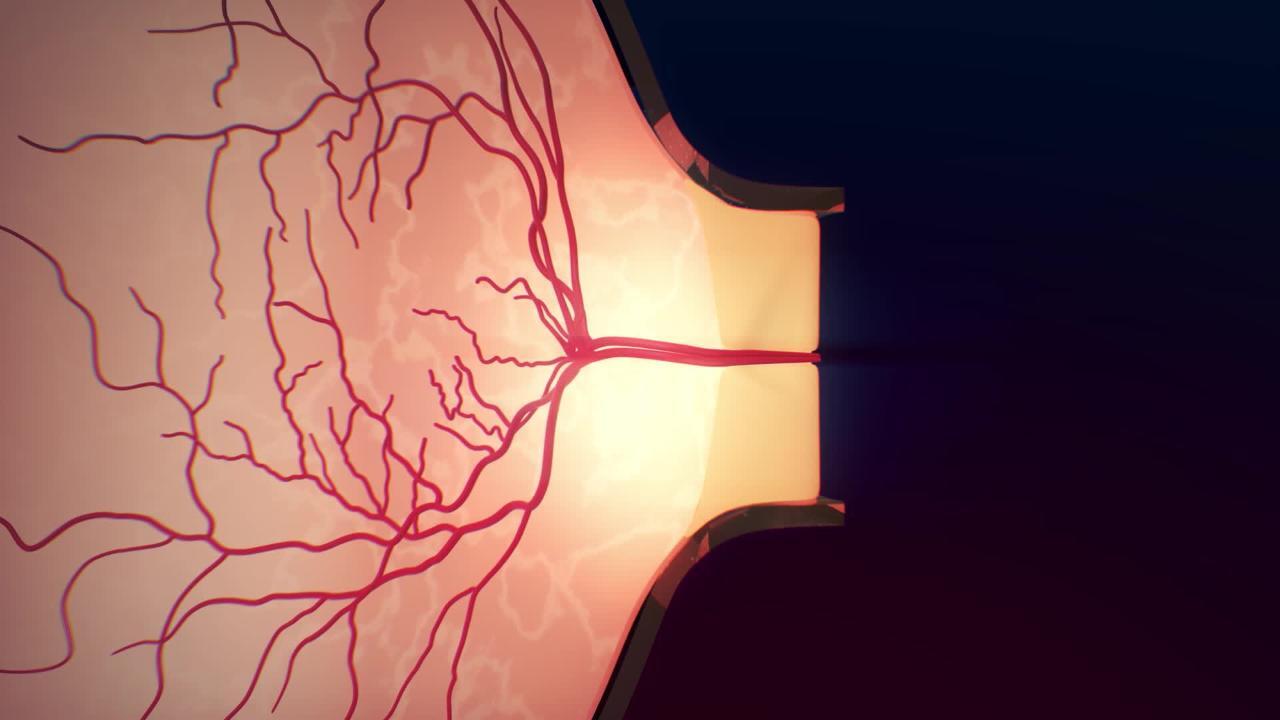
Using an ophthalmoscope, doctors can observe the typical appearance of the retina in people with high blood pressure. The amount of damage to the retinal blood vessels tends to correlate with the amount of damage to blood vessels in other organs affected by hypertension, such as the brain, heart, and kidneys. When blood pressure is extremely high, doctors may be able to see other changes in the eye, such as swelling of the front of the optic nerve.

Did You Know...
  • The eye is the only organ in the body where doctors can routinely directly observe arteries and deep veins (by using an ophthalmoscope). The appearance of these blood vessels can tell doctors how hypertension and atherosclerosis have affected other blood vessels in the body.

The goal of treatment is to lower blood pressure long term. If vision loss occurs, swelling in the retina can be treated with a laser, by injecting corticosteroids, by putting a dexamethasone (a corticosteroid) implant in the eye, or by injecting certain other drugs (for example, ranibizumabSome Trade Names
LUCENTIS
, pegaptanibSome Trade Names
MACUGEN
, aflibercept, or bevacizumabSome Trade Names
AVASTIN
) into the eye. Rarely, when high blood pressure is severe and life threatening, treatment may be needed immediately to save vision and avoid other complications, including stroke, heart failure, kidney failure, and heart attack.

Last full review/revision March 2013 by Sunir J. Garg, MD, FACS

Buy the Book

Mobile Versions

Pronunciations

atherosclerosis

corticosteroid

dexamethasone

macula

retina

retinopathy

sclerosis

Back to Top

Previous: Blockage of Central Retinal Arteries and Branches

Next: Diabetic Retinopathy

Audio
Figures
Photographs
Pronunciations
Sidebar
Tables
Videos

Copyright     © 2010-2013 Merck Sharp & Dohme Corp., a subsidiary of Merck & Co., Inc., Whitehouse Station, N.J., U.S.A.    Privacy    Terms of Use