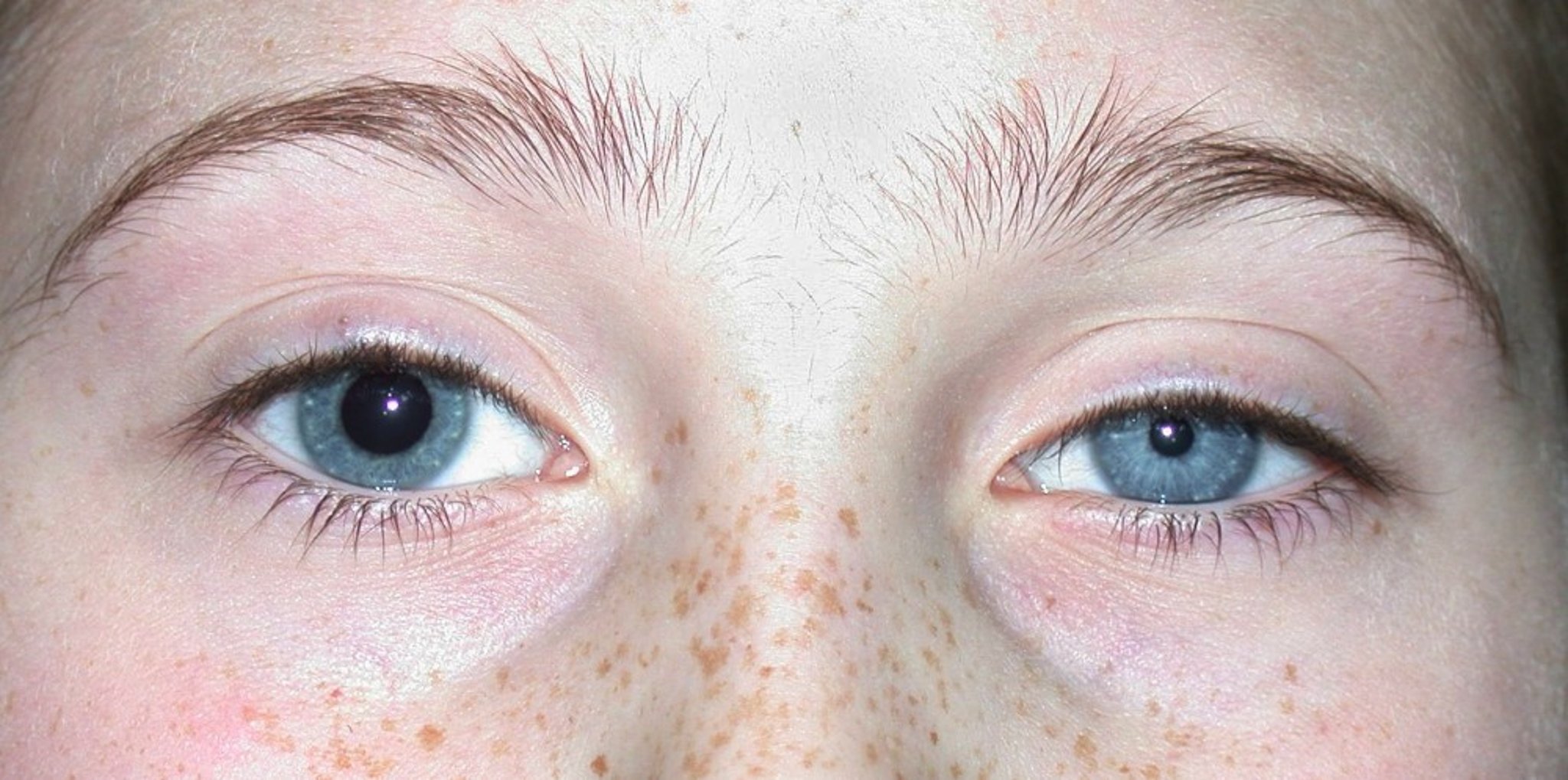
The pupil is the black center of the eye. Pupils get larger (dilate) in dim light and smaller (constrict) in bright light. Usually both pupils are about the same size and respond to light equally. Unequal pupil size is called anisocoria.

© Springer Science+Business Media
If pupil sizes are very unequal, a person may notice the discrepancy. More often, unequal pupils are noticed only during a doctor's examination. Unequal pupils themselves usually cause no symptoms, but occasionally a person may have trouble focusing on near objects. Also, the underlying disorder sometimes causes other symptoms such as eye pain and redness, loss of vision, drooping eyelid, double vision, or headache. These more noticeable symptoms, rather than the unequal pupils, are often the reason people seek medical care.
Causes of Unequal Pupils
The most common cause of unequal pupils is
Physiologic anisocoria
Physiologic anisocoria is pupils that are naturally different in size. No disorder is present. About 20% of people have this lifelong condition, which is considered a normal variation. In such people, both pupils react normally to light and darkness and there are no symptoms.
Less commonly, people have unequal pupils because of
Eye disorders
Nervous system disorders
Either the larger or the smaller pupil may be the abnormal one depending on the cause. Often, the larger pupil is unable to constrict normally. However, sometimes, as in Horner syndrome, the smaller pupil is unable to widen. If the larger pupil is abnormal, the difference between pupil sizes is greater in bright light. If the smaller pupil is abnormal, the difference is greater in the dark.
Eye disordersiritis) and certain types of glaucoma cause unequal pupils, but this finding is usually overshadowed by severe eye pain.
Nervous system disorders that cause unequal pupils are those that affect the third cranial nerve or certain parts of the sympathetic or parasympathetic nervous system (the autonomic nervous system). These pathways carry nerve impulses to the pupil and to the muscles that control the eye and eyelid. Thus, people with nervous system disorders that affect the pupil often also have a drooping eyelid, double vision, and/or visibly misaligned eyes. Brain disorders that can affect these pathways include strokes, brain hemorrhage (spontaneous or due to head injury), and, less commonly, certain tumors or infections. Disorders outside the brain that affect the sympathetic nervous system include tumors and injuries that involve the neck or upper part of the chest. Horner syndrome refers to the combination of a constricted pupil, drooping eyelid, and loss of sweating around the affected eye. Horner syndrome is caused by interruption of the sympathetic nerves to an eye due from any cause.
Evaluation of Unequal Pupils
Doctors' first goal is to determine whether the pupils have always been unequal or whether there is another cause such as a medication, chemical, or disorder. Then the goal is to decide whether the larger or the smaller pupil represents the problem. The following information can help people decide when a doctor's evaluation is needed and help them know what to expect during the evaluation.
Warning signs
In people with unequal pupils, certain symptoms and characteristics are cause for concern. They include
Drooping eyelid (ptosis)
Headache or neck pain
Recent head injury or eye injury
When to see a doctor
People with warning signs should see a doctor right away. People without warning signs but who have any other symptoms should call the doctor. The doctor can decide how quickly they need to be seen based on their symptoms. People who simply happen to have noticed unequal pupils and feel well can usually wait a week or two to see a doctor.
What the doctor does
Doctors first ask questions about the person's symptoms and medical history, including questions about smoking. Doctors then do a physical examination. What they find during the history and physical examination often suggests a cause of the unequal pupils (see table Some Causes and Features of Unequal Pupils) and the tests that may need to be done.
Doctors ask when the person noticed the unequal pupils, whether vision is blurred in the light or dark, and whether the person has any other symptoms. Other important symptoms involving the eyes include a droopy eyelid, double vision, pain with bright light, loss of vision, and eye pain. Other important symptoms that do not involve the eyes include headache, dizziness or loss of balance, cough, chest pain, or shortness of breath. Doctors ask whether the person has recently had a head or eye injury, what eye drops the person has used, and whether the person has ever had an eye disorder or eye surgery.
The physical examination focuses on the head and eyes. Doctors examine the person's pupils in light and dark rooms. They examine whether the eyes move normally when the person follows a doctor's finger moving up, down, left, right, and toward the eyes. Doctors examine the entire eye, usually using a slit lamp (an instrument that enables a doctor to examine the eye under high magnification). Other eye symptoms are evaluated as necessary. Doctors may use eye drops to test how the pupils respond to medications that cause the pupils to constrict or widen.
Sometimes doctors examine an old photograph of the person (for example, on the person's driver's license) to see whether pupils were previously unequal or the eyelid(s) droopy.
Typically, people with eye symptoms such as pain, redness, blurry vision, or light sensitivity have an eye disorder. People who have a droopy eyelid, double vision, headache, or balance difficulties have Horner syndrome or third cranial nerve paralysis (possibly due to a brain disorder). People whose only symptom is recent blurry vision, particularly when focusing on near objects, may have a pupil that has been widened by a medication. People with no other symptoms or abnormalities often have chronic conditions such as physiologic anisocoria, birth defects of the iris, or Adie (tonic) pupil (see table Some Causes and Features of Unequal Pupils).
Testing
Testing is usually unnecessary unless people have other symptoms. People with Horner syndrome or third cranial nerve paralysis usually require magnetic resonance imaging (MRI) or computed tomography (CT). People who have Horner syndrome may also need a CT of the chest.
Treatment of Unequal Pupils
Treatment of unequal pupils is itself unnecessary. However, the underlying disorder may need to be treated.
Key Points
Unequal pupils are very common and are often only a normal variation.
Doctors examine the pupils in light and dark rooms to help determine the cause.
They may also examine an old photograph or the person's driver's license and do other diagnostic tests.
People with a drooping eyelid or double vision may have a serious disorder.