Erythropoietic protoporphyria and X-linked protoporphyria are conditions related to abnormalities of enzymes involved in the production of heme and characterized by sensitivity to sunlight.
The heme precursor protoporphyrin accumulates in the bone marrow, red blood cells, and other tissues, including skin.
People have severe skin pain and swelling soon after exposure to sunlight.
Doctors test blood to look for elevated levels of protoporphyrin.
People should avoid exposure to sunlight.
Porphyrias are a group of disorders caused by abnormalities of enzymes involved in the production of heme. Heme is a chemical compound that contains iron and gives blood its red color. Heme is a key component of several important proteins in the body. (See also Overview of Porphyria.)
Accumulation of protoporphyrin in the skin results in extreme sensitivity to sunlight and severe pain soon after exposure. The sunlight activates the protoporphyrin molecules, which damage the surrounding tissue.
Accumulation of protoporphyrins in the liver can cause liver damage. Protoporphyrins excreted in the bile can often lead to gallstones.
Erythropoietic protoporphyria
Erythropoietic protoporphyria is uncommon. It usually appears in childhood.
In most people with erythropoietic protoporphyria, a deficiency of the enzyme ferrochelatase leads to accumulation of the heme precursor protoporphyrin in the bone marrow, red blood cells, blood plasma (the liquid component of blood), skin, and eventually the liver.
The enzyme deficiency is inherited from both parents.
X-linked protoporphyria
About 10% of people who have the symptoms of erythropoietic protoporphyria actually have increased activity of a different enzyme. The increased activity leads to accumulation of the same heme precursor. However, the abnormal gene for this form of erythropoietic protoporphyria is carried on the X-chromosome, and thus the disorder is called X-linked protoporphyria.
Because X-linked protoporphyria is so similar to erythropoietic protoporphyria, it is sometimes regarded as a variant of erythropoietic protoporphyria.
Symptoms
Symptoms usually start in childhood. Severe skin pain and swelling develop soon after even brief exposure to sunlight. Crusting may develop around the lips and on the back of the hands after prolonged sun exposure. Because blistering and scarring do not occur, doctors usually do not recognize the disorder.
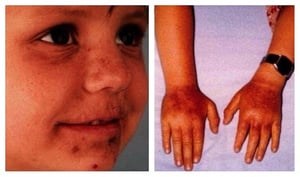
© Springer Science+Business Media
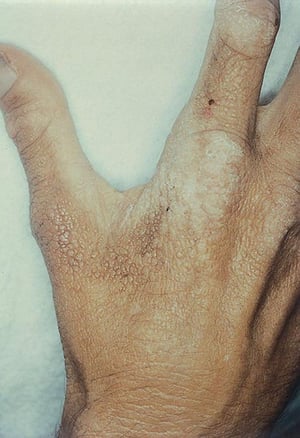
By permission of the publisher. From Bloomer J, Risheg H. In Gastroenterology and Hepatology: Liver. Edited by M Feldman (series editor) and WC Maddrey. Philadelphia, Current Medicine, 2004.
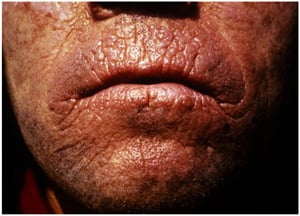
© Springer Science+Business Media

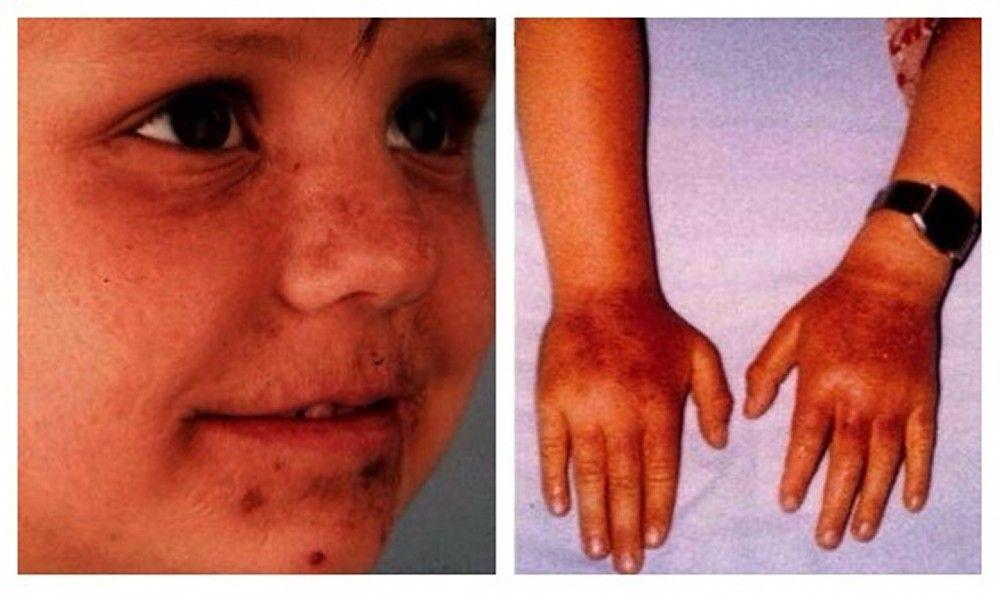
© Springer Science+Business Media

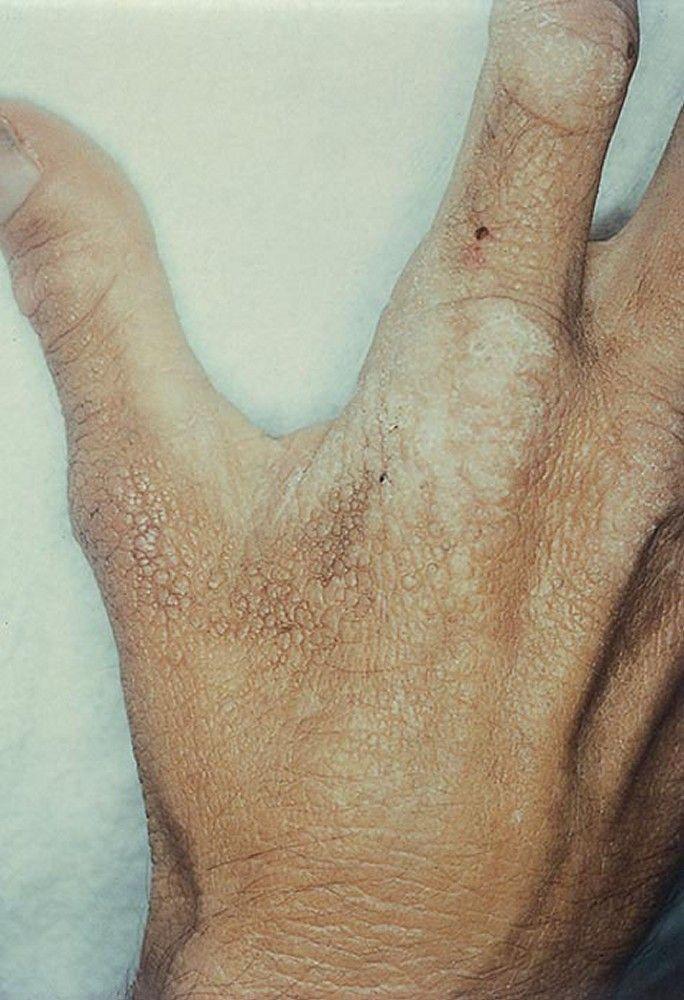
By permission of the publisher. From Bloomer J, Risheg H. In Gastroenterology and Hepatology: Liver. Edited by M Feldman (series editor) and WC Maddrey. Philadelphia, Current Medicine, 2004.

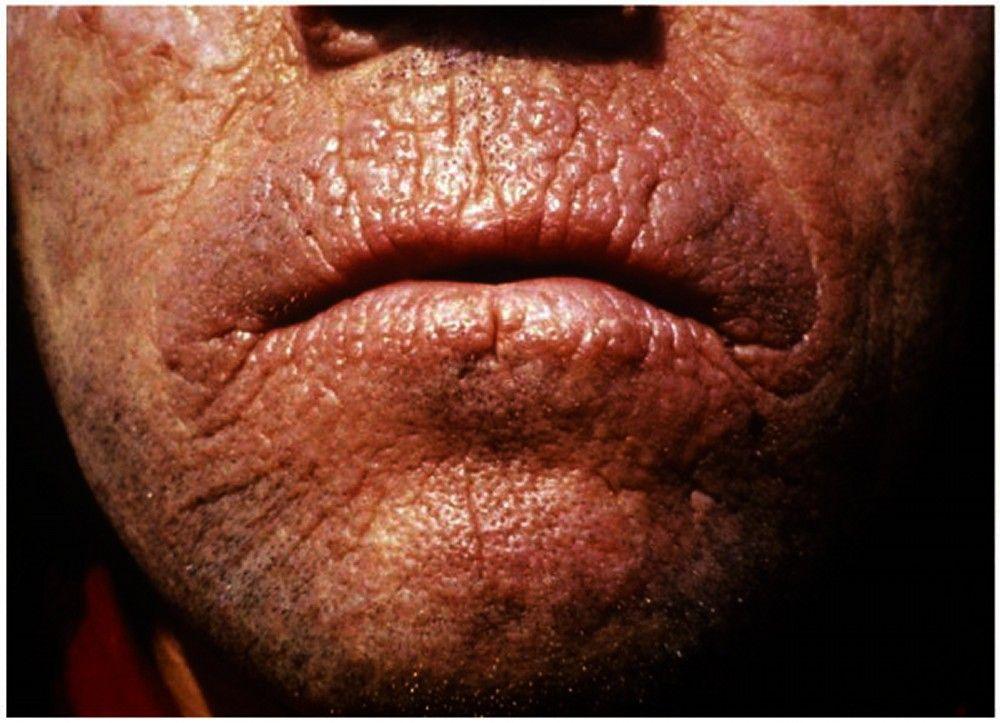
© Springer Science+Business Media
Gallstones cause characteristic abdominal pain. Liver damage may lead to increasing liver failure, with jaundice, abdominal pain, and enlargement of the spleen.
If skin protection is chronically neglected, rough, thickened, and leathery skin (lichenification) may develop, especially over the knuckles. Deep grooves may develop around the mouth (carp mouth).
People with X-linked protoporphyria tend to have higher levels of protoporphyrin in their red blood cells, plasma, and other tissues and, therefore, more severe reactions to sunlight and more severe liver disease than those with erythropoietic protoporphyria.
Children in whom erythropoietic protoporphyria and X-linked protoporphyria is unrecognized may develop psychosocial problems because they inexplicably refuse to go outdoors. They have often been misdiagnosed for years as having "allergy" to sunlight. The fear or anticipation of pain may be so distressing that children become nervous, tense, aggressive, or develop feelings of detachment from the surroundings or even suicidal thoughts.
Did You Know...
|
Diagnosis
Blood tests
The diagnosis is made when increased levels of protoporphyrin are detected in red blood cells and blood plasma (the liquid portion of blood).
The diagnosis cannot be made with testing of the urine because excess protoporphyrin is not excreted into the urine.
Genetic testing may be done. Family members may also be tested to determine whether they also have the gene mutation.
Treatment
Relief of symptoms of attacks
Treat gallstones and liver problems
People who develop gallstones that contain protoporphyrin and develop symptoms of cholecystitis (inflammation of the gallbladder wall) may need to have the gallbladder surgically removed.
Porphyrin accumulation in red blood cells and the condition of the liver should be monitored yearly by testing blood, urine, and stool samples. Vaccination against hepatitis A and B may help prevent liver damage. Liver damage, if severe, may necessitate liver transplantation.
Because sunlight provides needed vitamin Dvitamin D deficiency.
Stem cell transplantation may cure erythropoietic protoporphyria, but it is not usually done because the risks of transplantation typically outweigh the benefits.
Prevention of Attacks
Medications that trigger acute porphyrias do not cause erythropoietic protoporphyria and need not be avoided.
More Information
The following English-language resources may be useful. Please note that THE MANUAL is not responsible for the content of these resources.
American Porphyria Foundation: Aims to educate and support patients and families affected by porphyrias
The United Porphyrias Association: Provides education and support to patients and their families; provides reliable information to health-care providers; fosters and supports clinical research to improve diagnosis and management of the porphyrias