Hereditary angioedema (a genetic disorder) and acquired angioedema (acquired C1 inhibitor deficiency) are caused by a deficiency or malfunction of C1 inhibitor, which is part of the immune system. Both disorders result in repeated episodes of swelling under the skin.
Angioedema is swelling of areas of tissue under the skin that sometimes affects the face, throat, and airways.
Most angioedema is caused by an allergic reaction, but sometimes it is caused by a hereditary disorder or another disorder such as cancer.
Unlike angioedema caused by an allergic reaction, hereditary angioedema and acquired angioedema do not cause hives or itching.
Blood tests help doctors diagnose the disorder.
Certain drugs can help relieve symptoms, but if angioedema makes swallowing or breathing difficult, prompt emergency treatment is needed.
(See also Overview of Allergic Reactions.)
Hereditary angioedema is a genetic disorder that causes a deficiency or malfunction of C1 inhibitor. C1 inhibitor is one of the proteins in the complement system, which is part of the immune system. Symptoms usually start during childhood or adolescence.
Acquired angioedema, a rare disorder, differs from hereditary angioedema. It develops when certain cancers, such as lymphoma, or autoimmune disorders, such as systemic lupus erythematosus (lupus) or dermatomyositis, cause a deficiency of C1 inhibitor. Symptoms usually start later in life, after people have developed a disorder that can cause this deficiency.
In both hereditary and acquired angioedema, swelling (angioedema) may be triggered by
A minor injury, as may occur during a dental procedure
A viral infection
Certain foods
Pregnancy
Drugs that contain or are related to estrogen
Exposure to cold
Although certain foods and drugs may trigger the angioedema, it is not an allergic reaction to those substances.
Stress, such as that felt before having a dental or surgical procedure, can make angioedema worse.
Symptoms
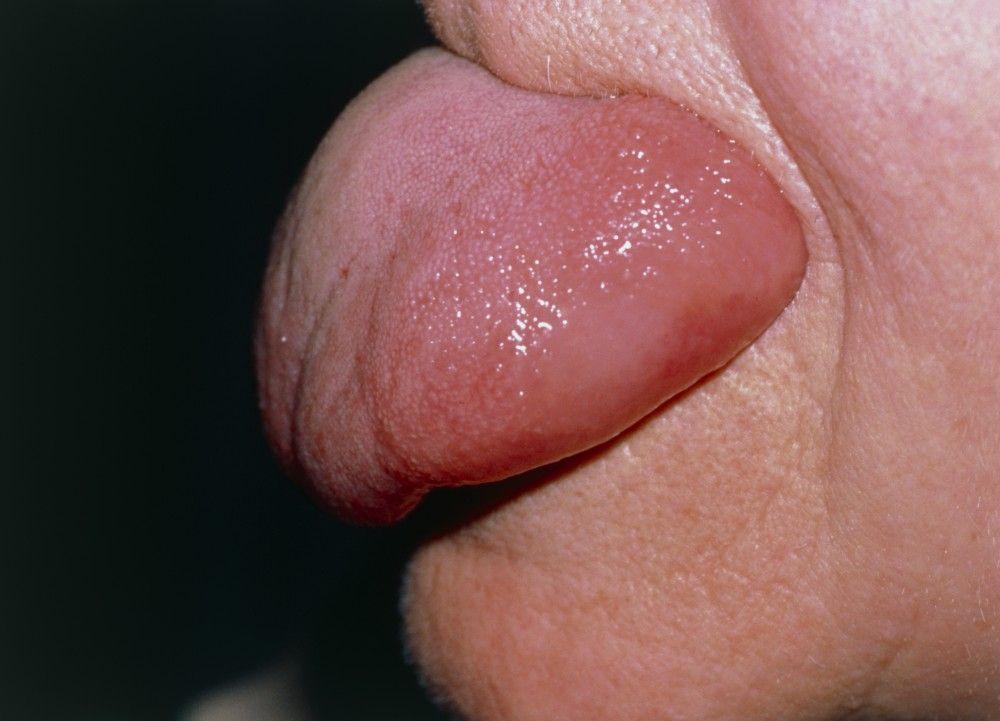
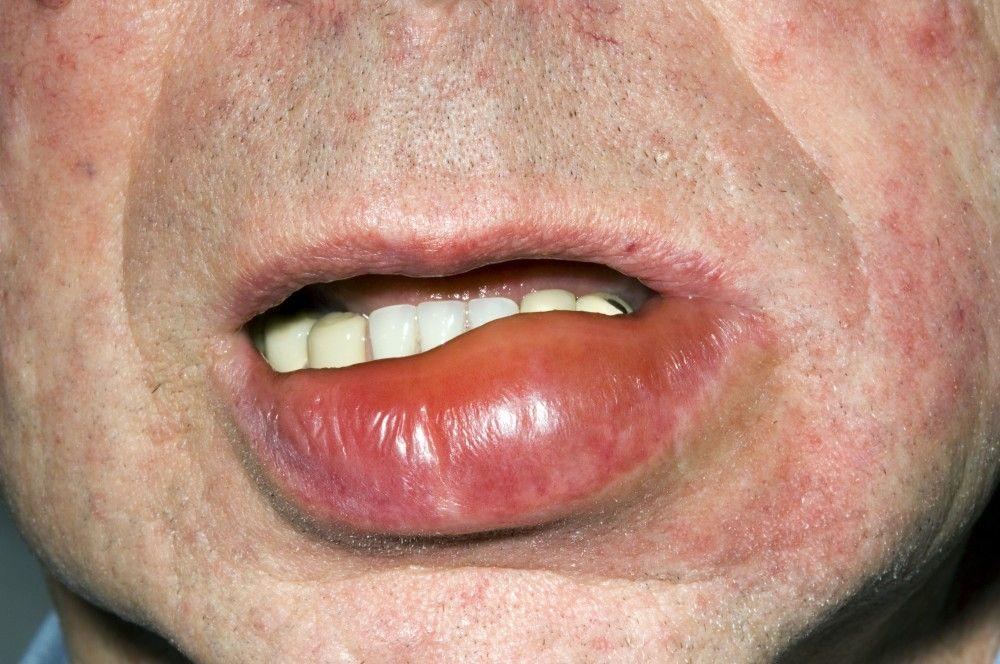
The face, lips, tongue, the back of the hands or feet, genitals, and/or other areas of the body may swell. Typically, the swollen areas are slightly painful and not itchy. Hives do not appear. Swelling usually resolves in 1 to 3 days.
The membranes lining the mouth, throat, and airways may also swell. People may make a gasping sound when they breathe in. Such swelling can interfere with breathing and be life threatening. If these symptoms develop, people should see a doctor right away.
The membranes lining the digestive tract may also swell. Nausea, vomiting, and cramps are common.
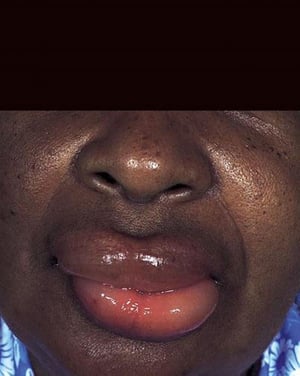
By permission of the publisher. From Joe E, Soter N. In Current Dermatologic Diagnosis and Treatment, edited by I Freedberg, IM Freedberg, and MR Sanchez. Philadelphia, Current Medicine, 2001.
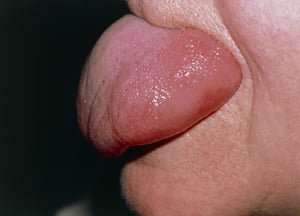
SCIENCE PHOTO LIBRARY
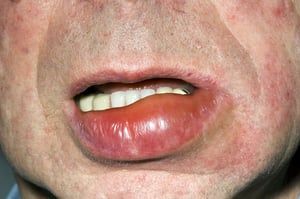
DR P. MARAZZI/SCIENCE PHOTO LIBRARY

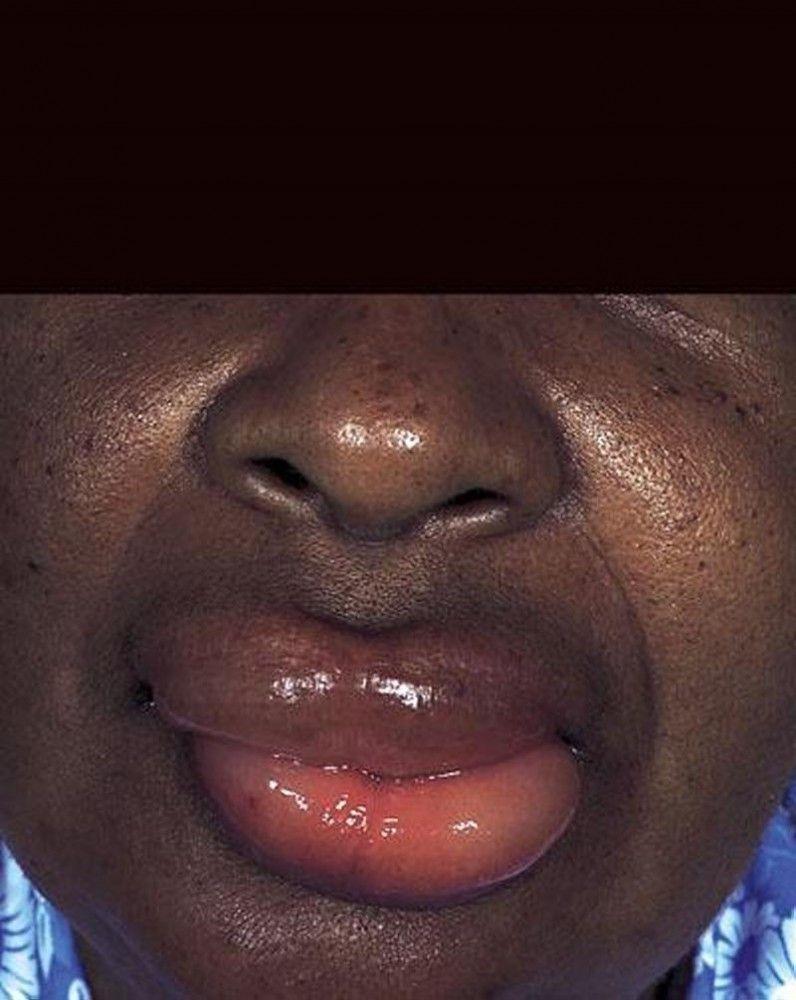
By permission of the publisher. From Joe E, Soter N. In Current Dermatologic Diagnosis and Treatment, edited by I Freedberg, IM Freedberg, and MR Sanchez. Philadelphia, Current Medicine, 2001.

SCIENCE PHOTO LIBRARY

DR P. MARAZZI/SCIENCE PHOTO LIBRARY
Diagnosis
Blood tests
Doctors suspect hereditary or acquired angioedema if both of the following are present:
People have swelling in the face, lips, tongue, hands, feet, genitals, and/or other areas of the body but do not have hives.
The swelling recurs, and no cause is apparent.
Doctors also suspect one of these disorders if angioedema is triggered by a minor injury.
If family members also have these symptoms, doctors suspect hereditary angioedema.
Doctors diagnose hereditary or acquired angioedema by measuring C1 inhibitor levels or activity in a sample of blood.
Treatment
Fresh frozen plasma
Drugs to prevent future attacks
Because hereditary angioedema is rare, the person's doctor usually checks whether the local health care facility has one of these necessary drugs. If the person has had a severe reaction, the doctor may give the person one of these drugs to keep at home and use when an attack starts. The person or family members are taught how to inject the drugs themselves. The earlier treatment begins, the better.
When these drugs are not available, fresh frozen plasma
Pain relievers, drugs to relieve nausea (antiemetic drugs), and fluids may help relieve symptoms.
Emergency treatment
Sometimes doctors have to make a small incision in the skin over the windpipe (trachea) to insert the breathing tube.
Drugs to prevent attacks of angioedema
Several treatments can be used to help prevent episodes of angioedema in people with hereditary angioedema. They include
C1 inhibitor derived from human blood
Synthetic male hormones
C1 inhibitor derived from human blood can be used to prevent attacks. However, recombinant C1 inhibitor cannot.