Search
SectionsIndexFirst Aid
  • Blood Disorders
  • Bone, Joint, and Muscle Disorders
  • Brain, Spinal Cord, and Nerve Disorders
  • Cancer
  • Children's Health Issues
  • Digestive Disorders
  • Disorders of Nutrition
  • Drugs
  • Ear, Nose, and Throat Disorders
  • Eye Disorders
  • Fundamentals
  • Heart and Blood Vessel Disorders
  • Hormonal and Metabolic Disorders
  • Immune Disorders
  • Infections
  • Injuries and Poisoning
  • Kidney and Urinary Tract Disorders
  • Liver and Gallbladder Disorders
  • Lung and Airway Disorders
  • Men's Health Issues
  • Mental Health Disorders
  • Mouth and Dental Disorders
  • Older People's Health Issues
  • Skin Disorders
  • Special Subjects
  • Women's Health Issues
ABCDEFGHI
JKLMNOPQR
STUVWXYZ
  • Emergencies
  • Cardiac Arrest
  • Choking
  • Drowning
  • Injuries
  • Altitude Illness
  • Bee Stings
  • Bites, Animal
  • Bites, Human
  • Bites, Snake
  • Burns
  • Electrical Injuries
  • Eye, Blunt Injury to
  • Eye, Chemical Burns of
  • Fractures
  • Frostbite
  • Head Injury
  • Heatstroke
  • Hypoithermia
  • Lightning Injuries
  • Shock
  • Sprains and Strains
  • Wounds
In This Topic
Infections
Sexually Transmitted Diseases
Genital Warts
Symptoms
Diagnosis
Prevention
Treatment
Back to Top
Resources
  • About The Merck Manual Home Health Handbook Online Version
  • Anatomical Drawings
  • The One-Page Merck Manual of Health
  • Multimedia
  • Pronunciations
  • Selected Links
  • Weights and Measures
  • Common Medical Tests
  • Drug Names: Generic and Trade
  • Resources for Help and Information
Manuals available online
'/professional/index.html' + bookPageLink
 
'/home/index.html'
These and other Manuals available
in print, online, and as mobile applications.

See more at MerckManuals.com
Sections in Patients & Caregivers
  • Blood Disorders
  • Bone, Joint, and Muscle Disorders
  • Brain, Spinal Cord, and Nerve Disorders
  • Cancer
  • Children's Health Issues
  • Digestive Disorders
  • Disorders of Nutrition
  • Drugs
  • Ear, Nose, and Throat Disorders
  • Eye Disorders
  • Fundamentals
  • Heart and Blood Vessel Disorders
  • Hormonal and Metabolic Disorders
  • Immune Disorders
  • Infections
  • Injuries and Poisoning
  • Kidney and Urinary Tract Disorders
  • Liver and Gallbladder Disorders
  • Lung and Airway Disorders
  • Men's Health Issues
  • Mental Health Disorders
  • Mouth and Dental Disorders
  • Older People's Health Issues
  • Skin Disorders
  • Special Subjects
  • Women's Health Issues
Chapters in Infections
  • Biology of Infectious Disease
  • Diagnosis of Infectious Diseases
  • Immunization
  • Bacterial Infections
  • Bacteremia, Sepsis, and Septic Shock
  • Antibiotics
  • Tuberculosis and Leprosy
  • Rickettsial and Related Infections
  • Parasitic Infections
  • Fungal Infections
  • Viral Infections
  • Human Immunodeficiency Virus HIV Infection
  • Sexually Transmitted Diseases
Topics in Sexually Transmitted Diseases
  • Overview of Sexually Transmitted Diseases
  • Chancroid
  • Chlamydial and Other Infections
  • Genital Warts
  • Gonorrhea
  • Granuloma Inguinale
  • Lymphogranuloma Venereum
  • Syphilis
  • Trichomoniasis
  • Other Sexually Transmitted Diseases
Warts
Are you a Healthcare Professional?
View related content in the
Merck Manual Professional Edition
 
  • Merck Manual
  • >
  • Patients & Caregivers
  • >
  • Infections
  • >
  • Sexually Transmitted Diseases
  • 4
 
Genital Warts

Share This

view related topics in this manual

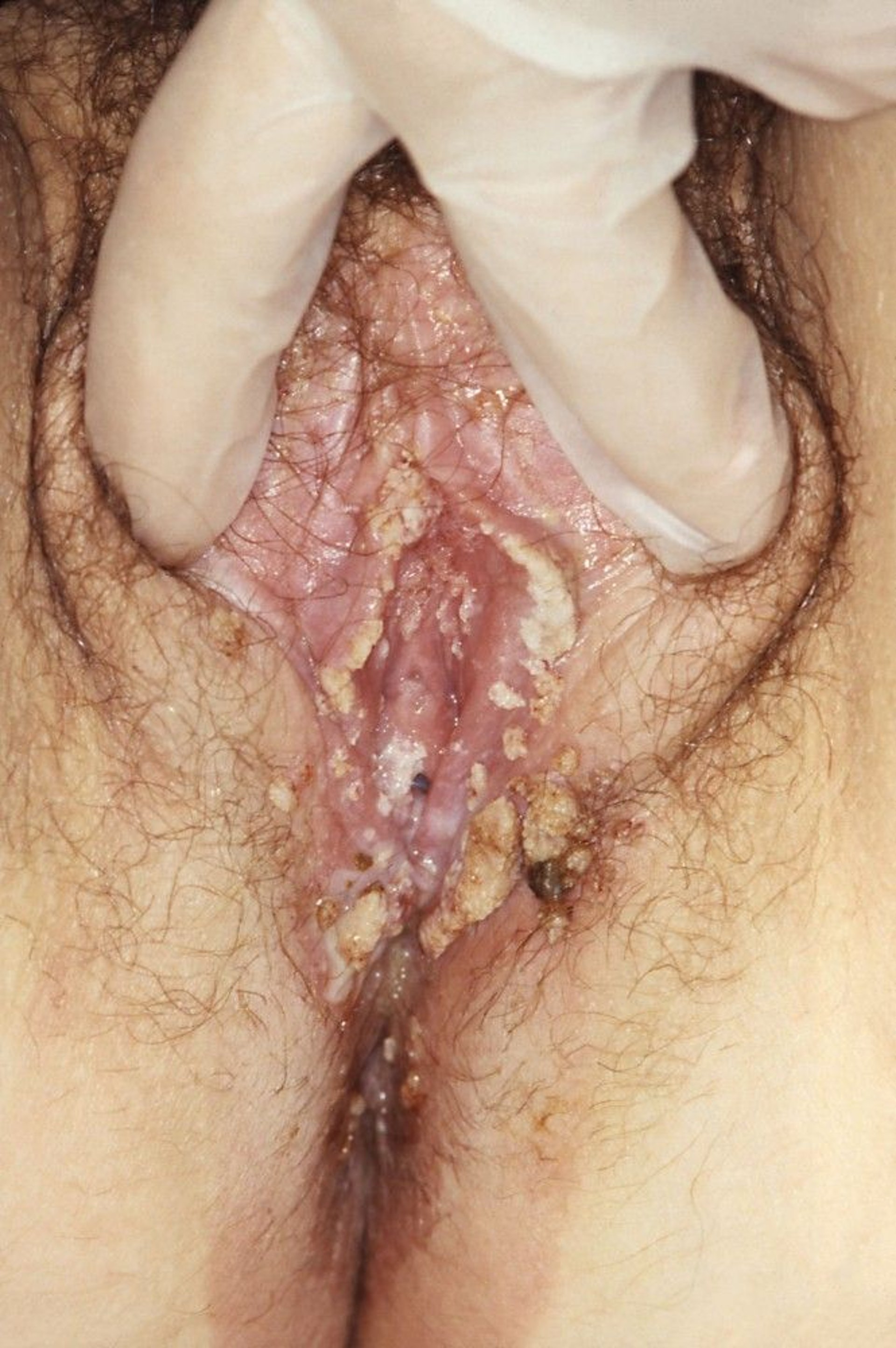
Genital warts (condylomata acuminata) are growths in or around the vagina, penis, or rectum caused by the human papillomavirus, which is sexually transmitted.

  • Some types of human papillomavirus (HPV) cause visible genital warts, and other types cause less visible warts that increase the risk of cancer.
  • Genital warts grow rapidly and sometimes cause burning pain.
  • Doctors identify visible warts based on their appearance, and they examine the cervix and anus to check for less visible warts.
  • Vaccines can prevent most types of HPV infection that can cause cancer.
  • Visible warts can usually be removed with a laser or by freezing (cryotherapy) or surgery, but sometimes drugs are applied to the warts.

In the United States, about 1.4 million people have genital warts, which are caused by HPV. An estimated 24 million people have an HPV infection, and 5.5 million are infected each year. About 50% of women have been infected at least once by age 50. Most infections go away within 1 to 2 years, but some persist. Persistent infection can increase the risk of certain types of cancer.

There are over 70 known types of HPV. Some types cause common skin warts. Other types cause different types of genital infections:

  • External (easily seen) genital warts: These warts are caused by certain types of HPV, especially types 6 and 11. These types are transmitted sexually and infect the genital and rectal areas.
  • Internal (less visible) genital warts: Other HPV types, especially types 16 and 18, infect the genital area but do not cause easily visible warts. They cause tiny flat warts on the cervix or in the anus, which may be visible only with a magnifying instrument called a colposcope. These less visible spots usually cause no symptoms, but the HPV types that cause them increase the risk of developing cervical, bladder, and rectal cancer and therefore should be treated (see Cancers of the Female Reproductive System: Cervical Cancer).

HPV can also be spread during oral sex, causing infections of the mouth and increasing the risk of oral cancer.

Did You Know...
  • Some types of the virus that causes genital warts can also cause cancer.

Symptoms

In men, warts usually occur on the penis, especially under the foreskin in uncircumcised men, or in the urethra. In women, genital warts occur on the vulva, vaginal wall, cervix, and skin around the vaginal area. Genital warts may develop in the area around the anus and in the rectum, especially in people who engage in anal sex. Warts cause no symptoms in many people but cause occasional burning pain in some.

The warts usually appear 1 to 6 months after infection with HPV, beginning as tiny, soft, moist, pink or gray growths. They grow rapidly and become rough, irregular bumps, which sometimes grow out from the skin on narrow stalks. Their rough surfaces make them look like a small cauliflower. Warts often grow in clusters.

Warts may grow more rapidly and spread in pregnant women and in people who have a weakened immune system, such as those who have human immunodeficiency virus (HIV) infection.

Diagnosis

Genital warts usually can be diagnosed based on their appearance. If warts look unusual, bleed, become open sores (ulcerate), or persist after treatment, they should be removed surgically and examined under a microscope to check for cancer.

If women have warts on the cervix, a Papanicolaou (Pap) test is done to rule out other abnormalities (such as cervical cancer—see Cancers of the Female Reproductive System: Cervical Cancer). If genital warts are diagnosed, women should have a Pap test and colposcopy of the vagina and cervix (using a magnifying instrument) twice a year so that any abnormalities can be identified and treated promptly.

Colposcopy is done to check for less visible warts on the cervix or in the anus. A stain may be applied to the area so that warts can be seen more easily. A sample taken from a wart may be analyzed using tests, such as the polymerase chain reaction (PCR). This test produces many copies of a gene, which may enable doctors to identify HPV's unique genetic material (DNA). These tests help confirm the diagnosis and enable doctors to identify the type of HPV.

Prevention

A vaccine for HPV is available that protects against the two types of HPV (types 6 and 11) that cause about 80% of genital warts. This vaccine also protects against the two types of HPV (types 16 and 18) that are believed to cause the majority (about 70%) of cervical cancers. The HPV vaccine has been recommended for girls and women 9 to 26 years old for prevention of initial infection. Three doses are given, preferably at age 11 to 12 years. The vaccine should be administered before the onset of sexual activity, but girls and women who are sexually active should still be vaccinated. The vaccine's role in preventing HPV in boys and men has not been established.

Because of the location of these warts, condoms do not fully protect against infection.

Treatment

If the immune system is healthy, it often eventually controls HPV and eliminates the warts and the virus, even without treatment. HPV infection is gone after 8 months in half of people and lasts longer than 2 years in fewer than 10%. If people with genital warts have a weakened immune system, treatment is required, and the warts often return.

No treatment for external warts is completely satisfactory, and some treatments are uncomfortable and leave scars. External genital warts may be removed with a laser or by freezing (cryotherapy) or surgery. A local or general anesthetic is used.

Alternatively, podophyllinSome Trade Names
PODOFIN
toxin, imiquimodSome Trade Names
ALDARA
, or trichloroacetic acidSome Trade Names
TRI-CHLOR
can be applied directly to the warts. However, this approach requires many applications over weeks to months, may burn the surrounding skin, and is frequently ineffective. After treatment, the area may be painful. ImiquimodSome Trade Names
ALDARA
cream causes less burning but may be less effective. The warts may return after apparently successful treatment.

For warts in the urethra, a viewing tube (endoscope) with surgical attachments may be the most effective way to remove them. It requires a general anesthetic. Or drugs, such as thiotepa inserted into the urethra or the chemotherapy drug 5-fluorouracilSome Trade Names
EFUDEX
injected into the wart, are often effective. Interferon-alpha injections into the wart or into a muscle are somewhat effective, but they must be given several times a week for many weeks and are expensive.

All sex partners should be examined for warts and other STDs and treated, if necessary. Sex partners should also have regular examinations to check for HPV infection.

Last full review/revision October 2008 by J. Allen McCutchan, MD, MSc

Buy the Book

Mobile Versions

Pronunciations

colposcopy

condylomata acuminata

fluorouracil

papilloma

papillomavirus

polymerase chain reaction

urethra

Back to Top

Previous: Chlamydial and Other Infections

Next: Gonorrhea

Audio
Figures
Photographs
Pronunciations
Sidebar
Tables
Videos

Copyright     © 2010-2013 Merck Sharp & Dohme Corp., a subsidiary of Merck & Co., Inc., Whitehouse Station, N.J., U.S.A.    Privacy    Terms of Use