Almost all spiders are venomous. However, the fangs of most species are too short or too fragile to penetrate human skin. Although at least 60 species in the United States have been implicated in biting people, serious injury occurs mainly from only two types of spiders:
The widow (black widow) spider
The brown (brown recluse, fiddleback, or violin) spider

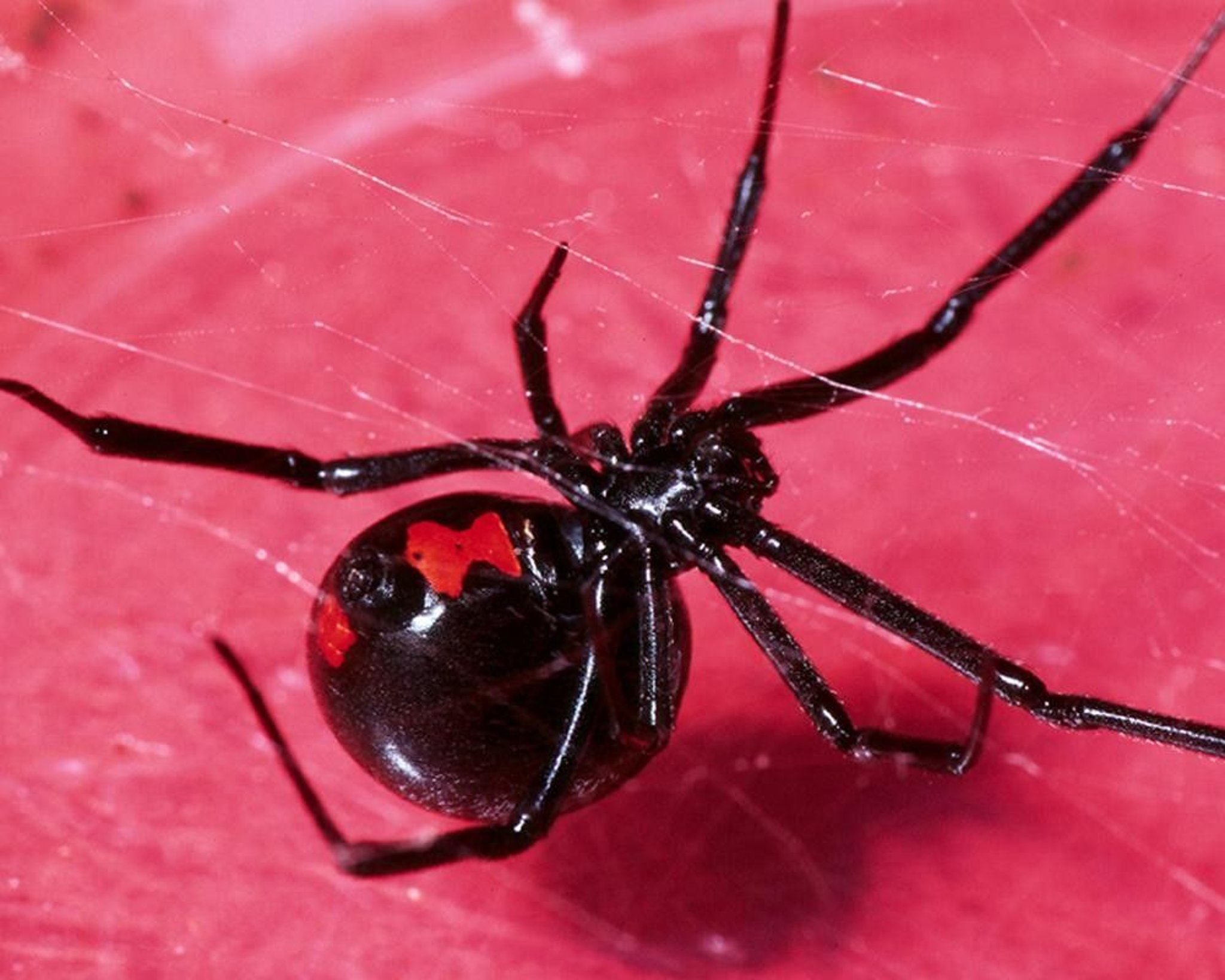
Photo courtesy of Mike Cardwell (Extreme Wildlife Photography, Sacramento, CA).
Brown spiders are present in the Midwest and South Central United States, not in the coastal and Canadian border states, except when imported on clothing or luggage. Widow spiders are present throughout the United States. Although some people consider tarantulas dangerous, their bites do not seriously harm people. Spider bites cause fewer than three deaths a year in the United States, usually in children.

Serious injuries from spider bites can include severe wounds caused by the tissue-destroying venom of brown spiders and bodywide poisoning caused by the nerve-toxic venom of widow spiders.
Wounds suspected of being caused by the brown spider are often caused by other problems, some potentially more serious.
Brown spider bites are treated by caring for the wound.
Widow spider bites are treated by relieving symptoms and sometimes giving antivenom.
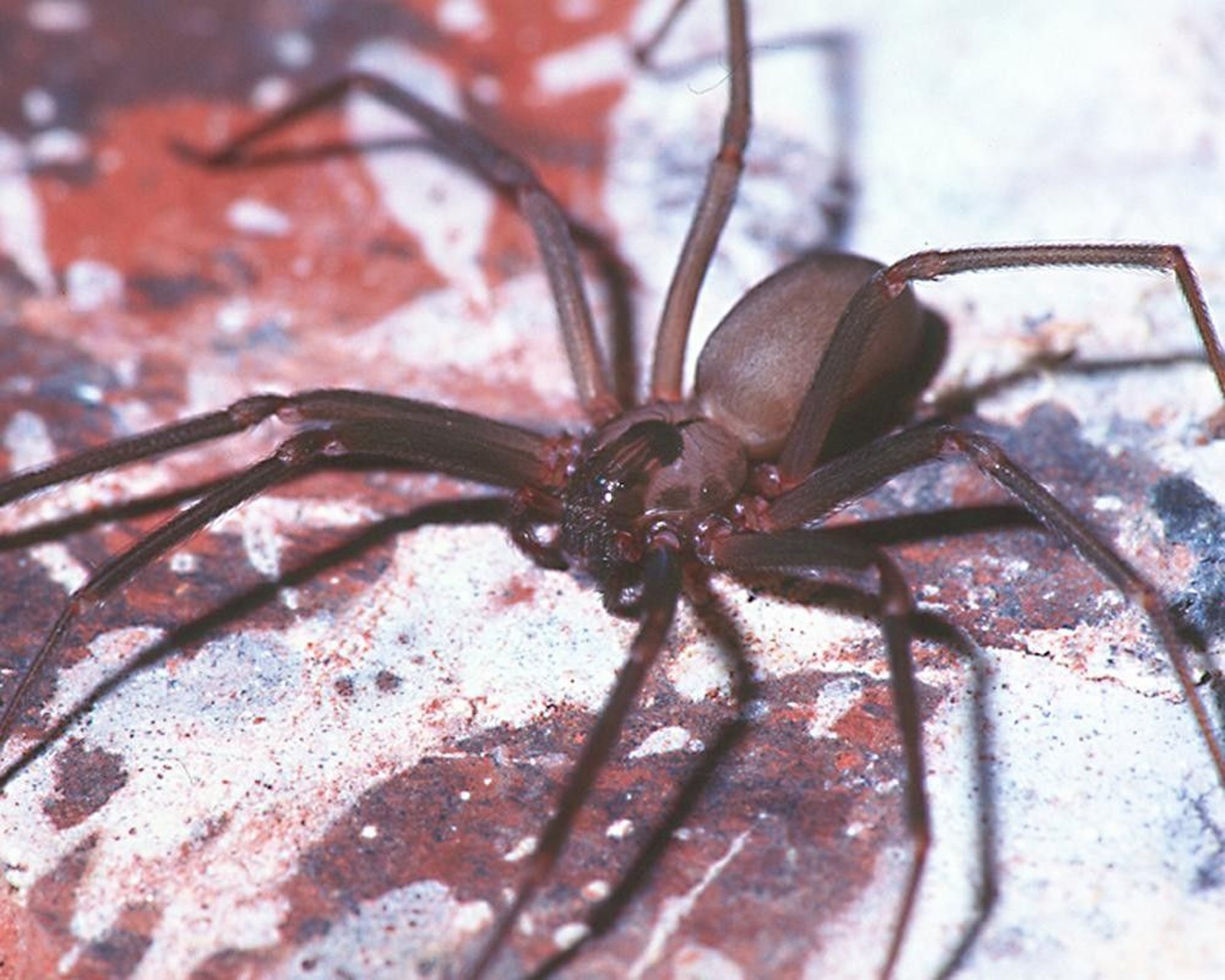
Photo courtesy of Mike Cardwell (Extreme Wildlife Photography, Sacramento, CA).
(See also Introduction to Bites and Stings.)
Symptoms of Spider Bites
The bite of a widow spider usually causes a sharp pain, somewhat like a pinprick, followed by a dull, sometimes numbing, pain in the area around the bite. Cramping pain and muscle stiffness, which may be severe, develop in the abdomen or the shoulders, back, and chest. Other symptoms may include nausea, vomiting, sweating, restlessness, anxiety, headache, drooping and swelling of the eyelids, rash and itching, severe breathing problems, increased saliva production, and weakness.
Did You Know...
|

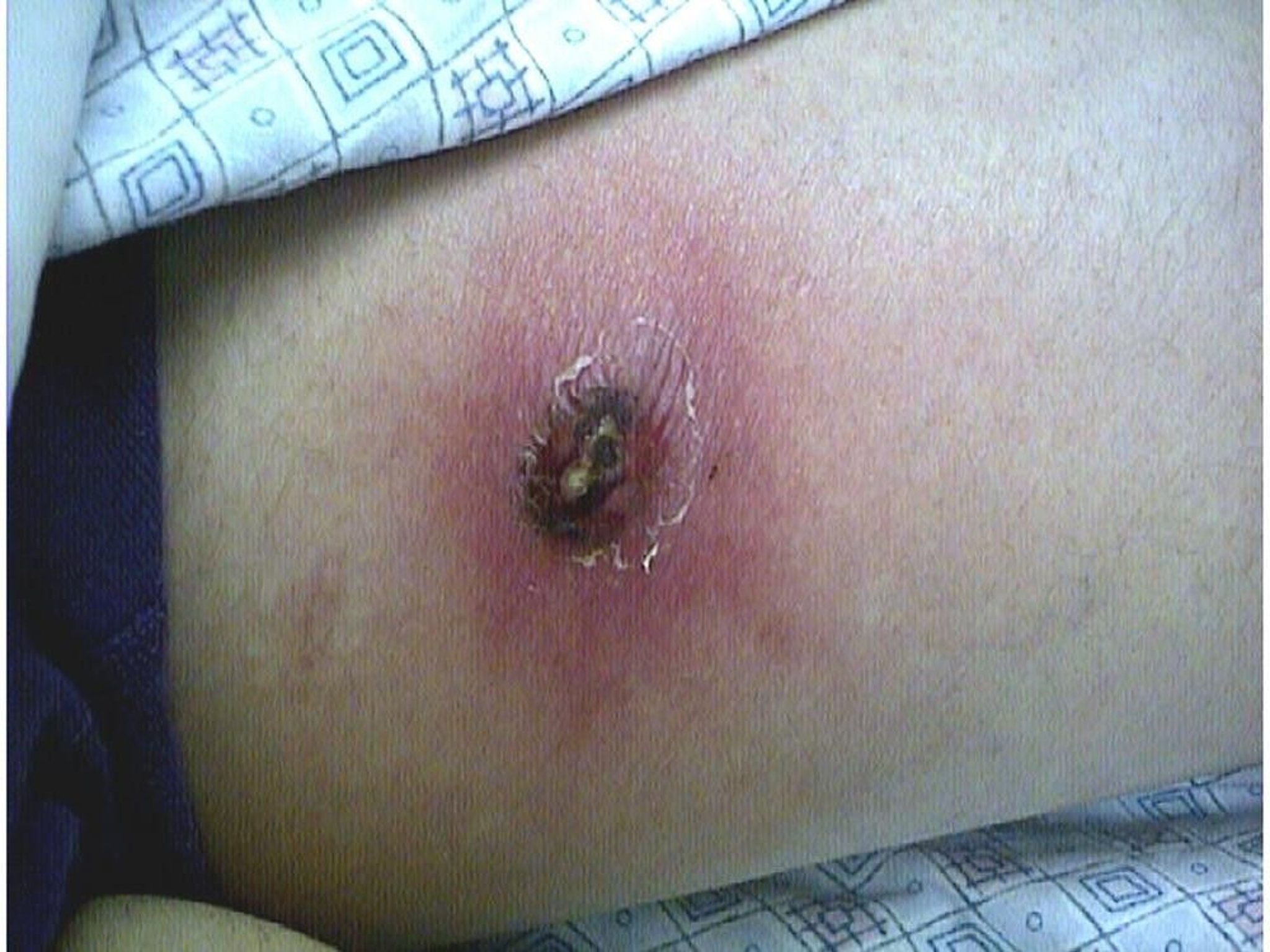
Photo courtesy of Thomas Arnold, MD.
The bite of a brown spider may cause little or no immediate pain, but some pain develops in the area around the bite within about an hour. Pain may be severe and may affect the entire injured area, which may become red and bruised and may itch. The rest of the body may itch as well. A blister forms, surrounded by a bruised area or by a more distinct red area that resembles a bull’s-eye. Then the blister enlarges, fills with blood, and ruptures, forming an open sore (ulcer) followed by a thick black scar (eschar) that may leave a large crater-like scar. Uncommonly, nausea and vomiting, aches, fatigue, chills, sweating, blood disorders, and kidney failure develop.
Diagnosis of Spider Bites
A doctor's evaluation
If possible, identification of the spider
There is no way to identify a particular spider on the basis of its bite mark. Therefore, a specific diagnosis can be made only if the spider can be identified. Widow spiders are recognized by a red or orange hourglass-shaped marking on the abdomen. Brown spiders have a violin-shaped marking on their back. However, these identifying marks can be difficult to discern, and the spider is rarely retrieved intact, so the diagnosis is usually uncertain and based on symptoms. Many people mistake skin infections, some potentially serious (such as methicillin-resistant Staphylococcus aureus [MRSA] infections), or other disorders for spider bites.
Treatment of Spider Bites
Cleaning the wound and applying ice
For widow spider bites, drugs to relieve pain and muscle spasms and often antivenom
For brown spider bites, wound care and sometimes surgical wound repair
First-aid measures for a spider bite include cleaning the wound, applying ice (for example, an ice cube or crushed ice in a plastic bag and wrapped in a thin cloth because ice should not be applied directly on the skin) to the bite to reduce pain, and, if the bite is on an extremity, elevating the wound site.
For a widow spider bite, muscle pain and spasms can be relieved with benzodiazepines (which sedate and may help relax muscles) and opioids (analgesics). Antivenom is given for severe and sometimes for moderate symptoms such as muscle cramping or other bodywide symptoms. Hospitalization is usually required for people younger than 16 or older than 60 and for people with high blood pressure, heart disease, or severe symptoms.
Did You Know...
|
Most brown spider bites