Search
SectionsIndexFirst Aid
  • Blood Disorders
  • Bone, Joint, and Muscle Disorders
  • Brain, Spinal Cord, and Nerve Disorders
  • Cancer
  • Children's Health Issues
  • Digestive Disorders
  • Disorders of Nutrition
  • Drugs
  • Ear, Nose, and Throat Disorders
  • Eye Disorders
  • Fundamentals
  • Heart and Blood Vessel Disorders
  • Hormonal and Metabolic Disorders
  • Immune Disorders
  • Infections
  • Injuries and Poisoning
  • Kidney and Urinary Tract Disorders
  • Liver and Gallbladder Disorders
  • Lung and Airway Disorders
  • Men's Health Issues
  • Mental Health Disorders
  • Mouth and Dental Disorders
  • Older People's Health Issues
  • Skin Disorders
  • Special Subjects
  • Women's Health Issues
ABCDEFGHI
JKLMNOPQR
STUVWXYZ
  • Emergencies
  • Cardiac Arrest
  • Choking
  • Drowning
  • Injuries
  • Altitude Illness
  • Bee Stings
  • Bites, Animal
  • Bites, Human
  • Bites, Snake
  • Burns
  • Electrical Injuries
  • Eye, Blunt Injury to
  • Eye, Chemical Burns of
  • Fractures
  • Frostbite
  • Head Injury
  • Heatstroke
  • Hypoithermia
  • Lightning Injuries
  • Shock
  • Sprains and Strains
  • Wounds
In This Topic
Injuries and Poisoning
First Aid
Soft Tissue Injuries
First-Aid Treatment
Back to Top
Resources
  • About The Merck Manual Home Health Handbook Online Version
  • Anatomical Drawings
  • The One-Page Merck Manual of Health
  • Multimedia
  • Pronunciations
  • Selected Links
  • Weights and Measures
  • Common Medical Tests
  • Drug Names: Generic and Trade
  • Resources for Help and Information
Manuals available online
'/professional/index.html' + bookPageLink
 
'/home/index.html'
These and other Manuals available
in print, online, and as mobile applications.

See more at MerckManuals.com
Sections in Patients & Caregivers
  • Blood Disorders
  • Bone, Joint, and Muscle Disorders
  • Brain, Spinal Cord, and Nerve Disorders
  • Cancer
  • Children's Health Issues
  • Digestive Disorders
  • Disorders of Nutrition
  • Drugs
  • Ear, Nose, and Throat Disorders
  • Eye Disorders
  • Fundamentals
  • Heart and Blood Vessel Disorders
  • Hormonal and Metabolic Disorders
  • Immune Disorders
  • Infections
  • Injuries and Poisoning
  • Kidney and Urinary Tract Disorders
  • Liver and Gallbladder Disorders
  • Lung and Airway Disorders
  • Men's Health Issues
  • Mental Health Disorders
  • Mouth and Dental Disorders
  • Older People's Health Issues
  • Skin Disorders
  • Special Subjects
  • Women's Health Issues
Chapters in Injuries and Poisoning
  • First Aid
  • Burns
  • Fractures
  • Injuries to the Eye
  • Abdominal Injuries
  • Injury to the Urinary Tract
  • Head Injuries
  • Sports Injuries
  • Heat Disorders
  • Cold Injuries
  • Radiation Injury
  • Electrical and Lightning Injuries
  • Drowning
  • Diving and Compressed Air Injuries
  • Motion Sickness
  • Altitude Illness
  • Poisoning
  • Bites and Stings
Topics in First Aid
  • Basic First Aid Supplies
  • Emergency First Aid Priorities
  • Cardiac Arrest
  • Choking
  • Internal Bleeding
  • Wounds
  • Soft Tissue Injuries
  • Severed or Constricted Limbs or Digits
 
  • Merck Manual
  • >
  • Patients & Caregivers
  • >
  • Injuries and Poisoning
  • >
  • First Aid
  • 4
 
Soft Tissue Injuries

Share This

Soft tissue injuries include bumps and bruises (contusions) and small tears of muscles (minor strains) or of ligaments and tendons near joints (minor sprains).

Contusions, mild strains, and mild sprains produce mild to moderate pain and swelling. The swelling can become discolored, turning purple after a day and becoming yellow or brown days later. The person usually can continue using the body part. People with more severe symptoms, such as deformity, an inability to walk or use an injured part, or severe pain, may have a mild strain or sprain. However, they may also have a complete separation of bones that were attached within a joint (dislocation), partial separation of bones that were attached within a joint (subluxation), fracture (see Fractures: Overview of Fractures), severe sprain or strain, or other severe injury. People with severe symptoms usually need medical care to determine the nature of the injury.

First-Aid Treatment

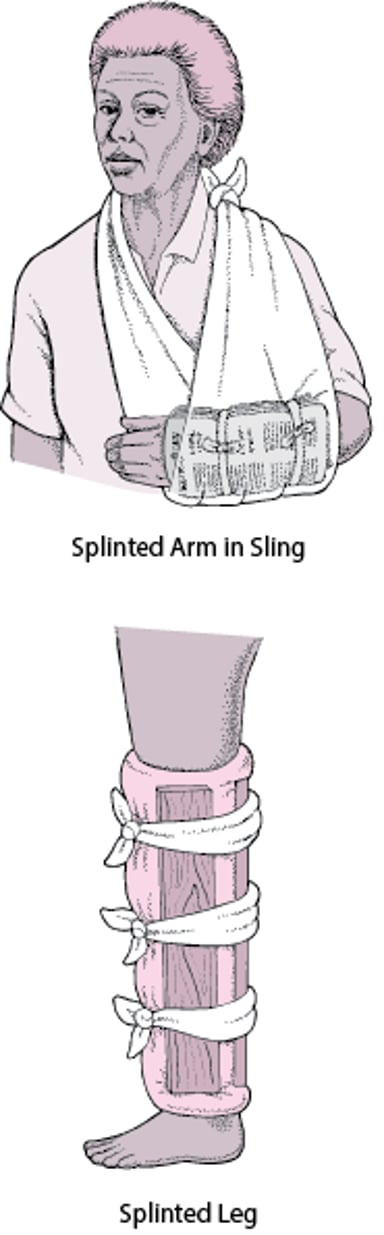
Commonly Used Splints

A splint can be anything that prevents movement of a limb. A splint is used to prevent further damage and limit pain. To be effective, a splint must immobilize the joints above and below the injury.

Splints can be made from readily available objects, such as a magazine or stack of newspapers. But splints usually consist of a rigid, straight object, such as a board, strapped to the limb. A sling may be used with a splint to support the forearm when an arm, a wrist, or a collarbone is injured.

Contusions, mild strains, and mild sprains can be treated at home with rest, ice, compression, and elevation (RICE—see Sports Injuries: Initial Treatment), which speeds recovery and decreases pain and swelling. If a fracture, severe strain, severe sprain, subluxation (partial dislocation), or dislocation is a possibility, a splint should be applied until medical help is available.

Last full review/revision August 2007 by Justin L. Kaplan, MD

Buy the Book

Mobile Versions

Back to Top

Previous: Wounds

Next: Severed or Constricted Limbs or Digits

Audio
Figures
Photographs
Pronunciations
Sidebar
Tables
Videos

Copyright     © 2010-2013 Merck Sharp & Dohme Corp., a subsidiary of Merck & Co., Inc., Whitehouse Station, N.J., U.S.A.    Privacy    Terms of Use