Search
SectionsIndexFirst Aid
  • Blood Disorders
  • Bone, Joint, and Muscle Disorders
  • Brain, Spinal Cord, and Nerve Disorders
  • Cancer
  • Children's Health Issues
  • Digestive Disorders
  • Disorders of Nutrition
  • Drugs
  • Ear, Nose, and Throat Disorders
  • Eye Disorders
  • Fundamentals
  • Heart and Blood Vessel Disorders
  • Hormonal and Metabolic Disorders
  • Immune Disorders
  • Infections
  • Injuries and Poisoning
  • Kidney and Urinary Tract Disorders
  • Liver and Gallbladder Disorders
  • Lung and Airway Disorders
  • Men's Health Issues
  • Mental Health Disorders
  • Mouth and Dental Disorders
  • Older People's Health Issues
  • Skin Disorders
  • Special Subjects
  • Women's Health Issues
ABCDEFGHI
JKLMNOPQR
STUVWXYZ
  • Emergencies
  • Cardiac Arrest
  • Choking
  • Drowning
  • Injuries
  • Altitude Illness
  • Bee Stings
  • Bites, Animal
  • Bites, Human
  • Bites, Snake
  • Burns
  • Electrical Injuries
  • Eye, Blunt Injury to
  • Eye, Chemical Burns of
  • Fractures
  • Frostbite
  • Head Injury
  • Heatstroke
  • Hypoithermia
  • Lightning Injuries
  • Shock
  • Sprains and Strains
  • Wounds
In This Topic
Liver and Gallbladder Disorders
Biology of the Liver and Gallbladder
Gallbladder and Biliary Tract
Back to Top
Resources
  • About The Merck Manual Home Health Handbook Online Version
  • Anatomical Drawings
  • The One-Page Merck Manual of Health
  • Multimedia
  • Pronunciations
  • Selected Links
  • Weights and Measures
  • Common Medical Tests
  • Drug Names: Generic and Trade
  • Resources for Help and Information
Manuals available online
'/professional/index.html' + bookPageLink
 
'/home/index.html'
These and other Manuals available
in print, online, and as mobile applications.

See more at MerckManuals.com
Sections in Patients & Caregivers
  • Blood Disorders
  • Bone, Joint, and Muscle Disorders
  • Brain, Spinal Cord, and Nerve Disorders
  • Cancer
  • Children's Health Issues
  • Digestive Disorders
  • Disorders of Nutrition
  • Drugs
  • Ear, Nose, and Throat Disorders
  • Eye Disorders
  • Fundamentals
  • Heart and Blood Vessel Disorders
  • Hormonal and Metabolic Disorders
  • Immune Disorders
  • Infections
  • Injuries and Poisoning
  • Kidney and Urinary Tract Disorders
  • Liver and Gallbladder Disorders
  • Lung and Airway Disorders
  • Men's Health Issues
  • Mental Health Disorders
  • Mouth and Dental Disorders
  • Older People's Health Issues
  • Skin Disorders
  • Special Subjects
  • Women's Health Issues
Chapters in Liver and Gallbladder Disorders
  • Biology of the Liver and Gallbladder
  • Diagnosis of Liver, Gallbladder, and Biliary Disorders
  • Manifestations of Liver Disease
  • Drugs and the Liver
  • Cirrhosis and Related Disorders
  • Hepatitis
  • Blood Vessel Disorders of the Liver
  • Tumors of the Liver
  • Gallbladder and Bile Duct Disorders
    Topics in Biology of the Liver and Gallbladder
    • Overview of the Liver and Gallbladder
    • Liver
    • Gallbladder and Biliary Tract
    • Effects of Aging on the Liver
     
    • Merck Manual
    • >
    • Patients & Caregivers
    • >
    • Liver and Gallbladder Disorders
    • >
    • Biology of the Liver and Gallbladder
    • 4
     
    Gallbladder and Biliary Tract

    Share This

    The gallbladder is a small, pear-shaped, muscular storage sac that holds bile. Bile is a greenish yellow, thick, sticky fluid. It consists of bile salts, electrolytes (dissolved charged particles, such as sodium and bicarbonate), bile pigments, cholesterol, and other fats (lipids). Bile has two main functions: aiding in digestion and eliminating certain waste products (mainly hemoglobin and excess cholesterol) from the body. Bile salts aid in digestion by making cholesterol, fats, and fat-soluble vitamins easier to absorb from the intestine. The main pigment in bile, bilirubin, is a waste product that is formed from hemoglobin (the protein that carries oxygen in the blood) and is excreted in bile. Hemoglobin is released when old or damaged red blood cells are destroyed.
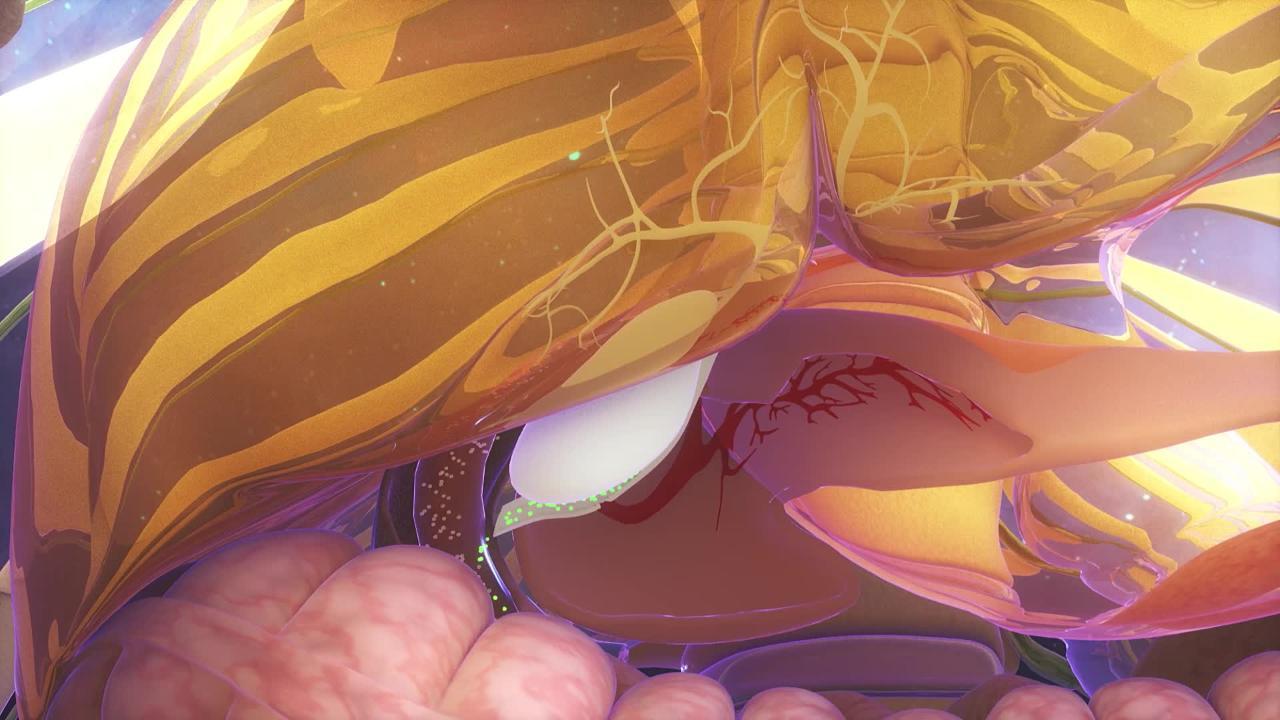
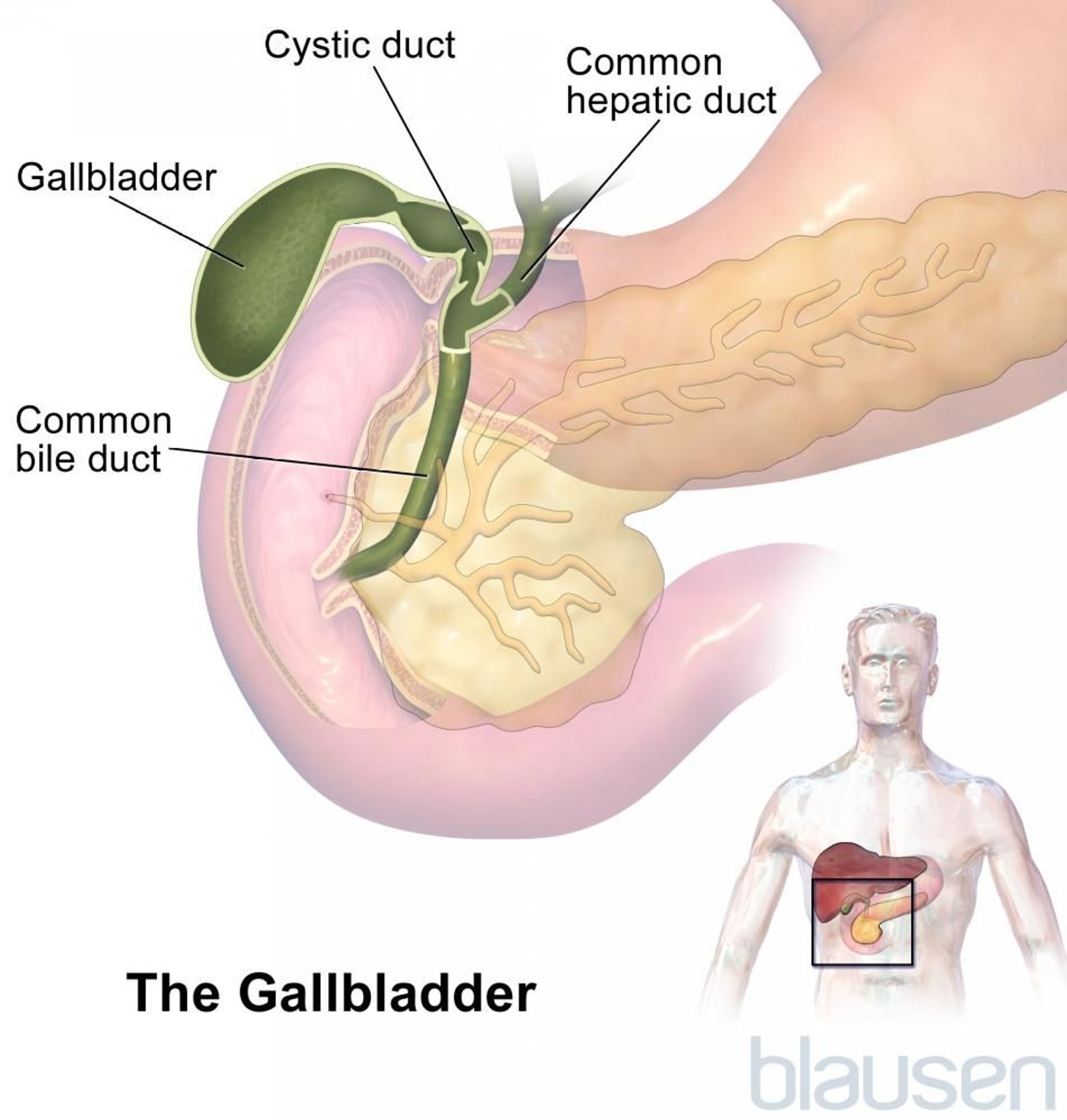
    Bile flows out of the liver through the left and right hepatic ducts, which come together to form the common hepatic duct. This duct then joins with a duct connected to the gallbladder, called the cystic duct, to form the common bile duct. The common bile duct enters the small intestine at the sphincter of Oddi (a ring-shaped muscle), located a few inches below the stomach.

    About half the bile secreted between meals flows directly through the common bile duct into the small intestine. The rest of the bile is diverted through the cystic duct into the gallbladder to be stored. In the gallbladder, up to 90% of the water in bile is absorbed into the bloodstream, making the remaining bile very concentrated. When food enters the small intestine, a series of hormonal and nerve signals triggers the gallbladder to contract and the sphincter of Oddi to relax and open. Bile then flows from the gallbladder into the small intestine to mix with food contents and perform its digestive functions.

    After bile enters and passes down the small intestine, about 90% of bile salts are reabsorbed into the bloodstream through the wall of the lower small intestine. The liver extracts these bile salts from the blood and resecretes them back into the bile. Bile salts go through this cycle about 10 to 12 times a day. Each time, small amounts of bile salts escape absorption and reach the large intestine, where they are broken down by bacteria. Some bile salts are reabsorbed in the large intestine. The rest are excreted in the stool.
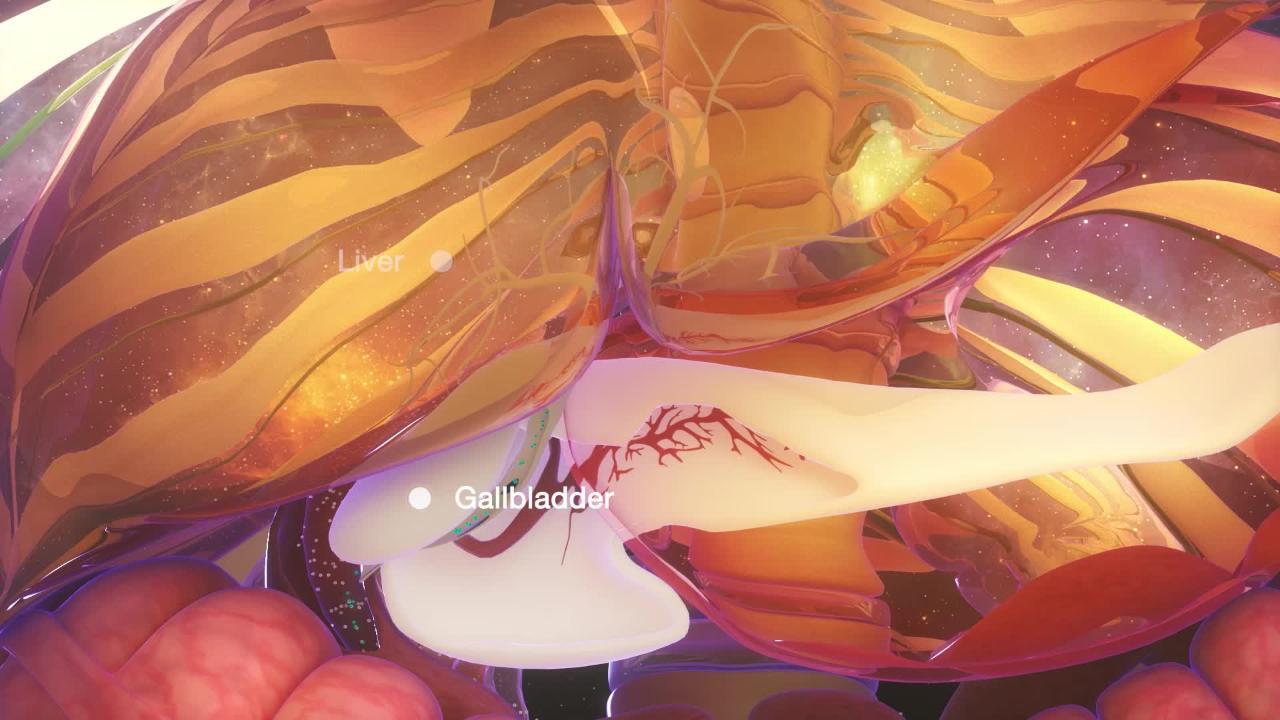
    The gallbladder, although useful, is not necessary. If the gallbladder is removed (for example, in a person with cholecystitis), bile can move directly from the liver to the small intestine.

    Hard masses consisting mainly of cholesterol (gallstones) may form in the gallbladder or bile ducts. Gallstones usually cause no symptoms. However, gallstones may block the flow of bile from the gallbladder, causing pain (biliary colic) or inflammation. They may also migrate from the gallbladder to the bile duct, where they can block the normal flow of bile to the intestine, causing jaundice (a yellowish discoloration of the skin and whites of the eyes) in addition to pain and inflammation. The flow of bile can also be blocked by tumors. Other causes of blocked flow are less common.

    Last full review/revision July 2006 by Sidney Cohen, MD

    Buy the Book

    Mobile Versions

    Pronunciations

    biliary

    bilirubin

    cholecystitis

    electrolytes

    hemoglobin

    sphincter of Oddi

    Back to Top

    Previous: Liver

    Next: Effects of Aging on the Liver

    Audio
    Figures
    Photographs
    Pronunciations
    Sidebar
    Tables
    Videos

    Copyright     © 2010-2013 Merck Sharp & Dohme Corp., a subsidiary of Merck & Co., Inc., Whitehouse Station, N.J., U.S.A.    Privacy    Terms of Use