Search
SectionsIndexFirst Aid
  • Blood Disorders
  • Bone, Joint, and Muscle Disorders
  • Brain, Spinal Cord, and Nerve Disorders
  • Cancer
  • Children's Health Issues
  • Digestive Disorders
  • Disorders of Nutrition
  • Drugs
  • Ear, Nose, and Throat Disorders
  • Eye Disorders
  • Fundamentals
  • Heart and Blood Vessel Disorders
  • Hormonal and Metabolic Disorders
  • Immune Disorders
  • Infections
  • Injuries and Poisoning
  • Kidney and Urinary Tract Disorders
  • Liver and Gallbladder Disorders
  • Lung and Airway Disorders
  • Men's Health Issues
  • Mental Health Disorders
  • Mouth and Dental Disorders
  • Older People's Health Issues
  • Skin Disorders
  • Special Subjects
  • Women's Health Issues
ABCDEFGHI
JKLMNOPQR
STUVWXYZ
  • Emergencies
  • Cardiac Arrest
  • Choking
  • Drowning
  • Injuries
  • Altitude Illness
  • Bee Stings
  • Bites, Animal
  • Bites, Human
  • Bites, Snake
  • Burns
  • Electrical Injuries
  • Eye, Blunt Injury to
  • Eye, Chemical Burns of
  • Fractures
  • Frostbite
  • Head Injury
  • Heatstroke
  • Hypoithermia
  • Lightning Injuries
  • Shock
  • Sprains and Strains
  • Wounds
In This Topic
Liver and Gallbladder Disorders
Biology of the Liver and Gallbladder
Liver
Functions of the Liver
Blood Supply of the Liver
Back to Top
Resources
  • About The Merck Manual Home Health Handbook Online Version
  • Anatomical Drawings
  • The One-Page Merck Manual of Health
  • Multimedia
  • Pronunciations
  • Selected Links
  • Weights and Measures
  • Common Medical Tests
  • Drug Names: Generic and Trade
  • Resources for Help and Information
Manuals available online
'/professional/index.html' + bookPageLink
 
'/home/index.html'
These and other Manuals available
in print, online, and as mobile applications.

See more at MerckManuals.com
Sections in Patients & Caregivers
  • Blood Disorders
  • Bone, Joint, and Muscle Disorders
  • Brain, Spinal Cord, and Nerve Disorders
  • Cancer
  • Children's Health Issues
  • Digestive Disorders
  • Disorders of Nutrition
  • Drugs
  • Ear, Nose, and Throat Disorders
  • Eye Disorders
  • Fundamentals
  • Heart and Blood Vessel Disorders
  • Hormonal and Metabolic Disorders
  • Immune Disorders
  • Infections
  • Injuries and Poisoning
  • Kidney and Urinary Tract Disorders
  • Liver and Gallbladder Disorders
  • Lung and Airway Disorders
  • Men's Health Issues
  • Mental Health Disorders
  • Mouth and Dental Disorders
  • Older People's Health Issues
  • Skin Disorders
  • Special Subjects
  • Women's Health Issues
Chapters in Liver and Gallbladder Disorders
  • Biology of the Liver and Gallbladder
  • Diagnosis of Liver, Gallbladder, and Biliary Disorders
  • Manifestations of Liver Disease
  • Drugs and the Liver
  • Cirrhosis and Related Disorders
  • Hepatitis
  • Blood Vessel Disorders of the Liver
  • Tumors of the Liver
  • Gallbladder and Bile Duct Disorders
    Topics in Biology of the Liver and Gallbladder
    • Overview of the Liver and Gallbladder
    • Liver
    • Gallbladder and Biliary Tract
    • Effects of Aging on the Liver
     
    • Merck Manual
    • >
    • Patients & Caregivers
    • >
    • Liver and Gallbladder Disorders
    • >
    • Biology of the Liver and Gallbladder
    • 4
     
    Liver

    Share This

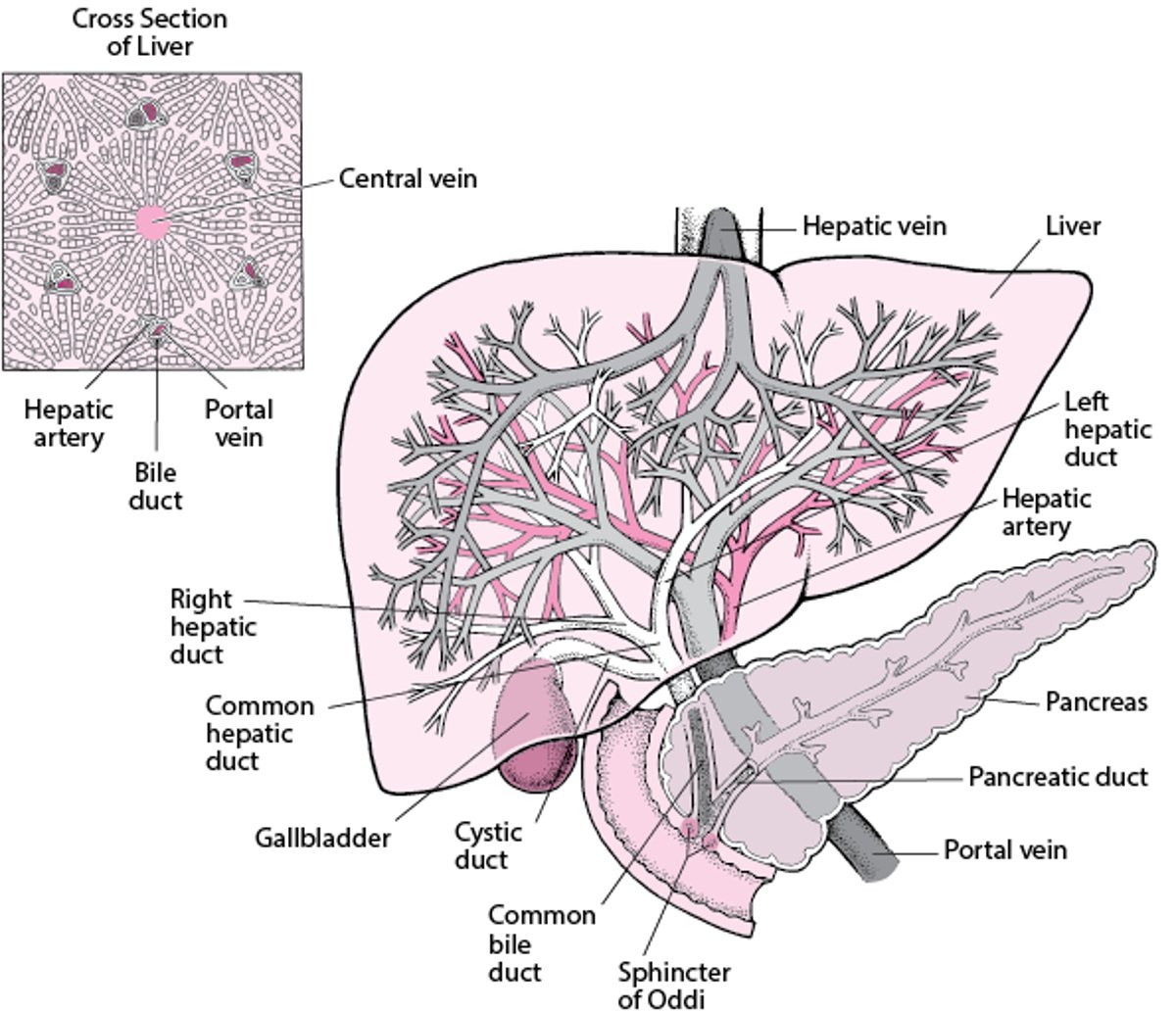
    The wedge-shaped liver is the largest—and, in some ways, the most complex—organ in the body. It serves as the body's chemical factory, performing many vital functions, from regulating the levels of chemicals in the body to producing substances that make blood clot (clotting factors) during bleeding.

    Functions of the Liver

    The liver manufactures about half of the body's cholesterol. The rest comes from food. Most of the cholesterol made by the liver is used to make bile, a greenish yellow, thick, sticky fluid that aids in digestion. Cholesterol is also needed to make certain hormones, including estrogen, testosteroneSome Trade Names
    ANDRODERM DELATESTRYL
    , and the adrenal hormones, and is a vital component of every cell membrane. The liver manufactures other substances, including proteins needed by the body for its functions. For example, clotting factors are proteins needed to stop bleeding. Albumin is a protein needed to maintain fluid pressure in the bloodstream.

    Sugars are stored in the liver as glycogen and then broken down and released into the bloodstream as glucose when needed—for example, during sleep when a person spends many hours without eating and sugar levels in the blood become too low.

    The liver also breaks down harmful or toxic substances (toxins) absorbed from the intestine or manufactured elsewhere in the body and then excretes them as harmless by-products into the bile or blood. By-products excreted into bile enter the intestine, then leave the body in stool. By-products excreted into blood are filtered out by the kidneys, then leave the body in urine. The liver also chemically alters (metabolizes) drugs (see Administration and Kinetics of Drugs: Drug Metabolism), often making them inactive or easier to excrete from the body.

    Blood Supply of the Liver

    The liver receives blood directly from the intestines, as well as from the heart, as do all other organs. Blood from the intestines contains nearly everything absorbed by the intestines, including nutrients, drugs, and sometimes toxins. This blood flows through tiny capillaries in the intestinal wall into the portal vein, which enters the liver. The blood then flows through a latticework of tiny channels inside the liver, where digested nutrients and toxins are processed.

    The hepatic artery brings blood to the liver from the heart. This blood carries oxygen to the liver tissues as well as cholesterol and other substances for processing. Blood from the intestines and heart then mix together in the liver tissues and flow back to the heart through the hepatic vein.

    Last full review/revision July 2006 by Sidney Cohen, MD

    Buy the Book

    Mobile Versions

    Back to Top

    Previous: Overview of the Liver and Gallbladder

    Next: Gallbladder and Biliary Tract

    Audio
    Figures
    Photographs
    Pronunciations
    Sidebar
    Tables
    Videos

    Copyright     © 2010-2013 Merck Sharp & Dohme Corp., a subsidiary of Merck & Co., Inc., Whitehouse Station, N.J., U.S.A.    Privacy    Terms of Use