THE MERCK MANUAL HOME HEALTH HANDBOOK
Print Topic

Sections

Chapters

Gynecologic Cysts

-
-

Cysts are closed sacs that are separate from the tissue around them. They often contain fluid or semisolid material. Cysts that commonly occur in the genital organs include Bartholin's gland cysts, endometriomas, inclusion and epidermal cysts, and Skene's duct cysts.

Bartholin's Gland Cysts

Bartholin's gland cysts are mucus-filled sacs that can form when the glands located near the opening to the vagina are blocked.

  • Cysts are usually painless, but if large, they can interfere with sitting, walking, and sexual intercourse.
  • Cysts may become infected, forming a painful abscess.
  • Doctors can usually see or feel the cysts during a pelvic examination.
  • Doctors may create a permanent opening from the cyst to the outside or may surgically remove the cyst.

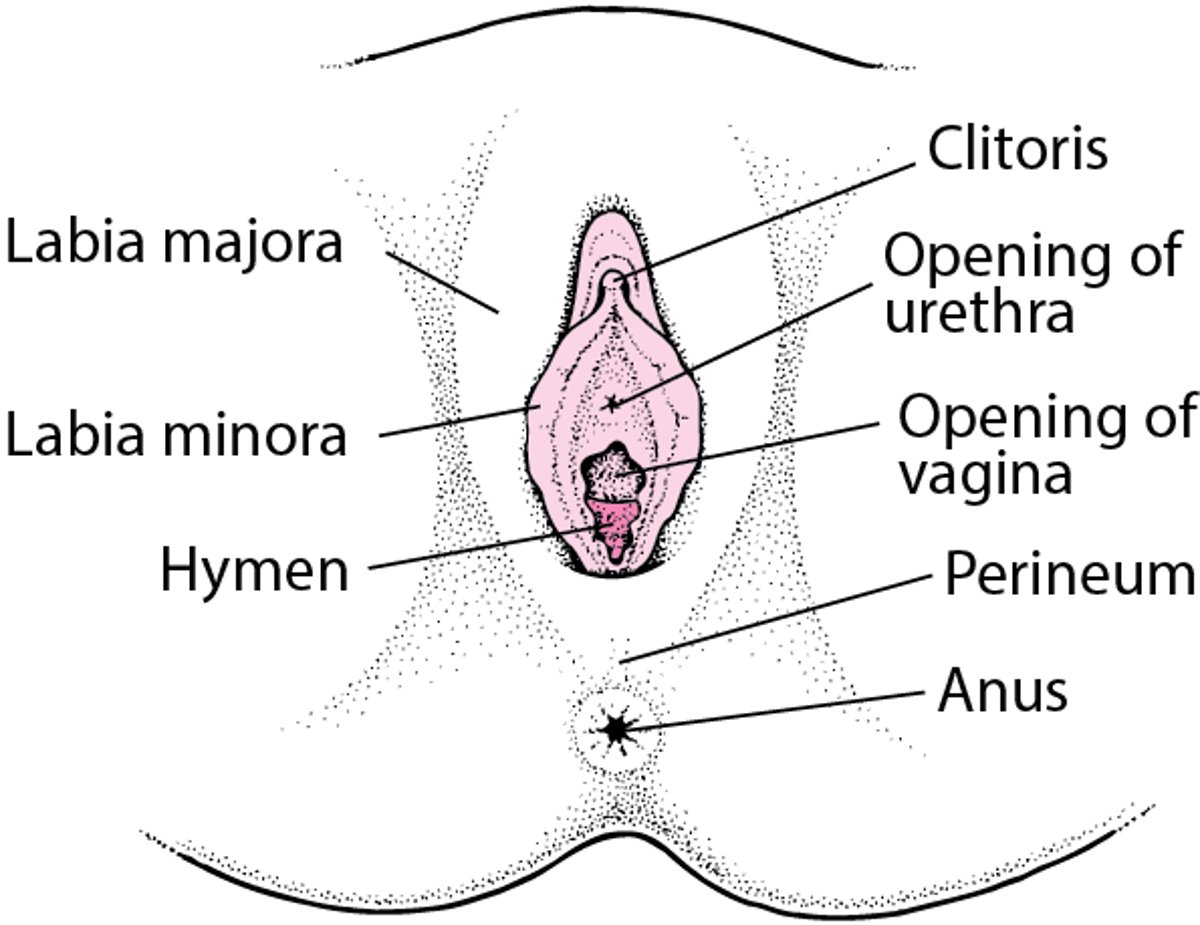
Bartholin's glands are very small, round glands that are located in the vulva on either side of the opening to the vagina. Because they are located deep under the skin, they cannot normally be felt. These glands may help provide fluids for lubrication during sexual intercourse.

If the duct to the gland is blocked, the gland becomes filled with mucus and enlarges. The result is a cyst. These cysts develop in about 2% of women, usually those in their 20s. As women age, they are less likely to have cysts and abscesses.

Typically, what causes the blockage is unknown. Rarely, cysts result from a sexually transmitted disease, such as gonorrhea.

Most cysts do not cause any symptoms. But if cysts become large, they can cause discomfort during sitting, walking, or sexual intercourse. Women may notice a painless lump near the opening of the vagina, making the vulva look lopsided.

Abscesses cause severe pain and sometimes fever. They are tender to the touch. The skin over them appears red. Women may have a discharge from the vagina, which is usually unrelated to the abscess.

A woman should see a doctor in the following circumstances:

  • The cyst continues to enlarge or persists after several days of immersing the area in hot water (in a tub or sitz bath).
  • The cyst is painful (often indicating an abscess).
  • A fever develops.
  • The cyst interferes with walking or sitting.
  • She is over 40.

If a cyst is large enough for a woman to notice it or for symptoms to develop, doctors can usually see or feel the cyst during a pelvic examination. Doctors can usually tell whether it is infected by its appearance. If a discharge is present, doctors may send a sample to be tested for other infections.

Because cancer of the vulva sometimes resembles a cyst, doctors may remove the cyst to examine under a microscope (biopsy). A biopsy is usually done if the cyst is irregular or bumpy or if the woman is over 40.

If a cyst causes little or no pain, women may treat it themselves. They can use a sitz bath or soak in a few inches of warm water in a tub. Soaks should last 10 to 15 minutes and be done 3 or 4 times a day. Sometimes cysts disappear after a few days of such treatment. If the treatment is ineffective, women should see a doctor.

In women under 40, only cysts that cause symptoms require treatment. Draining the cysts is usually ineffective because they commonly recur. Thus, surgery may be done to make a permanent opening from the gland's duct to the surface of the vulva. Thus, if fluids refill the cyst, they can drain out. After a local anesthetic is injected to numb the site, one of the following procedures can be done:

  • Placement of a catheter: A small incision is made in the cyst so that a small balloon-tipped tube (catheter) can be inserted into the cyst. Once in place, the balloon is inflated, and the catheter is left there for 4 to 6 weeks, so that a permanent opening can form. The catheter is inserted and removed in the doctor's office. Women can do their normal activities while the catheter is in place, although sexual intercourse may be uncomfortable.
  • Marsupialization: Doctors make a small cut in the cyst and stitch the inside edges of the cyst to the surface of the vulva. This procedure is done in an outpatient operating room. Sometimes general anesthesia is needed.

After these procedures, women may have a discharge for a few weeks. Usually, wearing panty liners is all that is needed. Taking sitz baths several times a day may help relieve any discomfort and help speed healing.

If cysts recur, they may be surgically removed. This procedure is done in an operating room.

In women over 40, all cysts must be treated. Treatment usually occurs during diagnosis, when doctors obtain a sample to check for cancer. Treatment involves surgically removing or marsupializing the cyst.

For an abscess, antibiotics are given by mouth for 7 to 10 days. A catheter can be inserted to drain the abscess or marsupialization may be done initially to treat the abscess or later to prevent the cyst from refilling.

Regardless of treatment, cysts sometimes recur.

Endometriomas of the Vulva

Vulvar endometriomas are rare, painful, blood-filled cysts that develop when tissue from the lining of the uterus (endometrial tissue) appears in the vulva.

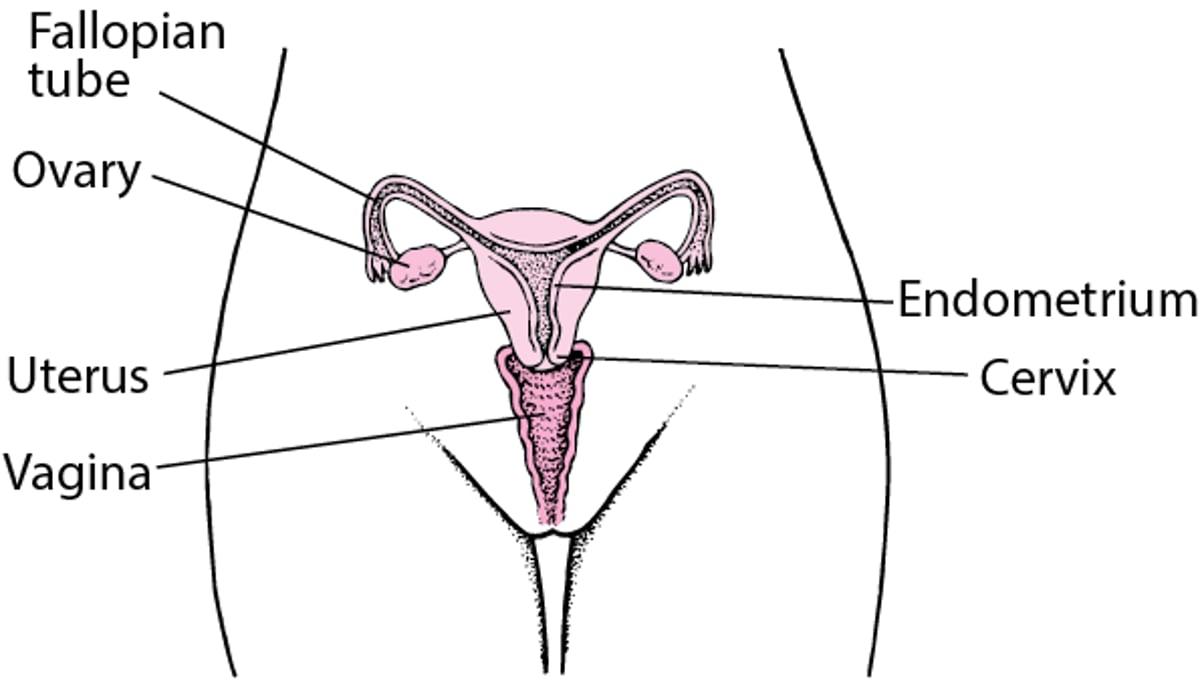
For unknown reasons, patches of tissue from the lining of the uterus (endometrial tissue) sometimes appear outside the uterus. This disorder is called endometriosis (see Endometriosis). Endometriosis rarely occurs in the vulva. It is more common in other locations, such as the ovaries. Sometimes the endometrial tissue forms a cyst (endometrioma). Endometriomas often develop at the site of a previous operation, such as an episiotomy (an incision to widen the opening of the vagina to help with delivery of a baby).

Endometriomas may be painful, particularly during intercourse. Endometriomas respond to hormones just as normal endometrial tissue does. Thus, they can enlarge and cause pain, particularly before and during menstrual periods. Endometriomas are tender and may look blue. They can rupture, causing severe pain.

During a pelvic examination, doctors can usually see or feel endometriomas that cause symptoms.

Endometriomas in the vulva are surgically removed. This procedure is usually done in an operating room but may be done in a doctor's office. A local anesthetic is used. Doctors do a biopsy of the removed tissue to make sure it is not a melanoma, which can occur on the vulva and vagina.

Inclusion and Epidermal Cysts of the Vulva

Cysts that develop on the vulva include inclusion cysts and epidermal cysts. Vulvar inclusion cysts are small sacs that contain tissue from the surface of the vulva. Vulvar epidermal cysts are similar but contain secretions from oil-producing (sebaceous) glands near hair follicles.

Inclusion cysts are the most common cysts of the vulva. The vulva is the area that contains the external genital organs (see Biology of the Female Reproductive System: Female External Genital Organs). Inclusion cysts may also develop in the vagina. They may result from injuries, such as tears caused during delivery of a baby. When the vulva is injured, tissue from its surface (epithelial tissue) may be trapped under the surface. Some inclusion cysts develop on their own.

Epidermal cysts may develop when the ducts to sebaceous glands become blocked. Secretions from these glands then accumulate under the skin's surface.

Both of these cysts eventually enlarge and sometimes become infected.

Cysts that do not become infected usually cause no symptoms, but they occasionally cause irritation. They are white or yellow and usually less than ½ inch (about 1 centimeter) in diameter. Infected cysts may be red and tender and make sexual intercourse painful.

Doctors can usually see or feel cysts during a pelvic examination.

If cysts cause symptoms, they are removed after a local anesthetic is injected to numb the site.

Skene's Duct Cyst

Skene's duct cysts develop near the opening of the urethra when the ducts to the glands are blocked.

  • Large cysts may cause pain during sexual intercourse or problems urinating.
  • Cysts that cause symptoms can be removed.

Skene's glands, also called periurethral or paraurethral glands, are located around the opening of the urethra. The tissue that surrounds them includes part of the clitoris. The glands may be involved in sexual stimulation and lubrication for sexual intercourse.

Cysts are uncommon. They form if the duct to the gland is blocked, usually because the gland is infected. These cysts occur mainly in adults. If cysts become infected, they may form an abscess.

Most cysts are less than 1/2 inch (about 1 centimeter) in diameter and do not cause any symptoms. Some cysts are larger and cause pain during sexual intercourse. Sometimes large cysts block the flow of urine through the urethra. In such cases, the first symptoms may be a hesitant start when urinating, dribbling at the end of urination, and retention of urine. Or a urinary tract infection may develop, causing a frequent, urgent need to urinate and painful urination.

Abscesses are tender, painful, and swollen. The skin over the ducts appears red. Most women do not have a fever.

During a pelvic examination, doctors can usually feel cysts or abscesses if they are large enough to cause symptoms. However, ultrasonography may be done or a flexible viewing tube to view the bladder (cystoscopy) may be used to confirm the diagnosis.

If cysts cause symptoms, they are removed, usually in a doctor's office or in an operating room. In the office, a local anesthetic is usually used.

For abscesses, antibiotics are given by mouth for 7 to 10 days. Then, the cyst is removed. Or doctors may make a small cut in the cyst and stitch the edges of the cyst to the surface of the vulva (marsupialization) so that it can drain.

Last full review/revision December 2008 by S. Gene McNeeley, MD

Copyright     © 2010-2013 Merck Sharp & Dohme Corp., a subsidiary of Merck & Co., Inc., Whitehouse Station, N.J., U.S.A.    Privacy    Terms of Use