Search
SectionsIndexFirst Aid
  • Blood Disorders
  • Bone, Joint, and Muscle Disorders
  • Brain, Spinal Cord, and Nerve Disorders
  • Cancer
  • Children's Health Issues
  • Digestive Disorders
  • Disorders of Nutrition
  • Drugs
  • Ear, Nose, and Throat Disorders
  • Eye Disorders
  • Fundamentals
  • Heart and Blood Vessel Disorders
  • Hormonal and Metabolic Disorders
  • Immune Disorders
  • Infections
  • Injuries and Poisoning
  • Kidney and Urinary Tract Disorders
  • Liver and Gallbladder Disorders
  • Lung and Airway Disorders
  • Men's Health Issues
  • Mental Health Disorders
  • Mouth and Dental Disorders
  • Older People's Health Issues
  • Skin Disorders
  • Special Subjects
  • Women's Health Issues
ABCDEFGHI
JKLMNOPQR
STUVWXYZ
  • Emergencies
  • Cardiac Arrest
  • Choking
  • Drowning
  • Injuries
  • Altitude Illness
  • Bee Stings
  • Bites, Animal
  • Bites, Human
  • Bites, Snake
  • Burns
  • Electrical Injuries
  • Eye, Blunt Injury to
  • Eye, Chemical Burns of
  • Fractures
  • Frostbite
  • Head Injury
  • Heatstroke
  • Hypoithermia
  • Lightning Injuries
  • Shock
  • Sprains and Strains
  • Wounds
In This Topic
Skin Disorders
Nail Disorders
Ingrown Toenail
Back to Top
Resources
  • About The Merck Manual Home Health Handbook Online Version
  • Anatomical Drawings
  • The One-Page Merck Manual of Health
  • Multimedia
  • Pronunciations
  • Selected Links
  • Weights and Measures
  • Common Medical Tests
  • Drug Names: Generic and Trade
  • Resources for Help and Information
Manuals available online
'/professional/index.html' + bookPageLink
 
'/home/index.html'
These and other Manuals available
in print, online, and as mobile applications.

See more at MerckManuals.com
Sections in Patients & Caregivers
  • Blood Disorders
  • Bone, Joint, and Muscle Disorders
  • Brain, Spinal Cord, and Nerve Disorders
  • Cancer
  • Children's Health Issues
  • Digestive Disorders
  • Disorders of Nutrition
  • Drugs
  • Ear, Nose, and Throat Disorders
  • Eye Disorders
  • Fundamentals
  • Heart and Blood Vessel Disorders
  • Hormonal and Metabolic Disorders
  • Immune Disorders
  • Infections
  • Injuries and Poisoning
  • Kidney and Urinary Tract Disorders
  • Liver and Gallbladder Disorders
  • Lung and Airway Disorders
  • Men's Health Issues
  • Mental Health Disorders
  • Mouth and Dental Disorders
  • Older People's Health Issues
  • Skin Disorders
  • Special Subjects
  • Women's Health Issues
Chapters in Skin Disorders
  • Biology of the Skin
  • Diagnosis and Treatment of Skin Disorders
  • Itching and Noninfectious Rashes
  • Psoriasis and Scaling Disorders
  • Acne
  • Pressure Sores
  • Sweating Disorders
  • Hair Disorders
  • Pigment Disorders
  • Blistering Diseases
  • Parasitic Skin Infections
  • Bacterial Skin Infections
  • Fungal Skin Infections
  • Viral Skin Infections
  • Sunlight and Skin Damage
  • Noncancerous Skin Growths
  • Skin Cancers
  • Nail Disorders
Topics in Nail Disorders
  • Overview of Nail Disorders
  • Deformities and Discoloration of the Nails
  • Fingernail and Toenail Infections
  • Ingrown Toenail
  • Fingernail and Toenail Trauma
  • Tumors of the Nails
     
    • Merck Manual
    • >
    • Patients & Caregivers
    • >
    • Skin Disorders
    • >
    • Nail Disorders
    • 4
     
    Ingrown Toenail

    Share This

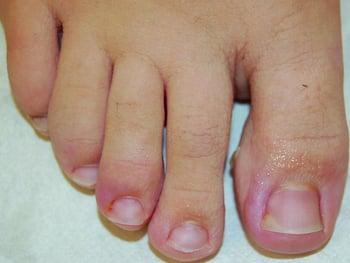
    An ingrown toenail is a condition in which the edges of the nail grow into the surrounding skin.

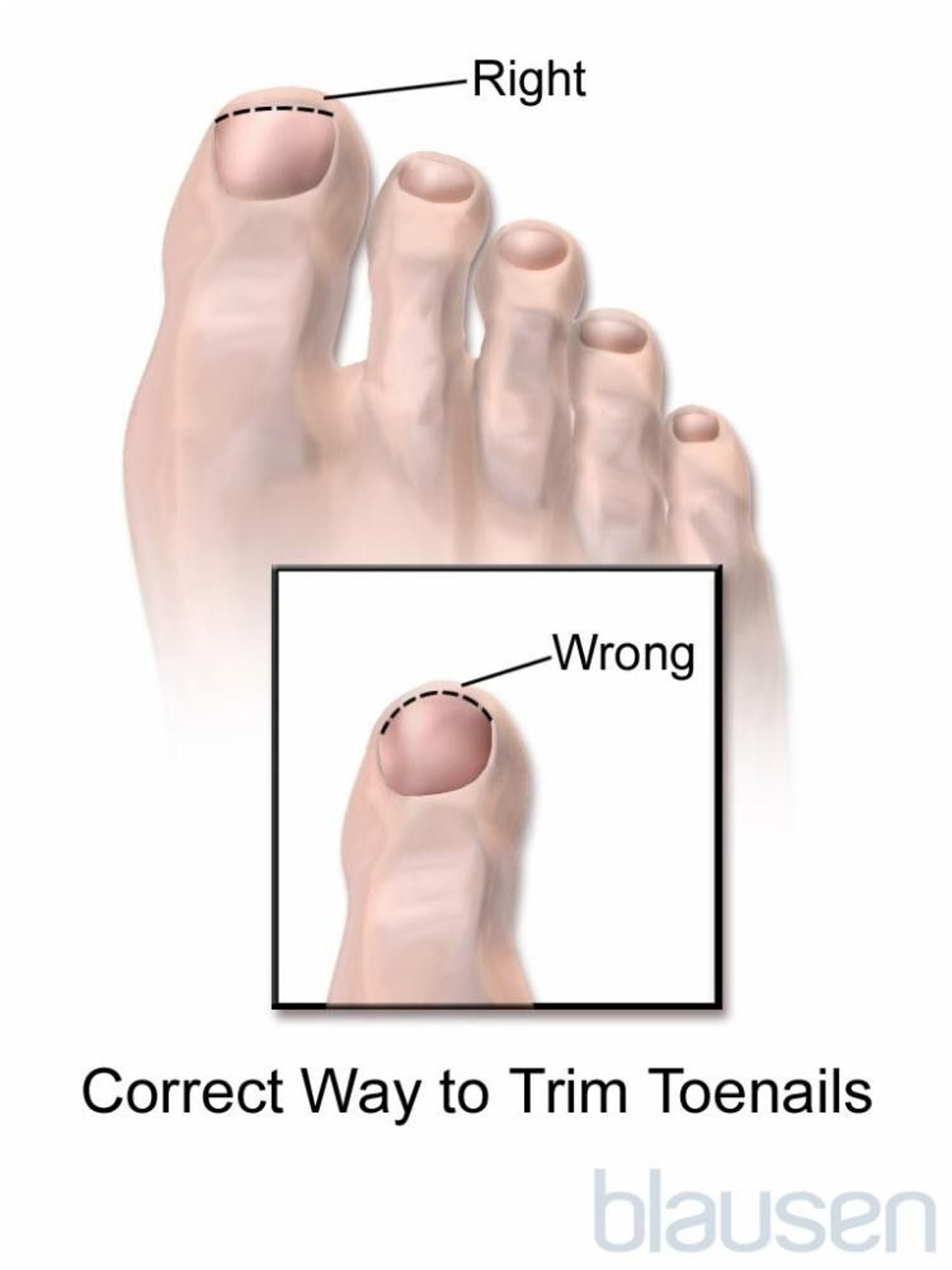
    An ingrown nail can result when a deformed toenail grows improperly into the skin or when the skin around the nail grows abnormally fast and engulfs part of the nail. Wearing narrow, ill-fitting shoes and trimming the nail into a curve with short edges rather than straight across can cause or worsen ingrown toenails.

    Ingrown nails may produce no symptoms at first but eventually may become painful, especially when pressure is applied to the ingrown area. The area is usually red and may be warm. If not treated, the area is prone to infection. Once infected, the area becomes more painful, red, and swollen. Pus may accumulate under the skin next to the nail (an infection of the cuticle called paronychia) and drain (see Nail Disorders: Paronychia).

    For mildly ingrown toenails, the doctor can gently lift the edge of the nail out from under the surrounding skin and place sterile cotton under the nail until the swelling goes away. If an ingrown nail requires further attention, the doctor usually numbs the area with a local anesthetic (such as lidocaineSome Trade Names
    XYLOCAINE
    ), then cuts away and removes the ingrown section of nail. The inflammation can then subside, and the ingrown nail usually does not recur.

    Last full review/revision August 2007 by Wingfield E. Rehmus, MD, MPH

    Buy the Book

    Mobile Versions

    Pronunciations

    paronychia

    Back to Top

    Previous: Fingernail and Toenail Infections

    Next: Fingernail and Toenail Trauma

    Audio
    Figures
    Photographs
    Pronunciations
    Sidebar
    Tables
    Videos

    Copyright     © 2010-2013 Merck Sharp & Dohme Corp., a subsidiary of Merck & Co., Inc., Whitehouse Station, N.J., U.S.A.    Privacy    Terms of Use