Vitiligo is a loss of melanocytes that causes patches of skin to turn white.
Patches of whitened skin are present on various parts of the body.
Doctors usually base the diagnosis on the appearance of the skin.
Corticosteroid creams, other drugs, or phototherapy plus light-sensitizing drugs may help repigment the skin, or, if needed, skin grafts may be used.
(See also Overview of Skin Pigment.)
Vitiligo affects up to 2% of people.
The cause of vitiligo is unknown, but it is a disorder of skin pigmentation that may involve an attack by the immune system on the cells that produce the skin pigment melanin (melanocytes). Vitiligo tends to run in families, or people may spontaneously develop it. Vitiligo may occur with certain other diseases. Vitiligo is associated with autoimmune disorders (when the body attacks its own tissues), and thyroid disease is the most common one. It is most strongly associated with an overactive thyroid (hyperthyroidism, particularly when caused by Graves disease) and an underactive thyroid (hypothyroidism, particularly when caused by Hashimoto thyroiditis). People with diabetes, Addison disease, and pernicious anemia also are somewhat more likely to develop vitiligo. However, the relationship between these disorders and vitiligo is unclear.

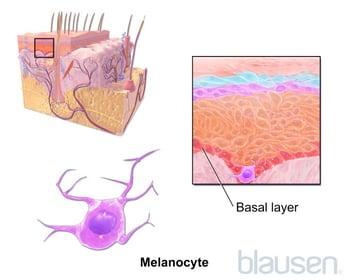
Occasionally, vitiligo occurs after physical injury to the skin, for example, as a response to a chemical burn or sunburn. People may also notice vitiligo is triggered by an episode of emotional stress.
Immunotherapy can also trigger vitiligo (for example, for melanoma).
Symptoms of Vitiligo
In some people, one or two well-defined patches of vitiligo appear. In other people, patches appear over a large part of the body. Rarely, vitiligo occurs over most of the skin surface. The changes are most striking in people with darker skin. Commonly affected areas are the face, fingers and toes, wrists, elbows, knees, hands, shins, ankles, armpits, anus and genital area, navel, and nipples. The affected skin is extremely prone to sunburn. The areas of skin affected by vitiligo also produce white hair because melanocytes are lost from the hair follicles.
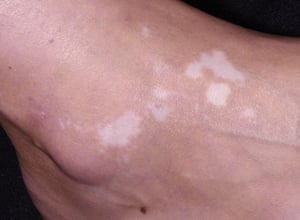
Image provided by Thomas Habif, MD.
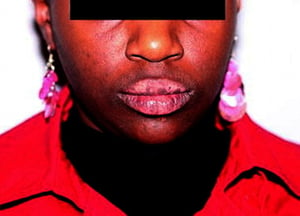
© Springer Science+Business Media

© Springer Science+Business Media
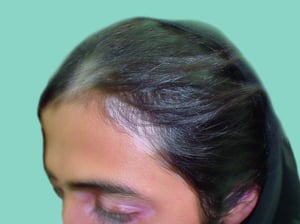
© Springer Science+Business Media

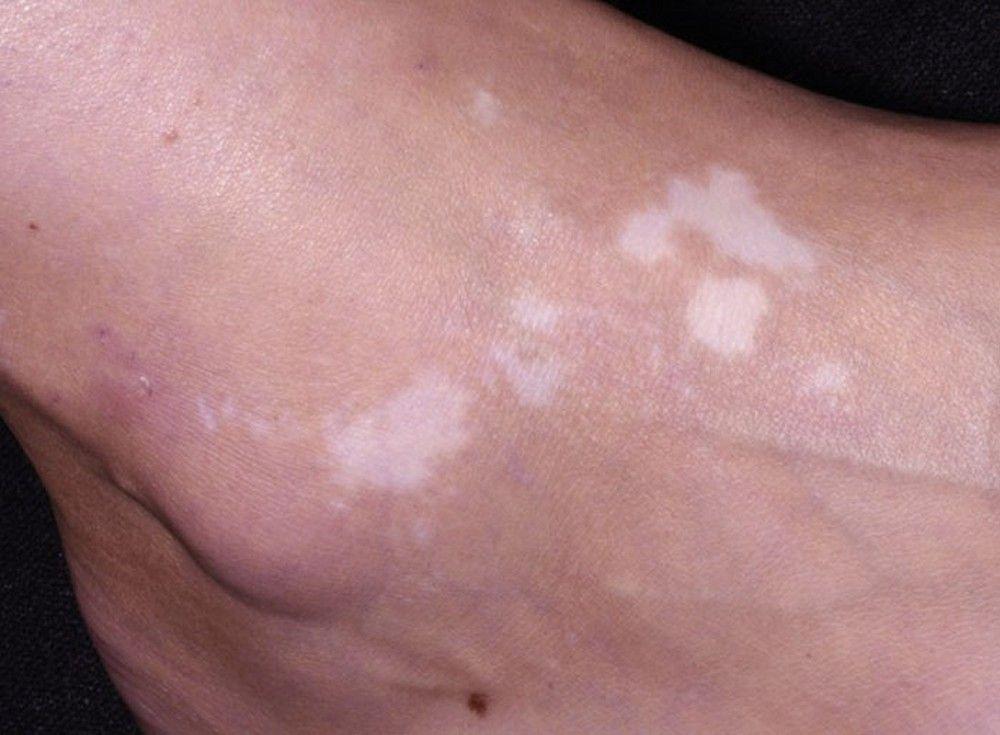
Image provided by Thomas Habif, MD.

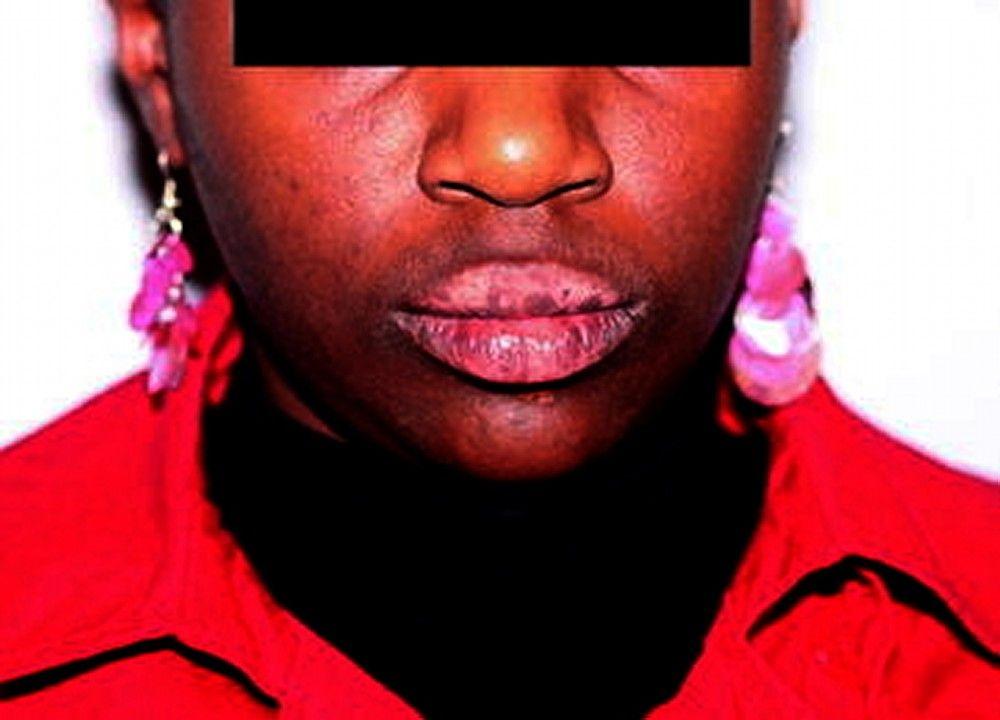
© Springer Science+Business Media


© Springer Science+Business Media

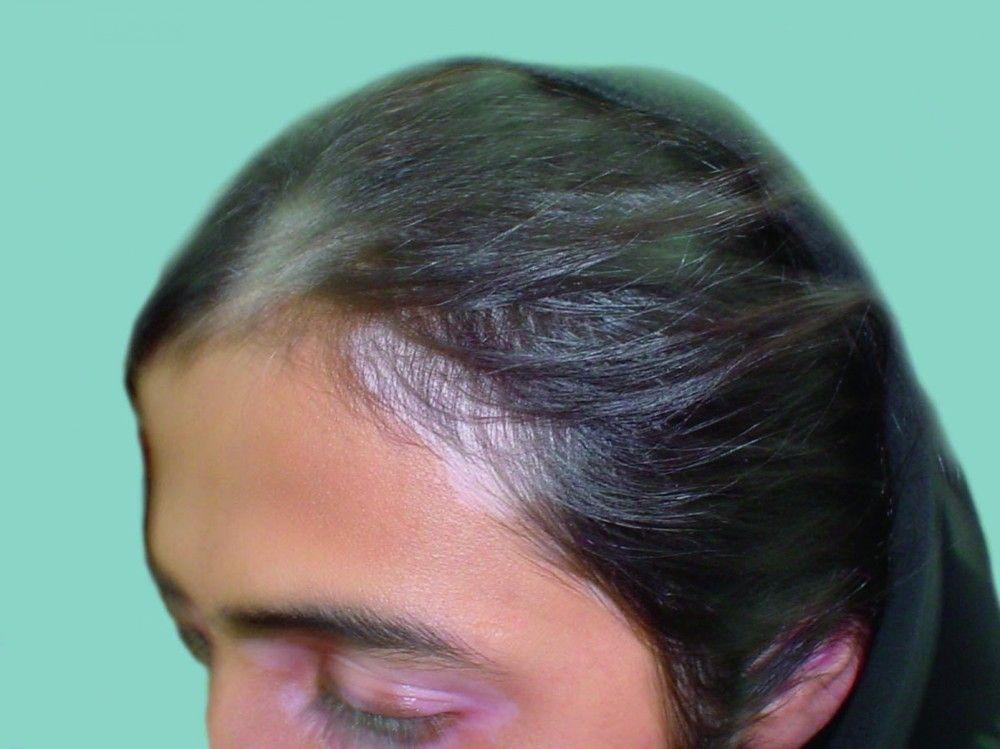
© Springer Science+Business Media
Diagnosis of Vitiligo
A doctor's evaluation
Vitiligo is recognized by its typical appearance. A Wood light examination is often done to help distinguish vitiligo from other causes of lightened skin. Other tests, including skin biopsies, are rarely necessary.

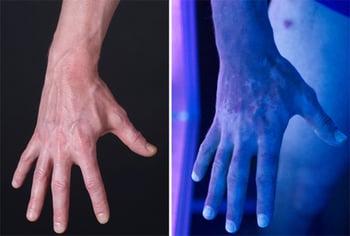
Treatment of Vitiligo
Phototherapy and psoralens
Surgery
Bleaching unaffected skin
No cure is known for vitiligo, and the disorder can be challenging to manage. However, skin color may return spontaneously. Treatment may be helpful. All affected areas of skin are at risk of severe sunburn and should be protected from the sun with clothing and sunscreen. Long-term sun exposure can increase the risk of skin cancer.
Topical therapy
Phototherapy and psoralens
Because many people still have a few melanocytes in the patches of vitiligo, exposure to ultraviolet (UV) light in a doctor’s office (phototherapy) restimulates pigment production in more than half of them ( see Phototherapy). In particular, psoralens (drugs that make the skin more sensitive to light) combined with UVA light (PUVA) or narrowband UVB light treatment without psoralens can be given. However, phototherapy takes months to years to be effective and may need to be continued indefinitely. It can also lead to skin cancer. Doctors also use lasers on some people who have small patches that do not respond to corticosteroid creams.
Surgery
Areas that do not respond to phototherapy may be treated with various skin-grafting techniques and even transplantation of melanocytes grown from unaffected areas of the person’s skin. Tattooing is especially useful for areas where it is difficult to restimulate pigment production (such as the nipples, lips, and fingertips).