Pityriasis rosea is a disease that causes the formation of many small patches of scaly, rose-colored or tan-colored patches on the skin.
Pityriasis rosea may be caused by a viral infection.
The most common symptoms are itching and an initial large, tan-colored or rose-colored circular patch that is followed by multiple patches that appear on the torso.
The diagnosis is based on symptoms.
This disease usually resolves with no treatment, and itching that is not severe may be alleviated with artificial or natural sunlight.
The cause of pityriasis rosea is not certain, but an infection with human herpesvirus type 6, 7, or 8 may be involved. However, the disorder is not thought to be contagious.
Pityriasis rosea most commonly occurs in people between the ages of 10 and 35 years. Pityriasis rosea affects women more often than men.
Women who develop pityriasis rosea during pregnancy (especially during the first 15 weeks of gestation) may have a premature or stillborn baby.
Symptoms of Pityriasis Rosea
Pityriasis rosea at first causes a single rose-colored or tan-colored round patch of skin about 1 to 4 inches (2 to 10 centimeters) in diameter. Doctors call this first patch a herald or mother patch. This patch usually develops on the torso.
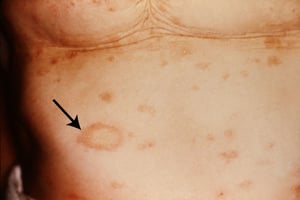
Image courtesy of the Public Health Image Library of the Centers for Disease Control and Prevention.
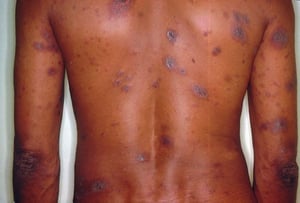
Image courtesy of Karen McKoy, MD.
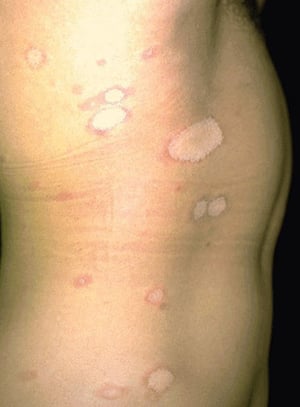
Photo provided by Thomas Habif, MD.
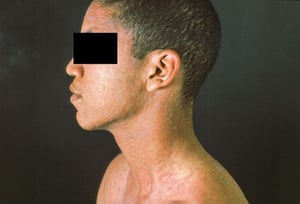
Image courtesy of Karen McKoy, MD.

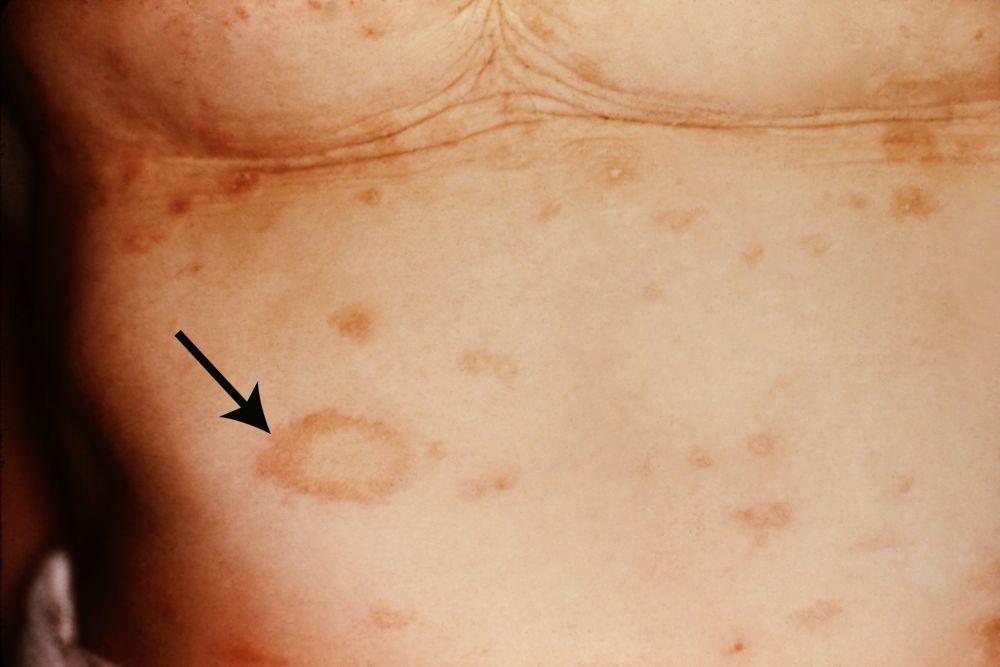
Image courtesy of the Public Health Image Library of the Centers for Disease Control and Prevention.

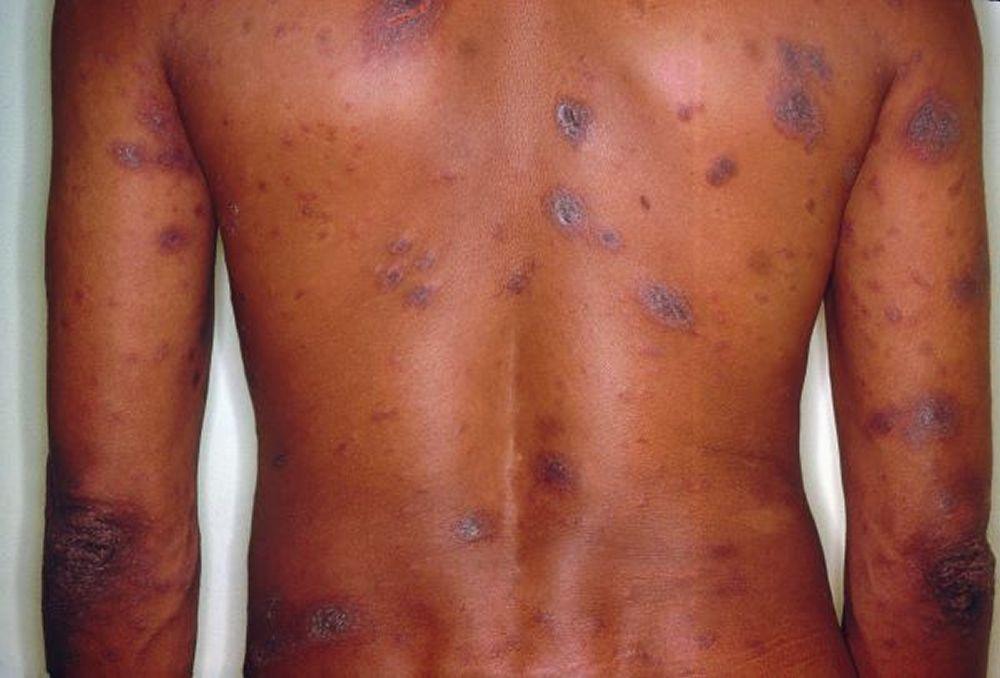
Image courtesy of Karen McKoy, MD.

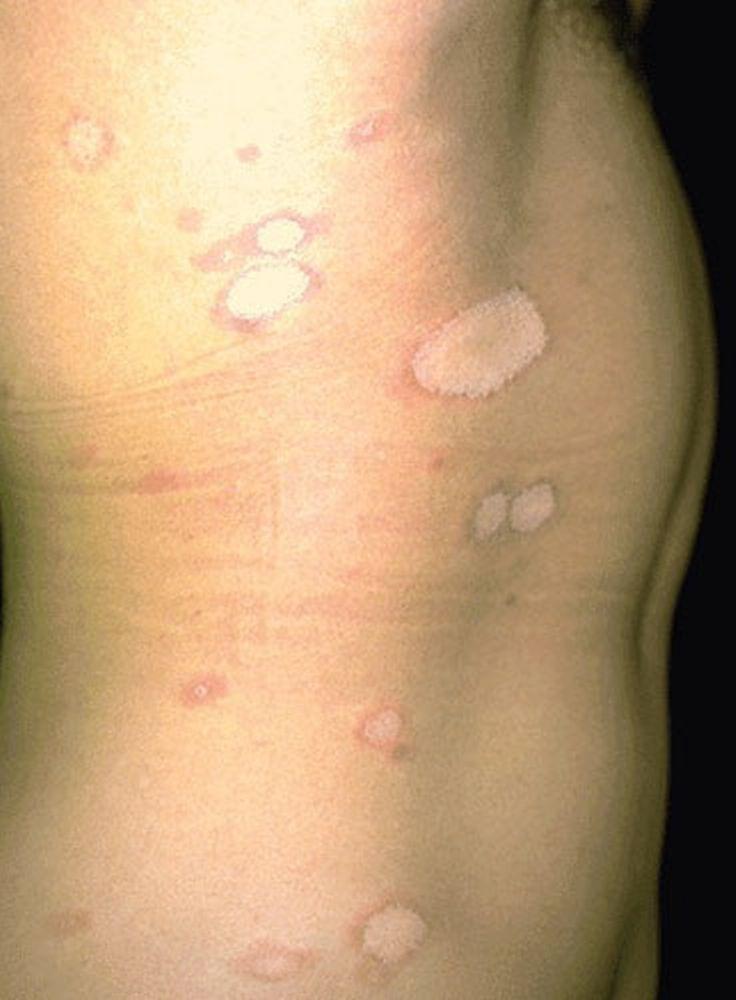
Photo provided by Thomas Habif, MD.

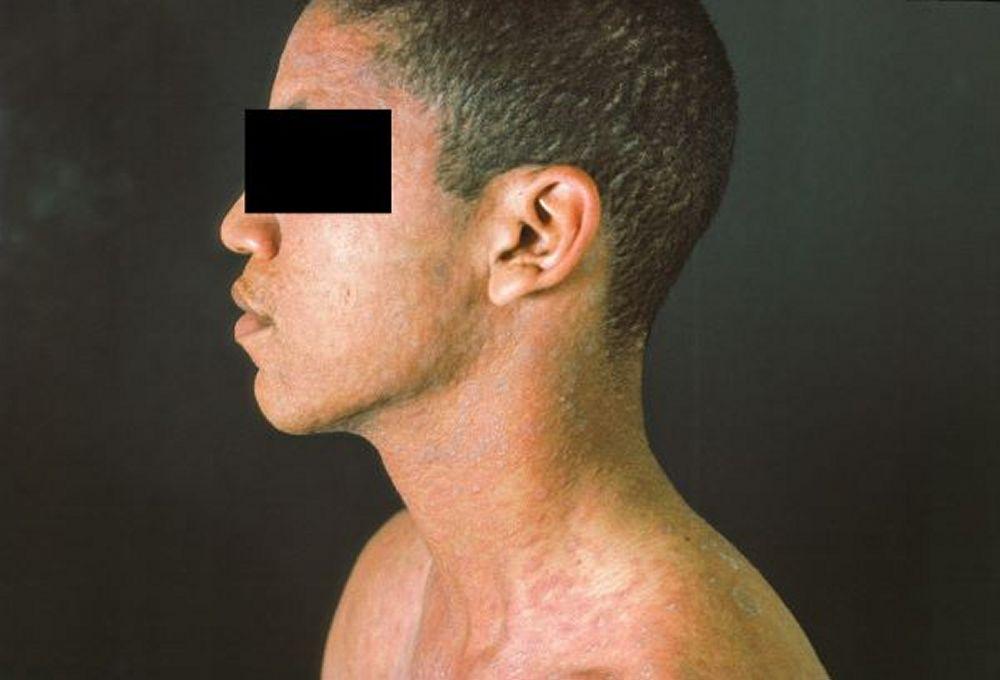
Image courtesy of Karen McKoy, MD.
In 7 to 14 days, many similar but smaller, scaly patches appear on other parts of the body. These secondary patches are most common on the torso, especially along and radiating from the spine.
The patches may appear more rose or tan in color in people with light skin and may appear more purple in people with dark skin.
In children, the patches commonly begin in the groin or underarms and spread outward. Children and pregnant women may have little or no scaling.
Most people with pityriasis rosea have some itching, and in some people the itching can be severe.
Sometimes the patches appear without any previous symptoms, but some people have a vague feeling of illness, loss of appetite, fever, headache, and sometimes joint pain a few days before the patches appear.
Diagnosis of Pityriasis Rosea
A doctor's evaluation
A doctor usually makes the diagnosis of pityriasis rosea based on the appearance of the rash, particularly the herald patch.
Treatment of Pityriasis Rosea
For itching, artificial and natural sunlight or topical corticosteroids
Both artificial and natural sunlight may speed up clearing and relieve the itching.
Other standard treatments for itching may be used as needed (see treatment of itching). Corticosteroids applied directly to the skin (topically) can also be used for short periods to help relieve itching.
Corticosteroids taken by mouth are necessary only for very severe itching.
acyclovir, but treatment with this medication does not reduce the risk of premature birth or stillbirth.
Prognosis for Pityriasis Rosea
Usually the rash goes away within 5 weeks without treatment, although sometimes it lasts for 2 months or more.