Search
SectionsIndexFirst Aid
  • Blood Disorders
  • Bone, Joint, and Muscle Disorders
  • Brain, Spinal Cord, and Nerve Disorders
  • Cancer
  • Children's Health Issues
  • Digestive Disorders
  • Disorders of Nutrition
  • Drugs
  • Ear, Nose, and Throat Disorders
  • Eye Disorders
  • Fundamentals
  • Heart and Blood Vessel Disorders
  • Hormonal and Metabolic Disorders
  • Immune Disorders
  • Infections
  • Injuries and Poisoning
  • Kidney and Urinary Tract Disorders
  • Liver and Gallbladder Disorders
  • Lung and Airway Disorders
  • Men's Health Issues
  • Mental Health Disorders
  • Mouth and Dental Disorders
  • Older People's Health Issues
  • Skin Disorders
  • Special Subjects
  • Women's Health Issues
ABCDEFGHI
JKLMNOPQR
STUVWXYZ
  • Emergencies
  • Cardiac Arrest
  • Choking
  • Drowning
  • Injuries
  • Altitude Illness
  • Bee Stings
  • Bites, Animal
  • Bites, Human
  • Bites, Snake
  • Burns
  • Electrical Injuries
  • Eye, Blunt Injury to
  • Eye, Chemical Burns of
  • Fractures
  • Frostbite
  • Head Injury
  • Heatstroke
  • Hypothermia
  • Lightning Injuries
  • Shock
  • Sprains and Strains
  • Wounds
In This Topic
Special Subjects
Common Imaging Tests
Angiography
Procedure
Uses
Variations
Disadvantages
Back to Top
Resources
  • About The Merck Manual Home Health Handbook Online Version
  • Anatomical Drawings
  • The One-Page Merck Manual of Health
  • Multimedia
  • Pronunciations
  • Selected Links
  • Weights and Measures
  • Common Medical Tests
  • Drug Names: Generic and Trade
  • Resources for Help and Information
Manuals available online
'/professional/index.html' + bookPageLink
 
'/home/index.html'
These and other Manuals available
in print, online, and as mobile applications.

See more at MerckManuals.com
Sections in Patients & Caregivers
  • Blood Disorders
  • Bone, Joint, and Muscle Disorders
  • Brain, Spinal Cord, and Nerve Disorders
  • Cancer
  • Children's Health Issues
  • Digestive Disorders
  • Disorders of Nutrition
  • Drugs
  • Ear, Nose, and Throat Disorders
  • Eye Disorders
  • Fundamentals
  • Heart and Blood Vessel Disorders
  • Hormonal and Metabolic Disorders
  • Immune Disorders
  • Infections
  • Injuries and Poisoning
  • Kidney and Urinary Tract Disorders
  • Liver and Gallbladder Disorders
  • Lung and Airway Disorders
  • Men's Health Issues
  • Mental Health Disorders
  • Mouth and Dental Disorders
  • Older People's Health Issues
  • Skin Disorders
  • Special Subjects
  • Women's Health Issues
Chapters in Special Subjects
  • Medical Decision Making
  • Surgery
  • Complementary and Alternative Medicine (CAM)
  • Travel and Health
  • Nonspecific Symptoms
  • Disorders of Unknown Cause
  • The Science of Medicine and Clinical Trials
  • Limb Prosthetics
  • Common Imaging Tests
  • Medicinal Herbs and Nutraceuticals
  • Hospital Care
  • Drug Use and Abuse
  • Tobacco Use
Topics in Common Imaging Tests
  • Overview of Imaging Tests
  • Angiography
  • Computed Tomography
  • Magnetic Resonance Imaging
  • Plain X-Rays
  • Radionuclide Scanning
  • Ultrasonography
 
  • Merck Manual
  • >
  • Patients & Caregivers
  • >
  • Special Subjects
  • >
  • Common Imaging Tests
  • 4
 
Angiography

Share This

In angiography, x-rays are used to produce detailed images of blood vessels. It is sometimes called conventional angiography to distinguish it from computed tomography (CT) angiography and magnetic resonance angiography. During angiography, doctors can also treat disorders of blood vessels.

Angiography can provide still images or motion pictures (called cineangiography). Cineangiography can show how fast blood travels through blood vessels.

Angiography, although invasive, is relatively safe.

Procedure

Before the procedure, people are usually asked to refrain from eating and drinking for 12 hours. For the procedure, people lie on an x-ray table. Because the table may be tilted, straps may be applied across the chest and legs. X-ray cameras can be positioned as needed. Electrodes are placed on the chest to monitor the heart. Blood pressure and oxygen levels in blood are also monitored.

After injecting a local anesthetic, a doctor makes a small incision, typically in the arm or groin. Then a thin, flexible tube (catheter) is inserted, usually into an artery, and is threaded through blood vessels to the area being evaluated. When the catheter is in place, a radiopaque dye (which can be seen on x-rays) is injected. The dye flows through the blood vessels and outlines them. The images appear on a video screen and are recorded. Thus, doctors can assess the structure of blood vessels and identify any abnormalities present.

Before angiography, people are often given a sedative intravenously to help them relax and remain calm, but they remain conscious during the procedure. During the procedure, people may be asked to take deep breaths, hold their breath, or cough. People should report any discomfort they feel. Angiography may take less than an hour or several hours, depending on the area of the body being evaluated and the type of the examination or procedures being done. It is usually done as an outpatient procedure.

If the catheter is inserted into an artery, the insertion site must be steadily compressed for 10 to 20 minutes after all the instruments are removed. Compression reduces bleeding and bruises. People may need to lie flat for several hours after the procedure to help prevent bleeding. Sometimes they need to stay overnight in the hospital. For the remainder of the day, they are advised to rest and to drink extra fluids to help eliminate the dye from the body.
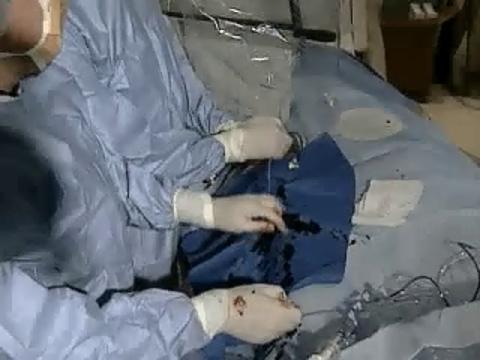
Videos

Cerebral Angiography: Catheter Insertion

Cerebral Angiography: Catheter Insertion

Uses

Angiography is used to check for abnormalities in blood vessels. Abnormalities may include blockages, narrowing, abnormal tangled clumps of arteries and veins (arteriovenous malformations), inflammation (vasculitis), bulges (aneurysms) in a weakened blood vessel wall, and tears (dissection) in a blood vessel wall.

During angiography, procedures to treat the abnormalities detected can sometimes be done:

  • Narrowed arteries can be widened.
  • Blockages can be removed.
  • A tube made of wire mesh (stent) can be placed to keep an artery open.
  • Tears or weakened areas in a blood vessel can be repaired.

Variations

Arteriography: This term refers to imaging of arteries. It is the most common type of angiography.

Venography: This term refers to imaging of veins.

Digital Subtraction Angiography: X-ray images of arteries are taken before and after a radiopaque dye is injected. Then a computer subtracts one image from the other. Images of structures other than arteries (such as bones) are thus eliminated. As a result, the arteries can be seen more clearly.

PrintOpen table in new window Open table in new window
Common Types of Angiography

Type

area to be evaluated

uses

Coronary angiography

Blood vessels of the heart

With cardiac catheterization, the heart itself

To diagnose coronary artery disease and other heart disorders

To determine whether angioplasty or coronary artery bypass surgery is feasible

To determine the severity of a heart disorder

To identify the cause of chest pain, shortness of breath, or certain other symptoms

To clarify the specific structure of a person's heart before heart valve replacement surgery

Pulmonary angiography

Blood vessels of the lungs

To diagnose pulmonary embolism (blockage by blood clots in the pulmonary arteries, which lead from the heart to the lungs)

Aortography

Aorta

To check for the following:

  • Bulges in a weakened wall (aneurysms)
  • Tears in the lining (dissection)
  • Leakage of the valve between the aorta and left ventricle (aortic regurgitation)

Cerebral angiography

Blood vessels of the brain

To check for the following:

  • Narrowed or blocked blood vessels (which can cause a stroke)
  • Aneurysms
  • Abnormal tangled clumps of arteries and veins (arteriovenous malformations)
  • Inflammation of blood vessels (vasculitis)

Fluorescein angiography

Blood vessels of the eye

To evaluate damage to the retina due to diabetes (diabetic retinopathy) or macular degeneration

To evaluate the retina before laser therapy

Peripheral arteriography

Arteries of the arms, legs, and trunk, except the aorta and arteries of the heart

To check for the following:

  • Narrowing or blockages
  • Aneurysms
  • Abnormal channels between an artery and a vein (arteriovenous fistulas)
  • Abnormal tangled clumps of arteries and veins (arteriovenous malformations)

Disadvantages

For some people, the procedure is uncomfortable. In a few people, allergic-type reactions to the dye occur. The injection site may bleed, become infected, or be painful. Rarely, the catheter damages a blood vessel. Serious complications, such as shock, seizures, kidney damage, and sudden stopping of the heart's pumping (cardiac arrest), are very rare. Sometimes during cardiac catheterization, the heart skips beats or slows briefly. The risk of complications is higher in older people, although it is still low.

The dose of radiation used in angiography can vary, from about 77 to 263 times as much as that used in two plain x-rays of the chest.

Angiography is not always readily available. It must be done by highly skilled people.

Last full review/revision April 2008 by Jon A. Jacobson, MD

Buy the Book

Mobile Versions

Pronunciations

aneurysm

angiography

angioplasty

aorta

arteriography

arteriovenous fistula

arteriovenous malformation

computed tomography

embolism

fistula

macula

macular degeneration

pulmonary embolism

retina

retinopathy

vasculitis

Back to Top

Previous: Overview of Imaging Tests

Next: Computed Tomography

Audio
Figures
Photographs
Pronunciations
Sidebar
Tables
Videos

Copyright     © 2010-2013 Merck Sharp & Dohme Corp., a subsidiary of Merck & Co., Inc., Whitehouse Station, N.J., U.S.A.    Privacy    Terms of Use