Deep venous thrombosis (DVT) is clotting of blood in a deep vein of an extremity (usually calf or thigh) or the pelvis. DVT is the primary cause of pulmonary embolism. DVT results from conditions that impair venous return, lead to endothelial injury or dysfunction, or cause hypercoagulability. DVT may be asymptomatic or cause pain and swelling in an extremity; pulmonary embolism is an immediate complication. Diagnosis is by history and physical examination and is confirmed by objective testing, typically with duplex ultrasonography. D-Dimer testing is sometimes used when DVT is suspected; a negative result helps to exclude DVT, whereas a positive result is nonspecific and requires additional testing to confirm DVT. Treatment is with anticoagulants. Prognosis is generally good with prompt, adequate treatment. Common long-term complications include venous insufficiency with or without the post-thrombotic syndrome.
DVT occurs most commonly in the lower extremities or pelvis (see figure Deep Veins of the Legs). DVT is less common in deep veins of the upper extremities (< 5% of DVT cases) (1).
Deep Veins of the Legs

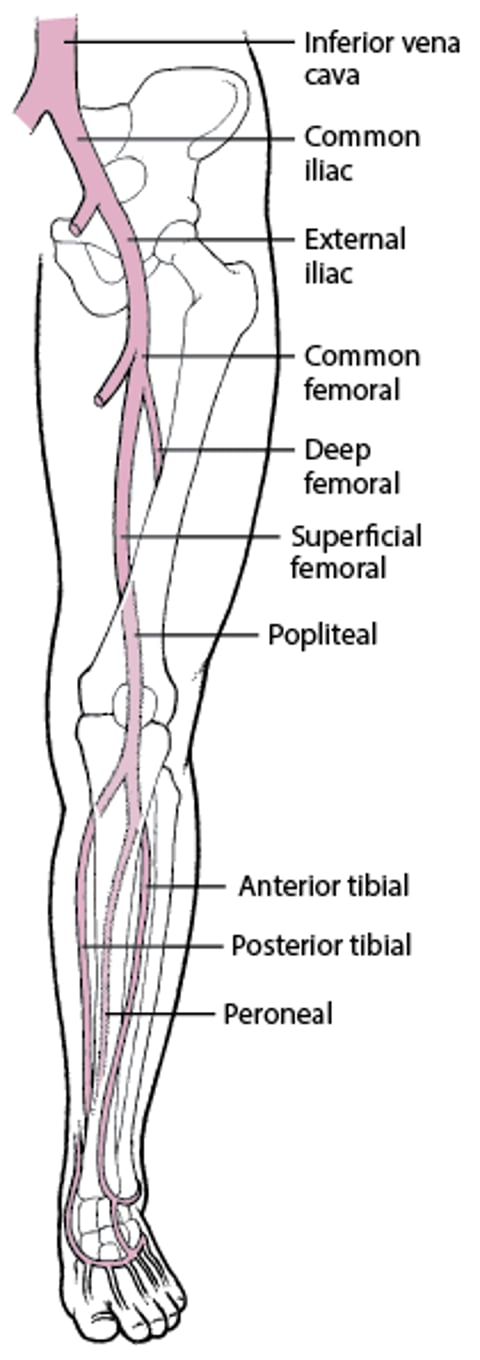
Lower extremity DVT is much more likely to cause pulmonary embolism (PE), possibly because of the higher clot burden. Approximately 90% of proximal DVTs involve the femoral or popliteal veins and 10% extend more proximally to involve the iliofemoral veins (2). DVT of the distal or calf veins usually involve the posterior tibial or peroneal veins. Distal or calf vein DVT is less likely to be a source of large emboli but can propagate to the proximal thigh veins and from there cause PE. About 50% of patients with DVT have occult PE, and at least 30% of patients with PE have demonstrable DVT (3).
Pearls & Pitfalls
|
General references
1. Yamashita Y, Morimoto T, Amano H, et al. Deep vein thrombosis in upper extremities: Clinical characteristics, management strategies and long-term outcomes from the COMMAND VTE Registry. Thromb Res 2019;177:1-9. doi:10.1016/j.thromres.2019.02.029
2. Douketis JD, Kearon C, Bates S, Duku EK, Ginsberg JS. Risk of fatal pulmonary embolism in patients with treated venous thromboembolism. JAMA 1998;279(6):458-462. doi:10.1001/jama.279.6.458
3. Stevens SM, Woller SC, Kreuziger LB, et al. Antithrombotic Therapy for VTE Disease: Second Update of the CHEST Guideline and Expert Panel Report [published correction appears in Chest. 2022 Jul;162(1):269]. Chest 2021;160(6):e545-e608. doi:10.1016/j.chest.2021.07.055
Etiology of Deep Venous Thrombosis
Many factors can contribute to DVT (see table Risk Factors for Deep Venous Thrombosis and Pulmonary Embolism). Cancer is a risk factor for DVT, particularly in older patients and in patients with recurrent thrombosis. The association is strongest for lung, ovarian, gastric, brain or pancreatic cancers where 10 to 15% of patients can develop VTE (1). Occult cancers may be present in patients with apparently idiopathic DVT, but extensive workup of patients for tumors is not recommended unless patients have major risk factors for cancer or symptoms suggestive of an occult cancer.
Etiology reference
1. Farge D, Frere C, Connors JM, et al. 2022 international clinical practice guidelines for the treatment and prophylaxis of venous thromboembolism in patients with cancer, including patients with COVID-19. Lancet Oncol 2022;23(7):e334-e347. doi:10.1016/S1470-2045(22)00160-7
Pathophysiology of Deep Venous Thrombosis
Lower extremity DVT most often results from
Impaired venous return (eg, in immobilized patients)
Endothelial injury or dysfunction (eg, after leg fractures)
Hypercoagulability
Upper extremity DVT most often results from
Endothelial injury due to central venous catheters, pacemakers, or injection drug use
Upper extremity DVT occasionally occurs as part of superior vena cava (SVC) syndrome (compression or invasion of the superior vena cava by a tumor and causing symptoms such as facial swelling, dilated neck veins, and facial flushing) or results from a hypercoagulable state or subclavian vein compression at the thoracic outlet (1). The compression may be due to a normal or an accessory first rib or fibrous band (thoracic outlet syndrome) or occur during strenuous arm activity (effort thrombosis, or Paget-Schroetter syndrome, which is rare).
Deep venous thrombosis usually begins in venous valve cusps. Thrombi consist of thrombin, fibrin, and red blood cells with relatively few platelets (red thrombi); without treatment, thrombi may propagate proximally or travel to the lungs.
Complications
Common complications of DVT include
Much less commonly, acute massive DVT lead to phlegmasia alba dolens or phlegmasia cerulea dolens, both of which, unless promptly diagnosed and treated, can result in venous gangrene.
In phlegmasia alba dolens, a rare complication of DVT during pregnancy, the leg turns milky white. Pathophysiology is unclear, but edema may increase soft-tissue pressure beyond capillary perfusion pressures, resulting in tissue ischemia and venous gangrene. Phlegmasia alba dolens may progress to phlegmasia cerulea dolens.
In phlegmasia cerulea dolens, massive iliofemoral venous thrombosis causes near-total venous occlusion; the leg becomes ischemic, extremely painful, and cyanotic. Pathophysiology may involve complete stasis of venous and arterial blood flow in the lower extremity because venous return is occluded or massive edema cuts off arterial blood flow. Venous gangrene may result.
Infection rarely develops in venous clots. Jugular vein suppurative thrombophlebitis (Lemierre syndrome), a bacterial (usually anaerobic) infection of the internal jugular vein and surrounding soft tissues, may follow tonsillopharyngitis and is often complicated by bacteremia and sepsis. In septic pelvic thrombophlebitis, pelvic thromboses develop postpartum and become infected, causing intermittent fever. Suppurative (septic) thrombophlebitis, a bacterial infection of a superficial peripheral vein, comprises infection and clotting and usually is caused by venous catheterization.
Pathophysiology reference
1. Bosch FTM, Nisio MD, Büller HR, van Es N. Diagnostic and Therapeutic Management of Upper Extremity Deep Vein Thrombosis. J Clin Med 2020;9(7):2069. doi:10.3390/jcm9072069
Symptoms and Signs of Deep Venous Thrombosis
DVT may occur in ambulatory patients or as a complication of surgery or major medical illness. Among patients who are hospitalized and at high risk, most deep vein thrombi occur in the small calf veins, are asymptomatic, and may not be detected.
When present, symptoms and signs of DVT (eg, vague aching pain, tenderness along the distribution of the veins, edema, erythema) are nonspecific, vary in frequency and severity, and are similar in arms and legs. Dilated collateral superficial veins may become visible or palpable. Calf discomfort elicited by ankle dorsiflexion with the knee extended (Homans sign) occasionally occurs with distal leg DVT but is neither sensitive nor specific. Tenderness, swelling of the whole leg, > 3 cm difference in circumference between calves, pitting edema, and collateral superficial veins may be most specific; DVT is likely with a combination of ≥ 3 in the absence of another likely diagnosis (see table Probability of Deep Venous Thrombosis Based on Clinical Factors).
Low-grade fever may be present; DVT may be the cause of fever without an obvious source, especially in postoperative patients. Symptoms of pulmonary embolism, if it occurs, may include shortness of breath and pleuritic chest pain.
Common causes of asymmetric leg swelling that mimic DVT are
Soft-tissue trauma
Compression of a pelvic vein
Obstruction of a lymphatic vessel in the pelvis
Popliteal cyst (Baker cyst) that obstructs venous return
Less common causes include abdominal or pelvic tumors that obstruct venous or lymphatic return.
Symmetric bilateral leg swelling is the typical result of use of medications that cause dependent edema (eg, dihydropyridine calcium channel blockers, estrogen, high-dose opioids), venous hypertension (usually due to right heart failure), and hypoalbuminemia; however, such swelling may be asymmetric if venous insufficiency coexists and is worse in one leg.
Common causes of calf pain that mimic acute DVT include
Cellulitis that causes painful erythema of the calf
Ruptured popliteal (Baker) cyst (pseudo-DVT), which causes calf swelling, pain, and sometimes bruising in the region of the medial malleolus
Partial or complete tears of the calf muscles or tendons
Diagnosis of Deep Venous Thrombosis
Ultrasonography
Sometimes D-dimer testing
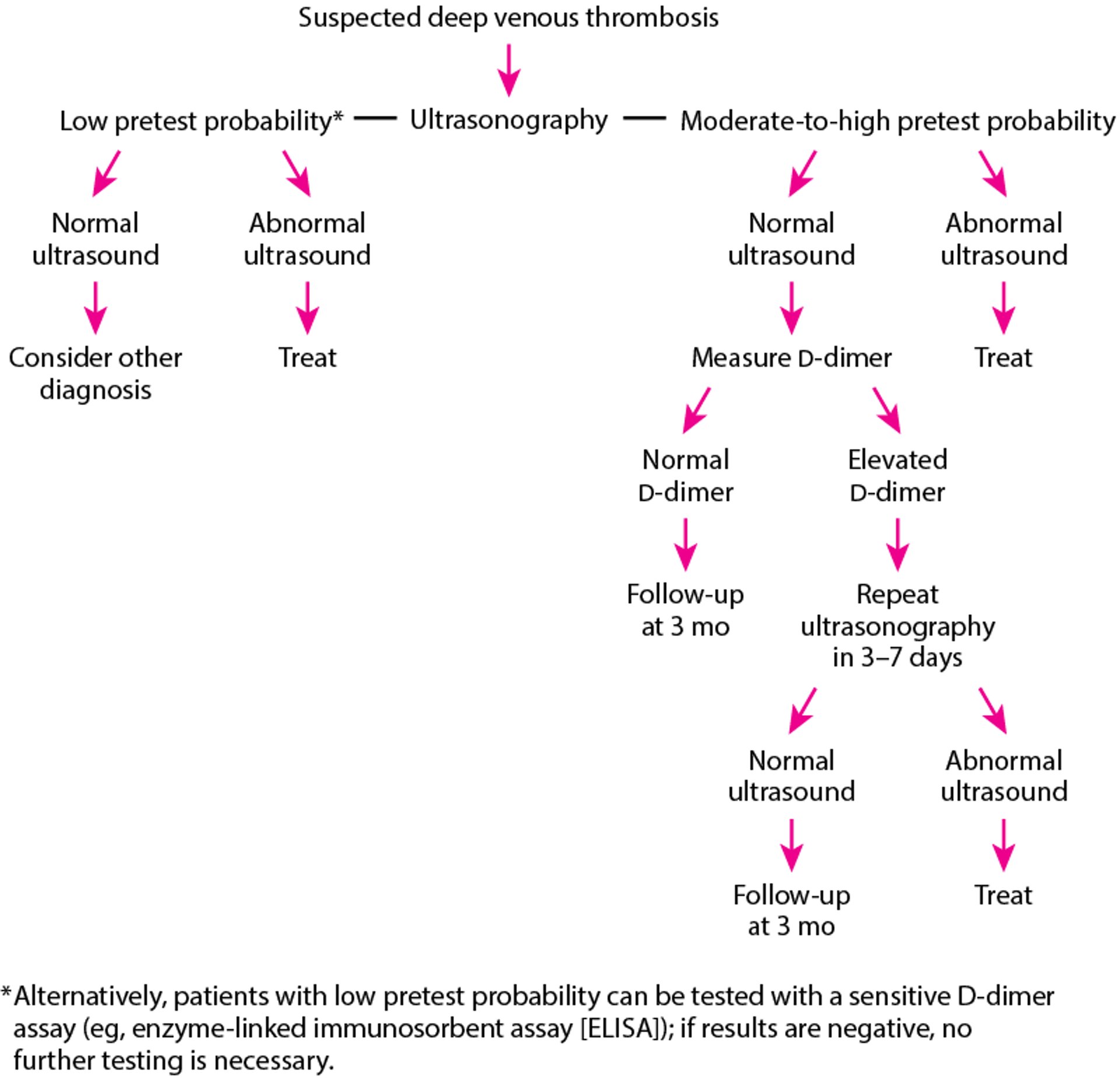
History and physical examination help determine probability of DVT before testing (see table Probability of Deep Venous Thrombosis Based on Clinical Factors). Diagnosis is typically by ultrasonography with Doppler flow studies (duplex ultrasonography). The need for additional tests (eg, D-dimer testing) and their choice and sequence depend on pretest probability and sometimes ultrasonography results. No single testing protocol is best; one approach is described in the figure One Approach to Testing for Suspected Deep Venous Thrombosis.
One Approach to Testing for Suspected Deep Venous Thrombosis

Ultrasonography

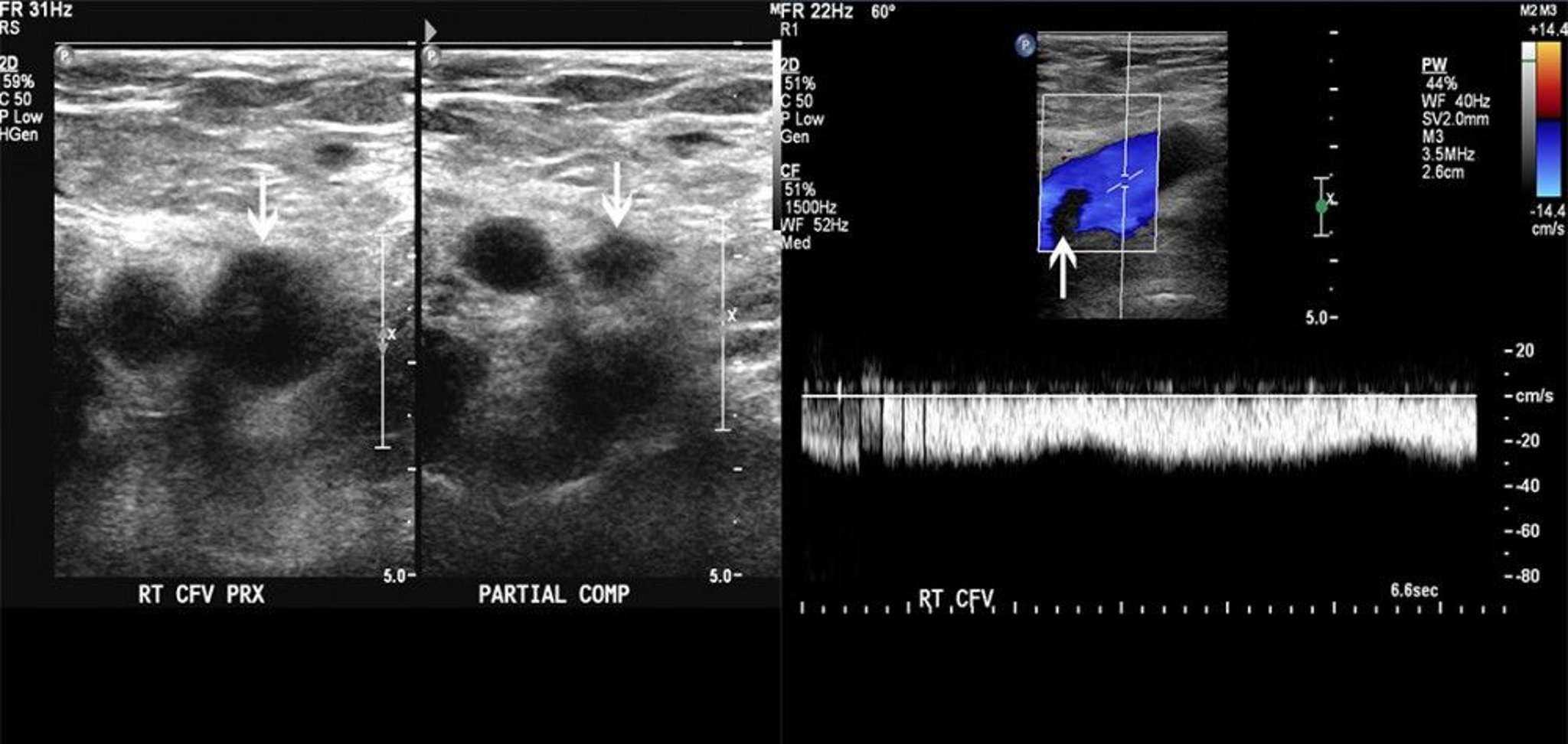
© 2017 Elliot K. Fishman, MD.
Ultrasonography identifies thrombi by directly visualizing the venous lining and by demonstrating abnormal vein compressibility or, with Doppler flow studies, impaired venous flow. The test is > 90% sensitive and > 95% specific for femoral and popliteal vein thrombosis but is less accurate for iliac or calf vein thrombosis (1).
D-Dimer
D-Dimer is a byproduct of fibrinolysis; elevated levels suggest recent presence and lysis of thrombi. D-Dimer assays vary in sensitivity and specificity; however, most are sensitive and not specific. A positive test result is nonspecific because levels can be elevated by other conditions (eg, liver disease, trauma, pregnancy, positive rheumatoid factor, inflammation, recent surgery, cancer), and further testing is necessary. Only the most accurate tests should be used. For example, a highly sensitive test is enzyme-linked immunosorbent assay (ELISA), which has a sensitivity of about 95% (2). D-dimer levels also increase with age, which further decreases the specificity in older patients (3).
The Pulmonary Embolism Graduated D-dimer (PEGeD) strategy is a diagnostic approach for pulmonary embolism that adjusts for D-dimer levels according to the patient's clinical pretest probability(4):
If pretest probability of DVT is low, DVT can generally be excluded in patients with a D-dimer level < 1000 ng/mL(< 5476 nmol/L) on a sensitive test.
If pretest probability of DVT is moderate, DVT can be excluded in patients with a normal D-dimer level (ie, < 500 ng/mL) on a sensitive test. Patients with a positive test require additional testing to rule out DVT.
If pretest probability of DVT is high, D-dimer testing can be done at the same time as duplex ultrasonography. A positive ultrasound result confirms the diagnosis regardless of the D-dimer level. If ultrasonography does not reveal evidence of DVT, a normal D-dimer level helps exclude DVT. Patients with an elevated D-dimer level should have repeat ultrasonography in a few days or additional imaging, such as venography, depending on clinical suspicion.
Additional testing
If symptoms and signs suggest PE, additional imaging (eg, CT pulmonary angiography or, less often, ventilation/perfusion [V/Q] scanning) is required.
Alternative imaging
Contrast-enhanced computed tomographic venography and magnetic resonance venography are other imaging modalities rarely used in the diagnosis of DVT. They are generally reserved for cases in which ultrasonography results are negative or indeterminate and the clinical suspicion for DVT remains high. These imaging tests are less well validated for DVT, are more costly, and may be associated with other complications (eg, related to exposure to radiation and contrast agents).
Contrast venography was the definitive test for the diagnosis of DVT in the past but has been largely replaced by ultrasonography, which is noninvasive, more readily available, and almost equally accurate for detecting DVT.
Determination of cause
Patients with confirmed DVT and an obvious cause (eg, immobilization, surgical procedure, leg trauma) need no further testing. Testing to detect hypercoagulability is controversial but is sometimes done in selected patients who have idiopathic (or unprovoked) DVT or recurrent DVT, in patients who have a personal or family history of other thromboses, and in young patients with no obvious predisposing factors. Some evidence suggests that testing for the presence of hypercoagulability in patients with or without clinical risk factors does not predict DVT recurrence (5, 6, 7) .
Screening patients with DVT for cancer has a low yield. Selective testing guided by complete history and physical examination and basic "routine" tests (complete blood count, chest x-ray, urinalysis, liver enzymes, and serum electrolytes, blood urea nitrogen [BUN], creatinine) aimed at detecting cancer is probably adequate. In addition, patients should have any appropriate cancer screening (eg, mammography, colonoscopy) that is due.
Diagnosis references
1. Lensing AW, Prandoni P, Brandjes D, et al. Detection of deep-vein thrombosis by real-time B-mode ultrasonography. N Engl J Med 1989;320(6):342-345. doi:10.1056/NEJM198902093200602
2. Di Nisio M, Squizzato A, Rutjes AW, Büller HR, Zwinderman AH, Bossuyt PM. Diagnostic accuracy of D-dimer test for exclusion of venous thromboembolism: a systematic review [published correction appears in J Thromb Haemost 2013 Oct;11(10):1942]. J Thromb Haemost 2007;5(2):296-304. doi:10.1111/j.1538-7836.2007.02328.x
3. Righini M, Van Es J, Den Exter PL, et al. Age-adjusted D-dimer cutoff levels to rule out pulmonary embolism: the ADJUST-PE study [published correction appears in JAMA. 2014 Apr 23-30;311(16):1694]. JAMA 2014;311(11):1117-1124. doi:10.1001/jama.2014.2135
4. Kearon C, de Wit K, Parpia S, et al. Diagnosis of Pulmonary Embolism with d-Dimer Adjusted to Clinical Probability. N Engl J Med 2019;381(22):2125-2134. doi:10.1056/NEJMoa1909159
5. Coppens M, Reijnders JH, Middeldorp S, Doggen CJ, Rosendaal FR. Testing for inherited thrombophilia does not reduce the recurrence of venous thrombosis. J Thromb Haemost 2008;6(9):1474-1477. doi:10.1111/j.1538-7836.2008.03055.x
6. Lijfering WM, Middeldorp S, Veeger NJ, et al. Risk of recurrent venous thrombosis in homozygous carriers and double heterozygous carriers of factor V Leiden and prothrombin G20210A. Circulation 2010;121(15):1706-1712. doi:10.1161/CIRCULATIONAHA.109.906347
7. Segal JB, Brotman DJ, Necochea AJ, et al. Predictive value of factor V Leiden and prothrombin G20210A in adults with venous thromboembolism and in family members of those with a mutation: a systematic review. JAMA 2009;301(23):2472-2485. doi:10.1001/jama.2009.853
Treatment of Deep Venous Thrombosis
Anticoagulation
Sometimes inferior vena cava filter, thrombolytic therapy, or surgery
Treatment is aimed primarily at pulmonary embolism prevention and secondarily at symptom relief and prevention of DVT recurrence, chronic venous insufficiency, and post-thrombotic syndrome. Treatment of lower and upper extremity DVT is generally the same.
General supportive measures include pain control with analgesics, which may include short (3- to 5-day) courses of a nonsteroidal anti-inflammatory drug (NSAID). Extended treatment with NSAIDs and aspirin should be avoided because their antiplatelet effects may increase the risk of bleeding complications. In addition, elevation of legs (supported by a pillow or other soft surface to avoid venous compression) is recommended during periods of inactivity. Patients may be as physically active as they can tolerate; there is no evidence that early activity increases risk of clot dislodgement and PE and may help to reduce the risk of the post-thrombotic syndrome.
Anticoagulants
(For details on medications and their complications, see Medications for Deep Venous Thrombosis)
Almost all patients with DVT are treated with anticoagulants (1, 2). Various anticoagulants are suitable for initial therapy, and the choice of agent is influenced by patient comorbidities (eg, renal dysfunction, cancer), preferences, cost, and convenience.
heparin. Although heparin acts rapidly and provides immediate anticoagulation, warfarin takes about 5 days to achieve a therapeutic effect; hence, heparinfactor Xathrombin inhibitor), the oral agent is started after 5 days of injectable heparin.
heparin. Starting rivaroxaban or apixaban without heparinfactor Xa inhibitor, is sometimes substituted for low molecular weight heparin and can also be used to treat acute DVT.
For selected patients (eg, with extensive iliofemoral DVT or cancer), continued treatment with a low-molecular-weight heparin rather than switching to an oral agent may be preferred.
Inadequate anticoagulation in the first 24 to 48 hours may increase risk of recurrence or of PE. Acute DVT can be treated on an outpatient basis unless severe symptoms require parenteral analgesics, other disorders preclude safe outpatient discharge, or other factors (eg, functional, socioeconomic) might prevent the patient from adhering to prescribed treatments.
Inferior vena cava (IVC) filter
An IVC filter may help prevent PE in patients with lower extremity DVT who have contraindications to anticoagulant therapy or in patients with recurrent DVT (or emboli) despite adequate anticoagulation. An IVC filter is placed in the inferior vena cava just below the renal veins via catheterization of an internal jugular or femoral vein. Some IVC filters are removable and can be used temporarily (eg, until contraindications to anticoagulation subside or resolve).
IVC filters reduce the risk of acute embolic complications but can have longer-term complications (eg, venous collaterals can develop, providing a pathway for emboli to circumvent the filter) There is also an increased risk of recurrent DVT). Also, IVC filters can dislodge or become obstructed by a clot. Thus, patients with recurrent DVT or nonmodifiable risk factors for DVT may still require anticoagulation despite the presence of an IVC filter.
A clotted filter may cause bilateral lower extremity venous congestion (including acute phlegmasia cerulea dolens), lower body ischemia, and acute kidney injury. Treatment for a dislodged filter is removal, using angiographic or, if necessary, surgical methods. Despite widespread use of IVC filters, efficacy in preventing PE is understudied and unproven (3). IVC filters should be removed whenever possible.
Thrombolytic (fibrinolytic) therapy
< 60 years with extensive iliofemoral DVT who have evolving or existing limb ischemia (eg, phlegmasia cerulea dolens) and do not have risk factors for bleeding (4).
Catheter-directed thrombolysis has largely replaced systemic administration when used for DVT.
Surgery
Surgery is rarely needed. However, thrombectomy, fasciotomy, or both are mandatory for phlegmasia alba dolens or phlegmasia cerulea dolens unresponsive to thrombolytics to try to prevent limb-threatening gangrene.
Treatment references
1. Ortel TL, Neumann I, Ageno W, et al: American Society of Hematology 2020 guidelines for management of venous thromboembolism: treatment of deep vein thrombosis and pulmonary embolism. Blood Adv 4(19):4693-4738, 2020. doi: 10.1182/bloodadvances.2020001830
2. Stevens SM, Woller SC, Kreuziger LB, et al: Antithrombotic Therapy for VTE Disease: Second Update of the CHEST Guideline and Expert Panel Report [published correction appears in Chest 2022 Jul;162(1):269]. Chest 160(6):e545-e608, 2021. doi:10.1016/j.chest.2021.07.055
3. Turner TE, Saeed MJ, Novak E, Brown DL: Association of Inferior Vena Cava Filter Placement for Venous Thromboembolic Disease and a Contraindication to Anticoagulation With 30-Day Mortality. JAMA Netw Open 1(3):e180452, 2018. Published 2018 Jul 6. doi:10.1001/jamanetworkopen.2018.0452
4. Kearon C, Akl EA, Comerota AJ, et al. Antithrombotic therapy for VTE disease: Antithrombotic Therapy and Prevention of Thrombosis, 9th ed: American College of Chest Physicians Evidence-Based Clinical Practice Guidelines [published correction appears in Chest 2012 Dec;142(6):1698-1704]. Chest 2012;141(2 Suppl):e419S-e496S. doi:10.1378/chest.11-2301
Prognosis for Deep Venous Thrombosis
Without adequate treatment, lower extremity DVT has a 3% risk of fatal PE (1, 2); death due to upper extremity DVT is very rare. Risk of recurrent DVT is lowest for patients with transient risk factors (eg, surgery, trauma, temporary immobility) and greatest for patients with persistent risk factors (eg, cancer), idiopathic DVT, or incomplete resolution of past DVT (residual thrombus). A normal D-dimer level obtained after anticoagulation is stopped for 3 to 4 weeks may help predict a relatively low risk of DVT or PE recurrence, more so in women than in men. Risk of venous insufficiency is difficult to predict. Risk factors for post-thrombotic syndrome include proximal thrombosis, recurrent ipsilateral DVT, and body mass index (BMI) ≥ 22 kg/m2.
Prognosis references
1. Yamashita Y, Murata K, Morimoto T, et al. Clinical outcomes of patients with pulmonary embolism versus deep vein thrombosis: From the COMMAND VTE Registry. Thromb Res 2019;184:50-57. doi:10.1016/j.thromres.2019.10.029
2. Douketis JD, Kearon C, Bates S, Duku EK, Ginsberg JS. Risk of fatal pulmonary embolism in patients with treated venous thromboembolism. JAMA 1998;279(6):458-462. doi:10.1001/jama.279.6.458
Prevention of Deep Venous Thrombosis
It is preferable and safer to prevent DVT than to treat it, particularly in patients who are at high risk. The following modalities are used (for a more complete discussion, see DVT Prevention).
Prevention of immobility
Intermittent pneumatic compression
Patients who should not receive anticoagulants may benefit from intermittent pneumatic compression devices, elastic stockings, or both.
Inferior vena cava (IVC) filters do not prevent DVT but are sometimes placed in an attempt to prevent PE. An IVC filter may help prevent PE in patients with lower extremity DVT who have contraindications to anticoagulant therapy or in patients with recurrent DVT (or emboli) despite adequate anticoagulation. IVC filters are also sometimes used for the primary prevention of PE after certain types of surgery or in patients with multiple severe injuries; however, their use is not routinely recommended for these indications given the lack of evidence of efficacy (1).
Prevention reference
1. Ho KM, Rao S, Honeybul S, et al. A Multicenter Trial of Vena Cava Filters in Severely Injured Patients. N Engl J Med 2019;381(4):328-337. doi:10.1056/NEJMoa1806515
Key Points
Symptoms and signs are nonspecific, so clinicians must be alert, particularly in high-risk patients.
Low-risk patients may have D-dimer testing, as a normal result essentially excludes deep venous thrombosis (DVT); others should have ultrasonography.
heparinfactor Xa inhibitor) or a LMWH; alternatively, the oral factor Xa
Duration of treatment is typically 3 or 6 months, depending on the presence and nature of risk factors; certain patients require lifelong treatment.
Preventive treatment is required for bedbound patients with major illness and/or those undergoing certain surgical procedures.
Early mobilization, leg elevation, and an anticoagulant are the recommended preventive measures; patients who should not receive anticoagulants may benefit from intermittent pneumatic compression devices, elastic stockings, or both.