Search
SectionsIndexSymptoms
  • Cardiovascular Disorders
  • Clinical Pharmacology
  • Critical Care Medicine
  • Dental Disorders
  • Dermatologic Disorders
  • Ear, Nose, and Throat Disorders
  • Endocrine and Metabolic Disorders
  • Eye Disorders
  • Gastrointestinal Disorders
  • Genitourinary Disorders
  • Geriatrics
  • Gynecology and Obstetrics
  • Hematology and Oncology
  • Hepatic and Biliary Disorders
  • Immunology; Allergic Disorders
  • Infectious Diseases
  • Injuries; Poisoning
  • Musculoskeletal and Connective Tissue Disorders
  • Neurologic Disorders
  • Nutritional Disorders
  • Pediatrics
  • Psychiatric Disorders
  • Pulmonary Disorders
  • Special Subjects
ABCDEFGHI
JKLMNOPQR
STUVWXYZ
  • Abdominal Pain, Acute
  • Abdominal pain, Chronic
  • Alopecia
  • Amenorrhea
  • Amnesia
  • Anosmia
  • Bleeding, Excessive
  • Breast Lumps
  • Chest Pain
  • Constipation in Adults
  • Constipation in Children
  • Cough in Adults
  • Cough in Children
  • Crying
  • Diarrhea in Adults
  • Diarrhea in Children
  • Diplopia
  • Dizziness
  • Dry Mouth
  • Dysmenorrhea
  • Dyspepsia
  • Dysphagia
  • Dyspnea
  • Dysuria
  • Earache
  • Ear Discharge
  • Edema
  • Edema During Late Pregnancy
  • Epistaxis
  • Erectile dysfunction
  • Eyelid Swelling
  • Eye Pain
  • Fever
  • Fever, Acute, in Adults
  • Fever, Chronic (FUO)
  • Fever in Infants and Children
  • Floaters
  • Gas
  • Gastrointestinal Bleeding
  • Halitosis
  • Headache
  • Hearing Loss
  • Hearing Loss: Sudden Deafness
  • Hematospermia
  • Hematuria
  • Hemoptysis
  • Hiccups
  • Hirsutism
  • Insomnia and Excessive Daytime Sleepiness
  • Itching
  • Itching, Anal
  • Jaundice in Adults
  • Jaundice in Neonates
  • Joint Pain, Monarticular
  • Joint Pain, Polyarticular
  • Knee pain
  • Lump in Throat
  • Nasal Congestion and Rhinorrhea
  • Nausea and Vomiting During Early pPregnancy
  • Nausea and Vomiting in Adults
  • Nausea and Vomiting in Infants and Children
  • Neck and Back Pain
  • Neck Mass
  • Nipple Discharge
  • Orthostatis Hypotension
  • Pain
  • Pain, Chronic
  • Palpitations
  • Pelvic Pain
  • Pelvic Pain During Early Pregnancy
  • Polyuria
  • Priapism
  • Red Eye
  • Scrotal Pain
  • Sore Throat
  • Stomatitis
  • Stridor
  • Syncope
  • Tearing
  • Tinnitus
  • Toothache
  • Tremor
  • Urinary Frequency
  • Urinary Incontinence in Adults
  • Urinary Incontinence in Children
  • Urinary Retention
  • Urticaria
  • Vaginal Bleeding
  • Vaginal Bleeding During Early Pregnancy
  • Vaginal Bleeding During Late Pregnancy
  • Vaginal Itching and Discharge
  • Vision, Blurred
  • Vision Loss, Acute
  • Weakness, Generalized
  • Wheezing
In This Topic
Genitourinary Disorders
Tubulointerstitial Diseases
Tubulointerstitial Nephritis
Etiology
Acute tubulointerstitial nephritis (ATIN)
Chronic tubulointerstitial nephritis (CTIN)
Symptoms and Signs
ATIN
CTIN
Diagnosis
ATIN
CTIN
Prognosis
Treatment
Key Points
Back to Top
Resources
  • About The Merck Manual
  • Ready Reference Guides
  • Trade Names of Some Commonly Used Drugs
  • Normal Laboratory Values
  • Clinical Calculators
  • Multimedia
  • Selected Links
Manuals available online
'/home/index.html' + bookPageLink
 
'/professional/index.html'
These and other Manuals available
in print, online, and as mobile applications.

See more at MerckManuals.com
Sections in Health Care Professionals
  • Cardiovascular Disorders
  • Clinical Pharmacology
  • Critical Care Medicine
  • Dental Disorders
  • Dermatologic Disorders
  • Ear, Nose, and Throat Disorders
  • Endocrine and Metabolic Disorders
  • Eye Disorders
  • Gastrointestinal Disorders
  • Genitourinary Disorders
  • Geriatrics
  • Gynecology and Obstetrics
  • Hematology and Oncology
  • Hepatic and Biliary Disorders
  • Immunology; Allergic Disorders
  • Infectious Diseases
  • Injuries; Poisoning
  • Musculoskeletal and Connective Tissue Disorders
  • Neurologic Disorders
  • Nutritional Disorders
  • Pediatrics
  • Psychiatric Disorders
  • Pulmonary Disorders
  • Special Subjects
Chapters in Genitourinary Disorders
  • Approach to the Genitourinary Patient
  • Symptoms of Genitourinary Disorders
  • Genitourinary Tests and Procedures
  • Male Reproductive Endocrinology and Related Disorders
  • Male Sexual Dysfunction
  • Voiding Disorders
  • Obstructive Uropathy
  • Urinary Calculi
  • Urinary Tract Infections (UTI)
  • Cystic Kidney Disease
  • Acute Kidney Injury
  • Chronic Kidney Disease
  • Renal Replacement Therapy
  • Glomerular Disorders
  • Tubulointerstitial Diseases
  • Renal Transport Abnormalities
  • Renovascular Disorders
  • Penile and Scrotal Disorders
  • Benign Prostate Disease
  • Genitourinary Cancer
Topics in Tubulointerstitial Diseases
  • Overview of Tubulointerstitial Diseases
  • Acute Tubular Necrosis (ATN)
  • Contrast Nephropathy
  • Tubulointerstitial Nephritis
  • Analgesic Nephropathy
  • Metabolic Nephropathies
  • Heavy Metal Nephropathy
  • Reflux Nephropathy
  • Myeloma-Related Kidney Disease
     
    • Merck Manual
    • >
    • Health Care Professionals
    • >
    • Genitourinary Disorders
    • >
    • Tubulointerstitial Diseases
    • 4
     
    Tubulointerstitial Nephritis

    Share This

    Tubulointerstitial nephritis is primary injury to renal tubules and interstitium resulting in decreased renal function. The acute form is most often due to allergic drug reactions or to infections. The chronic form occurs with a diverse array of causes, including genetic or metabolic disorders, obstructive uropathy, and chronic exposure to environmental toxins or to certain drugs and herbs. Diagnosis is suggested by history and urinalysis and often confirmed by biopsy. Treatment and prognosis vary by the etiology and potential reversibility of the disorder at the time of diagnosis.

    Etiology

    Tubulointerstitial nephritis can be primary, but a similar process can result from glomerular damage (see Glomerular Disorders: Overview of Glomerular Disorders) or renovascular disorders (see Renovascular Disorders).

    Primary tubulointerstitial nephritis may be

    • Acute (see Table 2: Tubulointerstitial Diseases: Causes of Acute Tubulointerstitial NephritisTables)
    • Chronic (see Table 3: Tubulointerstitial Diseases: Causes of Chronic Tubulointerstitial NephritisTables

    Acute tubulointerstitial nephritis (ATIN): ATIN involves an inflammatory infiltrate and edema affecting the renal interstitium that often develops over days to months. Over 95% of cases result from infection or an allergic drug reaction. A syndrome of ATIN plus uveitis (renal-ocular syndrome) also occurs and is idiopathic. ATIN causes acute kidney injury; severe cases, delayed therapy, or continuance of an offending drug can lead to permanent injury and chronic kidney disease.

    Chronic tubulointerstitial nephritis (CTIN): CTIN arises when chronic tubular insults cause gradual interstitial infiltration and fibrosis, tubular atrophy and dysfunction, and a gradual deterioration of renal function, usually over years. Concurrent glomerular involvement (glomerulosclerosis) is much more common in CTIN than in ATIN. Causes of CTIN are myriad; they include immunologically mediated disorders, infections, reflux or obstructive nephropathy, drugs, and other disorders. CTIN due to toxins, metabolic derangements, hypertension, and inherited disorders results in symmetric and bilateral disease; when CITN is due to other causes, renal scarring may be unequal and involve only one kidney. Some well-characterized forms of CTIN include analgesic (see Tubulointerstitial Diseases: Analgesic Nephropathy), metabolic (see Tubulointerstitial Diseases: Metabolic Nephropathies), heavy metal (see Tubulointerstitial Diseases: Heavy Metal Nephropathy), and reflux nephropathy (see Tubulointerstitial Diseases: Reflux Nephropathy) and myeloma kidney (see Tubulointerstitial Diseases: Myeloma-Related Kidney Disease). Hereditary cystic kidney diseases are discussed elsewhere (see Cystic Kidney Disease: Overview of Cystic Kidney Disease).

    Table 2

    PrintOpen table Open table in new window
    Causes of Acute Tubulointerstitial Nephritis

    Cause

    Examples

    Drugs*

    Antibiotics

    β-Lactam antibiotics (the most common cause, particularly methicillin†)

    CiprofloxacinSome Trade Names
    CILOXAN
    CIPRO
    Click for Drug Monograph

    EthambutolSome Trade Names
    MYAMBUTOL
    Click for Drug Monograph

    IndinavirSome Trade Names
    CRIXIVAN
    Click for Drug Monograph

    IsoniazidSome Trade Names
    INH
    NYDRAZID
    Click for Drug Monograph

    Macrolides

    MinocyclineSome Trade Names
    MINOCIN
    Click for Drug Monograph

    RifampinSome Trade Names
    RIFADIN
    RIMACTANE
    Click for Drug Monograph

    TetracyclineSome Trade Names
    ACHROMYCIN V
    TETRACYN
    TETREX
    Click for Drug Monograph

    TrimethoprimSome Trade Names
    PROLOPRIM
    TRIMPEX
    Click for Drug Monograph
    / sulfamethoxazole

    VancomycinSome Trade Names
    VANCOCIN
    Click for Drug Monograph

    Anticonvulsants

    CarbamazepineSome Trade Names
    TEGRETOL
    Click for Drug Monograph

    PhenobarbitalSome Trade Names
    LUMINAL
    Click for Drug Monograph

    PhenytoinSome Trade Names
    DILANTIN
    Click for Drug Monograph

    ValproateSome Trade Names
    DEPAKENE
    Click for Drug Monograph

    Diuretics

    BumetanideSome Trade Names
    BUMEX
    Click for Drug Monograph

    FurosemideSome Trade Names
    LASIX
    Click for Drug Monograph

    Thiazides

    TriamtereneSome Trade Names
    DYRENIUM
    Click for Drug Monograph

    NSAIDs

    DiclofenacSome Trade Names
    CATAFLAM
    VOLTAREN
    Click for Drug Monograph

    IbuprofenSome Trade Names
    ADVIL
    MOTRIN
    NUPRIN
    Click for Drug Monograph

    IndomethacinSome Trade Names
    INDOCIN
    Click for Drug Monograph

    NaproxenSome Trade Names
    ALEVE
    NAPROSYN
    Click for Drug Monograph

    Other

    AllopurinolSome Trade Names
    ZYLOPRIM
    Click for Drug Monograph

    Aristocholic acid‡

    CaptoprilSome Trade Names
    CAPOTEN
    Click for Drug Monograph

    CimetidineSome Trade Names
    TAGAMET
    Click for Drug Monograph

    Interferon alfa

    LansoprazoleSome Trade Names
    PREVACID
    Click for Drug Monograph

    Mesalazine

    OmeprazoleSome Trade Names
    PRILOSEC
    Click for Drug Monograph

    RanitidineSome Trade Names
    ZANTAC
    Click for Drug Monograph

    Metabolic disorders

    Hyperoxalaturia

    Ethylene glycol poisoning

    Hyperuricosuria

    Tumor lysis syndrome

    Renal parenchymal infection

    Bacterial

    Brucella sp

    Corynebacterium diphtheriae

    Legionella sp

    Leptospira sp

    Mycobacterium sp

    Mycoplasma sp

    Rickettsia sp

    Salmonella sp

    Staphylococci

    Streptococci

    Treponema pallidum

    Yersinia sp

    Fungal

    Candida sp

    Parasitic

    Toxoplasma gondii

    Viral

    Cytomegalovirus

    Epstein-Barr virus

    Hantavirus

    Hepatitis C virus

    HIV

    Mumps

    Polyomavirus

    Other conditions

    Idiopathic without and with uveitis

    —

    Immunologic

    Cryoglobulinemia

    Granulomatosis with polyangiitis (formerly Wegener granulomatosis)

    IgA nephropathy

    Renal transplant rejection

    Sarcoidosis

    Sjögren syndrome

    SLE (rare)

    Neoplastic

    Lymphoma

    Myeloma

    *Most common causative drugs are listed; > 120 drugs are implicated.

    †No longer available in the US.

    ‡Contained in some medicinal herbs used in traditional Chinese medicine.

    Causes of Acute Tubulointerstitial Nephritis

    Cause

    Examples

    Drugs*

    Antibiotics

    β-Lactam antibiotics (the most common cause, particularly methicillin†)

    CiprofloxacinSome Trade Names
    CILOXAN
    CIPRO
    Click for Drug Monograph

    EthambutolSome Trade Names
    MYAMBUTOL
    Click for Drug Monograph

    IndinavirSome Trade Names
    CRIXIVAN
    Click for Drug Monograph

    IsoniazidSome Trade Names
    INH
    NYDRAZID
    Click for Drug Monograph

    Macrolides

    MinocyclineSome Trade Names
    MINOCIN
    Click for Drug Monograph

    RifampinSome Trade Names
    RIFADIN
    RIMACTANE
    Click for Drug Monograph

    TetracyclineSome Trade Names
    ACHROMYCIN V
    TETRACYN
    TETREX
    Click for Drug Monograph

    TrimethoprimSome Trade Names
    PROLOPRIM
    TRIMPEX
    Click for Drug Monograph
    / sulfamethoxazole

    VancomycinSome Trade Names
    VANCOCIN
    Click for Drug Monograph

    Anticonvulsants

    CarbamazepineSome Trade Names
    TEGRETOL
    Click for Drug Monograph

    PhenobarbitalSome Trade Names
    LUMINAL
    Click for Drug Monograph

    PhenytoinSome Trade Names
    DILANTIN
    Click for Drug Monograph

    ValproateSome Trade Names
    DEPAKENE
    Click for Drug Monograph

    Diuretics

    BumetanideSome Trade Names
    BUMEX
    Click for Drug Monograph

    FurosemideSome Trade Names
    LASIX
    Click for Drug Monograph

    Thiazides

    TriamtereneSome Trade Names
    DYRENIUM
    Click for Drug Monograph

    NSAIDs

    DiclofenacSome Trade Names
    CATAFLAM
    VOLTAREN
    Click for Drug Monograph

    IbuprofenSome Trade Names
    ADVIL
    MOTRIN
    NUPRIN
    Click for Drug Monograph

    IndomethacinSome Trade Names
    INDOCIN
    Click for Drug Monograph

    NaproxenSome Trade Names
    ALEVE
    NAPROSYN
    Click for Drug Monograph

    Other

    AllopurinolSome Trade Names
    ZYLOPRIM
    Click for Drug Monograph

    Aristocholic acid‡

    CaptoprilSome Trade Names
    CAPOTEN
    Click for Drug Monograph

    CimetidineSome Trade Names
    TAGAMET
    Click for Drug Monograph

    Interferon alfa

    LansoprazoleSome Trade Names
    PREVACID
    Click for Drug Monograph

    Mesalazine

    OmeprazoleSome Trade Names
    PRILOSEC
    Click for Drug Monograph

    RanitidineSome Trade Names
    ZANTAC
    Click for Drug Monograph

    Metabolic disorders

    Hyperoxalaturia

    Ethylene glycol poisoning

    Hyperuricosuria

    Tumor lysis syndrome

    Renal parenchymal infection

    Bacterial

    Brucella sp

    Corynebacterium diphtheriae

    Legionella sp

    Leptospira sp

    Mycobacterium sp

    Mycoplasma sp

    Rickettsia sp

    Salmonella sp

    Staphylococci

    Streptococci

    Treponema pallidum

    Yersinia sp

    Fungal

    Candida sp

    Parasitic

    Toxoplasma gondii

    Viral

    Cytomegalovirus

    Epstein-Barr virus

    Hantavirus

    Hepatitis C virus

    HIV

    Mumps

    Polyomavirus

    Other conditions

    Idiopathic without and with uveitis

    —

    Immunologic

    Cryoglobulinemia

    Granulomatosis with polyangiitis (formerly Wegener granulomatosis)

    IgA nephropathy

    Renal transplant rejection

    Sarcoidosis

    Sjögren syndrome

    SLE (rare)

    Neoplastic

    Lymphoma

    Myeloma

    *Most common causative drugs are listed; > 120 drugs are implicated.

    †No longer available in the US.

    ‡Contained in some medicinal herbs used in traditional Chinese medicine.

    Table 3

    PrintOpen table Open table in new window
    Causes of Chronic Tubulointerstitial Nephritis

    Cause

    Examples

    Balkan nephropathy

    —

    Cystic diseases

    Acquired cystic disease

    Medullary cystic disease

    Medullary sponge kidney

    Nephronophthisis

    Polycystic kidney disease*

    Drugs

    Analgesics*

    Antineoplastics (cisplatinSome Trade Names
    PLATINOL
    Click for Drug Monograph
    and nitrosourea)

    Immunosuppressants (cyclosporineSome Trade Names
    NEORAL
    SANDIMMUNE
    Click for Drug Monograph
    * and tacrolimusSome Trade Names
    PROGRAF
    Click for Drug Monograph
    )

    LithiumSome Trade Names
    ESKALITH
    LITHOBID
    LITHONATE
    Click for Drug Monograph
    *

    Granulomatous

    Granulomatosis with polyangiitis (formerly Wegener granulomatosis)

    Inflammatory bowel disease

    Sarcoidosis

    TB

    Hematologic

    Aplastic anemia

    Leukemia

    Lymphoma

    Multiple myeloma*

    Sickle cell anemia

    Hereditary nephropathy associated with hyperuricemia and gout

    —

    Idiopathic

    —

    Immunologic

    Amyloidosis

    Cryoglobulinemia

    Goodpasture syndrome

    IgA nephropathy

    Renal transplant rejection

    Sarcoidosis

    Sjögren syndrome

    SLE

    Infection

    Renal parenchymal: Pyelonephritis, Hantavirus—Puumula type infection (nephropathia epidemica)

    Systemic

    Mechanical

    Obstructive uropathy

    Reflux nephropathy*

    Metabolic

    Chronic hypokalemia

    Cystinosis

    Fabry disease

    Hypercalcemia, hypercalciuria

    Hyperoxaluria

    Hyperuricemia*, hyperuricosuria

    Radiation nephritis

    —

    Toxins

    Aristocholic acid†

    Heavy metals (eg, arsenic, bismuth, cadmium, chromium, copper, gold, iron, lead, mercury, uranium)

    Vascular

    Atheroembolism

    Hypertension

    Renal vein thrombosis

    *Common causes.

    †Contained in some medicinal herbs used in traditional Chinese medicine.

    Causes of Chronic Tubulointerstitial Nephritis

    Cause

    Examples

    Balkan nephropathy

    —

    Cystic diseases

    Acquired cystic disease

    Medullary cystic disease

    Medullary sponge kidney

    Nephronophthisis

    Polycystic kidney disease*

    Drugs

    Analgesics*

    Antineoplastics (cisplatinSome Trade Names
    PLATINOL
    Click for Drug Monograph
    and nitrosourea)

    Immunosuppressants (cyclosporineSome Trade Names
    NEORAL
    SANDIMMUNE
    Click for Drug Monograph
    * and tacrolimusSome Trade Names
    PROGRAF
    Click for Drug Monograph
    )

    LithiumSome Trade Names
    ESKALITH
    LITHOBID
    LITHONATE
    Click for Drug Monograph
    *

    Granulomatous

    Granulomatosis with polyangiitis (formerly Wegener granulomatosis)

    Inflammatory bowel disease

    Sarcoidosis

    TB

    Hematologic

    Aplastic anemia

    Leukemia

    Lymphoma

    Multiple myeloma*

    Sickle cell anemia

    Hereditary nephropathy associated with hyperuricemia and gout

    —

    Idiopathic

    —

    Immunologic

    Amyloidosis

    Cryoglobulinemia

    Goodpasture syndrome

    IgA nephropathy

    Renal transplant rejection

    Sarcoidosis

    Sjögren syndrome

    SLE

    Infection

    Renal parenchymal: Pyelonephritis, Hantavirus—Puumula type infection (nephropathia epidemica)

    Systemic

    Mechanical

    Obstructive uropathy

    Reflux nephropathy*

    Metabolic

    Chronic hypokalemia

    Cystinosis

    Fabry disease

    Hypercalcemia, hypercalciuria

    Hyperoxaluria

    Hyperuricemia*, hyperuricosuria

    Radiation nephritis

    —

    Toxins

    Aristocholic acid†

    Heavy metals (eg, arsenic, bismuth, cadmium, chromium, copper, gold, iron, lead, mercury, uranium)

    Vascular

    Atheroembolism

    Hypertension

    Renal vein thrombosis

    *Common causes.

    †Contained in some medicinal herbs used in traditional Chinese medicine.

    Symptoms and Signs

    ATIN: Symptoms and signs of ATIN may be nonspecific and are often absent unless symptoms and signs of renal failure develop. Many patients develop polyuria and nocturia (due to a defect in urinary concentration and Na reabsorption). Symptom onset may be as long as several weeks after initial toxic exposure or as soon as 3 to 5 days after a 2nd exposure; extremes in latency range from 1 day with rifampinSome Trade Names
    RIFADIN
    RIMACTANE
    Click for Drug Monograph
    to 18 mo with an NSAID. Fever and urticarial rash are characteristic early manifestations of drug-induced ATIN, but the classically described triad of fever, rash, and eosinophilia is present in < 10% of patients with drug-induced ATIN. Abdominal pain, weight loss, and bilateral renal enlargement (caused by interstitial edema) may also occur in ATIN and with fever may mistakenly suggest renal cancer or polycystic kidney disease. Peripheral edema and hypertension are uncommon unless renal failure occurs.

    CTIN: Symptoms and signs are generally absent in CTIN unless renal failure develops. Edema usually is not present, and BP is normal or only mildly elevated in the early stages. Polyuria and nocturia may develop.

    Diagnosis

    • Risk factors
    • Active urinary sediment, particularly with sterile pyuria (including eosinophils)
    • Sometimes renal biopsy
    • Usually imaging to exclude other causes

    Few clinical and routine laboratory findings are specific. Thus, suspicion should be high when the following are present:

    • Typical symptoms or signs
    • Risk factors, particularly a temporal relationship between onset and use of a potentially causative drug
    • Characteristic urinalysis findings, particularly sterile pyuria (including eosinophils)
    • Modest proteinuria, usually < 1 g/day (except with use of NSAIDs, which may cause nephrotic-range proteinuria, 3.5 g/day)
    • Evidence of tubular dysfunction (eg, renal tubular acidosis, Fanconi syndrome)

    Other tests (eg, imaging) are usually necessary to differentiate ATIN or CTIN from other disorders. A presumptive clinical diagnosis of ATIN is often made based on the specific findings mentioned above, but renal biopsy is necessary to establish a definitive diagnosis.

    ATIN: Signs of active kidney inflammation (active urinary sediment), including RBCs, WBCs, and WBC casts, and absence of bacteria on culture (sterile pyuria) are typical; marked hematuria and dysmorphic RBCs are uncommon. Eosinophiluria has a positive predictive value of 50% (specificity of about 85 to 93%) and a negative predictive value of up to 90% for ATIN (sensitivity of about 63 to 91%). Thus, the presence of urinary eosinophils is not diagnostic, but their absence significantly decreases the likelihood of the diagnosis. Proteinuria is usually minimal but may reach nephrotic range with combined ATIN-glomerular disease induced by NSAIDs, ampicillinSome Trade Names
    OMNIPEN
    PRINCIPEN
    Click for Drug Monograph
    , rifampinSome Trade Names
    RIFADIN
    RIMACTANE
    Click for Drug Monograph
    , interferon alfa, or ranitidineSome Trade Names
    ZANTAC
    Click for Drug Monograph
    . Blood test findings of tubular dysfunction include hypokalemia (caused by a defect in K reabsorption) and a nonanion gap metabolic acidosis (caused by a defect in HCO3 reabsorption or acid excretion).

    Ultrasonography, radionuclide scanning, or both may be needed to differentiate ATIN from other causes of acute kidney injury, such as acute tubular necrosis. In ATIN, ultrasonography may show kidneys that are greatly enlarged and echogenic because of interstitial inflammatory cells and edema. Radionuclide scans may show kidneys avidly taking up radioactive gallium-67 or radionuclide-labeled WBCs. Positive scans strongly suggest ATIN (and indicate that acute tubular necrosis is less likely), but a negative scan does not exclude ATIN.

    Renal biopsy is usually reserved for patients with the following:

    • An uncertain diagnosis
    • Progressive renal injury
    • No improvement after potential causative drugs are stopped
    • Findings suggesting early disease
    • Drug-induced ATIN for which corticosteroid therapy is under consideration

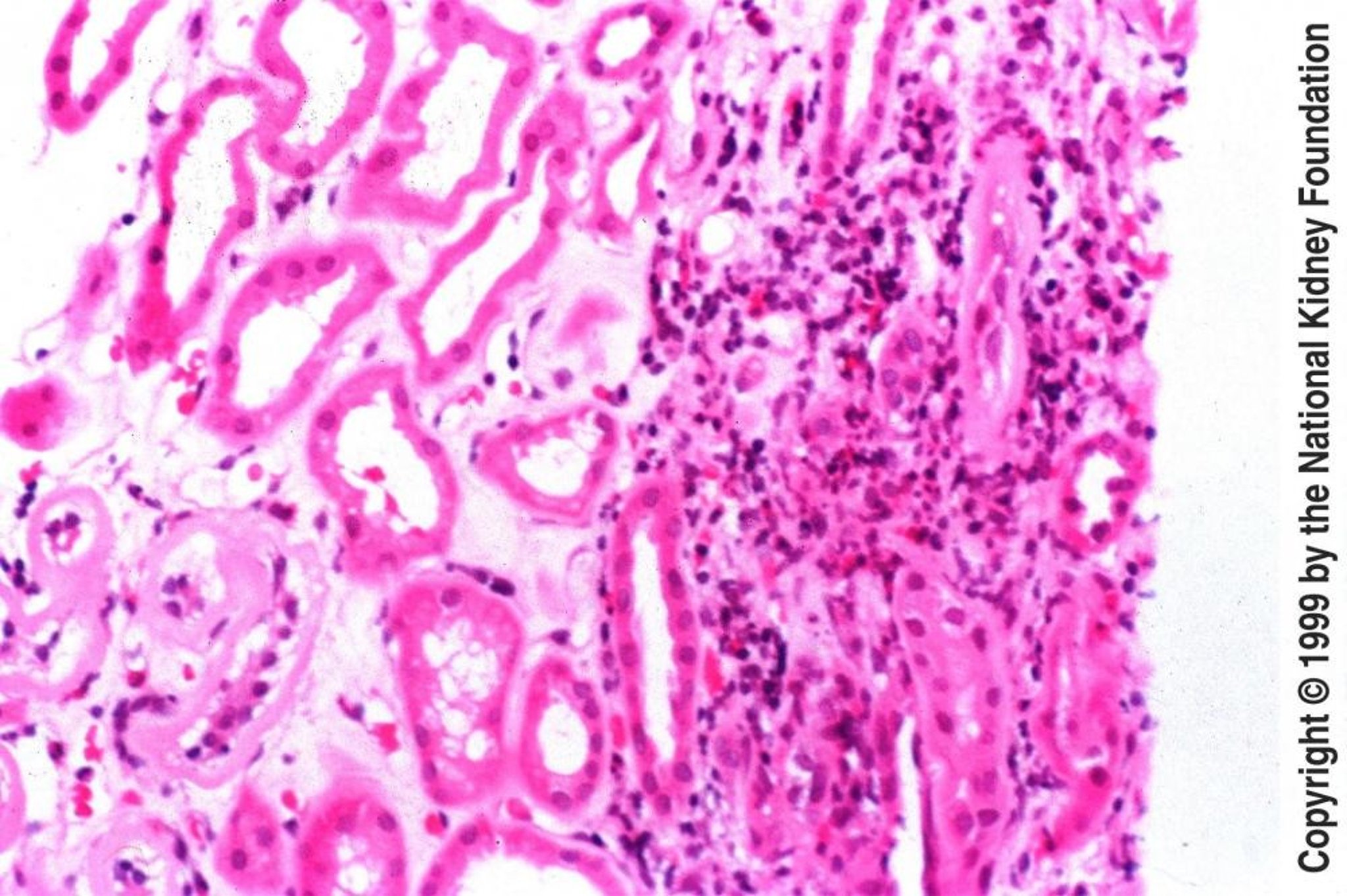
    In ATIN, glomeruli are usually normal. The earliest finding is interstitial edema, typically followed by interstitial infiltration with lymphocytes, plasma cells, eosinophils, and a few PMNs. In severe cases, inflammatory cells can be seen invading the space between the cells lining the tubular basement membrane (tubulitis); in other specimens, granulomatous reactions resulting from exposure to methicillin, sulfonamides, mycobacteria, or fungi may be seen. The presence of noncaseating granulomas suggests sarcoidosis. Immunofluorescence or electron microscopy seldom reveals any pathognomonic changes.

    CTIN: Findings of CTIN are generally similar to those of ATIN, although urinary RBCs and WBCs are uncommon. Because CTIN is insidious in onset and interstitial fibrosis is common, imaging tests may show small kidneys with evidence of scarring and asymmetry.

    In CTIN, renal biopsy is not often done for diagnostic purposes but has helped characterize the nature and progression of tubulointerstitial disease. Glomeruli vary from normal to completely destroyed. Tubules may be absent or atrophied. Tubular lumina vary in diameter but may show marked dilation, with homogeneous casts. The interstitium contains varying degrees of inflammatory cells and fibrosis. Nonscarred areas appear almost normal. Grossly, the kidneys are small and atrophic.

    Photographs

    Acute Tubulointerstitial Nephritis

    Acute Tubulointerstitial Nephritis

    Prognosis

    In drug-induced ATIN, renal function usually recovers within 6 to 8 wk when the causative drug is stopped, although some residual scarring is common. Recovery may be incomplete, with persistent azotemia above baseline. Prognosis is usually worse if ATIN is caused by NSAIDs than by other drugs. When other factors cause ATIN, histologic changes usually are reversible if the cause is recognized and removed; however, some severe cases progress to fibrosis and chronic kidney disease. Regardless of cause, irreversible injury is suggested by the following:

    • Diffuse rather than patchy interstitial infiltrate
    • Significant interstitial fibrosis
    • Delayed response to prednisoneSome Trade Names
      DELTASONE
      Click for Drug Monograph
    • Acute kidney injury lasting > 3 wk

    In CTIN, prognosis depends on the cause and on the ability to recognize and stop the process before irreversible fibrosis occurs. Many genetic (eg, cystic kidney disease), metabolic (eg, cystinosis), and toxic (eg, heavy metal) causes may not be modifiable, in which case CTIN usually evolves to end-stage renal disease.

    Treatment

    • Treatment of cause (eg, stopping the causative drug)
    • Corticosteroids for immune-mediated and sometimes drug-induced acute tubulointerstitial nephritis

    Treatment of both ATIN and CTIN is management of the cause. For immunologically induced ATIN and sometimes drug-induced ATIN, corticosteroids (eg, prednisoneSome Trade Names
    DELTASONE
    Click for Drug Monograph
    1 mg/kg po once/day with gradual tapering of the dose over 4 to 6 wk) may accelerate recovery. For drug-induced ATIN, corticosteroids are most effective when given within 2 wk of stopping the causative drugs. NSAID-induced ATIN is less responsive to corticosteroids than other drug-induced ATIN. ATIN should be proven by biopsy before corticosteroids are started. Treatment of CTIN often requires supportive measures such as controlling BP and treating anemia associated with kidney disease. In patients with CTIN and progressive renal injury, ACE inhibitors or angiotensin II receptor blockers may slow disease progression.

    Key Points

    • Causes of CTIN are myriad and much more diverse than ATIN (usually caused by an allergic reaction to a drug or by an infection).
    • Symptoms are often absent or nonspecific, particularly in CTIN.
    • Suspect the diagnosis based on risk factors and urinary sediment, exclude other causes using imaging, and sometimes confirm the diagnosis by biopsy.
    • Stop causative drugs, treat any other causes, and provide supportive treatment.
    • Treat biopsy-proven immune-mediated and sometimes drug-induced ATIN with corticosteroids (within 2 wk of stopping any causative drugs).

    Last full review/revision March 2013 by Navin Jaipaul, MD, MHS

    Content last modified March 2013

    Buy the Book

    Mobile Versions

    Back to Top

    Previous: Contrast Nephropathy

    Next: Analgesic Nephropathy

    Audio
    Figures
    Photographs
    Sidebars
    Tables
    Videos

    Copyright     © 2010-2013 Merck Sharp & Dohme Corp., a subsidiary of Merck & Co., Inc., Whitehouse Station, N.J., U.S.A.    Privacy    Terms of Use