Diphtheria is an acute pharyngeal or cutaneous infection caused mainly by toxigenic strains of the gram-positive bacillus Corynebacterium diphtheriae and rarely by other, less common Corynebacterium
Corynebacterium diphtheriae usually infect the nasopharynx (respiratory diphtheria) or skin (cutaneous diphtheria).
Diphtheria is now rare in the US and other high-income countries because childhood immunization is widespread. Susceptibility in high-income countries has also increased because booster immunization rates in adults are declining.
Diphtheria is endemic in many countries in Asia, the South Pacific, the Middle East, Eastern Europe, Venezuela, Haiti, and the Dominican Republic. Outbreaks in Indonesia, Thailand, Vietnam, Laos, South Africa, Sudan, and Pakistan have occurred since 2011 (travel information about diphtheria is available at the Centers for Disease Control and Prevention [CDC] web site for travelers' health). Diphtheria may be present in returning travelers or migrants from countries where diphtheria is endemic.
Diphtheria toxin
Diphtheria strains infected by a beta-phage, which carries a toxin-encoding gene, produce a potent toxin. This toxin first causes inflammation and necrosis of local tissues and then can damage the heart, nerves, and sometimes the kidneys.
Nontoxigenic strains of C. diphtheriae can also cause nasopharyngeal infection and sometimes systemic disease (eg, endocarditis, septic arthritis).
Transmission
Humans are the only known reservoir for C. diphtheriae. The organism is spread by
Respiratory droplets
Contact with nasopharyngeal secretions (including from asymptomatic carriers)
Contact with infected skin lesions
Fomites (rare)
A carrier state is common in endemic regions but not in high-income countries. Immunity derived from vaccination or active infection may not prevent patients from becoming carriers; however, most patients who are adequately treated do not become carriers. Patients with clinical illness or asymptomatic carriers may transmit the infection.
Poor personal and community hygiene contributes to the spread of cutaneous diphtheria.
Symptoms and Signs of Diphtheria
Symptoms of diphtheria vary depending on
Where the infection is
Whether the strain produces toxin
Most respiratory infections are caused by toxigenic strains. Cutaneous infections are caused by toxigenic and nontoxigenic strains. Toxin is poorly absorbed from the skin; thus, toxin complications are rare in cutaneous diphtheria.
Pharyngeal infection
After an incubation period, which averages 5 days, and a prodromal period of between 12 and 24 hours, patients develop mild sore throat, dysphagia, low-grade fever, and tachycardia. Nausea, emesis, chills, headache, and fever are more common among children.
If a toxigenic strain is involved, the characteristic membrane appears in the tonsillar area. It may initially appear as a white, glossy exudate but typically becomes dirty gray, tough, fibrinous, and adherent so that removal causes bleeding. Local edema may cause a visibly swollen neck (bull neck), hoarseness, stridor, and dyspnea. The membrane may extend to the larynx, trachea, and bronchi and may partially obstruct the airway or suddenly detach, causing complete obstruction.
If a large amount of toxin is absorbed, severe prostration, pallor, tachycardia, stupor, and coma may occur; toxemia may cause death within 6 to 10 days.
Mild disease with a serosanguineous or purulent discharge and irritation of the external nares and upper lip occur in patients who have only nasal diphtheria.
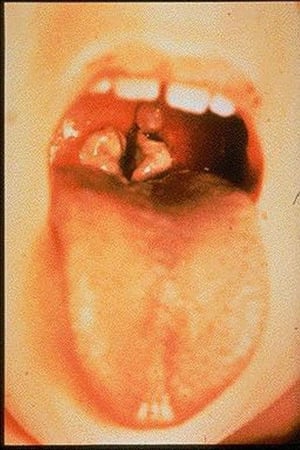
Image courtesy of the Centers for Disease Control and Prevention.
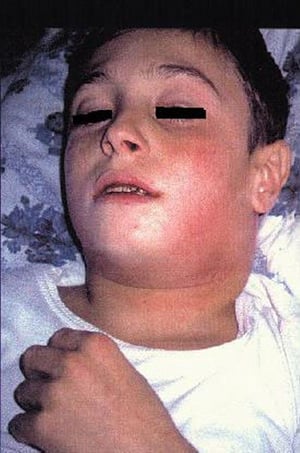
Image courtesy of the Public Health Image Library of the Centers for Disease Control and Prevention.
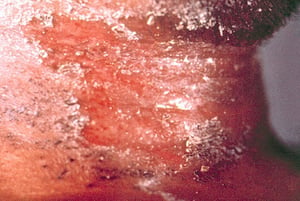
Image courtesy of the Public Health Image Library of the Centers for Disease Control and Prevention.
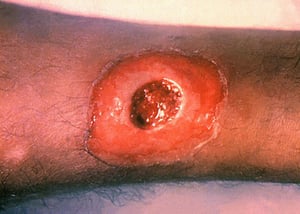
Image courtesy of the Public Health Image Library of the Centers for Disease Control and Prevention.

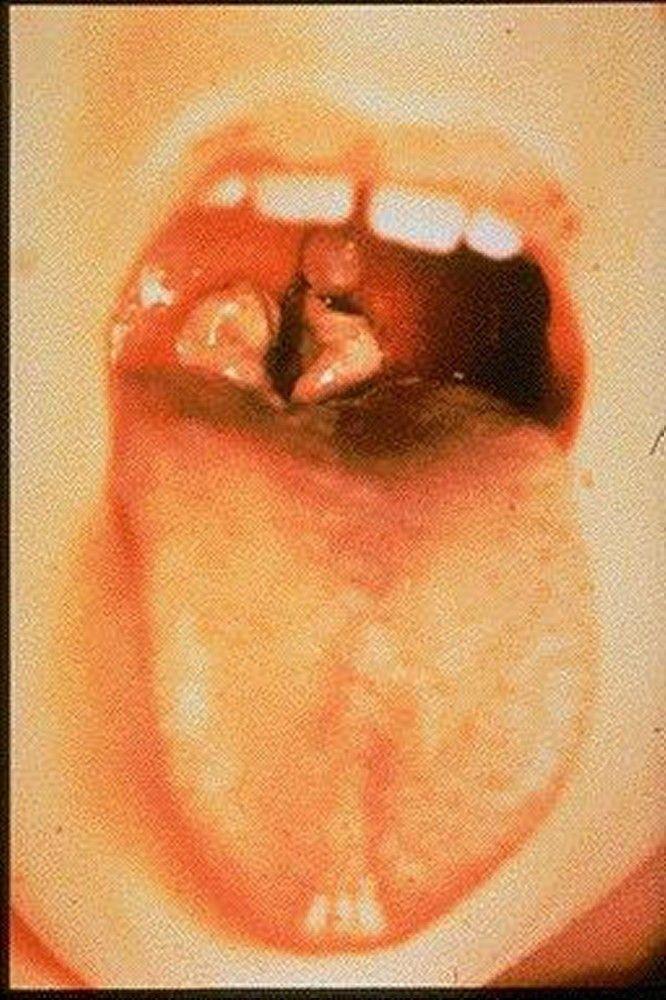
Image courtesy of the Centers for Disease Control and Prevention.

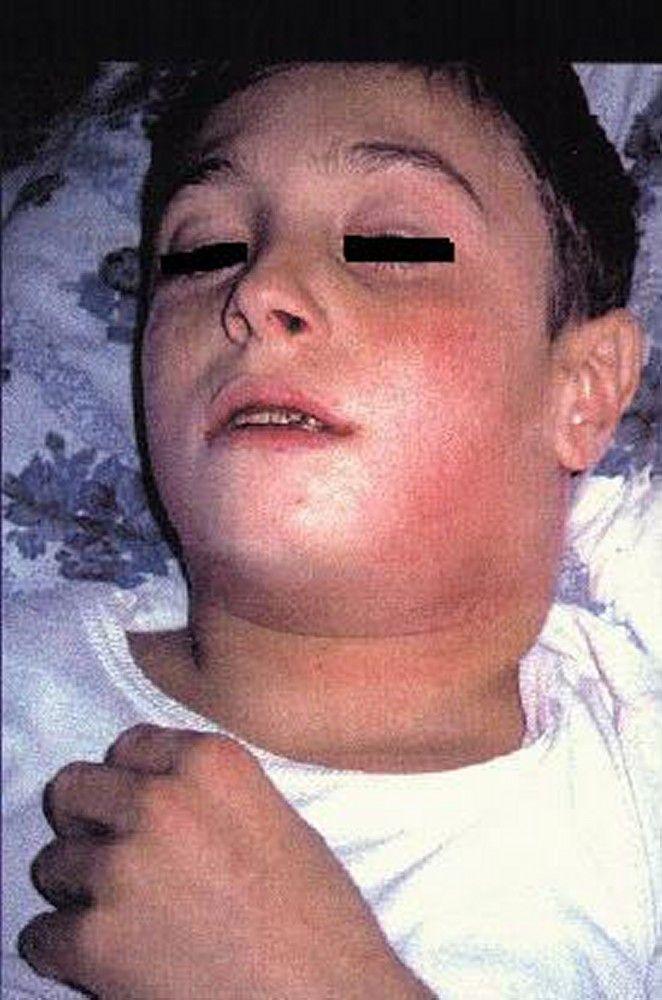
Image courtesy of the Public Health Image Library of the Centers for Disease Control and Prevention.

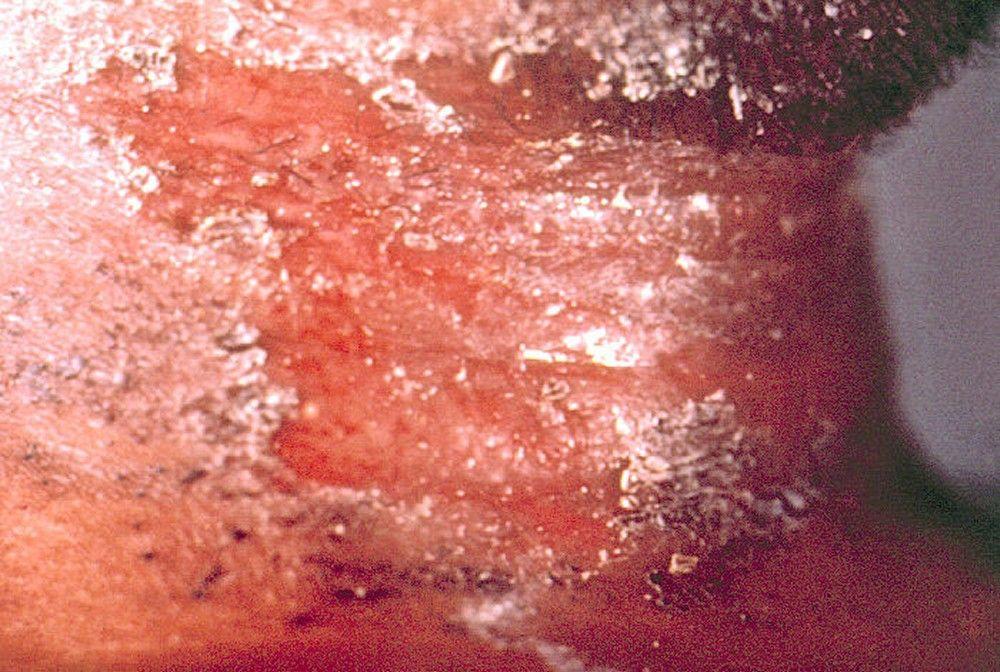
Image courtesy of the Public Health Image Library of the Centers for Disease Control and Prevention.

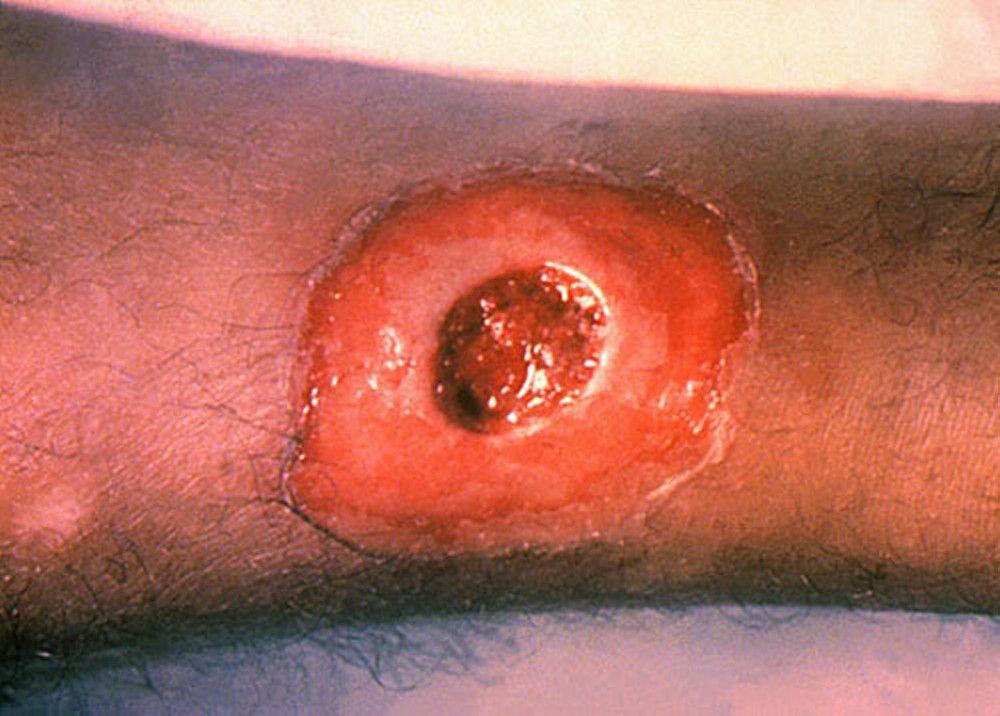
Image courtesy of the Public Health Image Library of the Centers for Disease Control and Prevention.
Skin infection
Skin lesions usually occur on the extremities and are varied in appearance, often indistinguishable from chronic skin conditions (eg, eczema, psoriasis, impetigo). A few patients have nonhealing, punched-out ulcers, occasionally with a grayish membrane. Pain, tenderness, erythema, and exudate are typical. If exotoxin is produced, lesions may be numb. Concomitant nasopharyngeal infection occurs in 20 to 40% by direct or indirect inoculation with the organism, often from preexisting chronic skin lesions.
Complications
The main complications of diphtheria are cardiac and neurologic.
Myocarditis is usually evident by the 10th to 14th day but can appear any time during the 1st to the 6th week, even while local respiratory symptoms are subsiding; risk of cardiac toxicity is related to degree of local infection. Insignificant ECG changes occur in 20 to 30% of patients, but atrioventricular dissociation, complete heart block, and ventricular arrhythmias may occur and are associated with a high mortality rate. Heart failure may develop.
Nervous system toxicity is uncommon (about 5%) and limited to patients with severe respiratory diphtheria. The toxin causes a demyelinating polyneuropathy that affects cranial and peripheral nerves. The toxic effects usually begin during the 1st week of illness with loss of ocular accommodation and bulbar palsy, causing dysphagia and nasal regurgitation. Peripheral neuropathy appears during the 3rd to 6th week. It is both motor and sensory, although motor symptoms predominate. The diaphragm may become paralyzed, sometimes causing respiratory failure. Resolution occurs over many weeks. Autonomic dysfunction in the form of loss of vasomotor tone (tachycardia, arrhythmias, and arterial hypotension) is also a complication of diphtheria.
In severe cases, acute renal failure may occur because the toxin damages the kidneys.
Overall mortality is 3%; it is higher in those with any of the following:
Delayed presentation
Acute renal failure
Myocarditis
Age < 15 years or > 40 years
Diagnosis of Diphtheria
Gram stain and culture
Pharyngeal diphtheria needs to be considered in patients with nonspecific findings of pharyngitis, cervical adenopathy, and low-grade fever if they also have systemic toxicity plus hoarseness, palatal paralysis, or stridor. The appearance of the characteristic membrane suggests the diagnosis.
Gram stain of a specimen from the membrane may reveal gram-positive bacilli with metachromatic (beaded) staining in typical Chinese-character configuration, with club-shaped swelling at one or both ends. Material for culture should be obtained from below the membrane, or a portion of the membrane itself should be submitted. The laboratory should be notified that C. diphtheriae is suspected, so that special culture media (Loeffler or Tindale) can be used. In vitro testing for toxin production (modified Elek test) is done to differentiate toxigenic from nontoxigenic strains. Polymerase chain reaction testing for the diphtheria toxin gene can be done.
Cutaneous diphtheria should be considered when a patient develops skin lesions during an outbreak of respiratory diphtheria. Swab or biopsy specimens should be cultured. Cutaneous diphtheria lesions may be coinfected with group A streptococci or Staphylococcus aureus.
ECG should be done to look for ST-T wave changes, QTc prolongation, and/or 1st-degree heart block related to myocarditis, which often becomes evident as the respiratory symptoms resolve.
Treatment of Diphtheria
Diphtheria antitoxin
Penicillin or erythromycin
Symptomatic patients with respiratory diphtheria should be hospitalized in an intensive care unit to monitor for respiratory and cardiac complications. Isolation with respiratory-droplet and contact precautions is required and must continue until 2 sequential cultures, taken starting 24 and 48 hours after antibiotics are stopped (after at least 14 days of treatment), are negative.
Diphtheria antitoxin
Diphtheria antitoxin must be given early without waiting for culture confirmation because the antitoxin neutralizes only toxin not yet bound to cells. The use of antitoxin for cutaneous disease, without evidence of respiratory disease, is of questionable value because toxic sequelae have rarely been reported in cutaneous diphtheria; however, some experts recommend it.
In the US, antitoxin must be obtained from the Centers for Disease Control and Prevention (CDC) through the CDC’s Emergency Operations Center at 770-488-7100 (see also the CDC’s information page regarding distribution of antitoxin).
CAUTION: Diphtheria antitoxin is derived from horses; therefore, a skin (or conjunctival) test to rule out sensitivity should always precede administration.
The dose of antitoxin, ranging from 20,000 to 100,000 units IM or IV, is determined by the following:
Site and severity of symptoms
Duration of the disease
Complications
Allergic reactions include anaphylaxis occurring within 30 minutes of administration and delayed allergic reactions (serum sickness, a type III hypersensitivity reaction
Antibiotics
Antibiotics are required to eradicate the organism and prevent spread; they are not substitutes for antitoxin.
Patients may be given either of the following:
Other treatments
For cutaneous diphtheria, thorough cleansing of the lesion with soap and water and administration of systemic antibiotics for 10 days are recommended.
Recovery from severe diphtheria is slow, and patients must be advised against resuming activities too soon. Even normal physical exertion may harm patients recovering from myocarditis.
Vaccination is required after recovery for patients who had diphtheria because infection does not guarantee immunity.
Prevention of Diphtheria
Prevention consists of
Infection control measures (respiratory droplet isolation until 2 cultures at least 24 hours apart are negative)
Vaccination (primary and postexposure)
Antibiotics
Vaccination
See Diphtheria-Tetanus-Pertussis Vaccine for more information, including indications, contraindications and precautions, dosing and administration, and adverse effects. See also the vaccine schedules for children and adults from the Centers for Disease Control and Prevention (CDC) and DTaP/Tdap/Td vaccine recommendations from the Advisory Committee on Immunization Practices (ACIP).
The vaccine for diphtheria contains diphtheria toxoid; it is available only in combination with other vaccines.
Everyone should be vaccinated at prescribed intervals using the following:
Children < 7 years of age: The diphtheria-tetanus–acellular pertussis (DTaP) vaccine is part of routine childhood vaccination.
Adolescents and adults: The tetanus-diphtheria-pertussis (Tdap) vaccine is given at age 11 or 12 and to people ≥ 13 years of age who have never received Tdap (regardless of the interval since the last tetanus-diphtheria [Td] vaccine) or whose vaccine status is unknown. A tetanus-diphtheria (Td) booster is given every 10 years after that.
After exposure, diphtheria immunization should be updated in all contacts (including hospital personnel) who have not completed a primary series or who have gone > 5 years since their last booster dose. The vaccine should also be given if immunization status is unknown. An age-appropriate diphtheria toxoid-containing vaccine is used.
Postexposure antibiotics
All close contacts should be examined; surveillance for evidence of disease is maintained for 7 days.
Nasopharyngeal and throat cultures for C. diphtheriae should be done regardless of immunization status because the vaccine protects only against the effects of diphtheria toxin; it does not prevent infection with C. diphtheriae.
< 30 kg and 1.2 million units IM for those > 30 kg).
Key Points
Usually, diphtheria is a cutaneous or nasopharyngeal infection, but a potent toxin can damage the heart, nerves, and sometimes the kidneys.
Diphtheria is rare in high-income countries because of widespread vaccination but is endemic in many low- and middle-income countries; rates are increasing slightly in high-income countries because rates of vaccination and revaccination are declining.
Pharyngeal infection causes a characteristic membrane in the tonsillar area; it may initially appear as a white, glossy exudate but typically becomes dirty gray, tough, fibrinous, and adherent.
Vaccinate patients after recovery, and vaccinate close contacts who have not completed a primary series or who have gone > 5 years since their last booster.
Do nasopharyngeal and throat cultures of close contacts regardless of their immunization status.
Give antibiotics to close contacts; duration of treatment depends on culture results.
More Information
The following English-language resources may be useful. Please note that THE MANUAL is not responsible for the content of these resources.
Centers for Disease Control and Prevention (CDC): Infectious Diseases Related to Travel: Diphtheria
CDC: Emergency Operations Center to request diphtheria antitoxin or call 770-488-7100
CDC: Recommendations for Ages 18 Years or Younger, United States, 2022
CDC: Recommendations for Ages 19 Years or Older, United States, 2022
Advisory Committee on Immunization Practices (ACIP): DTaP/Tdap/Td vaccine recommendations