
Larval cyathostominosis is a clinical syndrome caused by mass emergence of encysted cyathostomin larvae from the large intestinal walls. It is characterized by acute, generalized typhlocolitis, resulting in a profuse, watery diarrhea, and horses often present with ventral edema. Laboratory testing typically reveals neutrophilia and hypoalbuminemia, and ultrasonography can reveal edematous and thickened, large intestinal walls. Fecal flotation and egg counts are not diagnostic. Treatment includes intensive fluid therapy, anti-inflammatory drugs, and larvicidal medication.

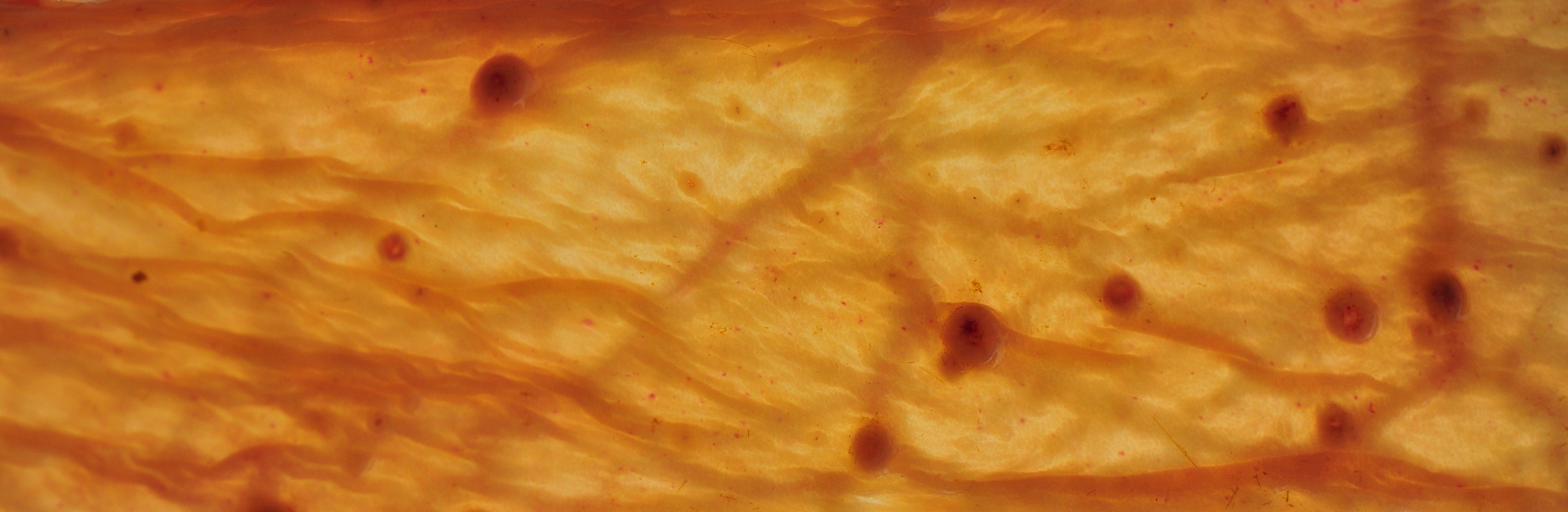
Courtesy of Dr. Martin K. Nielsen.
Cyathostomin parasites, also often referred to as small strongyles, are ubiquitous in grazing horses across the world, and the subfamily comprises 50 species within 14 different genera. Forty of these species infect horses, and it is common to find co-infections with 10–20 different species within a single horse. Clinically healthy horses can harbor cyathostomin burdens ranging from a few thousand to more than a million worms. Very little is known regarding biologic and pathogenic differences between species due to a lack of antemortem diagnostic tools to differentiate them. As a result, cyathostomins are discussed as a biologically uniform group in regard to pathogenicity and anthelmintic resistance.
As part of the normal life cycle, ingested third stage larvae (L3) migrate into the intestinal walls of the cecum and colon, where they encyst and go through the early (EL3), late third (LL3), and fourth (L4) stages. The L4s then excyst and migrate back into the intestinal lumen as luminal L4s before they reach the final and sexually mature stage (L5). The EL3 larvae undergo variable degrees of arrested development (hypobiosis) for durations ranging from a few weeks or months to several years. In climates with well-defined grazing seasons, a seasonal pattern of the relative proportion of arrested EL3s has been reported. This leads to an accumulation of EL3s over the course of the grazing season, with the largest number during autumn and winter months. As a result, horses can harbor hundreds of thousands of encysted larvae, especially horses < 5 years of age.
Larval cyathostominosis occurs when a large number of encysted larvae synchronously emerge from their cysts within the intestinal walls. Each larva induces an inflammatory reaction, and high numbers can lead to a generalized typhlocolitis affecting primarily the cecum and ventral colon. Despite the ubiquity of cyathostomin parasites and the accumulation of encysted larvae, however, larval cyathostominosis is rarely observed around the world. The majority of reported cases appear to be from countries in northern, temperate climates.
Clinical Signs of Larval Cyathostominosis in Horses
The typical case of acute larval cyathostominosis is a young horse (1–4 years old, rarely foals), but the condition can occur in mature horses as well. The horse has often been recently dewormed with an effective nonlarvicidal anthelmintic and is presenting during late autumn, winter, or early spring with these clinical signs:
sudden onset of profuse watery diarrhea
severe dehydration
varying degrees of circulatory shock
edema of the sternal region, prepuce, and distal limbs
possible colic signs
weight loss
body temperature can be elevated, normal, or decreased
Clinical laboratory findings typically include:
neutrophilic leukocytosis
hypoproteinemia and hypoalbuminemia
eosinophilia (in some cases)
increased acute phase marker concentrations (eg, amyloid A, fibrinogen)
lactic acidosis and metabolic acidosis
Diagnosis of Larval Cyathostominosis in Horses
There are no pathognomonic signs, and no diagnostic tests are useful in clinical cases. Fecal flotation and egg counts are not useful because the condition is caused by larval stages emerging from the intestinal walls and not the egg-producing adults. Similarly, cyathostomin larvae can sometimes be observed on a rectal sleeve or in fecal samples, but this only documents presence of parasites and does not indicate pathology.
Diagnosing the disease is based on clinical presentation, clinical laboratory findings, and anthelmintic treatment history of the horse and exclusion of differential diagnoses. Thus, fecal cultures and PCR testing for salmonellosis, as well as clostridial toxin assays and sampling for Neorickettsia risticii (the cause of Potomac Horse Fever) are relevant in any case of peracute colitis. Ultrasonography may help to differentiate colic from colitis cases and often reveal markedly thickened and edematous cecal or colonic walls along with signs of watery diarrhea. In chronic cases of cyathostominosis, weight loss and edema formation can occur due to severe enteric protein losses. Ultrasonography can help to differentiate cases of equine proliferative enteropathy due to enteritis from Lawsonia intracellularis infection, which is commonly diagnosed in weanlings.
Treatment of Larval Cyathostominosis in Horses
In the acute presentation, treatment should be directed at supporting measures:
replacement of fluid and electrolyte losses
correction of acid/base derangements
plasma expanders if the horse is hypoproteinemic
anti-inflammatory therapy
nutritional support and mucosal repair
anticoagulation
antibiotics if there is suspicion of bacterial superinfection
Anti-inflammatory therapy is generally recommended to stabilize the generalized typhlocolitis, but there is very little evidence documenting beneficial effects or supporting a choice of dosage and treatment course. Oral administration of prednisolone or dexamethasone has been suggested, but some clinicians prefer NSAIDs. Both treatment options should be used with caution due to their potential side effects in horses.
In the 1990s, case-fatality rates of ~50% were reported for acute larval cyathostominosis. Cases appear less common now, but the prognosis for survival remains similar.
The current recommendation is to include a larvicidal anthelmintic as part of the treatment plan. The anthelmintic drug of choice is a single oral dose of moxidectin (0.4 mg/kg). A 5-day regimen of oral fenbendazole (10 mg/kg in North America, 7.5 mg/kg in Europe) also has a label claim for larvicidal efficacy, but anthelmintic resistance to benzimidazoles is widespread in cyathostomins. Thus, the fenbendazole larvicidal regimen should only be attempted in cases in which full efficacy and no signs of resistance have been recently tested and documented.
Prevention of Larval Cyathostominosis in Horses
Current parasite control recommendations are designed to reduce the risk of larval cyathostominosis through fecal diagnostic testing, routine monitoring of anthelmintic efficacy, and a combination of strategic and targeted treatments. Coupled with good pasture management and regulation of stocking density, this should reduce parasite contamination of pastures and reduce the infection pressure.
A detailed presentation of current recommendations for equine parasite control can be found in the American Association for Equine Practitioners (AAEP) Guidelines (see below).
Zoonotic Risk of Larval Cyathostominosis in Horses
None.
Key Points
Larval cyathostominosis is an acute, generalized typhlocolitis caused by mass emergence of cyathostomin larvae from the intestinal mucosa.
Cyathostomins are ubiquitous in grazing horses across the world, but larval cyathostominosis is extremely rare.
Diagnosis is based on clinical presentation and clinical laboratory findings, and history.
Fecal diagnostic tests and finding cyathostomin specimens in the feces have no diagnostic value.
The treatment of choice is a single dose of moxidectin and supportive care.
Current recommendations for equine parasite control are designed to reduce the risk of infection, preventing larval cyathostominosis.
For More Information
AAEP recommendations for equine parasite control
Also see pet health content regarding small strongyles in horses.