

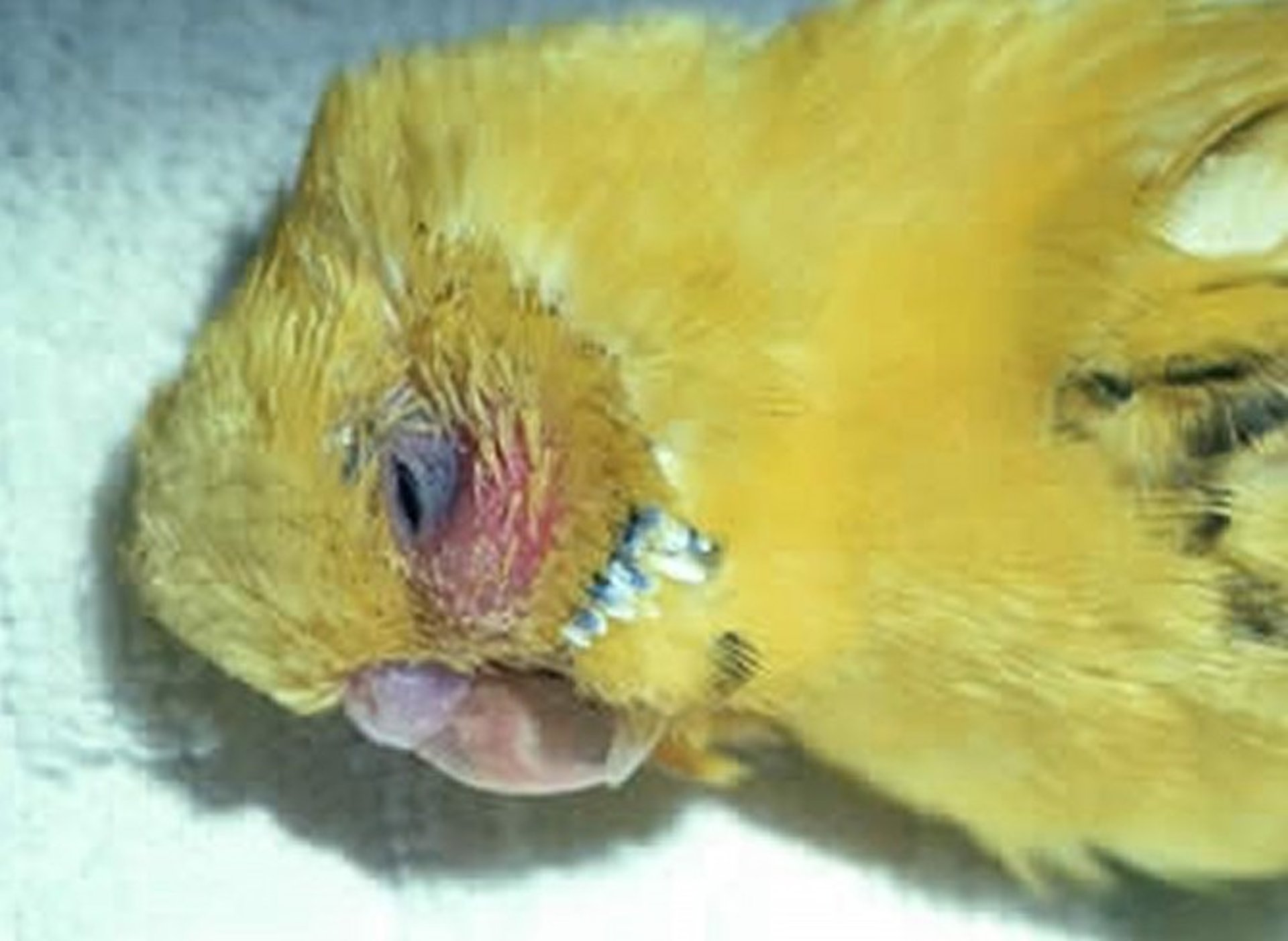
Courtesy of Dr. Louise Bauck.
Bacterial diseases are common in pet birds and should be considered in the differential list of any sick bird. Inappropriate husbandry and nutrition are often contributing factors. Neonates and young birds are especially susceptible. GI and respiratory infections are most common and can lead to systemic disease.
Normal bacterial flora of companion birds include Lactobacillus, Corynebacterium, nonhemolytic Streptococcus, Micrococcus spp, and Staphylococcus epidermidis.
The most commonly reported pathogens are gram-negative bacteria (Klebsiella, Pseudomonas, Aeromonas, Enterobacter, Proteus, and Citrobacter spp, Escherichia coli, and Serratia marcescens). Pasteurella spp have been reported as possible septicemic agents in birds attacked by pet cats or rats. Mycobacterium and Chlamydia are common intracellular bacterial pathogens. Infections with Salmonella spp are occasionally seen.
The most common gram-positive bacterial pathogens are Staphylococcus aureus, S intermedius, Clostridium, Enterococcus, Streptococcus, and other Staphylococcus spp. Methicillin-resistant S aureus (MRSA) is rare but has been documented. Mycoplasma spp have been implicated in chronic sinusitis, often found in cockatiels. This organism is difficult to culture, and the true incidence is unknown. Staphylococci and streptococci (especially hemolytic strains) and Bacillus spp are thought to be responsible for several dermatologic conditions in psittacine birds. Staphylococci are often isolated from lesions of pododermatitis (bumblefoot) in many avian species.
Clostridial organisms are common secondary invaders of damaged cloacal tissue in birds with cloacal prolapse or papillomatosis. They are also seen in birds with proventricular dilatation disease due to decreased GI motility. Several specific syndromes of birds can arise from various species of clostridia. A Gram stain or anaerobic culture is necessary to identify these organisms.
Diagnosis is based on clinical signs and results of cytologic examination and culture of tissue or swab samples. A Gram stain is used to identify normal flora, yeast, and spore-forming bacteria. Culture is needed to identify specific organisms and their sensitivity to antimicrobials. Samples can be obtained from the respiratory, GI, urinary, and reproductive tracts. Sample sites for culture and cytology include the choanal slit, sinus, cloaca, wounds, conjunctiva, internal organs (via ultrasound-guided fine-needle aspirates, endoscopic examination, or surgery), and blood.
Treatment is based on location of infection and results of culture and sensitivity testing. See table: Antimicrobials Used in Pet Birds for a partial list of frequently recommended antimicrobials.
Chlamydiosis
Chlamydia psittaci is an obligate intracellular bacterium that can infect all companion birds but is especially common in cockatiels, budgerigars, and small parrots. The incubation period of C psittaci is from 3 days to several weeks. The organism is excreted in the feces and in nasal and ocular discharge of infected birds. Although labile in the environment, the organism can remain infectious in organic debris for >1 month. Clinical signs range from asymptomatic carriers to anorexia, dyspnea or greenish diarrhea. Diagnosis can be challenging. A PCR assay of a combined conjunctival, choanal, and cloacal swab along with serologic testing is recommended. Doxycycline is the treatment of choice and is given orally or by injection for 45 days. Psittacosis is a zoonotic and reportable disease.
Chlamydia psittaci is an obligate intracellular bacterium that can infect all companion birds but is especially common in cockatiels, budgerigars, and parrots. Current state and federal regulations governing the testing, reporting, treatment, and quarantine for Chlamydia should be followed.
Clinical Findings of Chlamydiosis in Pet Birds
Clinical signs range from asymptomatic carriers to severe disease and may include ocular, nasal, or conjunctival irritation and discharge; anorexia; dyspnea; depression; dehydration; polyuria; biliverdinuria; and diarrhea. Clinically ill birds may have a leukocytosis, monocytosis, and increased AST and bile acid concentrations. Radiographs may reveal hepatomegaly, splenomegaly, or airsacculitis.
Diagnosis of Chlamydiosis in Pet Birds
Diagnosis of C psittaci can be challenging, especially in the absence of clinical signs. Few laboratories will culture the organism. Various antibody and antigen tests are available, but these have limitations.
Serologic tests available include indirect fluorescent antibody, complement fixation, ELISA, and fluorescent antibody. A positive serologic test result is evidence that a bird has been exposed but might not indicate active infection. Exposed but clinically healthy birds may produce appreciable antibody titers. Acutely ill birds may not mount an antibody response, also yielding false-negative results. These factors make an antibody test an insufficient screening tool for chlamydiosis in birds when used alone. Because of the intracellular nature of Chlamydia and the reduction in numbers of organisms that accompanies antimicrobial use, false-negative results of antigen tests are common.
With the advent of PCR assay testing, diagnosis of Chlamydia is more readily accomplished, and attempts to culture the organism or identify elementary bodies in tissue specimens are rarely done. Laboratories should be consulted before shipment to identify appropriate samples and shipping methods. Because of the difficulty in diagnosing Chlamydia, a single test method may not be adequate, and a PCR assay of a combined conjunctival, choanal, and cloacal swab sample, in conjunction with a serologic test, is recommended.
Treatment of Chlamydiosis in Pet Birds
Doxycycline is commonly used for treatment of Chlamydia infection. Because the treatment period required to eliminate the organism is uncertain, treatment for 45 days is recommended. Dietary calcium sources should be reduced if doxycycline is administered orally. Clinically ill birds should be treated with oral or injectable doxycycline initially to establish therapeutic drug levels quickly. Formulations of doxycycline in the food or water and chlortetracycline-impregnated seeds or other foods are available or can be manufactured to treat infected flocks.
A doxycycline-medicated feed for budgerigars can be created by combining 300 mg of doxycycline hyclate (from capsules) with 1 kg of a mixture of oats, millet, and sunflower oil (one part cracked steel oats is mixed with three parts hulled millet; add 5–6 mL of sunflower oil per kg of the oat/seed mixture). Fresh medicated mix should be made daily and fed as the sole diet for 30 days.
Doxycycline may also be added to the water for cockatiels (200–400 mg doxycycline hyclate/L of water), Goffin’s cockatoos (400–600 mg/L), and African grey parrots (800 mg/L). These indirect modes of antimicrobial administration depend on ingesting sufficient quantities of antimicrobials to maintain effective blood levels.
The only suitable injectable doxycycline formulation safe to use in birds is vibramycin SF IV (Vibravenous), imported from the Netherlands. It may be given either SC or IM at 75–100 mg/kg every 5–7 days for 45 days.
Zoonotic Potential of Chlamydiosis in Pet Birds
C psittaci is transmissible to humans, so the zoonotic risk must be considered when designing the diagnostic and therapeutic plan. Current state and federal regulations governing the testing, reporting, treatment, and quarantine for birds infected with Chlamydia should be followed. A compendium of control measures is available from The National Association of State Public Health Veterinarians.
Avian Mycobacteriosis
Avian mycobacteriosis is an important disease that affects companion, exotic, and domestic birds. This disease is most commonly caused by Mycobacterium avium and M genovense. Lesions are typically found in the liver and GI tract, although other organ systems can be affected. Signs of disease are generally nonspecific depending on duration of infection and organ system affected. These organisms are slow-growing, and disease is typically chronic in nature, so it tends to be a disease of older birds.
Diagnosis is challenging and includes PCR assay, acid-fast staining, and in some cases biopsy, cytology, and/or histopathology. Treatment involves combination antimicrobial therapy for 6–12 months or longer. Although current research indicates that infected birds are unlikely to present a zoonotic risk, the potential for zoonotic transmission cannot be ignored, especially to immunocompromised humans.
Avian mycobacteriosis infections caused byMycobacterium intracellulare, M bovis, and M tuberculosis are less commonly reported. Psittacine birds most commonly infected are brotogeris parakeets and Amazon parrots. Avian mycobacteriosis is a chronic progressive disease affecting the liver and GI tract.
Clinical Findings of Avian Mycobacteriosis
Clinical signs of avian mycobacteriosis include anorexia, weight loss, depression, and diarrhea. Birds with early infections may show few clinical signs.
Diagnosis of Avian Mycobacteriosis
Diagnosis of mycobacterial infection can be challenging and is most reliably done by acid-fast staining, culture, and/or DNA probe of a biopsy specimen. Biopsy of the liver, intestines, spleen, or a suspected mass is recommended; however, PCR assay of ultrasound-guided fine-needle aspirates of the liver may be diagnostic. Avian mycobacteria are difficult to culture, so a negative culture result does not exclude infection. A fecal acid-fast stain has poor sensitivity but may identify birds shedding large numbers of organisms; PCR assay of a fecal sample is a more sensitive test method. Most birds will have a significant leukocytosis with a monocytosis. Radiographs may reveal hepatomegaly and splenomegaly. Granulomas may occur that may be confused with tumors.
If infected birds are in a multiple bird collection, determining whether other birds are infected can be difficult. Husbandry and sanitation should be assessed. High-risk birds should be isolated and monitored by serial examinations (weights), CBCs, and fecal acid-fast stains and PCR testing.
Treatment of Avian Mycobacteriosis
Treatment involves combination antimicrobial therapy for 6–12 months or longer. Owner compliance is critical and should be discussed at length before beginning treatment. Use of multiple antimicrobials (typically three) is recommended, because mycobacterial organisms are prone to developing antimicrobial resistance. Antimicrobials in differing combinations that have been used successfully are rifabutin (45 mg/kg), clarithromycin (60–85 mg/kg), ethambutol (30 mg/kg), and enrofloxacin (20–30 mg/kg). All combinations are used daily.
Positive reinforcement training for targeting, and syringe training when long-term treatment is needed, can greatly facilitate treatment, as can compounding medications to increase palatability and reduce volume.
Due to the long duration of treatment, affected birds should be monitored monthly:
compliance assessed, weight /monitored
CBC, PCV, WBC, and biochemistry profile (liver enzymes) monitored
fecal Gram stain: assessed for fungal overgrowth (candidiasis)
Birds with advanced disease and granuloma formation have a poor prognosis. Although infections in humans have not been associated with exposure to birds, precautions should be taken for zoonotic risk, especially in immunocompromised humans.
For More Information
Also see pet health content regarding disorders and diseases of pet birds.