
Streptococcus suis is one of the most important pathogens of pigs, causing mainly septicemia with sudden death, meningitis, arthritis, and endocarditis, mostly in postweaned piglets. Diagnosis is suspected based on history and clinical signs and confirmed by bacterial culture. S suis is usually susceptible to beta-lactam antimicrobials, mostly penicillin and amoxicillin. There is no universal commercial vaccine available; autogenous vaccines are used with varying success.
S suis is a noteworthy pathogen of swine and one of the most important causes of bacterial mortality in piglets after weaning. It is considered a normal inhabitant of the upper respiratory tract (especially nonvirulent strains) and can be easily found in tonsils, which are considered a natural niche. It can also be isolated from the reproductive and GI tracts of clinically healthy pigs.
Etiology and Pathogenesis of Streptococcus suis Infection in Pigs
Streptococcus suis possesses antigens related to Lancefield group D streptococcus; however, it is taxonomically far from other members of this group. It is considered a facultatively anaerobic, gram-positive, nonmotile coccus, oriented in chains of varying lengths.
S suis produces alpha-hemolysis (incomplete hemolysis) on blood agar and is catalase negative (see Streptococcus suis, colony and Gram stain micrograph). It has a worldwide distribution, and originally 35 serotypes based on capsular antigens were described (serotypes 1 to 34 and serotype 1/2). However, serotypes 20, 22, 26 are now considered S parasuis and serotypes 32 and 34 S orisratti. Serotype 33, now S ruminantium, has been defined as a ruminant-associated pathogen. In summary, as of 2023, there are 29 serotypes of S suis officially recognized. Nonetheless, the number of serotypes considered highly virulent is relatively small and depends mainly on geographic location.

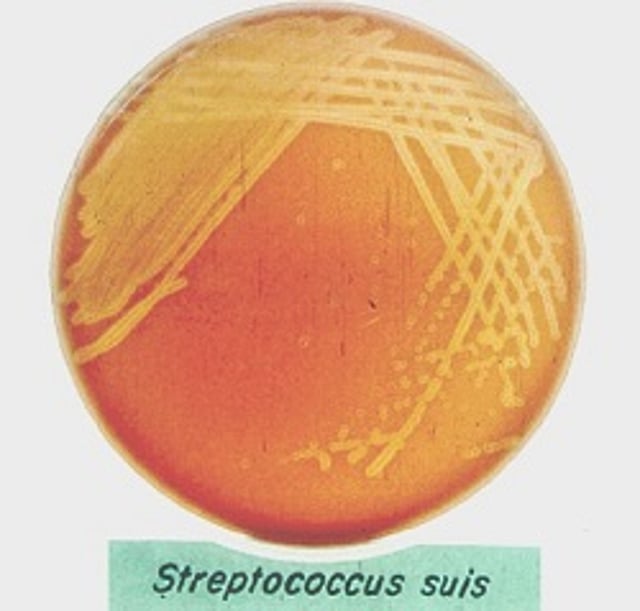
Courtesy of Dr. Marcelo Gottschalk

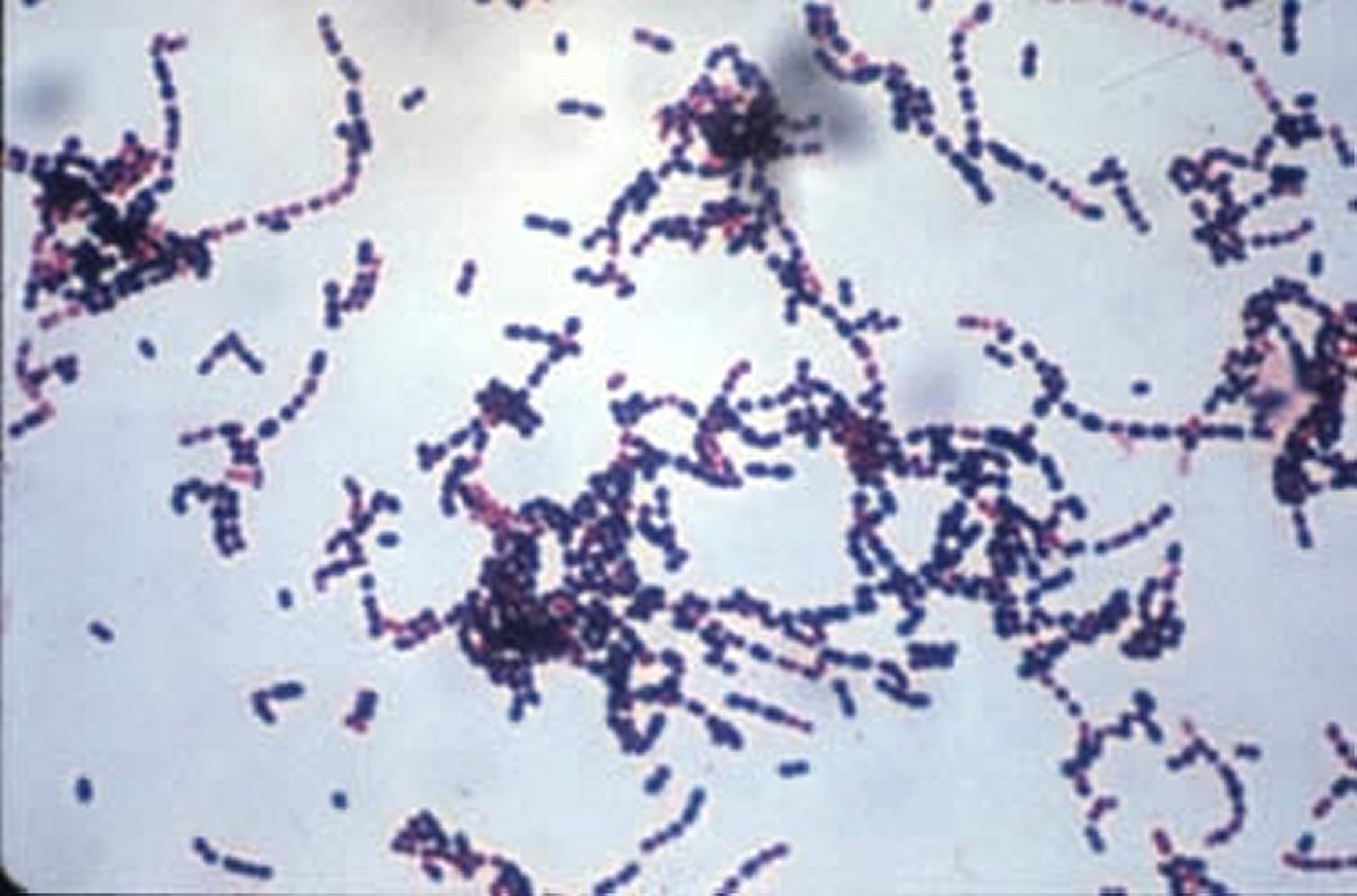
Courtesy of Dr. John Prescott.
Most studies on virulence factors of S suis have been performed with serotype 2 only. Type 2 virulent and nonvirulent strains exist, but characterization of virulence factors is still incomplete. Capsular polysaccharide is so far the most important critical virulence factor. However, well-encapsulated nonvirulent serotype 2 strains do exist. Some proteins, such as the muramidase-released protein, the extracellular factor, and the hemolysin (suilysin), constitute virulence-related markers for serotype 2 strains isolated in Europe and Asia but not for North American strains.
So far, there is no single true predictor of pathogenicity. In fact, serotype 2 strains from different continents are phenotypically and genotypically very different:
Most strains from Asia and Europe are highly virulent and belong mainly to clonal complex 1 (CC1), as characterized by multilocus sequence typing. Within this clonal complex, sequence type 1 (ST1) is the one most commonly isolated from clinical cases.
Most serotype 2 strains from North America belong to CC28, with ST28 and ST25 being the most prevalent and presenting lower virulence capacities, which may explain the importance of other serotypes on this continent (sometimes within the same farm), such as serotypes 1/2 and 3.
The mechanisms that enable S suis to disseminate throughout the animal are not well understood. The bacterium is able to spread systemically from the nasopharynx, occasionally resulting in septicemia and death. The palatine and pharyngeal tonsils are both potential portals of entry for S suis, leading to subsequent hematogenous or lymphatic dissemination.
A still unconfirmed hypothesis suggests that S suis can also reach the bloodstream through the intestinal route. Survival of the organism once in the bloodstream may be facilitated by the capsular polysaccharide as well as cell wall components, which efficiently hamper phagocytosis. If S suis does not cause acute fatal septicemia, bacteria are able to reach the CNS via mechanisms that are only partially elucidated, such as invasion of brain microvascular endothelial cells or through the choroid plexus epithelial cells.
In both septicemic and CNS cases, excessive host inflammation seems to play an important role in the pathogenesis of infection.
Epidemiology and Transmission of Streptococcus suis Infection in Pigs
S suis is present in all parts of the world in swine-intensive areas. Serotypes 1–9 (including serotype 1/2, which shares antigens with serotypes 1 and 2) represent > 70% of S suis isolates recovered from diseased pigs. Serotype 2 is, in general, the most prevalent in Europe and Asia; however, its importance is lower in North America, where it is the second-most prevalent serotype, behind serotype 1/2. Serotype 9 is the most frequently isolated type in some European countries, such as Spain, Germany, and the Netherlands. S suis has become highly prevalent in countries where prophylactic and metaphylactic uses of antimicrobials are not allowed.
Most clinically healthy pigs are carriers of multiple serotypes of S suis, although a few are colonized by virulent strains. Piglets become colonized with S suis from vaginal secretions during parturition and while nursing. Subclinical carriers serve as a source of infection for their pen mates after they are mixed and commingled in the nursery, when maternal antibodies are no longer present. Clinical signs of infection are observed mainly in weaned pigs (2–5 weeks after weaning), rarely in suckling and growing pigs, and almost never in adult animals.
Transmission between herds occurs by the movement and mixing of healthy carrier pigs. The introduction of a highly virulent strain into a naive herd may result in subsequent onset of disease in weaned pigs. However, some herds with animals harboring virulent strains but not showing illness may suddenly develop serious clinical disease in the presence of predisposing factors such as the following:
overcrowding
poor ventilation
excessive temperature fluctuations
mixing of pigs with an age spread of > 2 weeks
coinfections with other pathogens
Disease outbreaks due to S suis infection have been frequently reported with coinfections of porcine reproductive and respiratory syndrome virus and, less frequently, with swine influenza virus. S suis may also be transmitted via fomites and flies, although probabilities are low. Although S suis has been isolated from different mammal species and birds, the importance of such reservoirs is unknown.
Clinical Findings in Streptococcus suis Infection in Pigs
Even when the carrier rate in pigs is near 100%, the incidence of Streptococcus suis infection varies from period to period and is usually < 5%. However, in the absence of prophylactic or metaphylactic treatments, mortality rates can reach 20%.
The earliest clinical sign is usually fever, which may occur initially without other obvious signs. It is accompanied by a pronounced septicemia that may persist for several days if untreated. During this period, there is usually a fluctuating fever and variable inappetence, depression, and shifting lameness. In peracute cases, pigs may be found dead with no premonitory clinical signs. Postweaned piglets are the most susceptible to the disease, mainly due to the absence of maternal antibodies between 4 and 9 weeks old. Active antibodies are produced by pigs of 10 weeks or older.
Meningitis is the most striking feature and the one on which a presumptive diagnosis is usually based. Pigs in the early stages of meningitis may hold their ears back and squint their eyes (see meningitis photograph). Other early neurologic clinical signs include listlessness, incoordination, and adoption of unusual stances (eg, dog-sitting), which soon progress to inability to stand, paddling, opisthotonos, convulsions, and nystagmus (see meningitis video). Swollen joints and lameness are indicative of polyarthritis, which is very common in North America. Endocarditis is also a frequent finding but mostly in growing pigs, with affected animals dying suddenly or showing clinical signs of dyspnea, cyanosis, and wasting. Clinical signs of respiratory disease may be observed in some outbreaks, although S suis is not considered a primary agent of pneumonia. Isolation of S suis from lungs at slaughter is not clinically relevant.

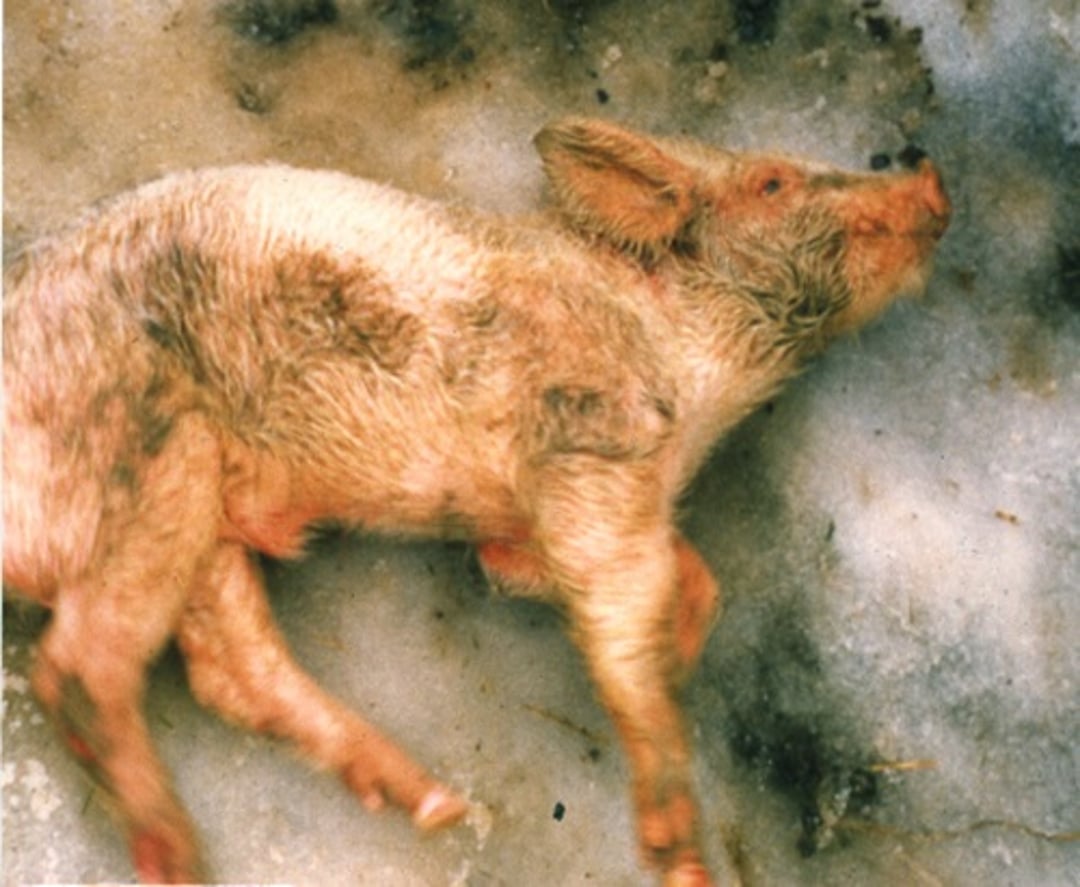
Courtesy of Dr. Marcelo Gottschalk.

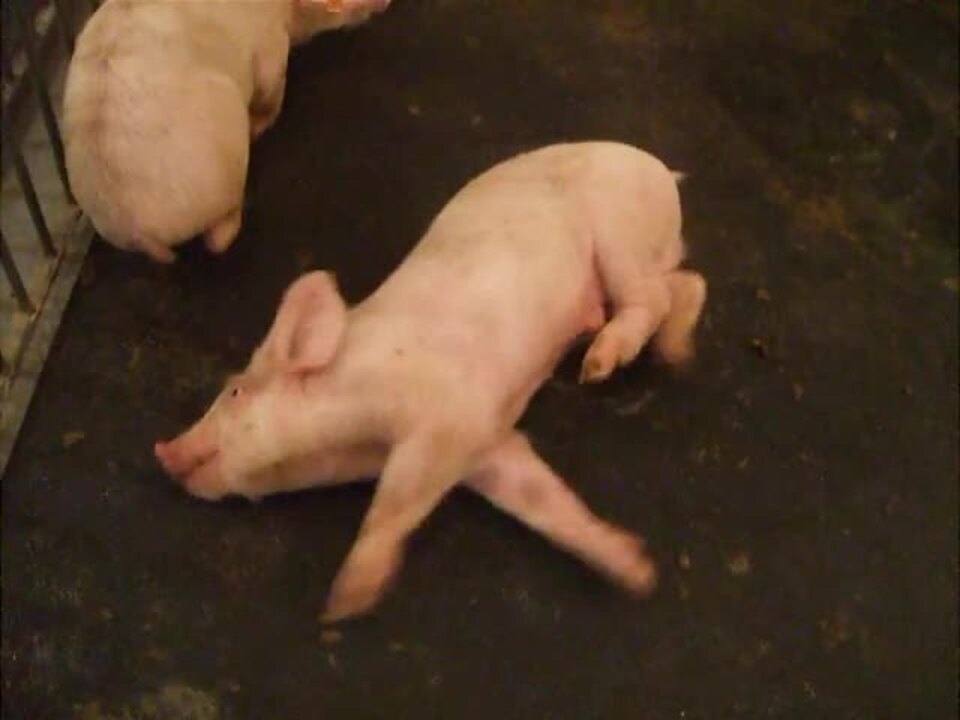
Lesions
Lesions are mainly present in weaned piglets and are associated with lymphadenopathy, meningitis, arthritis, and endocarditis. Polyserositis similar to that in Glässer disease is sometimes observed. Lesions may include fibrinopurulent exudates in the brain, swollen joints, fibrinous serositis, and cardiac valvular vegetations. Splenomegaly and petechial hemorrhages indicating septicemia are common. Extensive microscopic lesions are usually limited to the brain, heart, and joints.
The predominant lesions are neutrophilic meningitis and choroiditis, with hyperemic meningeal blood vessels, and fibrinopurulent or suppurative epicarditis. Evidence of encephalitis, edema, and congestion of the brain may be present. The choroid plexus may have disruption of the plexus brush border, and fibrin and inflammatory cell exudates may be present in the ventricles. Microscopic lesions do not seem to be associated with a given serotype.
Diagnosis of Streptococcus suis Infection in Pigs
History, clinical signs, and gross lesions
Bacterial culture
Presumptive diagnosis of Streptococcus suis infection is generally based on history, clinical signs, age of animals, and gross lesions. Isolation and serotyping of the infectious agent and, if possible, evaluation of microscopic lesions in affected tissues confirm the diagnosis. After isolation, biochemical identification of S suis isolates is routinely carried out by matrix-assisted laser desorption-ionization time-of-flight (MALDI-TOF) mass spectrometry.
Serotyping is important to confirm causation and implement preventive measures. Isolation of a predominant serotype implicates S suis as the causative organism in clinical disease outbreaks, whereas when S suis is a secondary agent, several different serotypes will be recovered from different animals of the same herd. Multiplex PCR assays are available to easily serotype S suis strains.
Genetic characterization, including multilocus sequence typing, is done in some laboratories and is particularly useful for epidemiological studies, mainly for serotype 2. For European and Asian strains of serotype 2, detection of the muramidase-released protein, the extracellular factor, and the hemolysin (suilysin) by PCR assay as an indication of virulence can also be done. Whole genome sequencing can also be used to compare isolates.
Detection of virulent strains of S suis from tonsils or nasal cavities should be avoided because S suis is a normal inhabitant of these sites and universal virulence factors are unknown. In addition, these sites are highly contaminated, and traditional bacterial isolation has a low specificity. Strains isolated from tonsils must be confirmed by PCR assay as being S suis because biochemical tests are not able to correctly differentiate this bacterial species from other streptococci normally present in the upper respiratory tract of swine. As of 2023, there is only one PCR assay that specifically identifies "true" S suis and is based on the gene recN.
Differential diagnoses include the following:
polyserositis caused by Glaesserella parasuis or Mycoplasma hyorhinis
meningitis caused by G parasuis
endocarditis caused by Erysipelothrix rhusiopathiae
septicemia caused by G parasuis, Actinobacillus suis, Escherichia coli, Erysipelothrix rhusiopathiae, or Salmonella Choleraesuis
polyarthritis caused by other streptococci, staphylococci, E coli, or A suis
Treatment, Control, and Prevention of Streptococcus suis Infection in Pigs
Antimicrobials
Vaccination: partially effective
Prompt recognition of the early clinical signs of streptococcal meningitis, followed by immediate parenteral treatment of affected pigs with an appropriate antimicrobial, is currently the best method to maximize survival of S suis infections. The early stages of meningitis may be difficult to detect, so weaned pigs should be observed 2–3 times daily on farms where the infections are a problem.
Some resistance of S suis to penicillin has been reported and varies among countries; however, extended spectrum beta-lactams such as ampicillin and amoxicillin appear to retain good effectiveness. Treatment can also be administered via drinking water or in amoxicillin-medicated feed in countries where this practice is allowed.
Whichever method of medication is used, treatment should be continued for at least 5 days. Administration of an anti-inflammatory preparation is sometimes recommended to decrease inflammation of affected tissues (mainly in cases of meningitis) and improve the overall condition of pigs. Animals should be watered carefully to avoid dehydration, because they are sometimes unable to drink.
Vaccines available in the field are autogenous bacterins (inactivated whole cells), and they have proved to be relatively effective in some cases but rather ineffective in others (contradictory results). Because the production of autogenous vaccines does not follow standardized protocols, each vaccine produced by a licensed company will be different. A high bacterial concentration and an appropriate adjuvant (oil emulsions are better than aluminium hydroxide–based adjuvants) should be used.
Because affected animals are in general 4–9 weeks old, sow vaccination may be useful for suckling piglets. Piglet vaccination would be necessary to protect older weaned piglets. It is still unclear whether early piglet vaccination may interfere with maternal antibodies.
S suis is one of several bacterial pathogens that have been able to defeat eradication efforts in nursing or early weaned pigs because animals are already colonized by the agent immediately after or even during farrowing.
Streptococci are susceptible to the action of aldehyde, biguanide, hypochlorite, iodine, and quaternary ammonium disinfectants. These products should be used only on contaminated equipment and housing and never on animals.
Zoonotic Risk in Streptococcus suis Infection in Pigs
Infection in humans with Streptococcus suis can result in the following:
septicemia with septic shock
meningitis with permanent hearing loss as a sequela
endocarditis
arthritis
The mortality rate among humans has been reported as 7%–13%, and most cases are related to employment in the swine industry (ie, pig farmers, abattoir workers, persons transporting pork, meat inspectors, butchers, and veterinarians). In Southeast Asia, the general population is at risk, and mortality rates can be > 20%. S suis is considered one of the most common causes of adult meningitis in Thailand, Vietnam, and Hong Kong. Serotype 2 and, to a lesser extent, serotype 14 are mainly involved in human cases.
Transmission to humans occurs via contamination of skin wounds or mucous membranes by blood or secretions from infected pigs (Western countries, China) or by consuming raw meat or blood (Southeast Asia). The disease is considered to be underdiagnosed and underreported in several countries.
Key Points
S suis is the most important bacterial pathogen in postweaned piglets and is an emerging zoonotic agent.
It is a normal inhabitant (mostly low-virulence strains) of the upper respiratory tract of pigs.
Diagnosis is based on bacterial isolation and serotyping.
It is usually susceptible to beta-lactam antimicrobials.
No commercial and universal effective vaccine is available.
For More Information
Gottschalk M, Segura M. Streptococcosis. In: Zimmerman JJ, Karriker LA, Ramirez A, Schwartz KJ, Stevenson GW, Zhang J, eds. Diseases of Swine. 11th ed. Wiley-Blackwell; 2019:934-950. doi:10.1002/9781119350927.ch61
Tram G, Jennings MP, Blackall PJ, Atack JM. Streptococcus suis pathogenesis: a diverse array of virulence factors for a zoonotic lifestyle. Adv Microb Physiol. 2021;78:217-257. doi:10.1016/bs.ampbs.2020.12.002
Obradovic MR, Corsaut L, Dolbec D, Gottschalk M, Segura M. Experimental evaluation of protection and immunogenicity of Streptococcus suis bacterin-based vaccines formulated with different commercial adjuvants in weaned piglets. Vet Res. 2021;52(1):133. doi:10.1186/s13567-021-01004-x