
Natural Service for Breeding in Horse Reproduction
Mares are commonly bred by natural service. The proper time to breed is determined by teasing, palpation, and ultrasonography per rectum, which permits detection of estrus and the presence of a dominant follicle and endometrial edema. Estrous mares should be bred when a follicle >30–35 mm is present or beginning on day 2–3 of estrus and every other day until ovulation occurs or the mare goes out of heat. Mares ovulate 0–48 hours before the end of estrus. Breeding should take place before ovulation. Ovulation can be induced by administration of deslorelin if the mare has a dominant follicle. (Also see Manipulation of Ovarian Activity.)

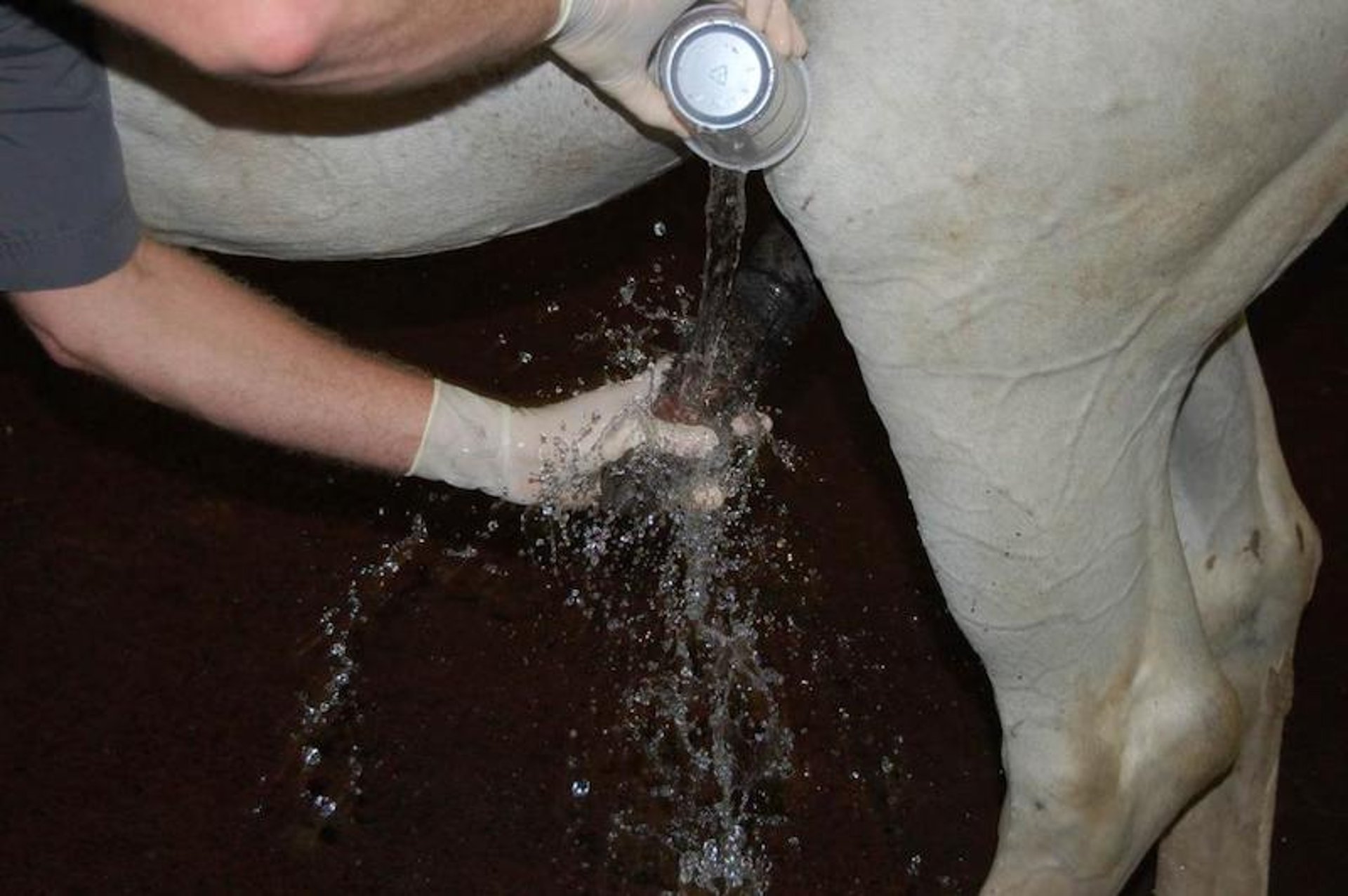
Courtesy of Dr. Patricia Sertich.

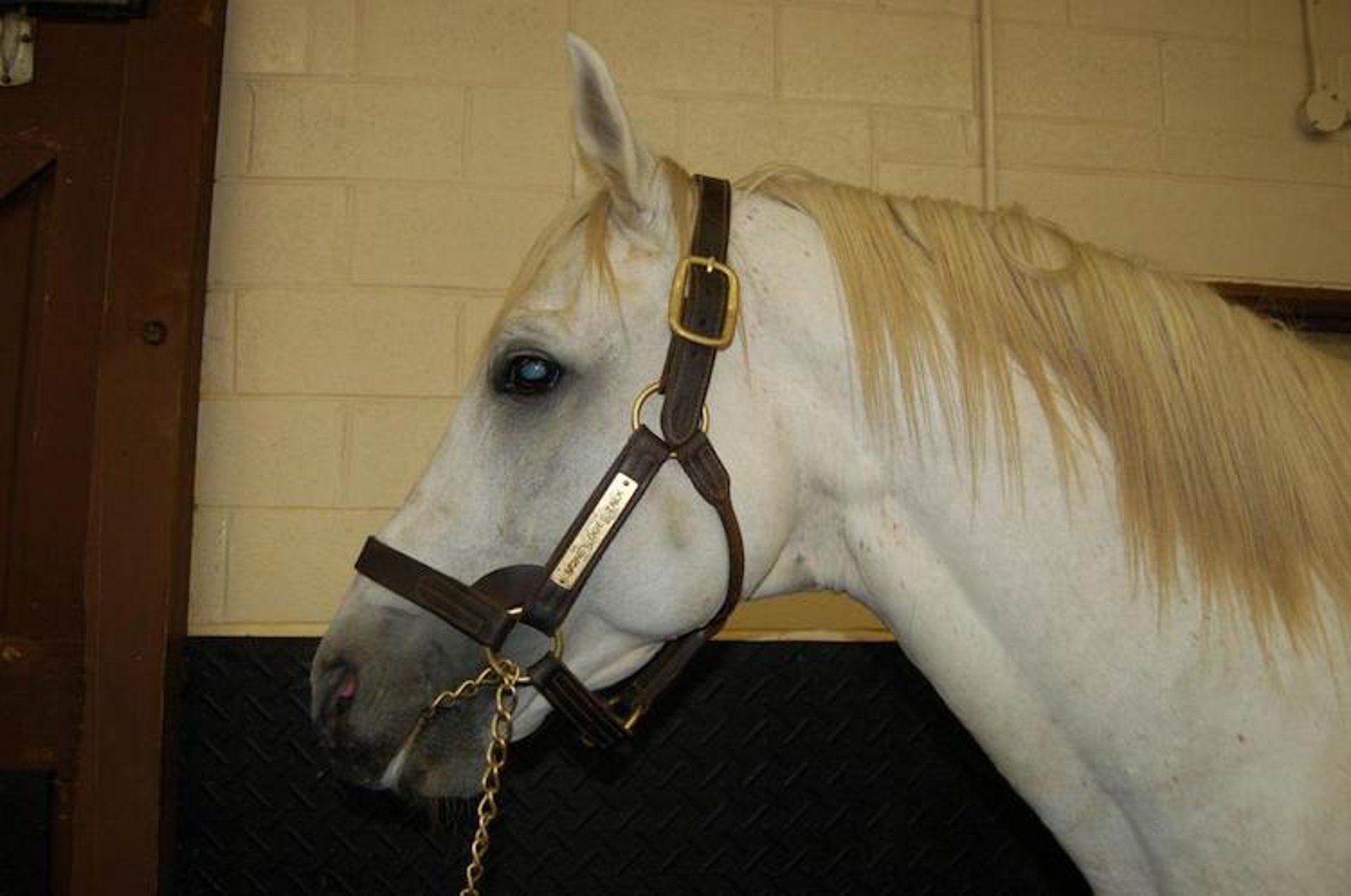
Courtesy of Dr. Patricia Sertich.
A tail wrap should be applied on the mare and the perineum cleansed. The stallion’s penis should be rinsed with water before breeding to remove smegma and to minimize contamination of the mare’s reproductive tract. The mare should be slowly introduced to the stallion and teased until obvious signs of receptivity (tail raise, abduction of hindlegs, eversion of vulvar lips, urination) are displayed. A nose twitch may be used for additional restraint but may interfere with the mare’s expression of sexual receptivity. For breeding, the stallion should be fitted with a well-adjusted halter with large rings that allow the chain shank to freely slide. During breeding, the stallion should be controlled adequately to prevent injury to the mare. After breeding, the penis can be rinsed with warm water to reduce contamination from the mare's genital tract.
Artificial Insemination for Breeding in Horse Reproduction
Semen is obtained using an artificial vagina; motility, morphology, and concentration of sperm are determined; and the number of morphologically normal, progressively motile sperm is calculated. Semen extender containing an antibiotic is then slowly added to semen to prolong sperm survival. The temperature of the semen extender should be similar to the temperature of the semen at the time of dilution.
Effective proprietary semen extenders are available commercially.
A classic semen extender is glucose skim milk extender (made with 4.9 g glucose, 2.4 g instant nonfat dry milk, and 100 mL sterile distilled water). One of the following antibiotics can be added: piperacillin 100 mg (1 mg/mL); ticarcillin 100 mg (1 mg/mL); reagent grade gentamicin 100 mg (1 mg/mL) but must be buffered with 2 mL 8.4% NaHCO3 ; or amikacin sulfate 100 mg (1 mg/mL).
The estrous mare is prepared for insemination by application of a tail wrap and cleansing of the perineum. If soap is used, it should be rinsed thoroughly to remove any residue. Mares should be inseminated with at least 250–500 × 106 progressively motile, morphologically normal spermatozoa before ovulation. Insemination is accomplished by depositing the semen into the body of the uterus using a sterile, plastic insemination pipette. Disposable sterile equipment is recommended to prevent contamination. Normal sperm can be expected to remain viable in the mare's reproductive tract for at least 48 hours. Deslorelin can be administered when a 30–35 mm dominant follicle is present to induce ovulation. Mares should be examined by palpation and ultrasonography per rectum to confirm that ovulation occurs. Stallion semen can be extended, cooled to 4°C, and packaged for transport in a commercial transport device. If semen from fertile stallions is properly handled, good pregnancy rates can be achieved when the semen is used within 48 hours.
For More Information
Also see pet health content regarding the breeding and reproduction of horses.