
Search
SectionsIndex
  • Behavior
  • Circulatory System
  • Clinical Pathology and Procedures
  • Digestive System
  • Emergency Medicine and Critical Care
  • Endocrine System
  • Exotic and Laboratory Animals
  • Eye and Ear
  • Generalized Conditions
  • Immune System
  • Integumentary System
  • Management and Nutrition
  • Metabolic Disorders
  • Musculoskeletal System
  • Nervous System
  • Pharmacology
  • Poultry
  • Reproductive System
  • Respiratory System
  • Toxicology
  • Urinary System
  • Zoonoses
ABCDEFGHI
JKLMNOPQR
STUVWXYZ
In This Topic
Management and Nutrition
Management of Reproduction: Small Animals
Pregnancy Determination in Small Animals
Back to Top
Resources
  • About The Merck Veterinary Manual
  • Reference Guides
  • Multimedia
Manuals available online
'/home/index.html' + bookPageLink
 
'/vet/index.html'
These and other Manuals available
in print, online, and as mobile applications.

See more at MerckManuals.com
Sections in Veterinary Professionals
  • Behavior
  • Circulatory System
  • Clinical Pathology and Procedures
  • Digestive System
  • Emergency Medicine and Critical Care
  • Endocrine System
  • Exotic and Laboratory Animals
  • Eye and Ear
  • Generalized Conditions
  • Immune System
  • Integumentary System
  • Management and Nutrition
  • Metabolic Disorders
  • Musculoskeletal System
  • Nervous System
  • Pharmacology
  • Poultry
  • Reproductive System
  • Respiratory System
  • Toxicology
  • Urinary System
  • Zoonoses
Chapters in Management and Nutrition
  • Management and Nutrition Introduction
  • Biosecurity
  • Cloning of Domestic Animals
  • Complementary and Alternative Veterinary Medicine
  • Management of the Neonate
  • Pain Assessment and Management
  • Stray Voltage in Animal Housing
  • Ventilation
  • Aquaculture Systems
  • Health-Management Interaction: Cattle
  • Health-Management Interaction: Goats
  • Health-Management Interaction: Horses
  • Health-Management Interaction: Pigs
  • Health-Management Interaction: Sheep
  • Health-Management Interaction: Small Animals
  • Management of Reproduction: Cattle
  • Management of Reproduction: Goats
  • Management of Reproduction: Horses
  • Management of Reproduction: Pigs
  • Management of Reproduction: Sheep
  • Management of Reproduction: Small Animals
  • Breeding Soundness Examination of the Male
  • Embryo Transfer in Farm Animals
  • Hormonal Control of Estrus
  • Nutrition: Cattle
  • Nutrition: Exotic and Zoo Animals
  • Nutrition: Goats
  • Nutrition: Horses
  • Nutrition: Pigs
  • Nutrition: Sheep
  • Nutrition: Small Animals
Topics in Management of Reproduction: Small Animals
  • Breeding Soundness Examination of Small Animals
  • Breeding Management of Small Animals
  • Manipulation of the Estrous Cycle in Small Animals
  • Pregnancy Determination in Small Animals
  • Prevention or Termination of Pregnancy in Small Animals
  • Whelping and Queening
  • Labor and Delivery in Small Animals
  • Postpartum Care in Small Animals
  • Periparturient Problems in Small Animals
  • Infertility in Small Animals
 
  • Merck Manual
  • >
  • Veterinary Professionals
  • >
  • Management and Nutrition
  • >
  • Management of Reproduction: Small Animals
  • 4
 
Pregnancy Determination in Small Animals

Share This

Fertilization occurs in the oviducts in both the bitch and queen. Implantation of zygotes in the uterus occurs at ~18 days in the bitch and 14 days in the queen. This is accompanied by the formation of small swellings along the uterine horns (deciduomata) by ~21 days. These are palpable, assuming the animal is cooperative, at this time. Fetal growth is rapid during early pregnancy, and these swellings double in diameter every 7 days. After day 35–38, they become indistinct, and palpation becomes difficult until late pregnancy when fetal heads and rumps are palpable as firm, nodular structures in the ventral posterior abdomen. A commercial relaxin assay, specific and sensitive for pregnancy diagnosis in the bitch after 30 days gestation, is available.

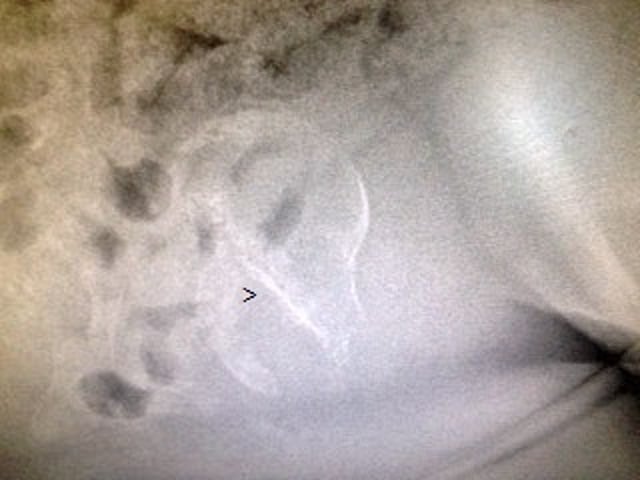
Although the fetal skeleton begins to calcify as early as day 28, it is not detectable by routine radiography until about day 42–45 and is quite prominent by day 47–48. Radiography at this time is not teratogenic. Late gestational radiography is the best method to determine litter size.

Ultrasonography is also useful in pregnancy determination and permits evaluation of fetal viability. Ultrasonography is best performed at 25–35 days gestation. Before 21 days, “false negative” results are seen. Doppler-type instruments allow one to “hear” the fetal heart, which beats 2–3 times faster than that of the dam. Placental sounds may also be heard. Ultrasonography is especially helpful in differentiating pregnancy from other causes of uterine distention (eg, hydrometra, pyometra, mucometra).

Last full review/revision July 2011 by Autumn P. Davidson, DVM, MS, DACVIM

Buy the Book

Back to Top

Previous: Manipulation of the Estrous Cycle in Small Animals

Next: Prevention or Termination of Pregnancy in Small Animals

Audio
Figures
Photographs
Sidebars
Tables
Videos

Copyright     © 2010-2013 Merck Sharp & Dohme Corp., a subsidiary of Merck & Co., Inc., Whitehouse Station, N.J., U.S.A.    Privacy    Terms of Use