
Search
SectionsIndex
  • Behavior
  • Circulatory System
  • Clinical Pathology and Procedures
  • Digestive System
  • Emergency Medicine and Critical Care
  • Endocrine System
  • Exotic and Laboratory Animals
  • Eye and Ear
  • Generalized Conditions
  • Immune System
  • Integumentary System
  • Management and Nutrition
  • Metabolic Disorders
  • Musculoskeletal System
  • Nervous System
  • Pharmacology
  • Poultry
  • Reproductive System
  • Respiratory System
  • Toxicology
  • Urinary System
  • Zoonoses
ABCDEFGHI
JKLMNOPQR
STUVWXYZ
In This Topic
Musculoskeletal System
Osteopathies in Small Animals
Bone Trauma in Small Animals
Back to Top
Resources
  • About The Merck Veterinary Manual
  • Reference Guides
  • Multimedia
Manuals available online
'/home/index.html' + bookPageLink
 
'/vet/index.html'
These and other Manuals available
in print, online, and as mobile applications.

See more at MerckManuals.com
Sections in Veterinary Professionals
  • Behavior
  • Circulatory System
  • Clinical Pathology and Procedures
  • Digestive System
  • Emergency Medicine and Critical Care
  • Endocrine System
  • Exotic and Laboratory Animals
  • Eye and Ear
  • Generalized Conditions
  • Immune System
  • Integumentary System
  • Management and Nutrition
  • Metabolic Disorders
  • Musculoskeletal System
  • Nervous System
  • Pharmacology
  • Poultry
  • Reproductive System
  • Respiratory System
  • Toxicology
  • Urinary System
  • Zoonoses
Chapters in Musculoskeletal System
  • Musculoskeletal System Introduction
  • Congenital and Inherited Anomalies of the Musculoskeletal System
  • Dystrophies Associated with Calcium, Phosphorus, and Vitamin D
  • Arthropathies in Large Animals
  • Lameness in Cattle
  • Lameness in Goats
  • Lameness in Horses
  • Lameness in Pigs
  • Lameness in Sheep
  • Myopathies in Ruminants and Pigs
  • Myopathies in Horses
  • Bovine Secondary Recumbency
  • Lameness in Small Animals
  • Arthropathies and Related Disorders in Small Animals
  • Myopathies in Small Animals
  • Osteopathies in Small Animals
  • Sarcocystosis
Topics in Osteopathies in Small Animals
  • Overview of Osteopathies in Small Animals
  • Developmental Osteopathies in Small Animals
  • Osteomyelitis in Small Animals
  • Hypertrophic Osteopathy in Small Animals
  • Nutritional Osteopathies in Small Animals
  • Bone Tumors in Small Animals
  • Bone Trauma in Small Animals
 
  • Merck Manual
  • >
  • Veterinary Professionals
  • >
  • Musculoskeletal System
  • >
  • Osteopathies in Small Animals
  • 4
 
Bone Trauma in Small Animals

Share This

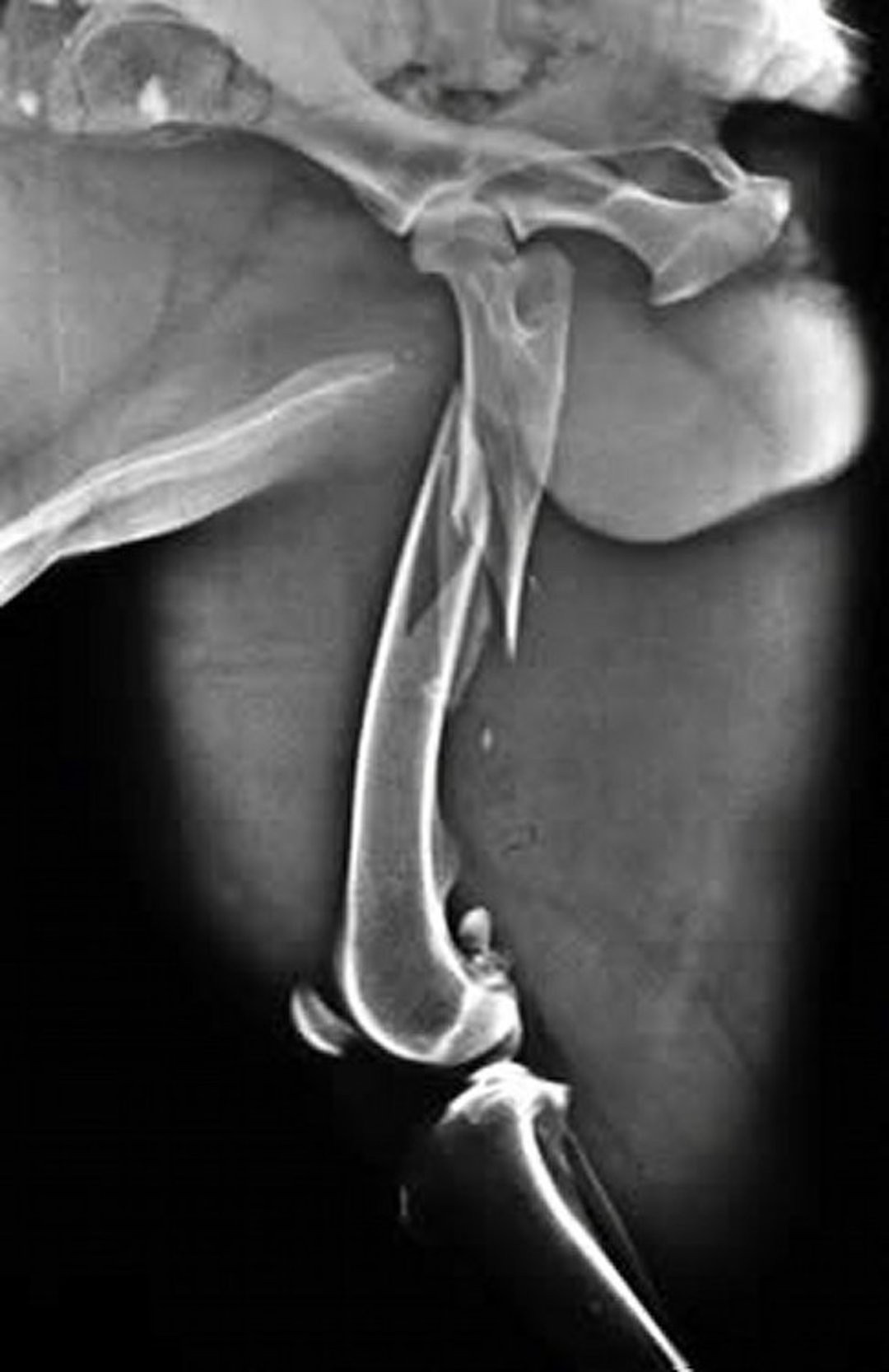
Bone fractures are frequently caused by vehicular accidents, firearms, fights, or falls. Fractures can be open or closed and involve single or multiple bones. Characteristics of the fracture—such as simple, comminuted, oblique, transverse, or spiral—are based on disruptive trauma forces (bending, compression, tension, and rotation).

Clinical signs invariably include lameness, pain, and swelling. Radiography is useful in delineating the fracture pattern. Treatments are based on the type of fracture, age and health of the animal, owner finances, and technical expertise of the surgeon.

Photographs

Oblique comminuted femoral fracture

Oblique comminuted femoral fracture

Young, healthy dogs with incomplete fractures can be treated with external splints or casts. Other injuries are treated with external (fixators) or internal devices, such as bone plates, screws, orthopedic wires, interlocking nails, and pins. Frequently, cancellous bone grafts are used to augment fracture healing in ill or aged patients. Antibiotics are given for open fractures or prolonged repairs. Perioperative analgesics (eg, epidural morphine, narcotic skin patches, systemic narcotics, oral NSAID) are used to alleviate discomfort. Physical therapy or rehabilitation is critical for restoring limb function and overall well-being.

Prognosis for recovery is usually good depending on the nature of the injury and success of repairs; successful wound therapy and monitoring of cardiopulmonary and urologic functions are essential. Followup care includes radiographic and clinical assessments of fracture healing. Internal implants may not need to be removed unless complications such as stress protection, infection, or soft-tissue irritation develop.

Last full review/revision March 2012 by Joseph Harari, MS, DVM, DACVS

Buy the Book

Back to Top

Previous: Bone Tumors in Small Animals

Next: Overview of Sarcocystosis

Audio
Figures
Photographs
Sidebars
Tables
Videos

Copyright     © 2010-2013 Merck Sharp & Dohme Corp., a subsidiary of Merck & Co., Inc., Whitehouse Station, N.J., U.S.A.    Privacy    Terms of Use