
Infections with Leucocytozoon spp can occasionally cause clinical and rarely fatal disease in turkeys, ducks, and chickens. Anemia and respiratory or neurologic signs can be observed. Diagnosis is made using blood smears, tissue cytology, histopathology, and/or PCR. Treatment may reduce parasitemia but does not eliminate the parasite. Preventive medication and limiting insect vectors help control the disease.

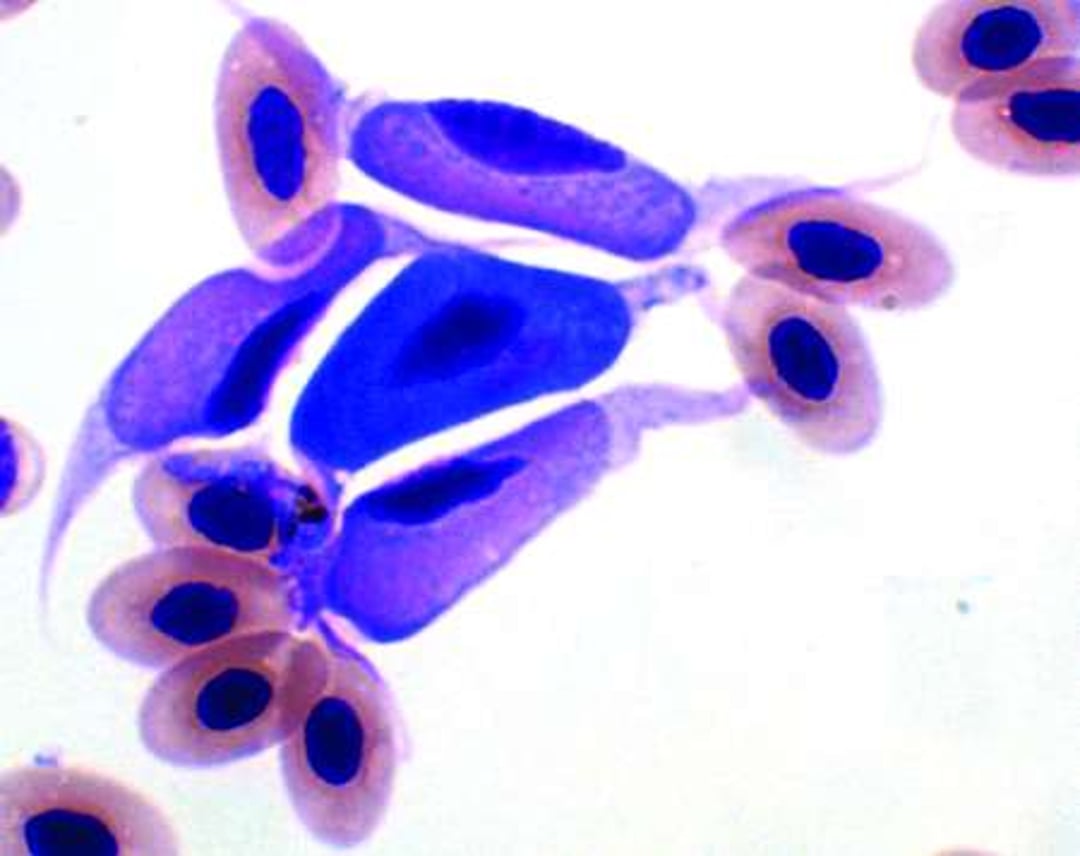
Courtesy of Dr. H. J. Barnes.
Infections with Leucocytozoon spp are most often subclinical but can occasionally cause clinical and even fatal disease. Mortality varies greatly with the strain of parasite, species, degree of exposure, age, immune status, and other factors. Outbreaks of leucocytozoonosis have been reported in chickens (Asia, Africa), turkeys (North America), waterfowl (North America, Europe, Asia), and a number of free-living and captive avian species throughout the world. Species in domestic birds include L simondi in waterfowl; L smithi in turkeys; and L caulleryi, L sabrazesi, and L schoutedeni in chickens. L caulleryi can be highly pathogenic, causing a lethal hemorrhagic disease of chickens in southeast Asia. L simondi can cause mortality in ducks and geese and L smithi in turkeys. Numerous Leucocytozoon spp infect nondomestic birds.
Clinical disease and mortality result from anemia caused by antierythrocytic factors produced by the parasite, high numbers of the large gametocytes blocking pulmonary capillaries, or parasites invading the endothelium of vessels in tissues (brain, heart, etc) where they form megaloschizonts that occlude vessels and result in multifocal necrosis.
Parasitemia often increases dramatically in late April and early May (called spring rise), just before arthropod vectors, black flies (Simulium spp), or biting midges (Culicoides spp) increase. Ducks that have recovered from infection with L simondi may relapse when light cycles are manipulated to increase egg production. Increased levels of prolactin have been suggested as a possible cause.
Acute disease is seen more often in the young with high parasitemia and when black flies or biting midges are most abundant. Subacute or chronic disease is seen in the young outside fly season and in older birds at any season; parasitemia is usually low. Recovered birds remain carriers and serve as a reservoir for young, susceptible birds.
Clinical Findings, Lesions, and Diagnosis of Leucocytozoonosis in Poultry
Diagnosis is by cytology, histopathology, and/or PCR
Ducklings or turkey poults are listless and show various combinations of the following signs: anemia, leukocytosis, tachypnea, anorexia, diarrhea with green droppings, and CNS signs. Mortality in ducklings can reach 70%. Mortality is low in adult ducks or turkeys. Egg production and hatchability is decreased. Signs are evident ~1 week after infection and coincide with the onset of parasitemia. Visibly affected birds die after 7–20 days or may recover with sequelae of poor growth and egg production. Hemorrhages, splenomegaly, and hepatomegaly are seen. Grossly visible white dots in affected organs are megaloschizonts. Histologic lesions are associated with megaloschizont development in the spleen, liver, heart, and other organs. Infection with L caulleryi in chickens has a tropism for the reproductive tract and is associated with oviduct inflammation and edema and decreased egg production. Peritoneal, perirenal, and subdural hemorrhages are reported with severe disease.

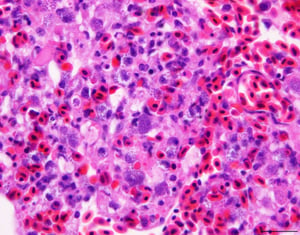
Courtesy of Dr. A. J. Van Wettere.
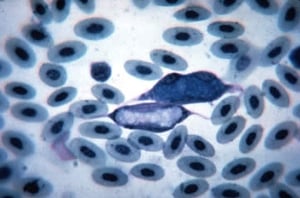
Courtesy of Dr. Jean Sander.
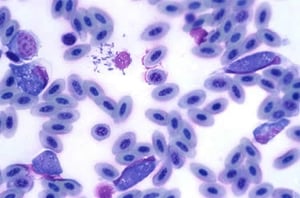
Courtesy of Dr. Louise Bauck.

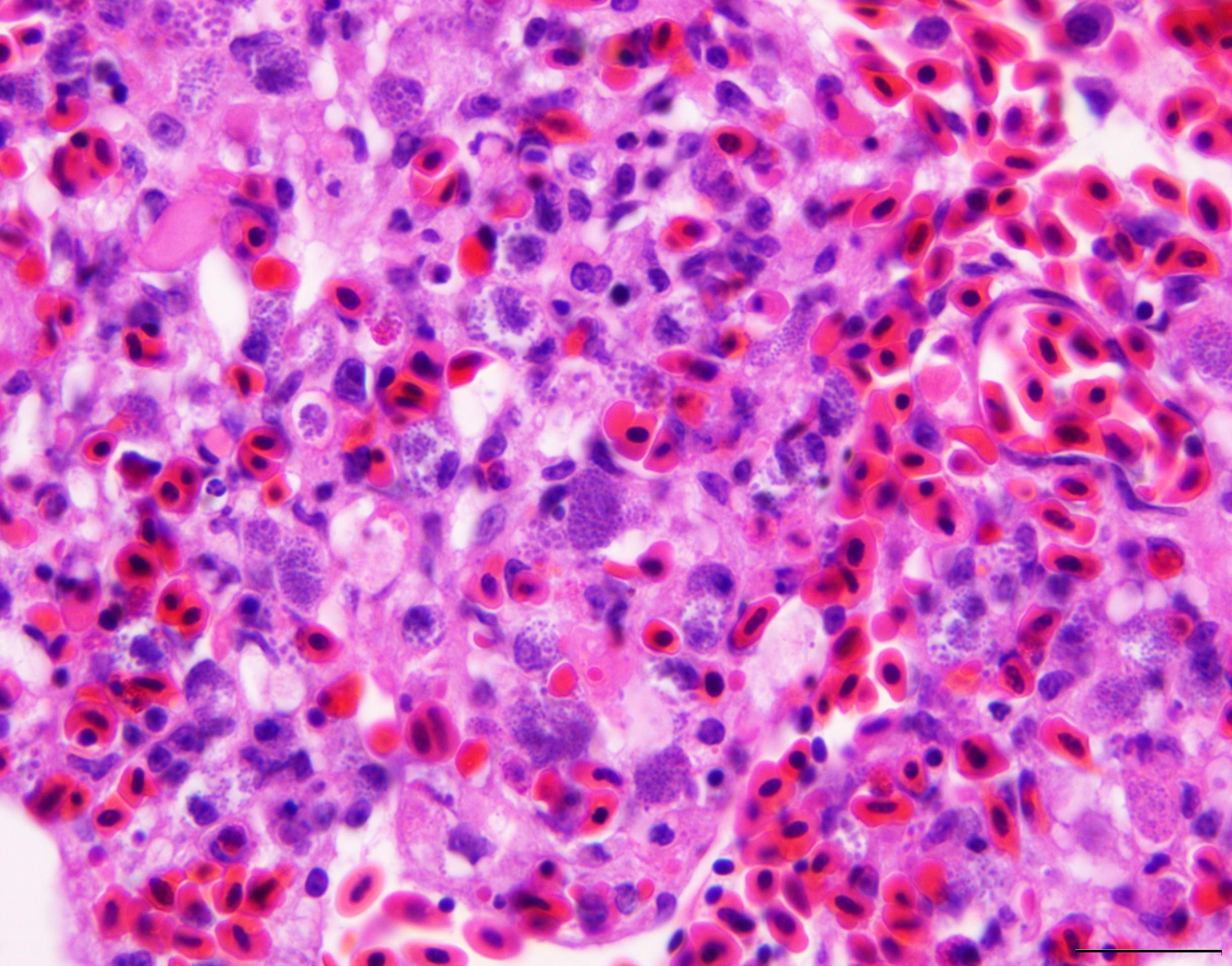
Courtesy of Dr. A. J. Van Wettere.

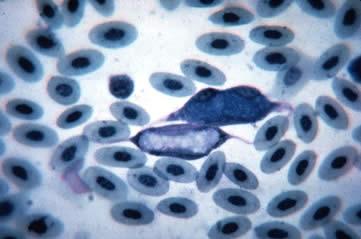
Courtesy of Dr. Jean Sander.

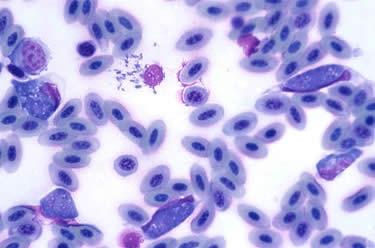
Courtesy of Dr. Louise Bauck.
In blood smears, gametocytes may be seen, especially along the edges and tail of the smear. Leucocytozoon is identified by large gametocytes that lack pigment and distort the host cell (RBC or WBC), making it no longer identifiable. The shape of gametocytes varies: some are elongated with long tapering extremities, whereas others are round. Serology may detect prior infection. PCR tests have been developed for diagnosis of leukocytozoonosis.
Treatment and Control of Leucocytozoonosis in Poultry
Treatment usually is not effective. Preventive medication using pyrimethamine (1 ppm) and sulfadimethoxine (10 ppm) combined in the feed controls L caulleryi. Clopidol (0.0125%–0.025%) controls L smithi. Measures to control invertebrate vectors are helpful. Humoral immunity resulting from vaccination will protect against L caulleryi infection. Treatments with quinacrine hydrochloride or trimethoprim/sulfamethoxazole solution have been used in raptors; parasitemia is reduced, but the infection is not cleared.
Key Points
Leucocytozoon spp infection is usually asymptomatic, but anemia and respiratory or neurologic signs may be seen.
Diagnosis is made using blood smears, tissue cytology, histopathology, and/or PCR.
Drug treatment may reduce parasitemia but does not eliminate parasites.
Preventive medication and limiting insect vectors help control the disease in susceptible species.