Sever disease is inflammation of the growth plate of the heel bone (calcaneus) in children around the age of puberty.
(See also Overview of Bone Disorders in Children.)
Sever disease is an osteochondrosis. An osteochondrosis is a disorder of the growth plates of bones that occurs when a child is growing rapidly. Children's bones grow from growth plates. When children have finished growing, growth plates become solid bone. After growth plates become solid, bones cannot grow in length. The heel bone becomes solid by the time children are about 15 years old.
Locating the Heel Bone
The heel bone (calcaneus) is located at the back of the foot. |

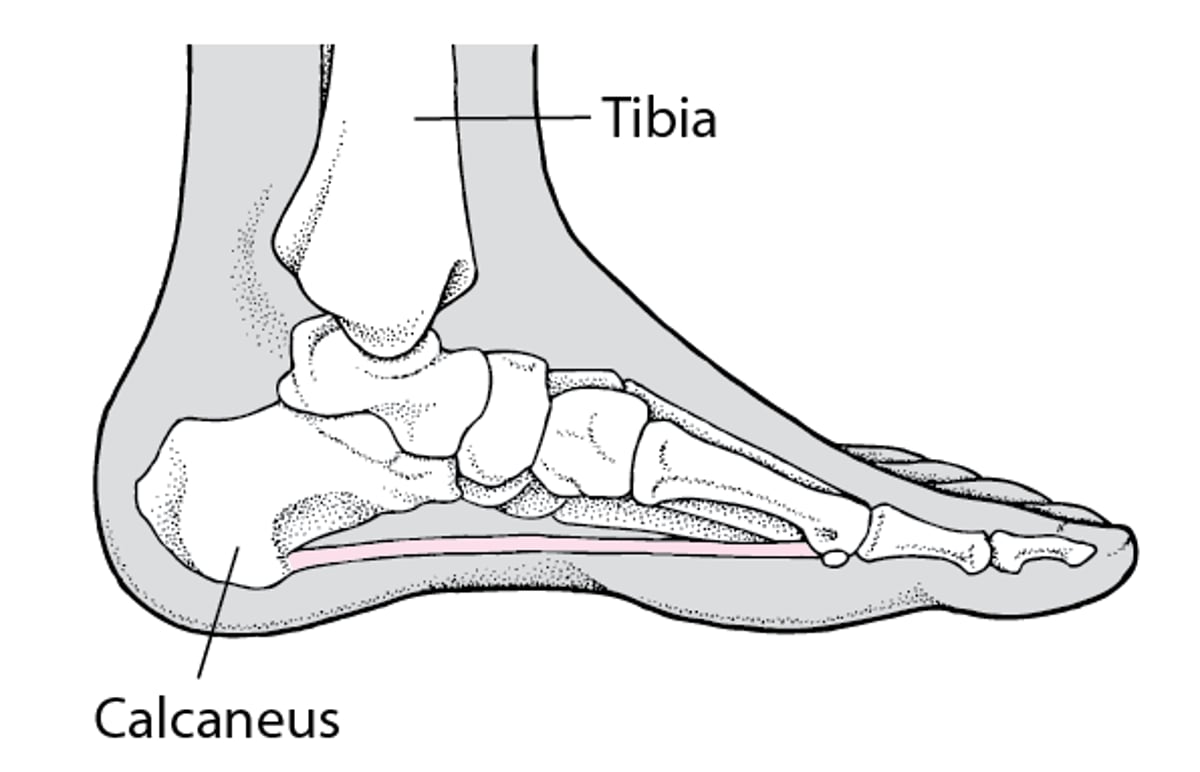
Sever disease happens during puberty. During a growth spurt, the bones, muscles, and tendons grow at different rates. The calf muscle and Achilles tendon can become tight and pull on the growth plate where they are attached in the heel. Children (usually aged 9 to 14 years) who are athletically active, especially those who wear shoes that do not raise the heel (such as track flats or soccer cleats), may develop Sever disease because while playing sports the tight muscles and tendons pull, injuring and causing swelling in the growth plate. This injury leads to pain in the heel.
Pain is felt on the sides or margins of the heel and is aggravated by standing on tip toes or running. Some children have warmth and redness. Children may limp and avoid putting weight on the affected heel.
Doctors base the diagnosis on the symptoms. X-rays cannot make the diagnosis of Sever disease but may help identify other causes of heel pain such as bone cysts or stress fractures.
Treatment of Sever Disease
Stretching of the calf muscles and Achilles tendon
Heel cups, pads, and night splints or sometimes a cast
Ice and rest
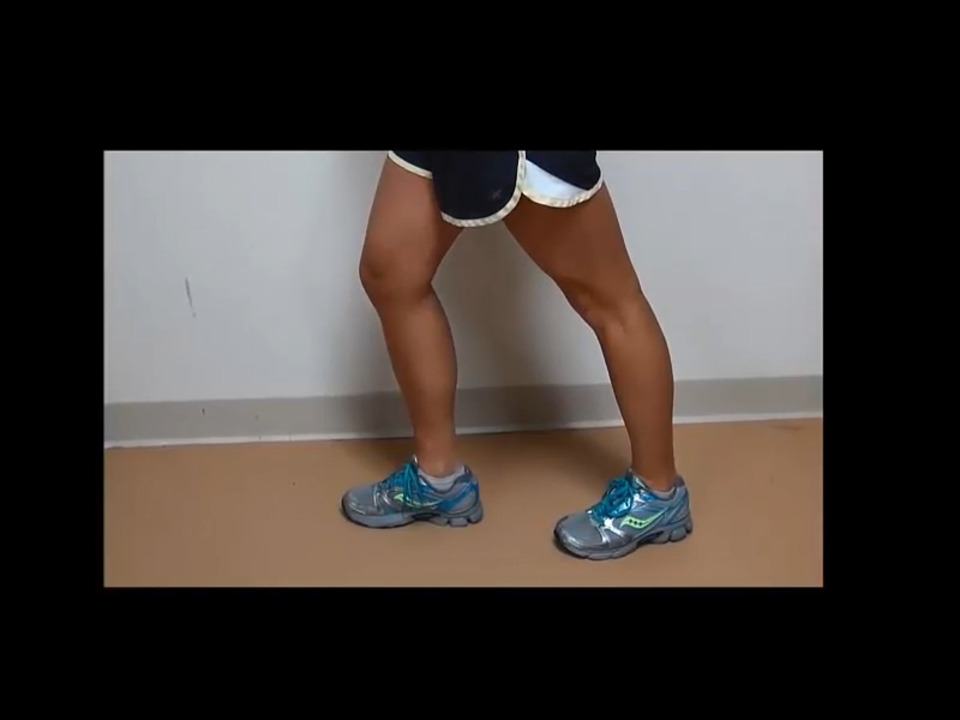
Stretching the calf muscles and Achilles tendon before and after sports helps prevent and relieve symptoms. Once stretch can be done while the child is seated, and another can be done while the child is standing up.
For the seated stretch, the child places an elastic band around the ball of the foot, extends the leg straight out, and gently pulls the band past the knee until a stretch is felt along the sole of the foot and the Achilles tendon.

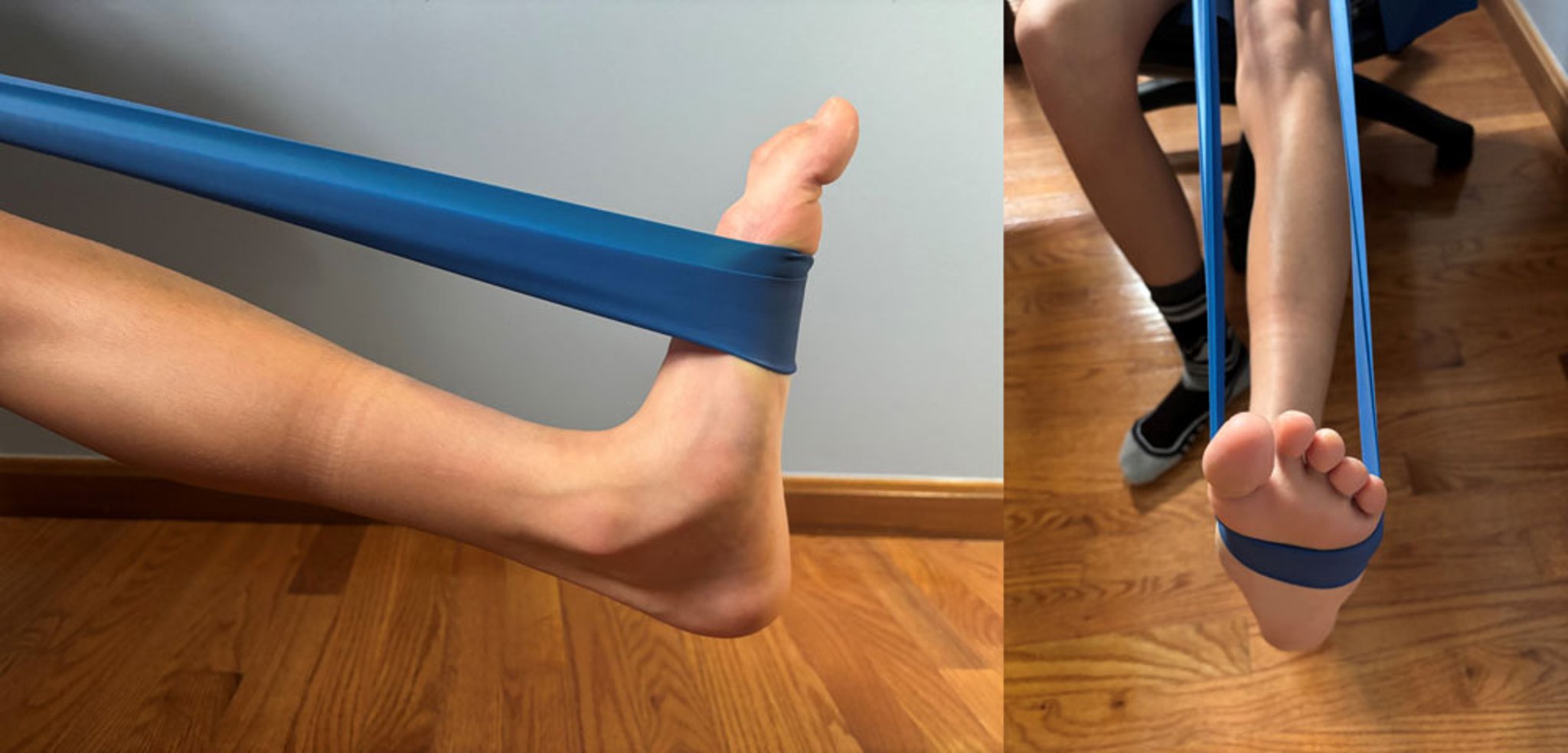
While seated, place an elastic band around the ball of the foot, extend the leg straight out, and gently pull the band past the knee until a stretch is felt along the sole of the foot and Achilles tendon.
Photos courtesy of James C. Connors, DPM.
For the standing stretch, see video .

Heel cups may be inserted into shoes such as cleats to provide cushion to the heel bone.
Heel pads relieve pain by elevating the heel, which reduces the pull of the Achilles tendon on the heel.
Splints may be worn at night to stretch the calf muscles, helping maintain flexibility.
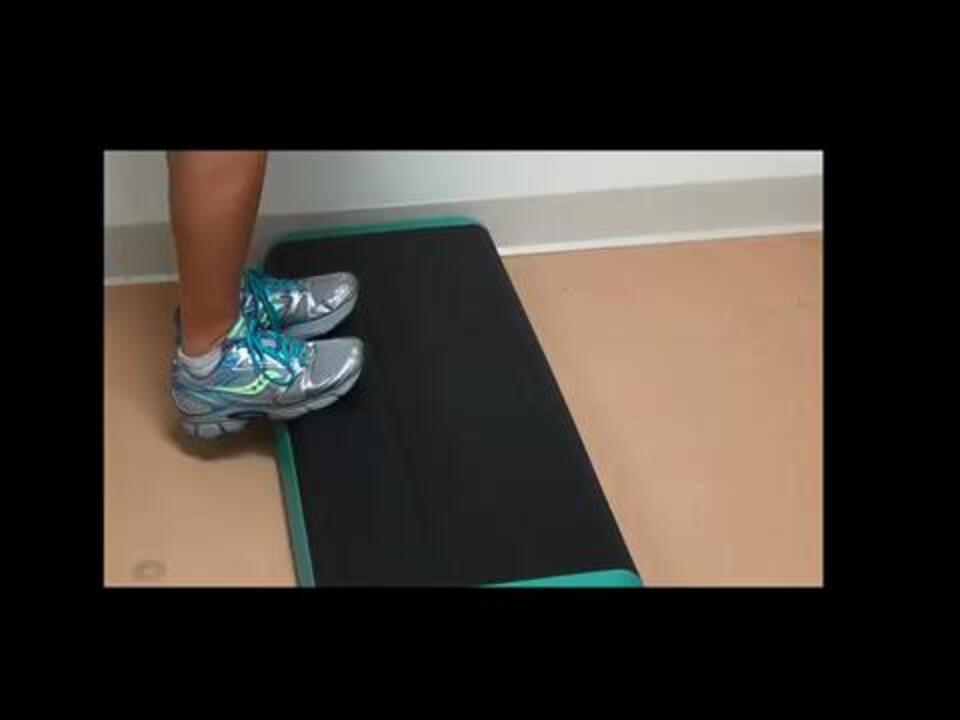
Children can also rest, apply ice to the affected heel, and modify their activities to relieve pain.
Doctors may recommend a cast for children who have pain that is severe or difficult to treat. The cast immobilizes the foot, relieves pain, and stretches the calf muscles.
Doctors may also prescribe anti-inflammatory or analgesic medications (such as ibuprofen) for pain relief.
Symptoms of Sever disease may last several months, but they do eventually go away.
Drug Information for the Topic