The windpipe (trachea), throat (pharynx), and voice box (larynx) can develop tumors that either grow into the structures or press on them, blocking breathing. Tumors from elsewhere in the body may also spread to these areas (metastasize).
Inside the Lungs and Airways

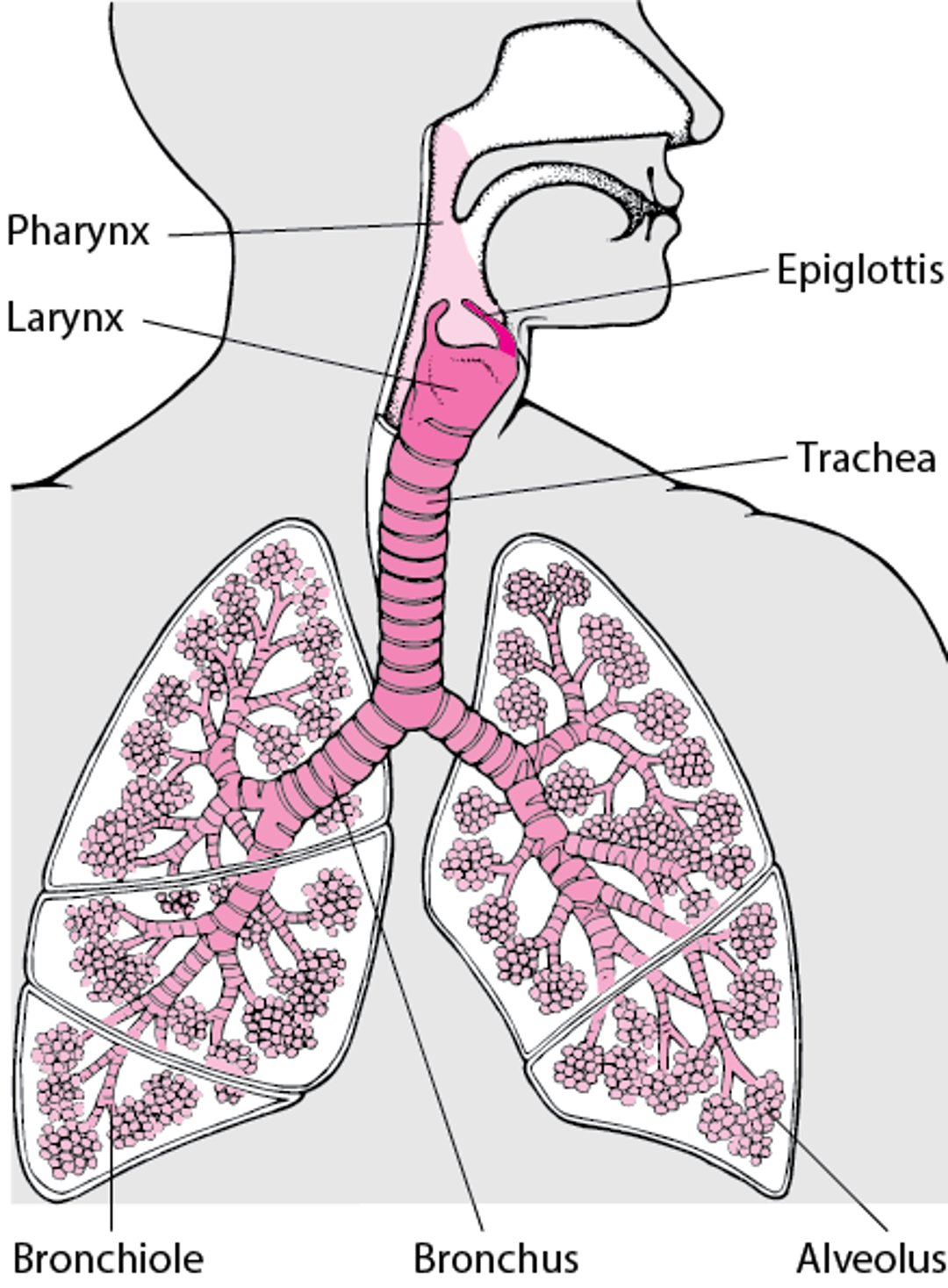
Tumors that develop in the trachea are rare. They are often cancerous (malignant) and found at a locally advanced stage (having spread to nearby tissue or lymph nodes).
The most common malignant tracheal tumors include squamous cell carcinoma, adenoid cystic carcinoma, and mucoepidermoid carcinomas.
The most common noncancerous (benign) airway tumor is a squamous papilloma, although other benign conditions can also occur.
Symptoms of Airway Tumors
Symptoms of airway tumors include:
Shortness of breath (dyspnea)
Coughing
Coughing up blood (hemoptysis)
Wheezing or other abnormal breathing noises
Difficulty swallowing and hoarseness can also be present.
Diagnosis of Airway Tumors
Bronchoscopy
Chest imaging
Doctors may consider an airway tumor if symptoms develop gradually and if standard treatments are ineffective, for example, if medications used to treat asthma do not relieve wheezing or medications given for pneumonia do not get rid of the infection. If an airway tumor is suspected, doctors do bronchoscopy. Bronchoscopy can both relieve airway blockage and allow specimens to be obtained for diagnosis.
If cancer is found, doctors order more extensive testing typically involving chest imaging (x-rays or CT scans) to identify the size and location of the tumors, and to better understand if surgical removal is an option.
Treatment of Airway Tumors
Surgery
Radiation therapy
Obstruction reduction techniques
Certain types of airway tumors should be removed surgically if possible. Sometimes radiation therapy is done either alone or in combination with surgery. Chemotherapy has not been proved to be effective for airway tumors, and targeted therapies are being studied.
If surgery is not possible, certain less invasive procedures can be used to remove some of the tumor. Laser vaporization, photodynamic therapy, cryotherapy, and endobronchial brachytherapy are options to remove a tumor blocking an airway. If a tumor presses on the trachea, doctors may insert a stent to hold the trachea open or use radiation therapy to shrink the tumor.
Prognosis for Airway Tumors
Prognosis depends on the type of cancer. Cancers that spread to lymph nodes in the neck or chest or that grow into nearby structures tend to have a worse prognosis.
More Information
The following English language resources may be helpful. Please note The Manual is not responsible for the content of these resources.
Cancer Nation (formerly National Coalition for Cancer Survivorship)