Mycoplasmas are bacteria that cause sexually transmitted infections of the urethra, female reproductive organs, rectum, and throat.
Mycoplasma infections can be spread through sexual contact.
Symptoms may include a discharge from the penis or vagina and painful or more frequent urination.
Special tests of a sample of the discharge or of urine can detect the bacteria.
Antibiotics can cure the infections, and sex partners should be treated at the same time if infected.
Using condoms during sex can help prevent passing these infections from one person to another.
If unnoticed or untreated in women, these infections may result in infertility and increase the risk of a mislocated (ectopic) pregnancy.
Several different bacteria can cause infections in the genital tract and reproductive organs. (See also Chlamydia and Trichomoniasis.)
The bacteria Mycoplasma genitalium (as well as the related bacteria Mycoplasma hominis and Ureaplasma urealyticum) can cause infections spread through sexual contact. These include infections of the urethra (urethritis) and sometimes, in women, infection of the cervix (cervicitis) and pelvic inflammatory disease. These organisms also cause infection of the rectum (proctitis) and infection of the throat (pharyngitis) after rectal or oral sex with an infected person.
(See also Overview of Sexually Transmitted Infections.)
Symptoms of Mycoplasma Infections
Men feel a mild burning sensation in their urethra (the tube that runs through the penis and drains urine from the bladder out of the body) during urination and may have a clear or cloudy discharge from the penis. There may be only a small amount of discharge, and symptoms may be mild. However, early in the morning, the opening of the penis is often red and blocked by dried secretions. Occasionally, symptoms are more severe, and men may have a frequent urge to urinate, pain when urinating, and a discharge of pus from the penis.
Women with infection of the cervix (the lower part of the uterus that protrudes into the upper part of the vagina) may have few or no symptoms. But some have frequent urges to urinate, pelvic pain, pain when urinating, and a discharge of yellow pus from the vagina or the urethra. Sexual intercourse may be painful for women.
Mycoplasma can also be spread during oral sex, causing infection of the throat (pharyngitis). Pharyngitis can cause a sore throat. Mycoplasma can also be spread during anal sex, causing rectal pain or tenderness and a yellow discharge of pus and mucus from the rectum.
Complications of Mycoplasma infections
Mycoplasma infections can have serious long-term consequences for women, even when they have no or only mild symptoms.
In women, complications of chlamydia include:
Scarring of the fallopian tubes
Infection of the fallopian tubes (salpingitis)
Infection of the membrane that lines the pelvis and abdominal cavity (peritonitis)
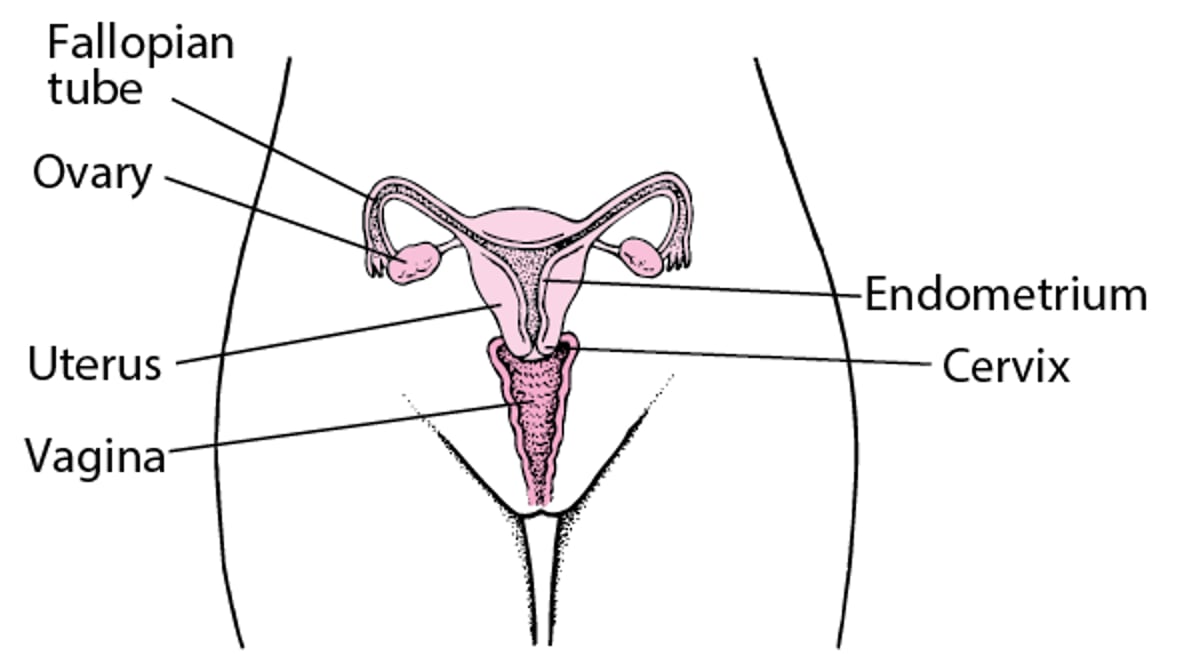
The infection may spread up the reproductive tract and infect the uterus, the tubes that connect the ovaries to the uterus (fallopian tubes), and sometimes the area around the ovaries (see figure ). In some women, the infection spreads to the lining of the pelvis and abdominal cavity (peritoneum), causing peritonitis. These complications together are called pelvic inflammatory disease (PID) and cause severe lower abdominal pain and sometimes fever.
Potential complications of pelvic inflammatory disease include severe infection throughout the body (sepsis), chronic abdominal pain, and scarring of the fallopian tubes. The scarring can cause infertility and mislocated (ectopic) pregnancies.
Pathway From the Vagina to the Ovaries
In women, some organisms can enter the vagina and infect other reproductive organs. From the vagina, these organisms can enter the cervix and uterus and may reach the fallopian tubes and sometimes the ovaries. |

Diagnosis of Mycoplasma Infections
Usually, nucleic acid amplification testing (NAAT)
Sometimes screening of sex partners
Doctors suspect mycoplasmal infections based on a person's symptoms, such as a discharge from the penis or vagina, or on risk factors, such as age or high-risk sexual activity.
Doctors do not routinely test or screen for mycoplasmal infections. However, testing is recommended for people who have repeat infections of the urethra, rectum, or cervix and for sex partners of people who have a sexually transmitted infection caused by Mycoplasma. Doctors may test people who have pelvic inflammatory disease for mycoplasmas.
In most cases, doctors diagnose mycoplasmal infections by doing NAAT to detect the bacteria’s unique genetic material, its DNA or RNA (which are nucleic acids). NAAT uses a process that increases the amount of the bacteria's DNA or RNA so that it can be more easily identified. Usually, a swab or sample of the discharge from the penis, cervix, or vagina or, in men, a urine sample is used. A vaginal swab or urine sample can often be collected by people themselves. If a urine sample can be used, men can avoid the discomfort of having a swab inserted into the penis.
If doctors suspect infection of the throat or rectum, samples from those sites are tested.
Treatment of Mycoplasma Infections
Antibiotics
Simultaneous treatment of sex partners
Mycoplasmal infections are treated first with the antibiotic doxycycline and then with azithromycin or moxifloxacin, which is given after treatment with doxycycline is finished.
Infected people and their sex partners should abstain from sexual intercourse for at least 1 week after the infected person has completed treatment.
Sex partners
All sex partners who have had sexual contact with infected people in the past 60 days should be tested for Mycoplasma (and other STIs) and, if positive, should be treated. People who are treated should be retested 21 days after treatment if they still have symptoms.
Prevention of Mycoplasma Infections
People can do the following to help reduce their risk of mycoplasmal infections and other STIs:
Practice safer sex, including using a condom every time for oral, anal, or genital sex.
Reduce the number of sex partners and not have high-risk sex partners (people with many sex partners or who do not practice safer sex).
Practice mutual monogamy or abstinence.
Seek prompt diagnosis (for repeat symptoms) and treatment to prevent spread to other people.
Identify sexual contacts if infected for the purposes of counseling and treatment.
More Information
The following English-language resource may be useful. Please note that The Manual is not responsible for the content of this resource.
Centers for Disease Control and Prevention (CDC): About Mycoplasma genitalium
Drug Information for the Topic