The skin is the body’s largest organ. It serves many important functions, including:
Protecting the body against injuries
Regulating body temperature
Maintaining water balance and electrolyte balance
Sensing painful and pleasant stimuli
Participating in vitamin D synthesis
The skin keeps vital chemicals and nutrients in the body. It provides a barrier against dangerous substances from entering the body and provides a shield from the harmful effects of ultraviolet radiation emitted by the sun.
Various marks and growths can appear on the skin, and these can affect skin color and texture.
The effects of aging and sun damage result in changes to skin function and appearance, which impact physical health and psychological well-being.
Many problems that appear on the skin are limited to the skin. Sometimes, however, the skin provides clues to a disorder that affects the entire body. Consequently, doctors often must consider many possible diseases when evaluating skin problems. They may need to order blood tests or other laboratory tests to look for an internal disease in people who come to them with a skin problem (see Diagnosis of Skin Disorders).
Layers of the Skin
The skin has 3 layers:
Epidermis
Dermis
Fat layer (also called the subcutaneous layer)
Each layer performs specific tasks.
Getting Under the Skin
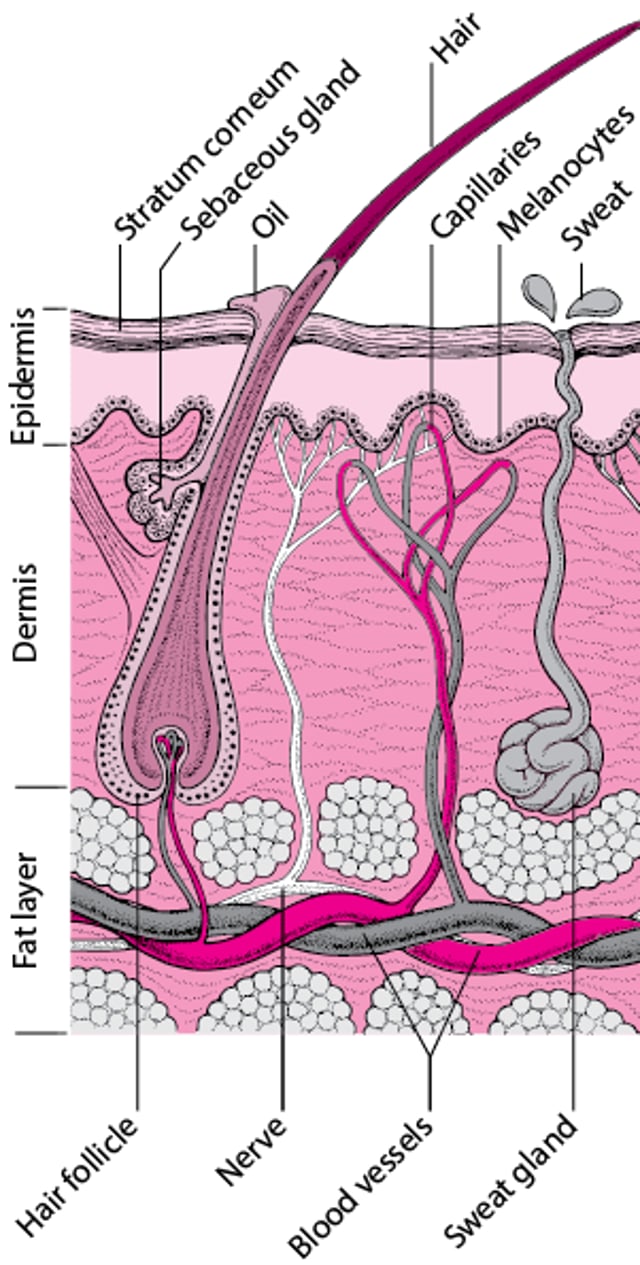
The skin has 3 layers: the epidermis, the dermis, and the hypodermis (primarily made up of a subcutaneous fat layer). Beneath the surface of the skin are nerves, nerve endings, glands, hair follicles, and blood vessels. Sweat is produced by glands in the dermis and reaches the surface of the skin through tiny ducts. |

Epidermis
The epidermis is the relatively thin, tough, outer layer of the skin. Most of the cells in the epidermis are keratinocytes. They originate from cells in the deepest layer of the epidermis called the basal layer. New keratinocytes slowly migrate up toward the surface of the epidermis. Once the keratinocytes reach the skin surface, they are gradually shed and are replaced by newer cells pushed up from below.
The outermost portion of the epidermis, known as the stratum corneum, is relatively waterproof and, when undamaged, prevents most bacteria, viruses, and other foreign substances from entering the body. The epidermis (along with other layers of the skin) also protects the internal organs, muscles, nerves, and blood vessels from injury. In certain areas of the body that require greater protection, such as the palms of the hands and the soles of the feet, there is an extra layer, so the stratum corneum is much thicker.
Scattered throughout the basal layer of the epidermis are cells called melanocytes, which produce the pigment melanin, one of the main contributors to skin color. Melanin's primary function, however, is to filter out ultraviolet radiation from sunlight (see Overview of Sunlight and Skin Damage), which damages DNA, resulting in numerous harmful effects, including skin cancer.
The epidermis also contains Langerhans cells, which are part of the skin's immune system. These cells help detect foreign substances and defend the body against infection. They also play a role in the development of skin allergies such as contact dermatitis.
Dermis
Below the epidermis is the dermis. The dermis is a thick layer of fibrous and elastic tissue (made mostly of collagen, with a small but important component of elastin) that gives the skin its flexibility and strength. The dermis contains nerve endings, sweat glands, oil glands (sebaceous glands), hair follicles, and blood vessels.
The nerve endings sense pain, touch, pressure, and temperature. Some areas of the skin contain more nerve endings than others. For example, the fingertips and toes contain many nerves and are extremely sensitive to touch.
The sweat glands produce sweat in response to heat and stress. Sweat is composed of water, salt, and other chemicals. As sweat evaporates off the skin, it helps cool the body. Specialized sweat glands in the armpits and the genital region (apocrine sweat glands) secrete a thick, oily sweat that produces a characteristic body odor when the sweat is digested by the normally harmless skin bacteria in those areas.
The sebaceous glands secrete sebum into hair follicles. Sebum is an oil that keeps the skin moist and soft and acts as a barrier against foreign substances.
The hair follicles produce the various types of hair found throughout the body. Hair not only contributes to a person's appearance but has a number of important physical roles, including regulating body temperature, providing protection from injury, and enhancing sensation. A portion of the follicle also contains stem cells, which are capable of regrowing damaged epidermis.
The blood vessels of the dermis provide nutrients to the skin and help regulate body temperature. Heat makes the blood vessels enlarge (dilate), allowing large amounts of blood to circulate near the skin surface, where the heat can be released. Cold makes the blood vessels narrow (constrict), retaining the body's heat.
Layers of the Skin
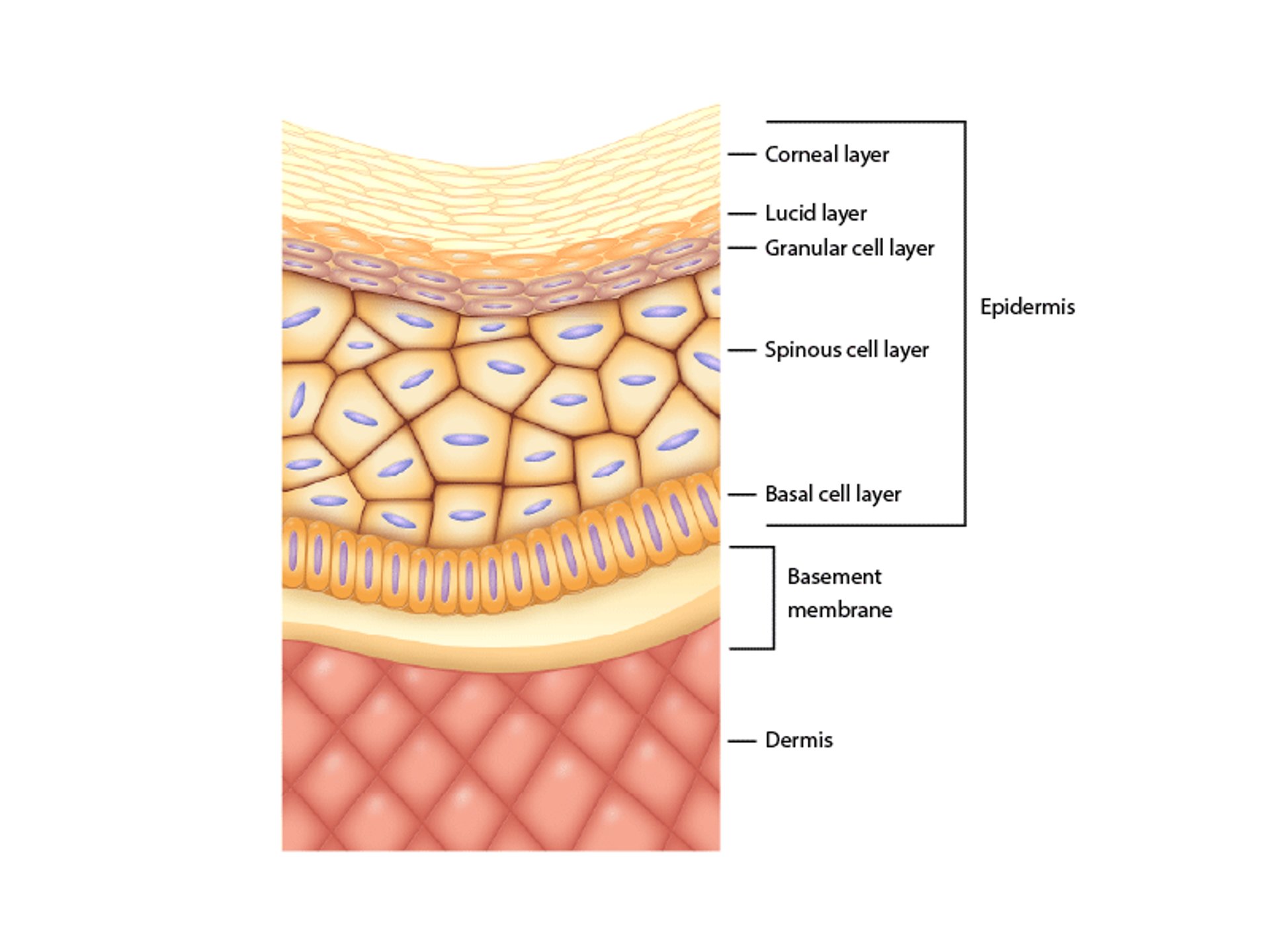
This figure shows the 5 layers of the epidermis along with its basement membrane and the dermis. The basement membrane of the epidermis is a specialized structure located at the point where the dermis and epidermis meet (dermal–epidermal junction). The layers of the basement membrane contribute to the structural stability and integrity of the skin. The lucid layer is present only in areas where the skin is thickened, such as the palms and soles. The basement membrane is disproportionately enlarged so that its layers are easier to see. |

Over different parts of the body, the number of nerve endings, sweat glands, sebaceous glands, hair follicles, and blood vessels varies. The top of the head, for example, has many hair follicles, whereas the soles of the feet have none.
Fat layer
Below the epidermis and dermis lies a layer of fat, also called adipose tissue, that helps insulate the body from heat and cold, provides protective padding, and serves as an energy storage area. The fat is contained in living cells called fat cells (adipocytes) that are held together by fibrous tissue.
The fat layer varies in thickness, from a fraction of an inch on the eyelids to several inches on the abdomen and buttocks in some people.
Drug Information for the Topic