Hepatitis A is caused by an enterically transmitted RNA virus that, in older children and adults, causes typical symptoms of viral hepatitis, including anorexia, malaise, and jaundice. Young children may be asymptomatic. Acute liver failure and death are rare in countries that have adequate and effective water treatment and sanitation facilities. Chronic hepatitis does not occur. Diagnosis is by antibody testing. Treatment is supportive. Vaccination and previous infection are protective.
(See also Causes of Hepatitis and Overview of Acute Viral Hepatitis.)
Hepatitis A virus (HAV) is a single-stranded RNA picornavirus. It is the most common cause of acute viral hepatitis worldwide (1), and is particularly common among children and young adults in endemic areas. In some countries, > 90% of children have been exposed to HAV by age 10 (2). Approximately 100 million infections are estimated to occur annually, resulting in 1.5 million symptomatic cases and 15,000 to 30,000 deaths (3).
In the United States, 1,648 cases were reported in 2023, and an estimated 3,300 cases occurred. Many cases are not recognized or not reported (4).
HAV spreads primarily by fecal-oral contact and is thus associated with poor sanitation and poor hygiene (3). Waterborne and foodborne epidemics occur, especially in countries that do not have adequate and effective water treatment and sanitation facilities. Eating contaminated raw shellfish is sometimes responsible. Sporadic cases are also common, usually as a result of person-to-person contact. Groups at higher-than-average risk for infection include international travelers and people in close contact with international adoptees, men who have sex with men, people experiencing homelessness, and people who use illicit drugs (both injectable and other) (3).
Fecal shedding of the virus occurs before symptoms develop and usually ceases a few days after symptoms begin; thus, infectivity often has already ceased when hepatitis becomes clinically evident.
HAV has no known chronic carrier state and does not cause chronic hepatitis or cirrhosis.
General references
1. Ouyang G, Pan G, Guan L, et al. Incidence trends of acute viral hepatitis caused by four viral etiologies between 1990 and 2019 at the global, regional and national levels. Liver Int. 2022;42(12):2662-2673. doi:10.1111/liv.15452
2. World Health Organization (WHO). Hepatitis A. Accessed April 27, 2026.
3. Migueres M, Lhomme S, Izopet J. Hepatitis A: Epidemiology, High-Risk Groups, Prevention and Research on Antiviral Treatment. Viruses. 2021;13(10):1900. Published 2021 Sep 22. doi:10.3390/v13101900
4. U.S. Centers for Disease Control and Prevention (CDC). 2023 Viral Hepatitis Surveillance Report. Published April 15, 2025. Accessed May 12, 2026.
Symptoms and Signs of Hepatitis A
In children < 6 years old, 70 to 90% of hepatitis A infections are asymptomatic, and in children with symptoms, jaundice is rare (1, 2). In contrast, most older children and adults have typical manifestations of viral hepatitis, including anorexia, malaise, fever, nausea, and vomiting; jaundice occurs in > 70%.

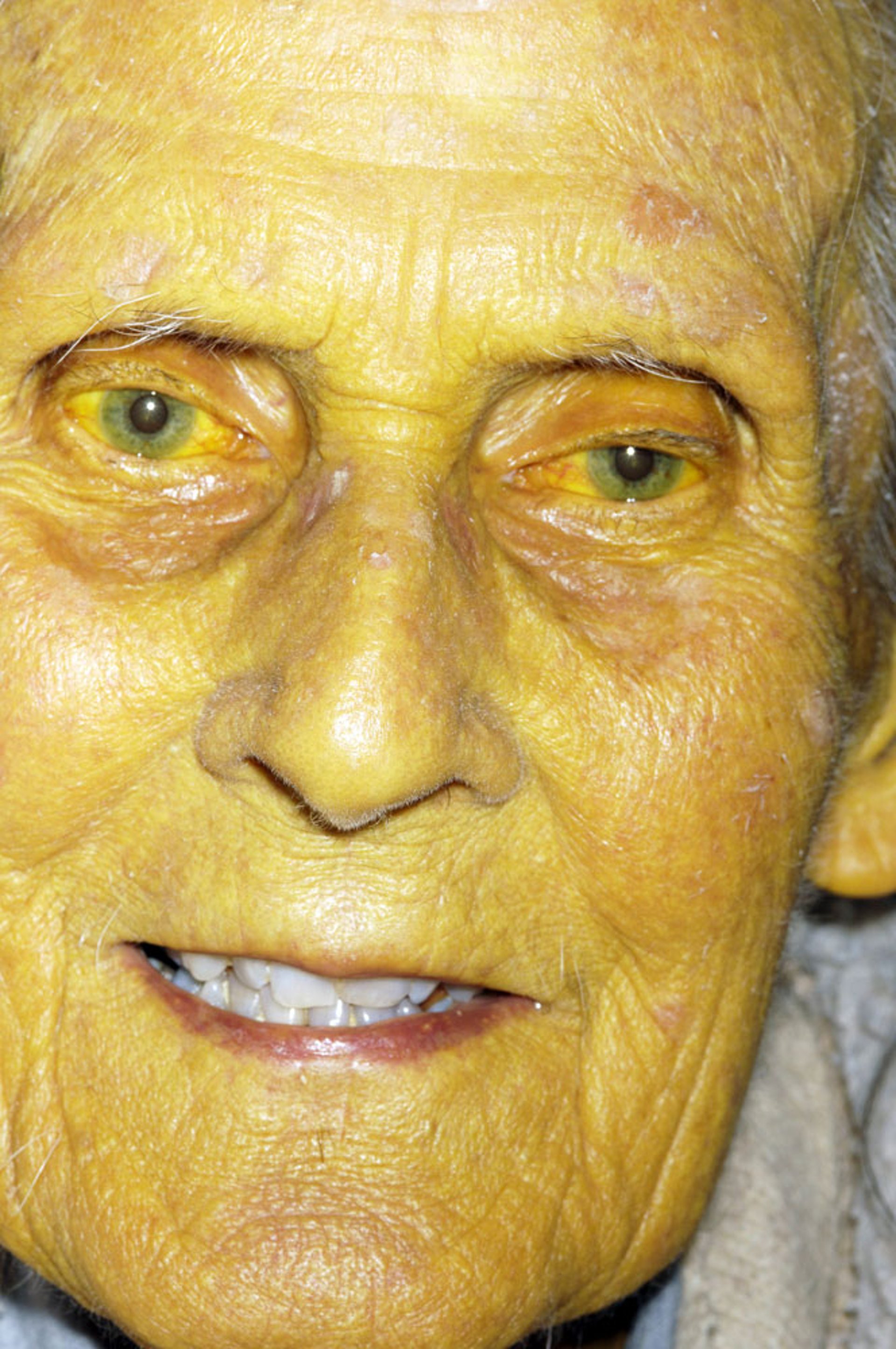
This photo shows yellowing of the sclera of the eyes and the skin on the face.
DR P. MARAZZI/SCIENCE PHOTO LIBRARY


This photo shows icterus, or jaundice, of the conjunctivae and facial skin, caused by the hepatitis A virus.
CDC
Manifestations typically resolve after approximately 2 months, but in some patients, symptoms continue or recur for up to 6 months. Some patients have prolonged cholestasis (cholestatic hepatitis) due to hepatitis A; cholestatic hepatitis is characterized by marked jaundice with pruritus, continued fever, weight loss, diarrhea, and malaise.
Recovery from acute hepatitis A is usually complete. Acute liver failure rarely occurs, but is more likely in people with preexisting liver disorders (3).
Symptoms and signs references
1. Hofmeister M, Weng M. Hepatitis A. CDC Yellow Book: Health Information for International Travel. April 23, 2025. Accessed May 12, 2026.
2. Carrillo-Santisteve P, Tavoschi L, Severi E, et al. Seroprevalence and susceptibility to hepatitis A in the European Union and European Economic Area: a systematic review. Lancet Infect Dis.2017;17(10):e306-e319. doi:10.1016/S1473-3099(17)30392-4
3. Nelson NP, Weng MK, Hofmeister MG, et al. Prevention of Hepatitis A Virus Infection in the United States: Recommendations of the Advisory Committee on Immunization Practices, 2020. MMWR Recomm Rep. 2020;69(5):1-38. Published 2020 Jul 3. doi:10.15585/mmwr.rr6905a1
Diagnosis of Hepatitis A
Serologic and nucleic acid amplification testing (NAAT)
In the initial diagnosis of acute hepatitis, viral hepatitis should be differentiated from other disorders causing jaundice (see figure ).
If acute viral hepatitis is suspected, the following tests are performed to test for hepatitis viruses A, B, and C:
Hepatitis A virus: IgM antibody to HAV (IgM anti-HAV) (acute infection); total anti-HAV (immunity)
Hepatitis B virus: Hepatitis B surface antigen (HBsAg) and IgM antibody to hepatitis B core antigen (IgM anti-HBc)
Antibody to hepatitis C virus (anti-HCV) and hepatitis C RNA polymerase chain reaction (HCV-RNA PCR)
Hepatitis C virus: Antibody to HCV (anti-HCV) with reflex quantitative hepatitis C RNA polymerase chain reaction (HCV-RNA PCR)
Hepatitis E virus (selected patients): IgM anti-HEV and HEV-RNA PCR
For suspected acute hepatitis A, total anti-HAV (which measures both IgM and IgG) can be used to assess immunity (see table ). If total anti-HAV is positive, then the IgM anti-HAV is obtained separately to help determine whether the infection is acute. A positive total anti-HAV with a negative IgM anti-HAV indicates past infection or vaccination. Although HAV RNA can be detected by NAAT during the viremic phase, routine clinical diagnosis relies on serologic testing with IgM anti-HAV rather than direct viral detection.
IgM antibody typically develops early in the infection and peaks approximately 1 to 2 weeks after the development of jaundice. It diminishes within several weeks, followed by the development of protective IgG antibody (IgG anti-HAV), which persists usually for life. Thus, IgM antibody is a marker of acute infection, whereas IgG anti-HAV indicates only previous exposure to HAV and immunity to recurrent infection.
Hepatitis A Serology
Marker | Acute HAV Infection | Prior HAV Infection or Vaccination* |
|---|---|---|
Total anti-HAV (includes IgM and IgG anti-HAV) | + | + |
IgM anti-HAV | + | − |
* HAV does not cause chronic hepatitis. | ||
HAV = hepatitis A virus; IgM anti-HAV = IgM antibody to HAV. | ||
Other tests
Liver tests are needed if not previously performed; they include serum alanine aminotransferase (ALT), aspartate aminotransferase (AST), and alkaline phosphatase.
Other tests should be performed to evaluate liver function; they include serum albumin, bilirubin, and prothrombin time/international normalized ratio (PT/INR).
Treatment of Hepatitis A
Supportive care
No specific treatments attenuate acute hepatitis A (1). Alcohol and hepatotoxic medications should be avoided because they can increase liver damage. Restrictions on diet or activity, including commonly prescribed bed rest, have no scientific basis.
For cholestatic hepatitis, cholestyramine 8 g orally once or twice a day can relieve itching.
Hospitalization may be necessary for dehydration; transplantation is necessary, rarely, for acute liver failure (2).
Hepatitis A should be reported to the local or state health department.
Treatment references
1. Workowski KA, Bachmann LH, Chan PA, et al. Sexually Transmitted Infections Treatment Guidelines, 2021. MMWR Recomm Rep. 2021;70(4):1-187. Published 2021 Jul 23. doi:10.15585/mmwr.rr7004a1
2. Shingina A, Mukhtar N, Wakim-Fleming J, et al. Acute Liver Failure Guidelines. Am J Gastroenterol. 2023;118(7):1128-1153. doi:10.14309/ajg.0000000000002340
Prevention of Hepatitis A
Good personal hygiene, as well as food and water safety measures, help prevent fecal-oral transmission of hepatitis A. Barrier protection is recommended, but isolation of patients does little to prevent spread of hepatitis A virus (HAV).
Spills and contaminated surfaces in the home of patients can be cleaned with dilute household bleach.
Vaccination
(See also Hepatitis A [HepA] Vaccine).
Routine vaccination for hepatitis A is recommended by some expert organizations for all children, and for adults at high risk. (See Hepatitis A (HepA) Vaccine and Hepatitis B (HepB) Vaccine.)
A vaccine for hepatitis E is not available in the United States but is available in China and Pakistan (1).
Standard immune globulin prevents or decreases the severity of HAV infection and should be given to nonimmune family members and close contacts of patients (post-exposure prophylaxis), as well as for pre-exposure prophylaxis in those who cannot or do not receive the vaccine (2).
Preexposure HAV vaccination should be provided for adults with increased risk, including (3):
Travelers to countries with high or intermediate HAV endemicity
Diagnostic laboratory workers or others with occupational exposure
Men who have sex with men
People who use injection or noninjection illicit drugs
People with chronic liver disorders (including chronic hepatitis C) because they have an increased risk of developing acute liver failure due to HAV
People who anticipate close contact with an international adoptee during the first 60 days after arrival from a country with high or intermediate HAV endemicity
People who do not have stable housing or who are experiencing homelessness
Preexposure HAV prophylaxis with Hepatitis A immune globulin administered simultaneously with Hepatitis A vaccine at a separate injection site, should be considered for adults > 40 years, immunocompromised patients (of any age), and patients with chronic liver disease (of any age) who are traveling to areas of high or intermediate HAV endemicity in < 2 weeks and have not been previously vaccinated (1). Immune globulin alone should also be administered to individuals > 6 months of age in whom the vaccine is contraindicated or who choose not to be vaccinated.
Postexposure prophylaxis
Postexposure prophylaxis should be given to those exposed to HAV within the last 2 weeks (eg, a household or sexual contact) and who have not been vaccinated previously (4).
For healthy, unvaccinated patients aged ≥ 1 year, a single dose of hepatitis A vaccine is given as soon as possible after exposure. The HepA vaccine series should be completed with a second dose at least 6 months after the first dose for long-term protection.
Higher-risk patients, including those > 40 years old, those who are immunocompromised or have chronic liver disease, who have been exposed to HAV within the past 2 weeks and have not previously completed the HepA vaccination series should receive both immune globulin and HepA vaccine simultaneously in a different anatomic site (eg, separate limbs) as soon as possible after exposure (4).
Prevention references
1. Huang S, Zhang X, Su Y, et al. Long-term efficacy of a recombinant hepatitis E vaccine in adults: 10-year results from a randomised, double-blind, placebo-controlled, phase 3 trial. Lancet. 2024;403(10429):813-823. doi:10.1016/S0140-6736(23)02234-1
2. Nelson NP, Weng MK, Hofmeister MG, et al. Prevention of Hepatitis A Virus Infection in the United States: Recommendations of the Advisory Committee on Immunization Practices, 2020. MMWR Recomm Rep. 2020;69(5):1-38. Published 2020 Jul 3. doi:10.15585/mmwr.rr6905a1
3. Migueres M, Lhomme S, Izopet J. Hepatitis A: Epidemiology, High-Risk Groups, Prevention and Research on Antiviral Treatment. Viruses. 2021;13(10):1900. Published 2021 Sep 22. doi:10.3390/v13101900
4. Hofmeister M, Weng M. Hepatitis A. CDC Yellow Book: Health Information for International Travel. April 23, 2025. Accessed May 12, 2026.
Key Points
Hepatitis A virus is the most common cause of acute viral hepatitis; it is spread by the fecal-oral route.
Children < 6 years old may be asymptomatic; older children and adults usually have anorexia, malaise, and jaundice.
Acute liver failure is rare, and chronic hepatitis, cirrhosis, and cancer do not occur.
Treat supportively.
Routine vaccination beginning at age 1 is recommended by some expert organizations for all children.
Vaccinate people at risk (eg, travelers to endemic areas, laboratory workers), and provide postexposure prophylaxis in those who are not previously vaccinated.
Drug Information for the Topic