


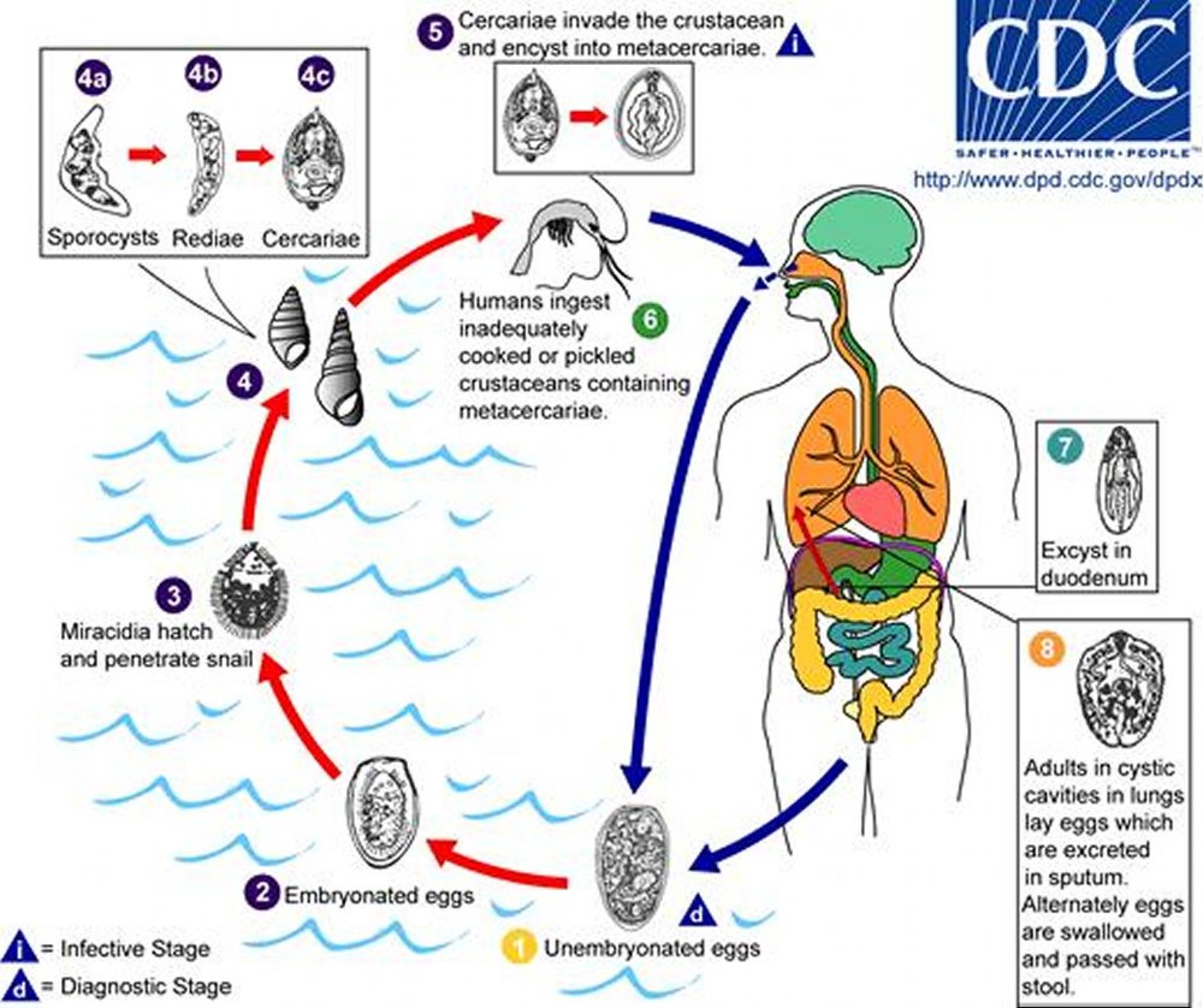
Paragonimus westermani Life Cycle
1. In the human host, unembryonated eggs pass out of the body in sputum, or they are swallowed and passed with feces.
2. In the external environment, eggs become embryonated, and miracidia hatch.
3. Miracidia seek a snail (first intermediate host), and penetrate its soft tissues.
4. Inside the snail, miracidia develop into sporocysts, then rediae, and then many cercariae, which emerge from the snail.
5. Cercariae invade a crustacean such as a crab or crayfish (2nd intermediate host), where they encyst (form cystic structures) and become metacercariae (the infective stage for mammalian hosts).
6. Humans are infected with P. westermani by eating inadequately cooked or pickled freshwater crab or crayfish that contain metacercariae.
7. The metacercariae excyst (rupture out of existing cysts) in the duodenum.
8. They then penetrate the intestinal wall and move into the peritoneal cavity, then through the abdominal wall and diaphragm into the lungs; there, they become encapsulated and develop into adults, which produce eggs. The eggs exit the body in sputum that is coughed up and spit out or swallowed and passed in feces. The worms can also reach other organs and tissues, but in such sites, the life cycle cannot be completed because the eggs cannot exit the body.
Image from the Centers for Disease Control and Prevention Image Library.