Ehlers-Danlos syndromes are hereditary collagen disorders characterized by joint hypermobility, hyperextensible skin, and widespread tissue fragility with delayed wound healing and easy bruising. Some forms involve the great vessels or cardiac valves. Diagnosis is based on clinical presentation and genetic testing. Treatment is supportive.
Ehlers-Danlos syndromes are heterogeneous. The current Ehlers-Danlos syndromes classification system recognizes 14 clinical types caused by variants in 20 genes (1, 2). Patients with Ehlers-Danlos syndromes have pathogenic variants in genes encoding fibrillar collagen types I, III, and V; modifying or processing enzymes (eg, lysyl hydroxylase, an enzyme that hydroxylates lysine residues in collagen); glycosaminoglycan biosynthesis; the complement pathway; or other intracellular processes.
There are 14 clinical types. See table .
Hypermobile, classical, and vascular types are the most common; the hypermobile type does not have a known gene mutation.
Clinical Types of Ehlers-Danlos Syndromes
Type | Common Clinical Features | Gene Variants | Molecular Pathophysiology |
|---|---|---|---|
Classical | Fragile skin (velvety or doughy texture) Atrophic scarring Generalized hypermobility | COL5A1 COL5A2 COL1A1 | Collagen structure and processing |
Vascular | Arterial fragility, aneurysm, dissection, rupture Bruising Colonic and uterine, muscular, or tendon rupture Spontaneous pneumothorax | COL3A1 COL1A1 | Collagen structure and processing |
Arthrochalasia | Severe hypermobility with dislocations Congenital hip dislocation (bilateral) Tissue fragility and atrophic scarring | COL1A1 COL1A2 | Collagen structure and processing |
Dermatosparaxis | Extreme skin fragility with loose, excessive skin and severe bruising Characteristic craniofacial features* Short limbs | ADAMTS2 | Collagen structure and processing |
Cardiac valvular | Cardiac valvular insufficiency Hypermobility | COL1A2 | Collagen structure and processing |
Kyphoscoliotic | Hypotonia Congenital/early-onset kyphoscoliosis Hypermobility | PLOD1 FKBP14 | Collagen folding and crosslinking |
Classical-like Classical-like type 2 (provisional) | Classical-like: Hyperextensible skin (velvety texture); no atrophic scarring Leg edema Classical-like type 2: Hyperextensible skin with atrophic scarring Generalized hypermobility Osteopenia Both: Foot deformities† | Classical-like: TNXB Classical-like type 2: AEBP1 | Classical-like: Myomatrix structure and function Classical-like type 2: Collagen and extracellular matrix formation |
Myopathic | Hypotonia Contractures Hypermobility | COL12A1 | Myomatrix structure and function |
Musculocontractural | Multiple contractures Characteristic craniofacial features* Fragile, hyperextensible skin with easy bruising | CHST14 DSE | Glycosaminoglycan biosynthesis |
Spondylodysplastic | Progressive short stature Hypotonia Limb bowing Some craniofacial features specific to the affected gene | B4GALT7 B3GALT6 SLC39A13 | Glycosaminoglycan biosynthesis (B4GALT7 and B3GALT6) Intracellular processes (SLC39A13) |
Brittle cornea syndrome | Thin cornea, corneal rupture, retinal detachment Hearing loss | ZNF469 PRDM5 | Extracellular matrix homeostasis |
Periodontal | Severe, early-onset periodontal disease with tooth loss Pretibial plaques Hyperextensible skin with easy bruising | C1R C1S | Complement pathway |
Hypermobile | Generalized joint hypermobility Joint instability Chronic pain | Unknown | Unknown |
* Craniofacial features include large fontanelle, downslanting palpebral fissures, and blue sclerae; others vary by Ehlers-Danlos syndrome type. | |||
† Foot deformities include broad forefoot, brachydactyly, pes planus, bunions, and heel papules. | |||
Data from The Ehlers-Danlos Society. 2017 EDS International Classification; Malfait F, Castori M, Francomano CA, Giunta C, Kosho T, Byers PH. The Ehlers-Danlos syndromes. Nat Rev Dis Primers. 2020;6(1):64. Published 2020 Jul 30. doi:10.1038/s41572-020-0194-9; and from Malfait F, Francomano C, Byers P, et al. The 2017 international classification of the Ehlers-Danlos syndromes. Am J Med Genet C Semin Med Genet. 2017;175(1):8-26. doi:10.1002/ajmg.c.31552. | |||
General references
1. Malfait F, Francomano C, Byers P, et al. The 2017 international classification of the Ehlers-Danlos syndromes. Am J Med Genet C Semin Med Genet. 2017;175(1):8-26. doi:10.1002/ajmg.c.31552
2. Malfait F, Castori M, Francomano CA, Giunta C, Kosho T, Byers PH. The Ehlers-Danlos syndromes. Nat Rev Dis Primers. 2020;6(1):64. Published 2020 Jul 30. doi:10.1038/s41572-020-0194-9
Symptoms and Signs of Ehlers-Danlos Syndromes
Symptoms and signs vary widely by type and by patient; certain manifestations are common between many types, whereas other features are more specific to an individual type.
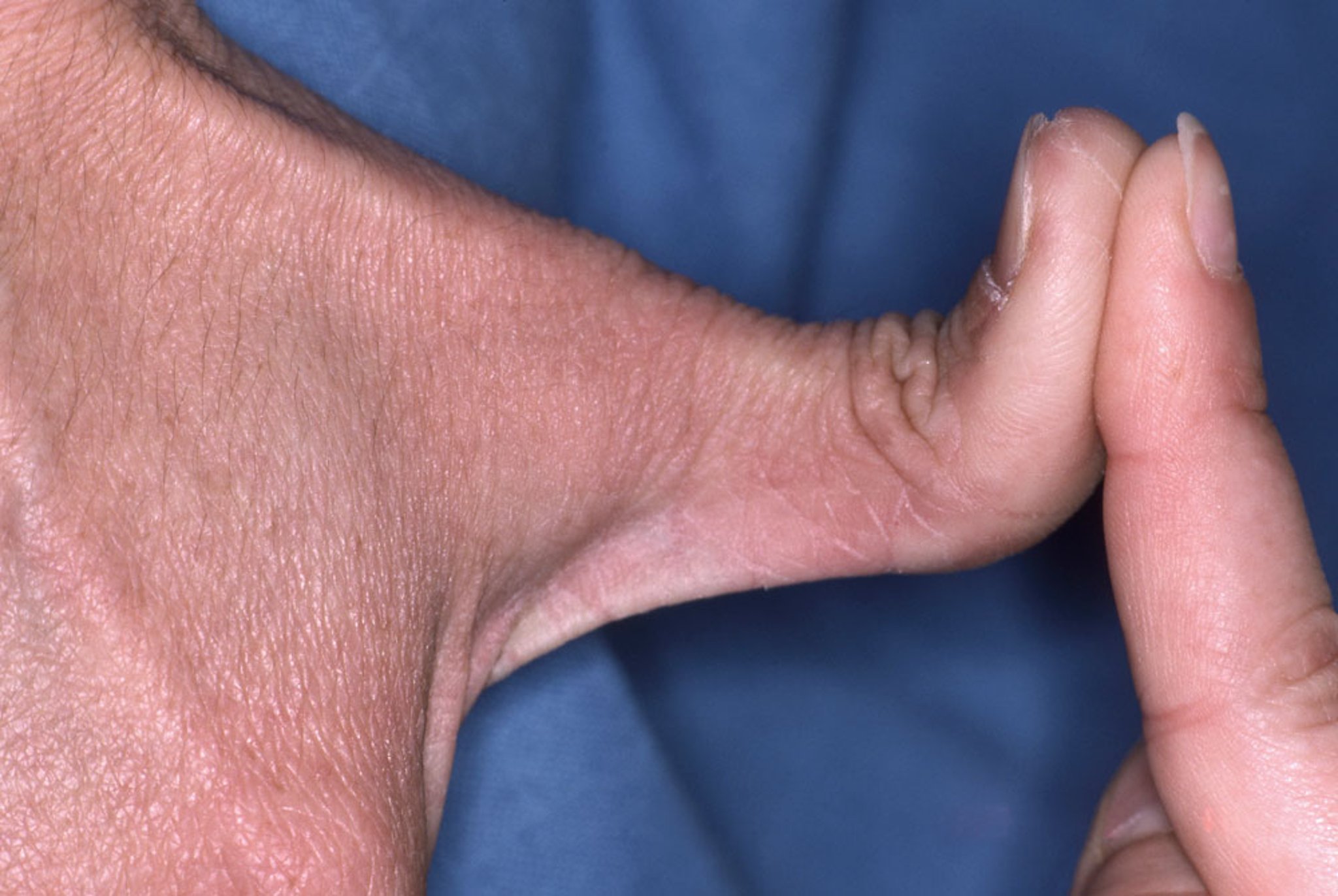
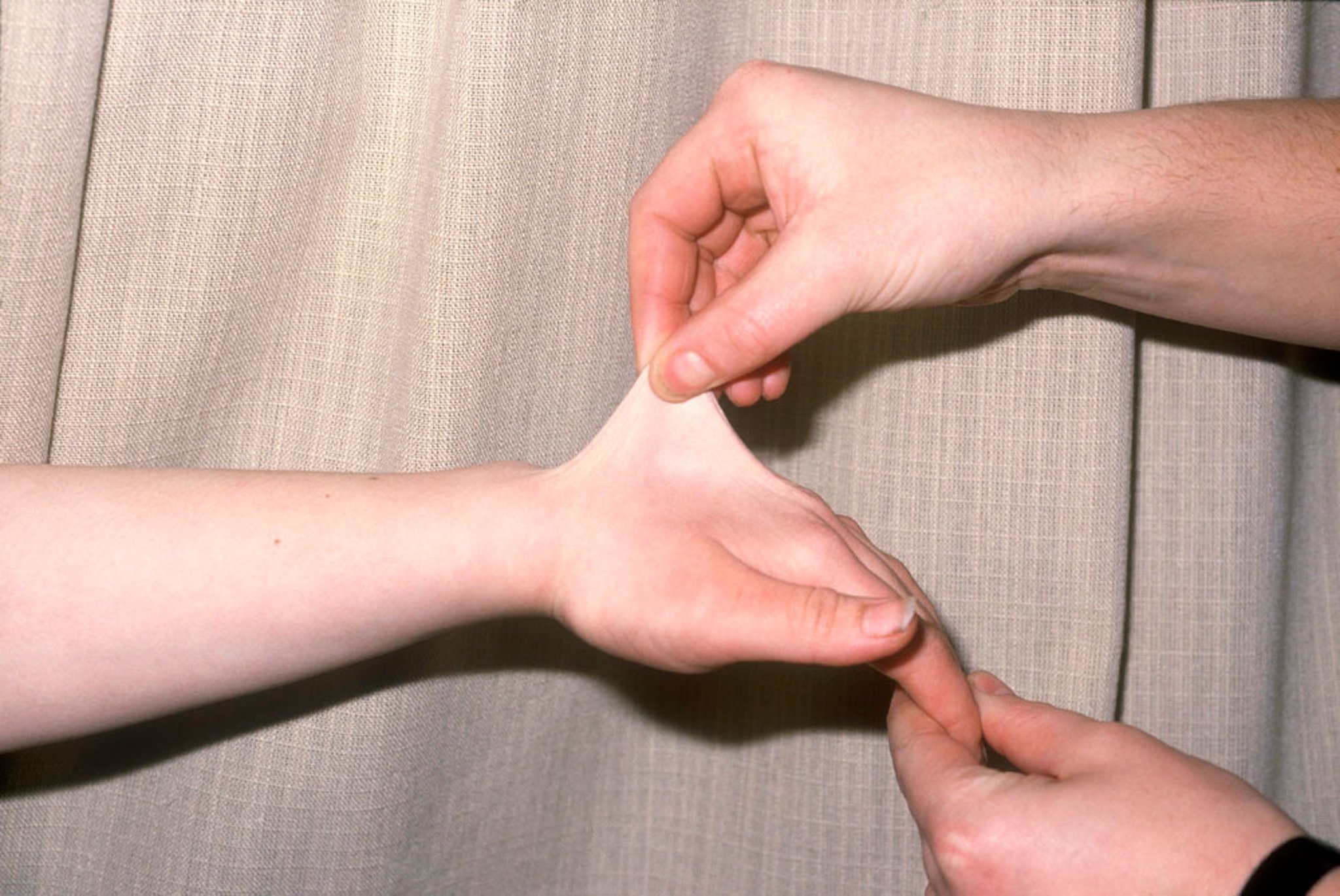
Common, but not universal, symptoms include hypermobile joints, abnormal scar formation and wound healing, fragile vessels, and soft, hyperextensible skin. Skin can be stretched several centimeters but returns to normal when released. Wide papyraceous scars often overlie bony prominences, particularly elbows, knees, and shins; scarring is less severe in the hypermobile type. Molluscoid pseudotumors (fleshy outgrowths) frequently form on top of scars or at pressure points.
Extent of joint hypermobility varies but may be marked in the arthrochalasia, classical, and hypermobile types. Other joint manifestations include spinal kyphoscoliosis (especially in people with the kyphoscoliosis type), thoracic deformity, talipes equinovarus (clubfoot), pes planus (flat feet), and developmental dysplasia of the hip (formerly congenital dislocation of the hip). The arthrochalasia type is characterized by bilateral developmental dysplasia of the hip.
The hypermobile type may be accompanied by autonomic dysfunction including postural orthostatic tachycardia syndrome and disorders of gut-brain interaction.
Bleeding tendency is rare, although the vascular type is characterized by vascular rupture of aneurysms and easy bruising.
Subcutaneous calcified spherules may be palpated or seen on radiographs.


Abnormal elasticity of the skin is seen in this patient with a type of Ehlers-Danlos syndrome.
Complications of Ehlers-Danlos syndromes
Ehlers-Danlos syndromes can include dysfunction of any organ or tissue (1):
Skin: Minor trauma may cause wide gaping wounds but little bleeding; surgical wound closure may be difficult because sutures tend to tear out of the fragile tissue. Surgical complications occur because of deep tissue fragility.
Eyes: Sclera and cornea may be fragile, leading to perforation of the globe.
Joints: Bland synovial effusions, sprains, and dislocations occur frequently.
Gastrointestinal (GI) tract: GI hernias and diverticula are common. Rarely, portions of the GI tract spontaneously hemorrhage and perforate.
Cardiovascular system: Mitral valve prolapse is a common complication in the most severe type (vascular type) and can be seen in other types. Patients can develop dissecting aortic aneurysms and spontaneous rupture of large arteries.
In pregnant patients, tissue extensibility worsens because of elevated levels of oxytocin and may cause premature birth, cervical incompetence, and possibly uterine rupture. If the fetus is affected, fetal membrane is fragile, sometimes resulting in early rupture. Maternal tissue fragility may complicate episiotomy or cesarean delivery. Antenatal, perinatal, and postnatal bleeding may occur.
Other potentially serious complications include arteriovenous fistula, ruptured viscus, and pneumothorax or pneumohemothorax.
Symptoms and signs reference
1. Malfait F, Castori M, Francomano CA, Giunta C, Kosho T, Byers PH. The Ehlers-Danlos syndromes. Nat Rev Dis Primers. 2020;6(1):64. Published 2020 Jul 30. doi:10.1038/s41572-020-0194-9
Diagnosis of Ehlers-Danlos Syndromes
Clinical criteria
Confirmatory genetic testing
Echocardiography and/or other vascular imaging to screen for cardiovascular complications
Most but not all types of Ehlers-Danlos syndromes involve 1 or both of the following:
Joint hypermobility
Skin hyperextensibility (hyperelasticity)

PDC/SCIENCE PHOTO LIBRARY

Biophoto Associates/SCIENCE PHOTO LIBRARY
Thus, diagnosis may be suspected in patients who present with frequent joint dislocations, poor wound healing, and/or frequent or unusual scarring. However, joint hypermobility is common among the general population. Also, other connective tissue disorders with similar joint and/or skin manifestations (eg, Marfan syndrome, cutis laxa) should be considered.
Screening patients with simple questions regarding joint hypermobility may be helpful (1):
Can you now, or could you ever, place your hands flat on the floor without bending your knees?
Can you now, or could you ever, bend your thumb to touch your forearm?
As a child, did you amuse your friends by contorting your body into strange shapes or could you do splits?
As a child or adolescent, did your kneecap or shoulder dislocate on more than one occasion?
Do you consider yourself “double-jointed”?
A positive answer on 2 or more of these questions strongly suggests hypermobility, which can be further assessed by physical examination using the Beighton scoring system (2). This tool assesses hypermobility in 4 pairs of joints (fifth digits, thumbs, elbows, knees) and the spine. One point is scored for each joint manifesting the defined hypermobility criterion; a score of ≥ 6 in prepubertal children, ≥ 5 in postpubertal children and adults ≤ 50 years old, and ≥ 4 in adults over 50 years old is positive for hypermobility (2).
Skin hyperextensibility is assessed in standardized areas. Skin is considered hyperextensible if it can be stretched > 1.5 cm on the distal forearm and dorsum of the hands, > 3 cm on the neck, elbow, and knees, and > 1 cm on the palm (2).
There are major and minor clinical criteria for each Ehlers-Danlos type (2, 3), typically including presence or absence of joint hypermobility and skin hyperextensibility. However, there is much variability both within and between the different types, and diagnosis should be confirmed by genetic testing, which is now available for all subtypes except the hypermobile type.
Ultrastructural examination of skin biopsy can help in diagnosing the classical, hypermobile, and vascular types.
Echocardiography and other vascular imaging are performed to check for heart disorders (eg, valvular prolapse, arterial aneurysm) that are associated with some of the types.
Diagnosis references
1. Hakim AJ, Grahame R. A simple questionnaire to detect hypermobility: An adjunct to the assessment of patients with diffuse musculoskeletal pain. Int J Clin Pract. 2003;57(3):163–166.
2. Malfait F, Francomano C, Byers P, et al. The 2017 international classification of the Ehlers-Danlos syndromes. Am J Med Genet C Semin Med Genet. 2017;175(1):8-26. doi:10.1002/ajmg.c.31552
3. The Ehlers-Danlos Society. Types. Accessed May 12, 2025.
Treatment of Ehlers-Danlos Syndromes
Early recognition and treatment of complications
There is no specific treatment for many subtypes of Ehlers-Danlos syndromes.
Trauma should be minimized. Protective clothing and padding may help.
Physical therapy with muscle strengthening improves joint stability.
For subtypes with a high risk of vascular involvement, vascular surveillance is important, but there is no standardized approach (1). If surgery is performed, whether for joint or vascular indications, hemostasis must be meticulous. Wounds are carefully sutured, and tissue tension is avoided.
Obstetric supervision during pregnancy and delivery is mandatory. Genetic counseling should be provided.
Treatment reference
1. Byers PH, Belmont J, Black J, et al. Diagnosis, natural history, and management in vascular Ehlers-Danlos syndrome. Am J Med Genet C Semin Med Genet. 2017;175(1):40-47. doi:10.1002/ajmg.c.31553
Prognosis for Ehlers-Danlos Syndromes
Life span is usually normal with most types, and there is a low rate (2%) of death due to vascular complications in nonvascular types (1). Quality of life, however, may be significantly reduced, particularly by joint involvement (2).
Lethal complications (eg, arterial rupture) are much more common in the vascular type. In one study, 5-year survival after diagnosis for patients with the vascular type was estimated at 72%; the expected life span in patients with this type is approximately 50 years (3).
Prognosis references
1. D'hondt S, Van Damme T, Malfait F. Vascular phenotypes in nonvascular subtypes of the Ehlers-Danlos syndrome: a systematic review. Genet Med. 2018;20(6):562-573. doi:10.1038/gim.2017.138
2. Malfait F, Castori M, Francomano CA, Giunta C, Kosho T, Byers PH. The Ehlers-Danlos syndromes. Nat Rev Dis Primers. 2020;6(1):64. Published 2020 Jul 30. doi:10.1038/s41572-020-0194-9
3. Frank M, Adham S, Seigle S, et al. Vascular Ehlers-Danlos Syndrome: Long-Term Observational Study. J Am Coll Cardiol. 2019;73(15):1948-1957. doi:10.1016/j.jacc.2019.01.058
Key Points
Ehlers-Danlos syndromes are genetic disorders of connective tissue with 14 identified clinical types.
Patients typically have hypermobile joints, hyperextensible skin, and fragile skin and connective tissue.
Fragile connective tissue may predispose to cardiac valvular regurgitation, scleral rupture, arterial dissection or rupture, uterine rupture, and other complications.
Diagnosis is made using clinical criteria and typically confirmed by genetic testing.
Drug Information for the Topic