Search
SectionsIndexSymptoms
  • Cardiovascular Disorders
  • Clinical Pharmacology
  • Critical Care Medicine
  • Dental Disorders
  • Dermatologic Disorders
  • Ear, Nose, and Throat Disorders
  • Endocrine and Metabolic Disorders
  • Eye Disorders
  • Gastrointestinal Disorders
  • Genitourinary Disorders
  • Geriatrics
  • Gynecology and Obstetrics
  • Hematology and Oncology
  • Hepatic and Biliary Disorders
  • Immunology; Allergic Disorders
  • Infectious Diseases
  • Injuries; Poisoning
  • Musculoskeletal and Connective Tissue Disorders
  • Neurologic Disorders
  • Nutritional Disorders
  • Pediatrics
  • Psychiatric Disorders
  • Pulmonary Disorders
  • Special Subjects
ABCDEFGHI
JKLMNOPQR
STUVWXYZ
  • Abdominal Pain, Acute
  • Abdominal pain, Chronic
  • Alopecia
  • Amenorrhea
  • Amnesia
  • Anosmia
  • Bleeding, Excessive
  • Breast Lumps
  • Chest Pain
  • Constipation in Adults
  • Constipation in Children
  • Cough in Adults
  • Cough in Children
  • Crying
  • Diarrhea in Adults
  • Diarrhea in Children
  • Diplopia
  • Dizziness
  • Dry Mouth
  • Dysmenorrhea
  • Dyspepsia
  • Dysphagia
  • Dyspnea
  • Dysuria
  • Earache
  • Ear Discharge
  • Edema
  • Edema During Late Pregnancy
  • Epistaxis
  • Erectile dysfunction
  • Eyelid Swelling
  • Eye Pain
  • Fever
  • Fever, Acute, in Adults
  • Fever, Chronic (FUO)
  • Fever in Infants and Children
  • Floaters
  • Gas
  • Gastrointestinal Bleeding
  • Halitosis
  • Headache
  • Hearing Loss
  • Hearing Loss: Sudden Deafness
  • Hematospermia
  • Hematuria
  • Hemoptysis
  • Hiccups
  • Hirsutism
  • Insomnia and Excessive Daytime Sleepiness
  • Itching
  • Itching, Anal
  • Jaundice in Adults
  • Jaundice in Neonates
  • Joint Pain, Monarticular
  • Joint Pain, Polyarticular
  • Knee pain
  • Lump in Throat
  • Nasal Congestion and Rhinorrhea
  • Nausea and Vomiting During Early pPregnancy
  • Nausea and Vomiting in Adults
  • Nausea and Vomiting in Infants and Children
  • Neck and Back Pain
  • Neck Mass
  • Nipple Discharge
  • Orthostatis Hypotension
  • Pain
  • Pain, Chronic
  • Palpitations
  • Pelvic Pain
  • Pelvic Pain During Early Pregnancy
  • Polyuria
  • Priapism
  • Red Eye
  • Scrotal Pain
  • Sore Throat
  • Stomatitis
  • Stridor
  • Syncope
  • Tearing
  • Tinnitus
  • Toothache
  • Tremor
  • Urinary Frequency
  • Urinary Incontinence in Adults
  • Urinary Incontinence in Children
  • Urinary Retention
  • Urticaria
  • Vaginal Bleeding
  • Vaginal Bleeding During Early Pregnancy
  • Vaginal Bleeding During Late Pregnancy
  • Vaginal Itching and Discharge
  • Vision, Blurred
  • Vision Loss, Acute
  • Weakness, Generalized
  • Wheezing
In This Topic
Dermatologic Disorders
Fungal Skin Infections
Tinea Versicolor
Symptoms and Signs
Diagnosis
Treatment
Key Points
Back to Top
Resources
  • About The Merck Manual
  • Ready Reference Guides
  • Trade Names of Some Commonly Used Drugs
  • Normal Laboratory Values
  • Clinical Calculators
  • Multimedia
  • Selected Links
Manuals available online
'/home/index.html' + bookPageLink
 
'/professional/index.html'
These and other Manuals available
in print, online, and as mobile applications.

See more at MerckManuals.com
Sections in Health Care Professionals
  • Cardiovascular Disorders
  • Clinical Pharmacology
  • Critical Care Medicine
  • Dental Disorders
  • Dermatologic Disorders
  • Ear, Nose, and Throat Disorders
  • Endocrine and Metabolic Disorders
  • Eye Disorders
  • Gastrointestinal Disorders
  • Genitourinary Disorders
  • Geriatrics
  • Gynecology and Obstetrics
  • Hematology and Oncology
  • Hepatic and Biliary Disorders
  • Immunology; Allergic Disorders
  • Infectious Diseases
  • Injuries; Poisoning
  • Musculoskeletal and Connective Tissue Disorders
  • Neurologic Disorders
  • Nutritional Disorders
  • Pediatrics
  • Psychiatric Disorders
  • Pulmonary Disorders
  • Special Subjects
Chapters in Dermatologic Disorders
  • Approach to the Dermatologic Patient
  • Principles of Topical Dermatologic Therapy
  • Acne and Related Disorders
  • Bullous Diseases
  • Cornification Disorders
  • Dermatitis
  • Reactions to Sunlight
  • Psoriasis and Scaling Diseases
  • Hypersensitivity and Inflammatory Disorders
  • Sweating Disorders
  • Bacterial Skin Infections
  • Fungal Skin Infections
  • Parasitic Skin Infections
  • Viral Skin Diseases
  • Pigmentation Disorders
  • Hair Disorders
  • Nail Disorders
  • Pressure Ulcers
  • Benign Skin Tumors, Growths, and Vascular Lesions
  • Cancers of the Skin
Topics in Fungal Skin Infections
  • Candidiasis (Mucocutaneous)
  • Overview of Dermatophytoses
  • Tinea Barbae
  • Tinea Capitis
  • Tinea Corporis
  • Tinea Cruris
  • Tinea Pedis
  • Dermatophytid Reaction
  • Intertrigo
  • Tinea Versicolor
 
  • Merck Manual
  • >
  • Health Care Professionals
  • >
  • Dermatologic Disorders
  • >
  • Fungal Skin Infections
  • 4
 
Tinea Versicolor(Pityriasis Versicolor)

Share This

Tinea versicolor is skin infection with Malassezia furfur that manifests as multiple asymptomatic scaly patches varying in color from white to tan to brown to pink. Diagnosis is based on clinical appearance and potassium hydroxide wet mount of skin scrapings. Treatment is with topical or sometimes oral antifungals. Recurrence is common.

Malassezia furfur is a dimorphic fungus that is normally a harmless component of normal skin flora but that in some people causes tinea versicolor. Most affected people are healthy. Factors that may predispose to tinea versicolor include heat and humidity and immunosuppression due to corticosteroids, pregnancy, undernutrition, diabetes, or other disorders. Hypopigmentation in tinea versicolor is due to the inhibition of tyrosinase caused by M. furfur production of azelaic acidSome Trade Names
AZELEX
FINACEA
Click for Drug Monograph
.

Symptoms and Signs

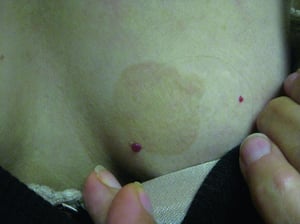
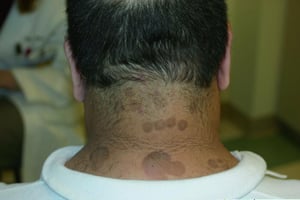
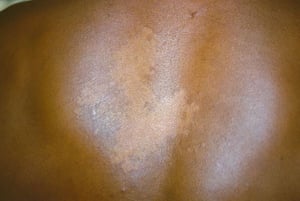
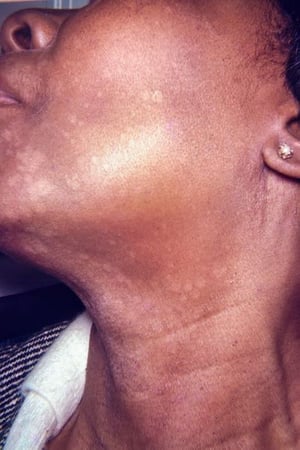
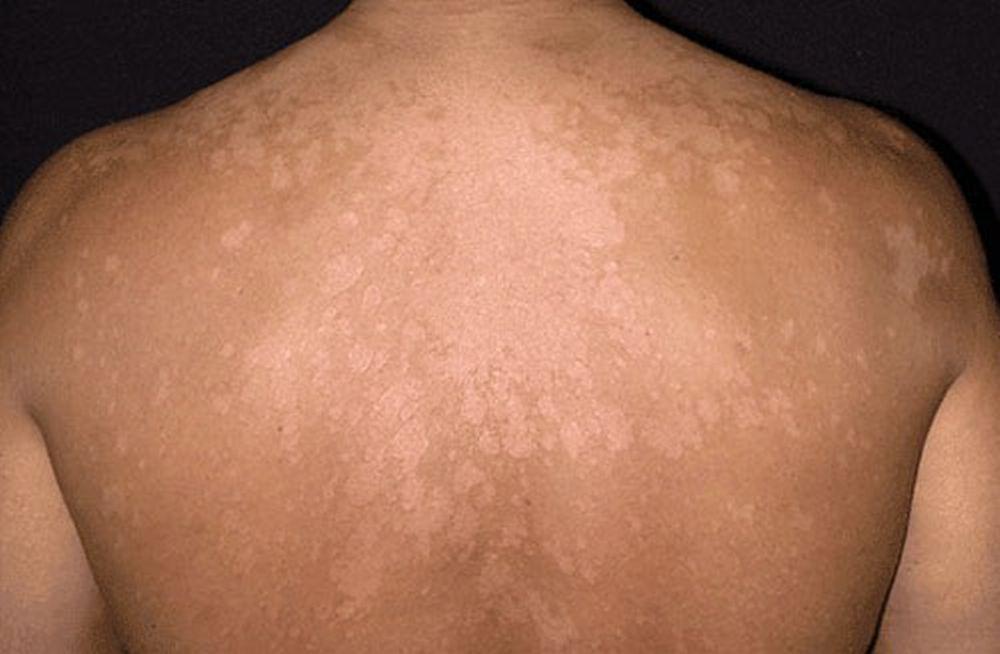
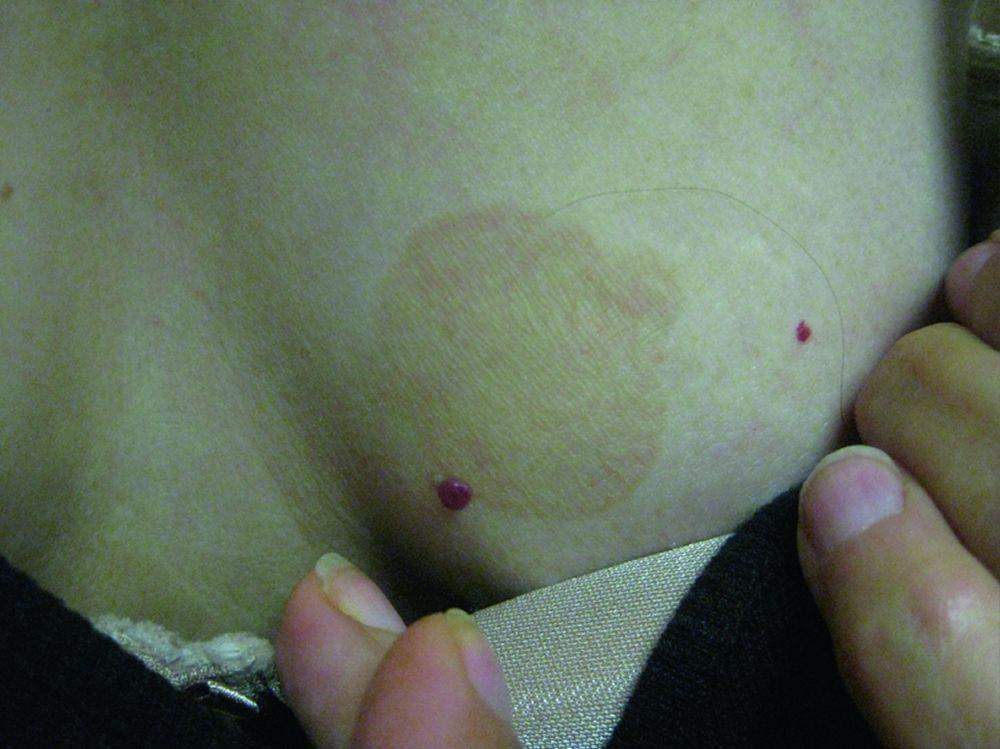
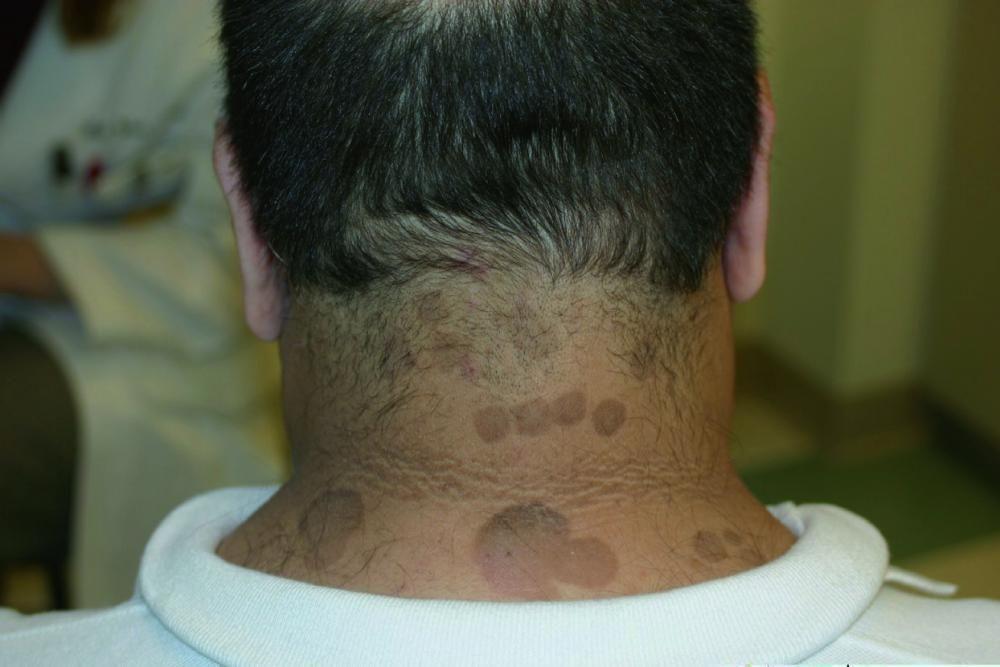
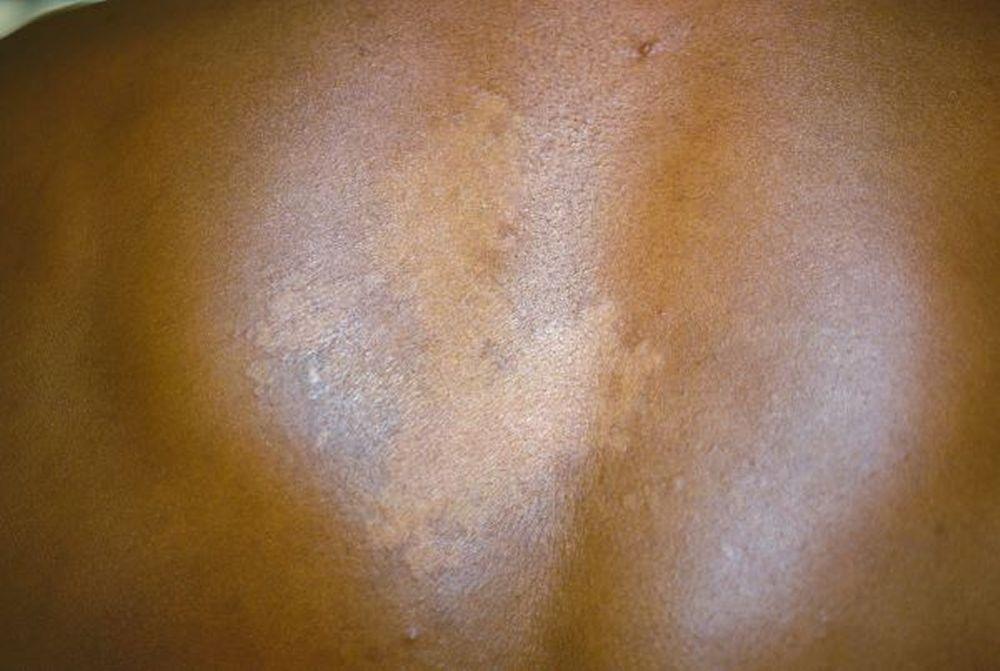
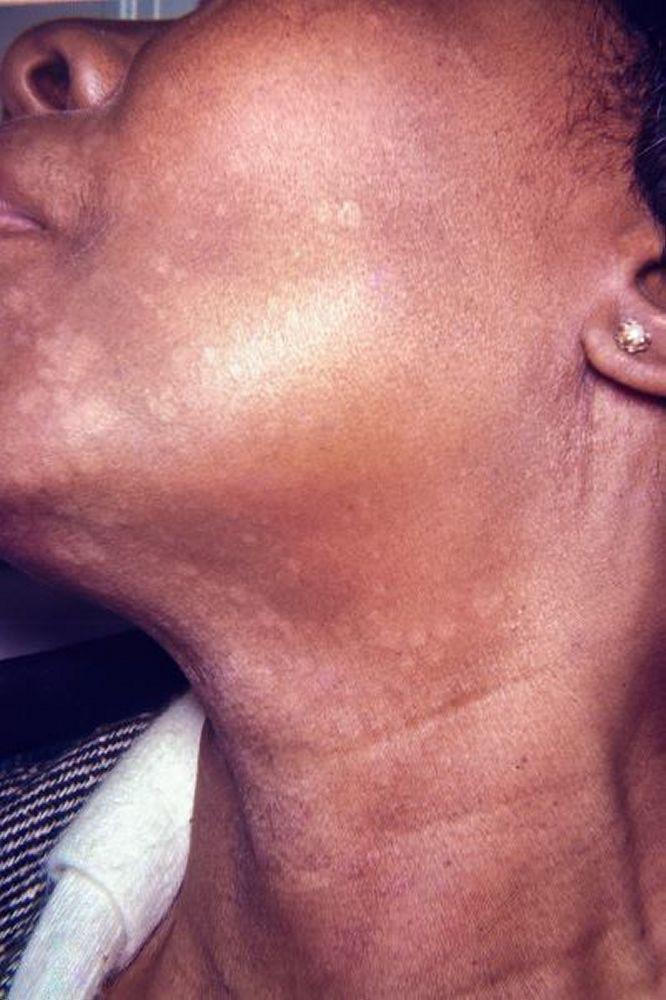
Tinea versicolor usually is asymptomatic. Classically, it causes the appearance of multiple tan, brown, salmon, pink, or white scaling patches on the trunk, neck, abdomen, and occasionally face. The lesions may coalesce. In light-skinned patients, the condition is often diagnosed in summer months because the lesions, which do not tan, become more obvious against tanned skin. Tinea versicolor is benign and is not considered contagious.
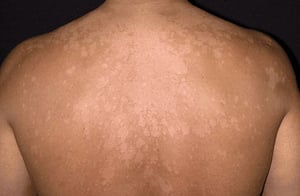
Photographs

Tinea Versicolor

Tinea Versicolor

Diagnosis

  • Clinical appearance
  • Potassium hydroxide wet mount
  • Sometimes Wood light examination

Diagnosis is based on clinical appearance and by identification of hyphae and budding cells (“spaghetti and meatballs”) on potassium hydroxide wet mount of fine scale scrapings. A Wood light examination reveals golden-white fluorescence.

Treatment

  • Topical antifungals
  • Sometimes oral antifungals

Treatment is any topical antifungal drug. Examples include seleniumSome Trade Names
SELSUN
Click for Drug Monograph
sulfide shampoo 2.5% (in 10-min applications daily for 1 wk or 24-h applications weekly for 1 mo); topical azoles (eg, ketoconazoleSome Trade Names
NIZORAL
Click for Drug Monograph
2% daily for 2 wk); and daily bathing with zinc pyrithione soap 2% or sulfur-salicylic shampoo 2% for 1 to 2 wk.

Oral treatment is indicated for patients with extensive disease and those with frequent recurrences. Two convenient regimens are a single 400-mg dose of ketoconazoleSome Trade Names
NIZORAL
Click for Drug Monograph
or fluconazoleSome Trade Names
DIFLUCAN
Click for Drug Monograph
150 mg/wk for 2 to 4 wk.

Hypopigmentation from tinea versicolor is reversible in months to years after the yeast has cleared.

Recurrence is almost universal after treatment because the causative organism is a normal skin inhabitant. Fastidious hygiene, regular use of zinc pyrithione soap, or once-monthly use of topical antifungal therapy lowers the likelihood of recurrence.

Key Points

  • Although tinea versicolor can occur in immunosuppressed patients, most affected patients are healthy.
  • The disorder is frequently diagnosed in the summer, but mainly because hypopigmented lesions become more obvious against tanned skin.
  • Try to confirm the diagnosis by finding hyphae and budding cells on potassium hydroxide wet mount of fine scale scrapings.
  • Treat with topical or oral antifungals.

Last full review/revision March 2013 by Denise M Aaron, MD

Content last modified March 2013

Buy the Book

Mobile Versions

Back to Top

Previous: Intertrigo

Next: Introduction to Parasitic Skin Infections

Audio
Figures
Photographs
Sidebars
Tables
Videos

Copyright     © 2010-2013 Merck Sharp & Dohme Corp., a subsidiary of Merck & Co., Inc., Whitehouse Station, N.J., U.S.A.    Privacy    Terms of Use