Search
SectionsIndexSymptoms
  • Cardiovascular Disorders
  • Clinical Pharmacology
  • Critical Care Medicine
  • Dental Disorders
  • Dermatologic Disorders
  • Ear, Nose, and Throat Disorders
  • Endocrine and Metabolic Disorders
  • Eye Disorders
  • Gastrointestinal Disorders
  • Genitourinary Disorders
  • Geriatrics
  • Gynecology and Obstetrics
  • Hematology and Oncology
  • Hepatic and Biliary Disorders
  • Immunology; Allergic Disorders
  • Infectious Diseases
  • Injuries; Poisoning
  • Musculoskeletal and Connective Tissue Disorders
  • Neurologic Disorders
  • Nutritional Disorders
  • Pediatrics
  • Psychiatric Disorders
  • Pulmonary Disorders
  • Special Subjects
ABCDEFGHI
JKLMNOPQR
STUVWXYZ
  • Abdominal Pain, Acute
  • Abdominal pain, Chronic
  • Alopecia
  • Amenorrhea
  • Amnesia
  • Anosmia
  • Bleeding, Excessive
  • Breast Lumps
  • Chest Pain
  • Constipation in Adults
  • Constipation in Children
  • Cough in Adults
  • Cough in Children
  • Crying
  • Diarrhea in Adults
  • Diarrhea in Children
  • Diplopia
  • Dizziness
  • Dry Mouth
  • Dysmenorrhea
  • Dyspepsia
  • Dysphagia
  • Dyspnea
  • Dysuria
  • Earache
  • Ear Discharge
  • Edema
  • Edema During Late Pregnancy
  • Epistaxis
  • Erectile dysfunction
  • Eyelid Swelling
  • Eye Pain
  • Fever
  • Fever, Acute, in Adults
  • Fever, Chronic (FUO)
  • Fever in Infants and Children
  • Floaters
  • Gas
  • Gastrointestinal Bleeding
  • Halitosis
  • Headache
  • Hearing Loss
  • Hearing Loss: Sudden Deafness
  • Hematospermia
  • Hematuria
  • Hemoptysis
  • Hiccups
  • Hirsutism
  • Insomnia and Excessive Daytime Sleepiness
  • Itching
  • Itching, Anal
  • Jaundice in Adults
  • Jaundice in Neonates
  • Joint Pain, Monarticular
  • Joint Pain, Polyarticular
  • Knee pain
  • Lump in Throat
  • Nasal Congestion and Rhinorrhea
  • Nausea and Vomiting During Early pPregnancy
  • Nausea and Vomiting in Adults
  • Nausea and Vomiting in Infants and Children
  • Neck and Back Pain
  • Neck Mass
  • Nipple Discharge
  • Orthostatis Hypotension
  • Pain
  • Pain, Chronic
  • Palpitations
  • Pelvic Pain
  • Pelvic Pain During Early Pregnancy
  • Polyuria
  • Priapism
  • Red Eye
  • Scrotal Pain
  • Sore Throat
  • Stomatitis
  • Stridor
  • Syncope
  • Tearing
  • Tinnitus
  • Toothache
  • Tremor
  • Urinary Frequency
  • Urinary Incontinence in Adults
  • Urinary Incontinence in Children
  • Urinary Retention
  • Urticaria
  • Vaginal Bleeding
  • Vaginal Bleeding During Early Pregnancy
  • Vaginal Bleeding During Late Pregnancy
  • Vaginal Itching and Discharge
  • Vision, Blurred
  • Vision Loss, Acute
  • Weakness, Generalized
  • Wheezing
In This Topic
Dermatologic Disorders
Viral Skin Diseases
Molluscum Contagiosum
Symptoms and Signs
Diagnosis
Treatment
Key Points
Back to Top
Resources
  • About The Merck Manual
  • Ready Reference Guides
  • Trade Names of Some Commonly Used Drugs
  • Normal Laboratory Values
  • Clinical Calculators
  • Multimedia
  • Selected Links
Manuals available online
'/home/index.html' + bookPageLink
 
'/professional/index.html'
These and other Manuals available
in print, online, and as mobile applications.

See more at MerckManuals.com
Sections in Health Care Professionals
  • Cardiovascular Disorders
  • Clinical Pharmacology
  • Critical Care Medicine
  • Dental Disorders
  • Dermatologic Disorders
  • Ear, Nose, and Throat Disorders
  • Endocrine and Metabolic Disorders
  • Eye Disorders
  • Gastrointestinal Disorders
  • Genitourinary Disorders
  • Geriatrics
  • Gynecology and Obstetrics
  • Hematology and Oncology
  • Hepatic and Biliary Disorders
  • Immunology; Allergic Disorders
  • Infectious Diseases
  • Injuries; Poisoning
  • Musculoskeletal and Connective Tissue Disorders
  • Neurologic Disorders
  • Nutritional Disorders
  • Pediatrics
  • Psychiatric Disorders
  • Pulmonary Disorders
  • Special Subjects
Chapters in Dermatologic Disorders
  • Approach to the Dermatologic Patient
  • Principles of Topical Dermatologic Therapy
  • Acne and Related Disorders
  • Bullous Diseases
  • Cornification Disorders
  • Dermatitis
  • Reactions to Sunlight
  • Psoriasis and Scaling Diseases
  • Hypersensitivity and Inflammatory Disorders
  • Sweating Disorders
  • Bacterial Skin Infections
  • Fungal Skin Infections
  • Parasitic Skin Infections
  • Viral Skin Diseases
  • Pigmentation Disorders
  • Hair Disorders
  • Nail Disorders
  • Pressure Ulcers
  • Benign Skin Tumors
  • Cancers of the Skin
Topics in Viral Skin Diseases
  • Introduction
  • Molluscum Contagiosum
  • Warts
  • Zoonotic Diseases
 
  • Merck Manual
  • >
  • Health Care Professionals
  • >
  • Dermatologic Disorders
  • >
  • Viral Skin Diseases
  • 4
 
Molluscum Contagiosum

Share This

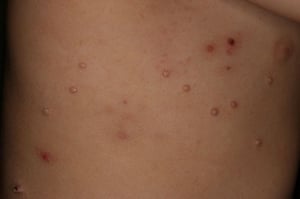
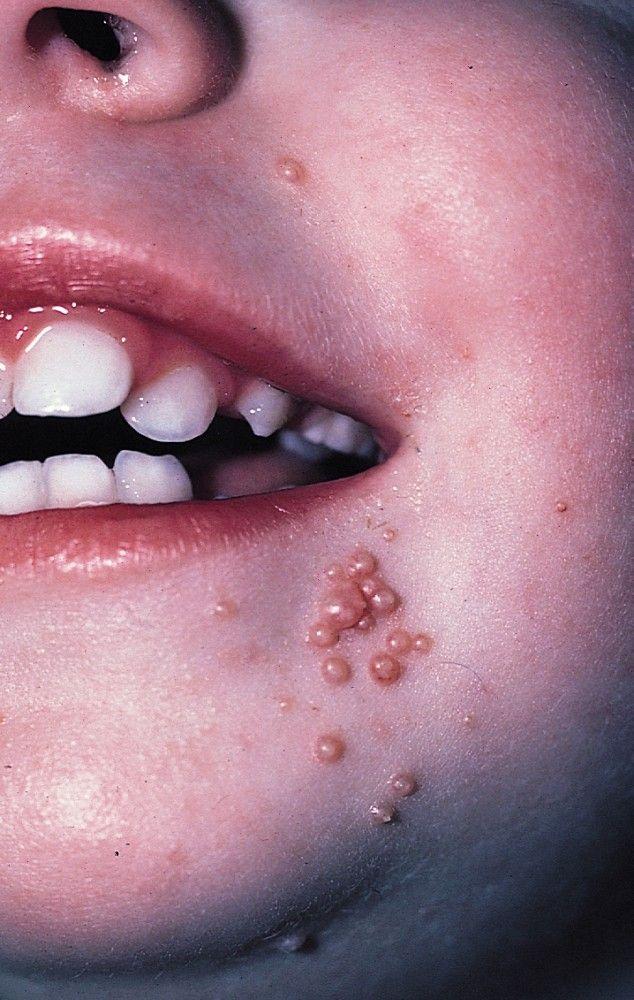
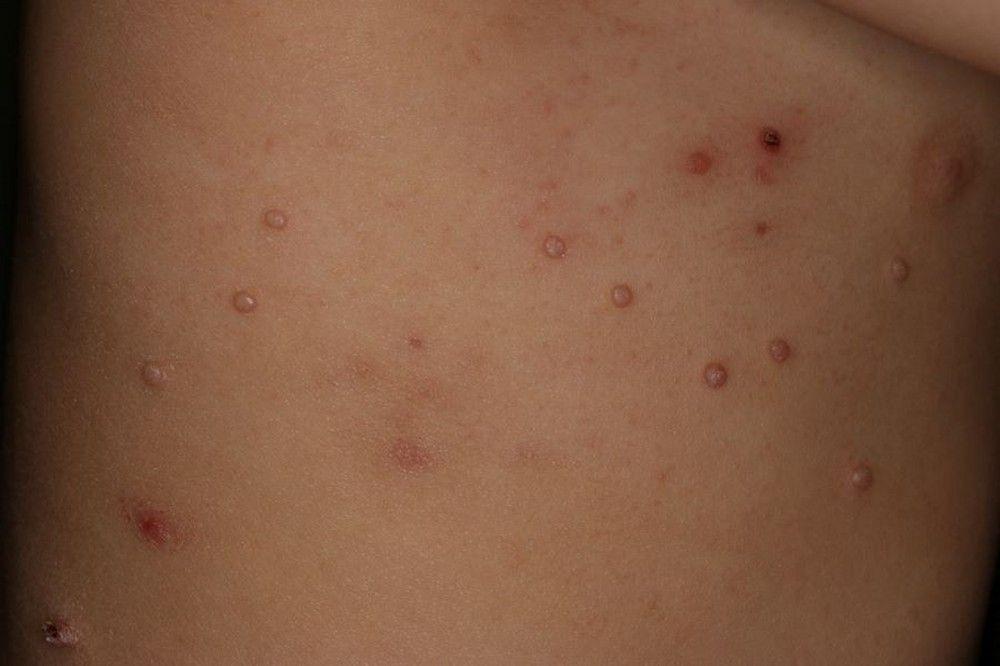
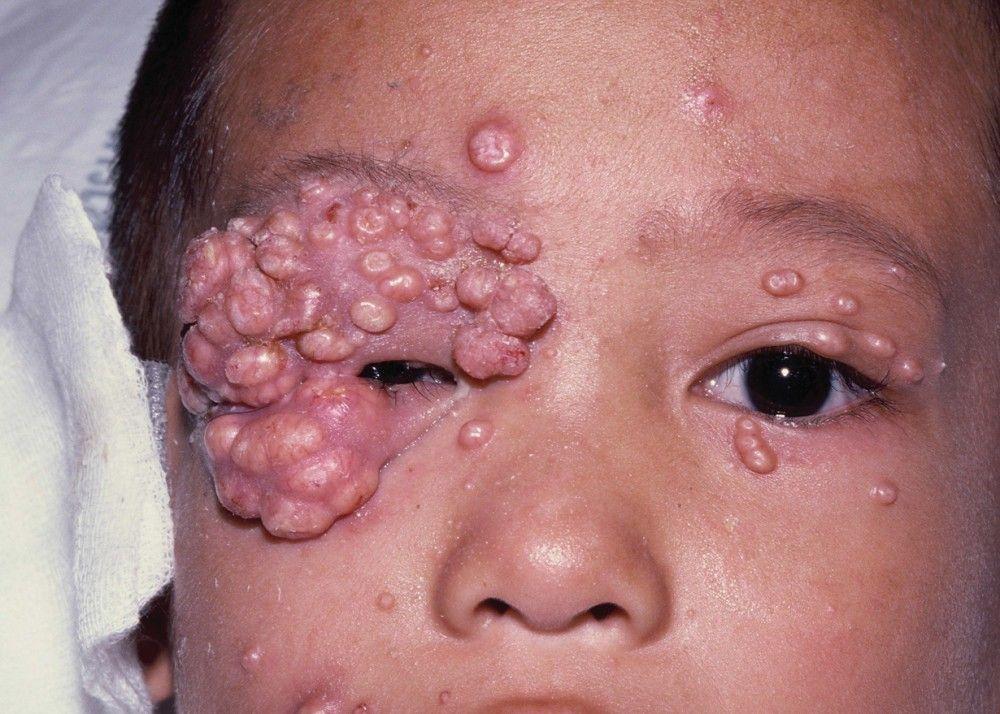
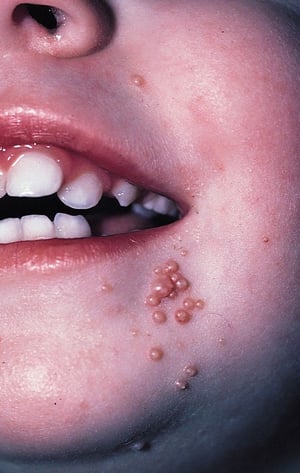
Molluscum contagiosum is clusters of pink, dome-shaped, smooth, waxy, or pearly and umbilicated papules 2 to 5 mm in diameter caused by molluscum contagiosum virus, a poxvirus. Diagnosis is based on clinical appearance. Treatment aims to prevent spread or remove cosmetically unacceptable lesions and can include mechanical methods (eg, curettage, cryosurgery) and topical irritants (eg, imiquimod, cantharidin, tretinoin).

Molluscum contagiosum virus commonly causes a localized chronic infection. Transmission is by direct contact; spread occurs by autoinoculation and via fomites (eg, towels, bath sponges) and bath water. Molluscum contagiosum is common among children. Adults acquire the infection via close skin-to-skin contact with an infected person (eg, sexual contact, wrestling). Patients with immunocompromise (eg, due to HIV/AIDS, corticosteroid use, chemotherapy) may develop a more widespread infection.

Symptoms and Signs

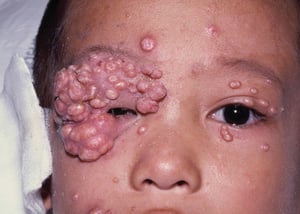
Molluscum contagiosum can appear anywhere on the skin except the palms and soles. Lesions consist of clusters of pink, dome-shaped, smooth, waxy, or pearly and umbilicated papules, usually 2 to 5 mm in diameter, which occur most commonly on the face, trunk, and extremities in children and on the pubis, penis, or vulva in adults. Lesions may grow to 10 to 15 mm in diameter, especially among patients with HIV infection and other immunodeficiencies. Lesions are usually not pruritic or painful and may be discovered only coincidentally during a physical examination. However, the lesions can become inflamed and itchy as the body fights off the virus.
Photographs

Molluscum Contagiosum

Molluscum Contagiosum

Diagnosis

  • Clinical evaluation

Diagnosis is based on clinical appearance; skin biopsy or smear of expressed material shows characteristic inclusion bodies but is necessary only when diagnosis is uncertain. Differential diagnosis includes folliculitis, milia, and warts (for lesions < 2 mm) and juvenile xanthogranuloma and Spitz nevus (for lesions > 2 mm).

Treatment

  • Curettage, cryosurgery, laser therapy, or electrocautery
  • Topical irritants (eg, trichloroacetic acid, cantharidin, tretinoinSome Trade Names
    RETIN-A
    Click for Drug Monograph
    , tazaroteneSome Trade Names
    AVAGE
    TAZORAC
    Click for Drug Monograph
    ), imiquimodSome Trade Names
    ALDARA
    Click for Drug Monograph
    , or both
  • Sometimes combination therapies

Most lesions spontaneously regress in 1 to 2 yr, but they can remain for 2 to 3 yr. Treatment is indicated for cosmetic reasons or for prevention of sexual spread. Options include curettage, cryosurgery, laser therapy, electrocautery, trichloroacetic acid (25 to 40% solution), cantharidin, podophyllin (in adults), tretinoinSome Trade Names
RETIN-A
Click for Drug Monograph
, tazaroteneSome Trade Names
AVAGE
TAZORAC
Click for Drug Monograph
, and imiquimodSome Trade Names
ALDARA
Click for Drug Monograph
5% cream. Molluscum lesions within the orbital rim should be removed via gentle destruction by a skilled health care practitioner. Treatments that cause minimal pain (eg, tretinoinSome Trade Names
RETIN-A
Click for Drug Monograph
, imiquimodSome Trade Names
ALDARA
Click for Drug Monograph
, tazaroteneSome Trade Names
AVAGE
TAZORAC
Click for Drug Monograph
, cantharidin) are used first, especially in children. Curettage or liquid nitrogen can be used 40 to 60 min after application of a topical anesthetic such as eutectic mixture of local anesthetics (EMLA) or 4% lidocaineSome Trade Names
XYLOCAINE
Click for Drug Monograph
cream under an occlusive dressing. EMLA cream must be applied judiciously because it can cause systemic toxicity, especially in children. In adults, curettage is very effective but painful if done without anesthetic. Dermatologists often use combination therapy such as liquid nitrogen or cantharidin in the office and imiquimodSome Trade Names
ALDARA
Click for Drug Monograph
cream or a retinoid cream at home. This form of therapy is typically successful, but resolution often takes 1 to 2 mo in some patients.

Nondermatologists should feel comfortable using imiquimodSome Trade Names
ALDARA
Click for Drug Monograph
cream. The cream is applied at night, 1 drop to each molluscum lesion and rubbed in well, until the cream turns clear. In the morning, the treated area is washed with soap and water. The cream can be applied 3 to 7 times/wk. Lesions in the genital region and skinfolds easily become irritated. Lesions should be treated until they develop a scant amount of redness; treatment is then withheld to avoid weeping and crusting. ImiquimodSome Trade Names
ALDARA
Click for Drug Monograph
should not be used within the orbital rim.

Cantharidin is safe and effective but can cause blistering. Cantharidin is applied in 1 small drop directly to the molluscum lesion. Areas that patients (especially children) may rub are covered with a bandage because contact with the fingers should be avoided. Cantharidin should not be applied to the face or near the eyes because blistering is unpredictable. If cantharidin comes into contact with the cornea, it can scar the cornea. Cantharidin should be washed off with soap and water in 6 h. Fewer than 15 lesions should be treated in one session, because infection may occur after application of cantharidin. Parents should be warned about blistering if their children are prescribed this drug.

Children should not be excluded from school or day care. However, their lesions should be covered to reduce the risk of spread.

Key Points

  • Molluscum contagiosum, caused by a poxvirus, commonly spreads by direct contact (eg, sexual contact, wrestling), fomites, and bath water.
  • Lesions tend to be asymptomatic clusters of 2- to 5-mm in diameter papules that are pink, dome-shaped, smooth, waxy, or pearly and umbilicated.
  • Diagnosis is based on clinical appearance.
  • Treatment is for cosmetic reasons or prevention of sexual spread.
  • Treatments can include destructive methods (eg, curettage, cryosurgery, laser therapy, electrocautery), topical irritants (eg, trichloroacetic acid, cantharidin, tretinoinSome Trade Names
    RETIN-A
    Click for Drug Monograph
    , tazaroteneSome Trade Names
    AVAGE
    TAZORAC
    Click for Drug Monograph
    ), and imiquimodSome Trade Names
    ALDARA
    Click for Drug Monograph
    .

Last full review/revision September 2012 by James G. H. Dinulos, MD

Content last modified November 2012

Buy the Book

Mobile Versions

Back to Top

Previous: Introduction

Next: Warts

Audio
Figures
Photographs
Sidebars
Tables
Videos

Copyright     © 2010-2013 Merck Sharp & Dohme Corp., a subsidiary of Merck & Co., Inc., Whitehouse Station, N.J., U.S.A.    Privacy    Terms of Use