Trachoma is a chronic conjunctivitis caused by Chlamydia trachomatis and is characterized by progressive exacerbations and remissions. It is the leading cause of preventable blindness worldwide. Initial symptoms are conjunctival hyperemia, eyelid edema, photophobia, and lacrimation. Later, corneal neovascularization and scarring of the conjunctiva, cornea, and eyelids occur. Diagnosis is usually clinical. Treatment is with topical or systemic antibiotics.
(See also Overview of Conjunctival and Scleral Disorders.)
Trachoma is endemic in resource-limited parts of North Africa, the Middle East, the Indian subcontinent, Australia, and Southeast Asia, affecting 1.9 million people. It is also the cause of about 1.4 percent of blindness worldwide (1). The causative organism is Chlamydia trachomatis (serotypes A, B, Ba, and C). In the United States, trachoma is rare, occurring occasionally among American Indians and immigrants. The disease occurs mainly in children, particularly those between the ages of 3 and 6. Older children and adults are much less susceptible because of increased immunity and better personal hygiene. Trachoma is highly contagious in its early stages and is transmitted by eye-to-eye contact, hand-to-eye contact, eye-seeking flies, or the sharing of contaminated articles (eg, towels, handkerchiefs, eye makeup).
General reference
1. Trachoma: World Health Organization. Published October 5, 2022. Accessed March 20, 2023.
Symptoms and Signs of Trachoma
Trachoma usually affects both eyes. Five stages are described in the World Health Organization grading system.
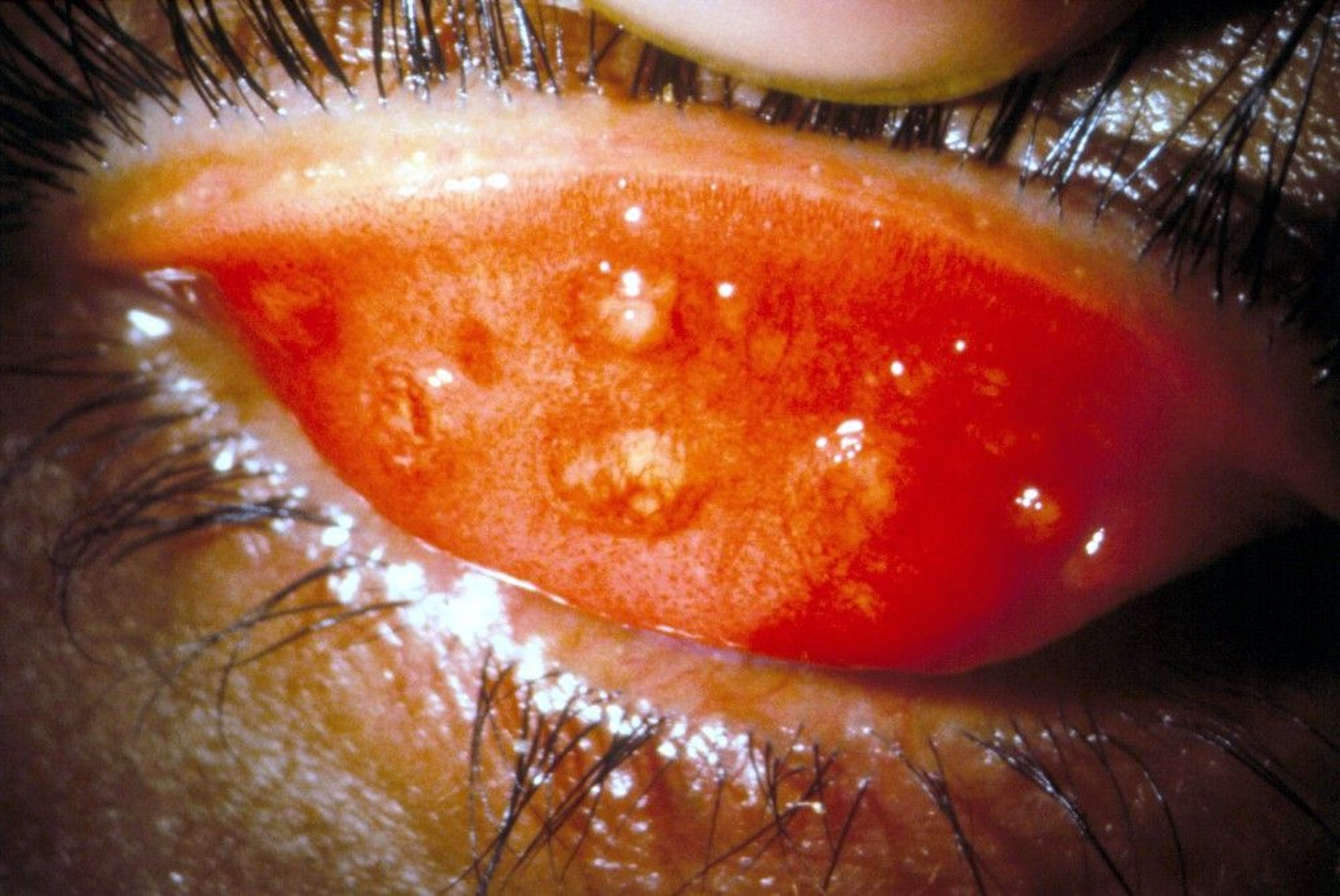
Trachomatous inflammation-follicular (TF): Characterized by 5 or more follicles in the upper tarsal conjunctiva
Trachomatous inflammation-intense (TI): Characterized by pronounced inflammatory thickening of the tarsal conjunctiva that obscures more than half of the normal deep tarsal vessels
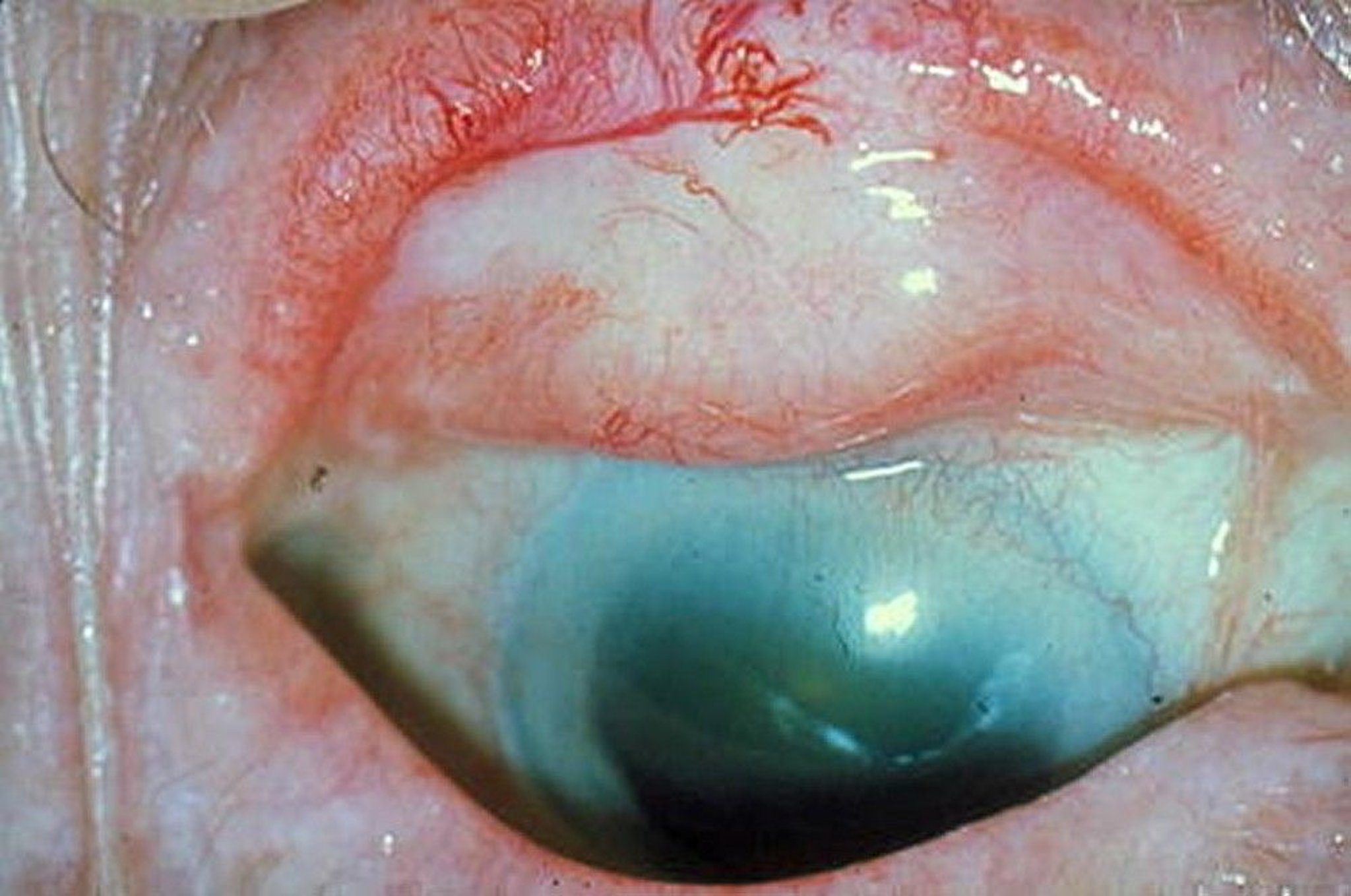
Trachomatous scarring (TS): Characterized by scarring in the tarsal conjunctiva
Trachomatous trichiasis (TT): Characterized by at least one eyelash rubbing the eyeball
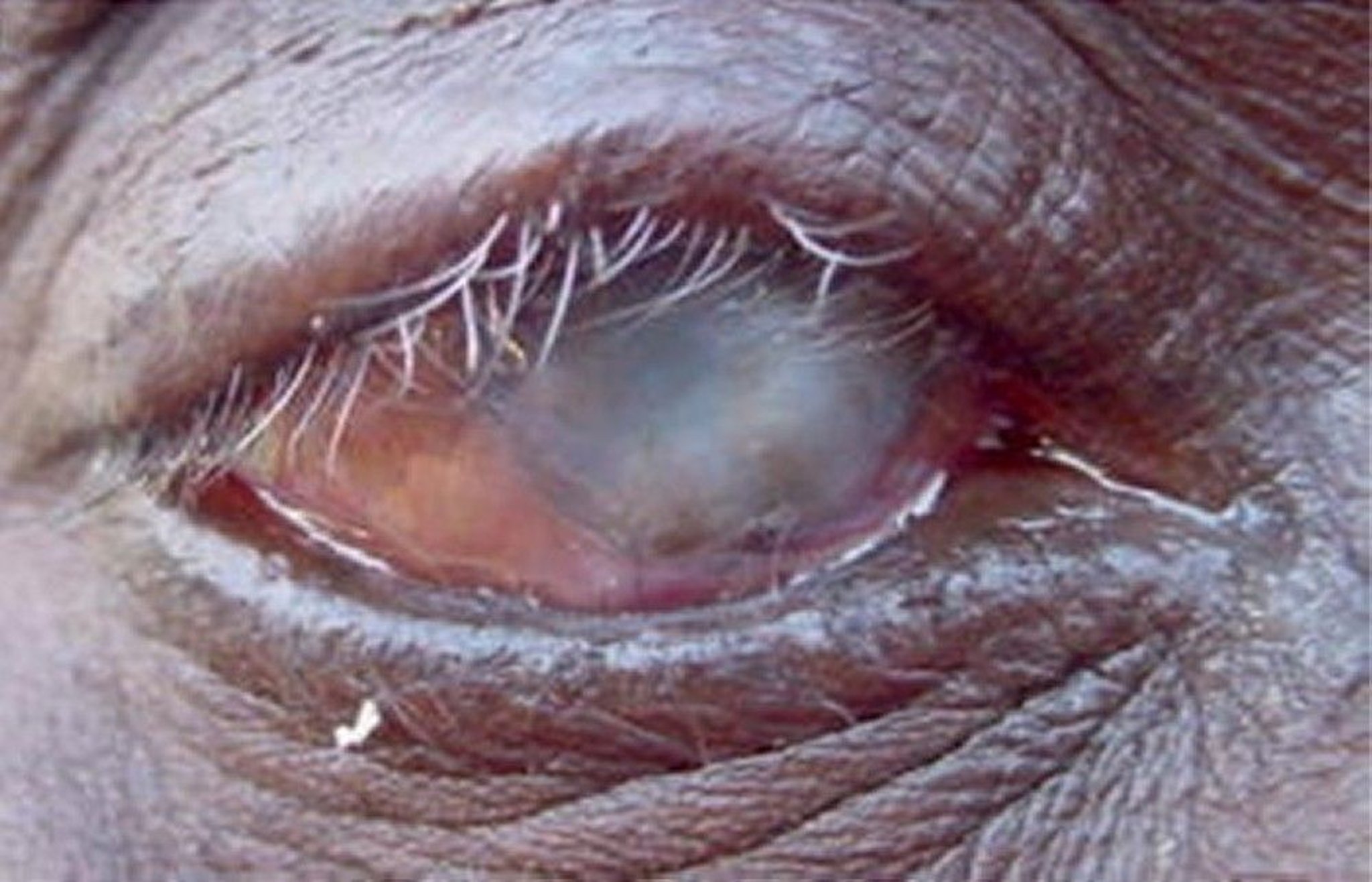
Corneal opacity (CO): Characterized by easily visible corneal opacity over the pupil

WESTERN OPHTHALMIC HOSPITAL/SCIENCE PHOTO LIBRARY

© Springer Science+Business Media

© Springer Science+Business Media
Rarely, corneal neovascularization regresses completely without treatment, and corneal transparency is restored. With treatment and healing, the conjunctiva becomes smooth and grayish white. In a population survey in the Nile Delta of Egypt, 6.5% of adults had trachoma; of those, 13% had visual impairment and 8% were blind.
Diagnosis of Trachoma
Clinical findings (eg, tarsal lymphoid follicles, linear conjunctival scars, corneal pannus)
Diagnosis of trachoma is usually clinical because testing is rarely available in endemic areas. Lymphoid follicles on the tarsal plate or along the corneal limbus, linear conjunctival scarring, and corneal pannus are considered diagnostic in the appropriate clinical setting.
C. trachomatis can be isolated in culture or identified by nucleic acid amplification tests (NAAT) and immunofluorescence techniques, and testing should be done when it is readily available. In resource limited-settings, testing may be limited to cases of diagnostic uncertainty. In the early stage, minute basophilic cytoplasmic inclusion bodies within conjunctival epithelial cells in Giemsa-stained conjunctival scrapings differentiate trachoma from nonchlamydial conjunctivitis. Inclusion bodies are also found in adult inclusion conjunctivitis, but the setting and developing clinical picture distinguish it from trachoma. Palpebral vernal conjunctivitis appears similar to trachoma in its follicular hypertrophic stage, but symptoms are different, milky flat-topped papillae are present, and eosinophils (not basophilic inclusion bodies) are found in the scrapings.
Treatment of Trachoma
Antibiotics, preferably systemic but alternatively topical
Surgery for eyelid deformities and/or corneal opacity
SAFE (Surgery, Antibiotics, Facial cleanliness, Environmental improvement) program in endemic areas
The World Health Organization (WHO) recommends that individual or sporadic cases of trachomatous inflammation–follicular be treated topically. The WHO also recommends topical treatment for trachomatous inflammation–intense, but that systemic treatment should be considered. Trachomatous scarring alone does not require treatment until it progresses to cause trachomatous trichiasis.
The WHO recommends eyelid surgery for trachomatous trichiasis. If corneal opacity has advanced into the central cornea, it is considered the stage of untreatable irreversible blindness. In resource-rich nations a corneal transplant could restore vision. The procedure is complex, and the frequent and intense aftercare to prevent rejection and infection makes corneal transplant impractical for many patients in most resource-limited nations.
Trachoma control in endemic areas
The WHO has endorsed a 4-step program for control of trachoma in endemic areas. This program is known as SAFE:
Surgery to correct eyelid deformities (eg, entropion and trichiasis) that place patients at risk of blindness
Antibiotics to treat individual patients and mass drug administration to reduce the disease burden in the community
Facial cleanliness to reduce transmission from infected individuals
Environmental improvement (eg, access to potable water and improved sanitation) to reduce transmission of disease and reinfection of patients
Key Points
Trachoma is a chronic, exacerbating, and remitting chlamydial conjunctivitis that is common among children ages 3 through 6 in certain resource-limited areas worldwide.
Manifestations develop in stages and include conjunctivitis, formation of tarsal follicles, thickening and scarring of tarsal conjunctiva, trichiasis, and corneal neovascularization and scarring.
About 7% of patients develop decreased vision or blindness; trachoma is the leading cause of preventable blindness worldwide.
Diagnosis is usually clinical, but standard methods to detect chlamydia can be done when available.
Treatment is with topical or systemic antibiotics.
For endemic areas, the World Health Organization also advocates corrective surgery, mass administration of antibiotics, emphasizing facial cleanliness, and environmental interventions to reduce transmission.