Babesiosis is infection with Babesia species of protozoa. Infections can be asymptomatic or cause a malaria-like illness with fever and hemolytic anemia. Disease is most severe in asplenic patients, older patients, and patients with AIDS. Diagnosis is by identification of Babesia
In 2019, there were 2,418 reported cases of babesiosis in the US from the 25 states where babesiosis was a reportable condition (see Centers for Disease Control and Prevention: Babesiosis Data & Statistics). Endemic areas include the islands and the mainland bordering Nantucket Sound in Massachusetts, Rhode Island, eastern Long Island and Shelter Island in New York, coastal Connecticut, and New Jersey, as well as foci in Wisconsin and Minnesota in the upper Midwest. Babesia duncani has been isolated from patients in Washington and California. A B. duncani-like strain designated MO-1 has been reported in patients in Missouri. Other Babesia species transmitted by different ticks infect humans in other areas of the world. In Europe, B. divergens is the principal cause of babesiosis, typically in patients who have had a splenectomy.
Etiology of Babesiosis
In the US, Babesia microti is the most common cause of babesiosis in humans. Rodents are the principal natural reservoir, and deer ticks of the family Ixodidae are the usual vectors. Larval ticks become infected while feeding on an infected rodent, then transform into nymphs that transmit the parasite to another animal or to a human. Adult ticks ordinarily feed on deer but may also transmit the parasite to humans.
Babesia enter red blood cells, mature, and then divide asexually. Infected erythrocytes eventually rupture and release organisms that invade other red blood cells; thus, Babesia can also be transmitted by blood transfusion and possibly by organ transplantation. A test to screen blood and organ donors for Babesia microti is currently used in states in the northeastern US with the highest incidences of infection.
Congenital infection can also occur but is very rare.
Ixodes ticks infected with Babesia are sometimes coinfected with Borrelia burgdorferi (which causes Lyme disease), Anaplasma phagocytophilum (which causes human granulocytic anaplasmosis [HGA]), Borrelia miyamotoi (which causes a relapsing fever-like illness), or Powassan virus (a flavivirus that causes encephalitis). Thus patients occasionally acquire more than one infection from a tick bite.
Deer ticks

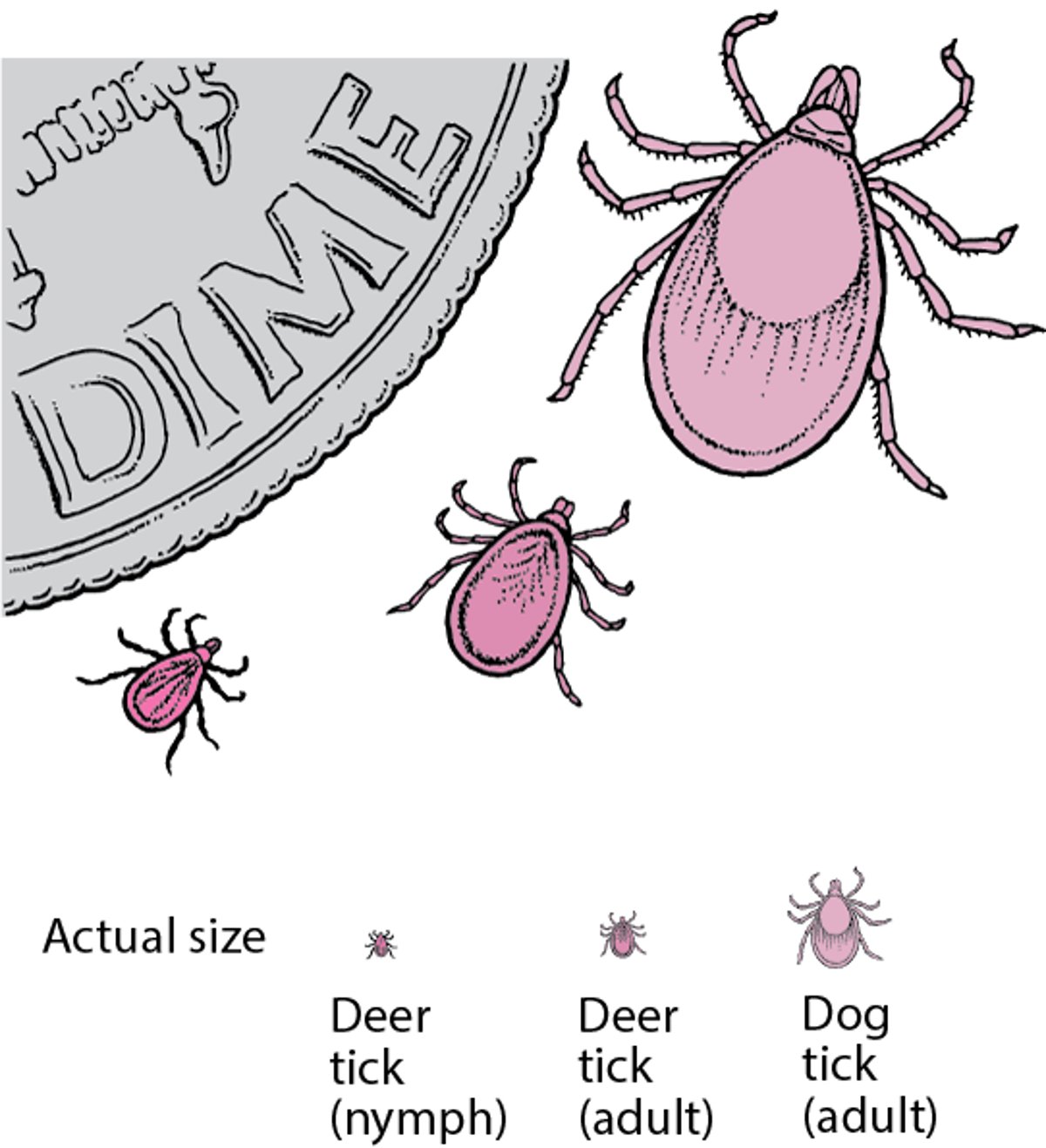

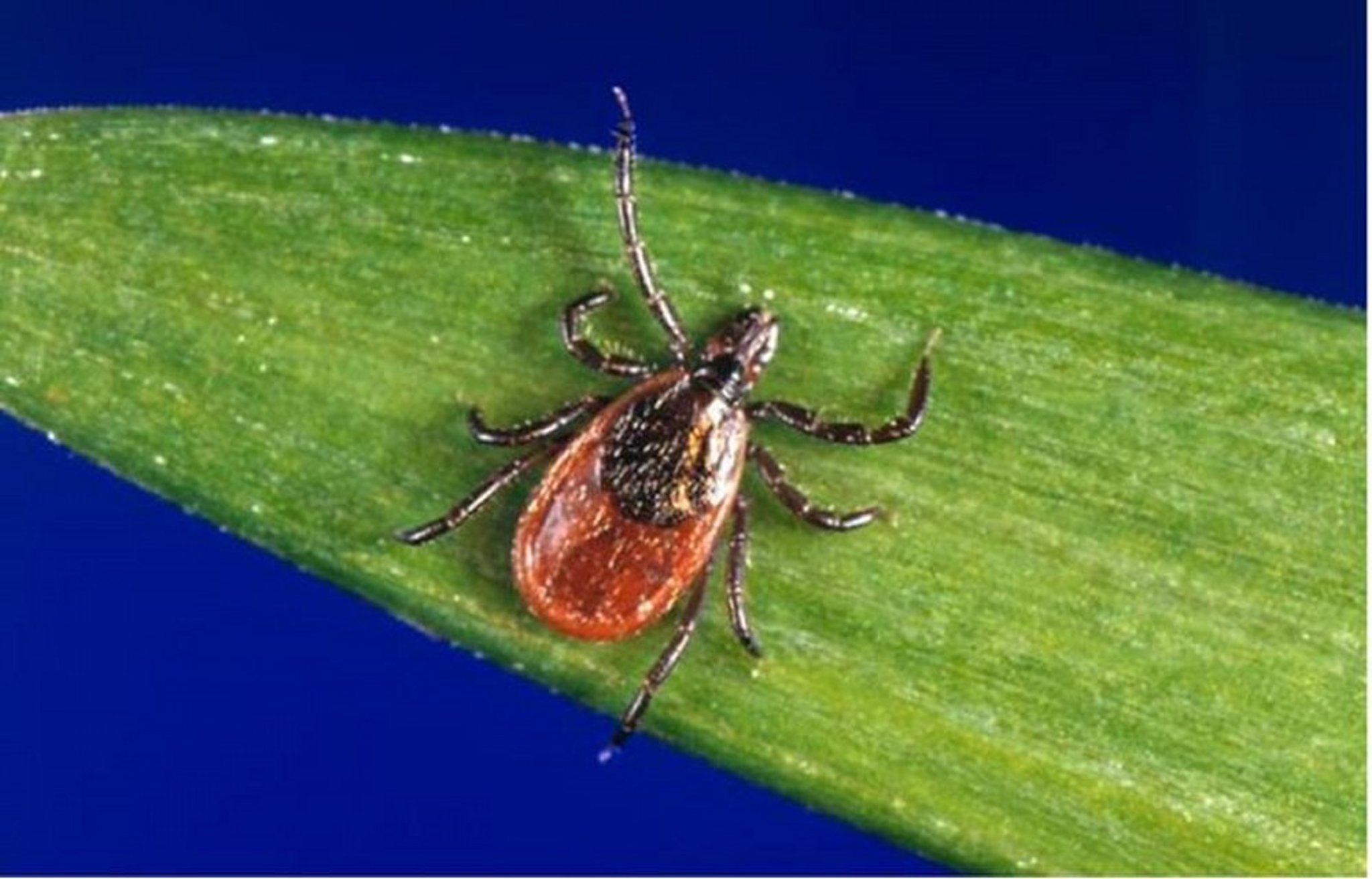
Image courtesy of James Gathany via the Public Health Image Library of the Centers for Disease Control and Prevention.
Symptoms and Signs of Babesiosis
Asymptomatic Babesia infection may persist for months to years and remain subclinical throughout its course in otherwise healthy people, especially those < 40 years.
When symptomatic, babesiosis usually starts after a 1- to 2-week incubation period with nonspecific symptoms including malaise, fatigue, chills, fever, headache, myalgia, and arthralgia. In healthy people, symptoms usually resolve after a week. In others, hepatosplenomegaly with jaundice, mild to moderately severe hemolytic anemia, mild neutropenia, and thrombocytopenia may occur. Noncardiac pulmonary edema can develop in severe disease.
Babesiosis is sometimes fatal, particularly in older patients, asplenic patients, and patients with AIDS. In such patients, babesiosis may resemble falciparum malaria, with high fever, hemolytic anemia, hemoglobinuria, jaundice, and renal failure. Splenectomy may cause previously acquired asymptomatic parasitemia to become symptomatic.
Babesiosis in neonates ranges from mild to severe febrile illnesses.
Diagnosis of Babesiosis
Light microscopy of blood smears
Serologic and polymerase chain reaction-based tests
Most patients with babesiosis do not remember a tick bite, but they may reside in or report a history of travel to an endemic region.
Babesiosis is usually diagnosed by finding Babesia in blood smears, but differentiation from Plasmodium species can be difficult. Tetrad forms (the so-called Maltese cross formation), although not common, are unique to Babesia and helpful diagnostically.
Serologic and polymerase chain reaction (PCR)–based tests are available. Antibody detection by indirect fluorescent antibody (IFA) testing using B. microti antigens can be helpful in patients with low-level parasitemia but may be falsely negative in those infected with other Babesia species. PCR-based assays can help differentiate Babesia from Plasmodium falciparum if blood smear findings are ambiguous, confirm infection in patients with low parasitemia, and identify the Babesia species.
Treatment of Babesiosis
Asymptomatic patients usually require no treatment, but therapy is indicated for patients with persistent high fever, rapidly increasing parasitemia, and falling hematocrit.
atovaquone 750 mg orally every 12 hours and azithromycin 500 to 1000 mg orally the first day followed by a daily dose of 250 to 1000 mg. In children > 5 kg, dosage is atovaquone 20 mg/kg orally twice a day plus azithromycin 10 mg/kg orally once, then 5 mg/kg once a day for 7 to 10 days.
quinine 10 mg/kg orally 3 times a day plus clindamycin 7 to 14 mg/kg orally 3 times a day. Quinine plus clindamycin
Exchange transfusion has been used in severely ill patients with high (>10% of erythrocytes) parasitemia.
Prevention of Babesiosis
To prevent babesiosis, standard tick precautions should be taken by all people in endemic areas. Asplenic patients and patients with AIDS should be particularly cautious. People who have had babesiosis are deferred from donating blood and potentially organs to prevent transmission. Screening of blood and organ donors is now done in states with relatively high incidences of infection.
Tick bite prevention
Preventing tick access to skin includes
Staying on paths and trails
Tucking trousers into boots or socks
Wearing long-sleeved shirts
Engorged ticks should be removed with care and not crushed between the fingers because crushing the tick may result in disease transmission. The tick’s body should not be grasped or squeezed. Gradual traction on the head with a small forceps dislodges the tick. The point of attachment should be swabbed with alcohol. Petroleum jelly, alcohol, lit matches, and other irritants are not effective ways to remove ticks and should not be used.
No practical means are available to rid entire areas of ticks, but tick populations may be reduced in endemic areas by controlling small-animal populations.
Key Points
Endemic areas of babesiosis in the US include the coast and islands of southern New England and New Jersey as well as parts of the upper Midwest and Northwest.
Babesiosis ranges from a mild, asymptomatic infection to a severe, life-threatening illness (mainly in older or asplenic patients or in patients with AIDS or other immunocompromising conditions).
Symptoms are nonspecific and may resemble those of malaria, with prolonged fever, headache, myalgias, and sometimes jaundice.
Diagnose using light microscopy of blood smears and sometimes with serologic or PCR-based tests.
More Information
The following English-language resource may be useful. Please note that THE MANUAL is not responsible for the content of this resource.