Blastomycosis is a pulmonary disease caused by inhaling spores of the dimorphic fungus Blastomyces dermatitidis. Occasionally, the fungi spread hematogenously, causing extrapulmonary disease. Symptoms result from pneumonia or from dissemination to multiple organs, most commonly the skin. Diagnosis is clinical, by chest x-ray, or both and is confirmed by laboratory identification of the fungi. For severe infection, treatment is initiated with a lipid formulation of amphotericin B. After clinical improvement, treatment can be transitioned to itraconazole. For mild to moderate disease that does not involve the central nervous system and does not require hospitalization, itraconazole is the recommended treatment.
(See also Overview of Fungal Infections.)
In North America, the endemic area for blastomycosis includes
Ohio–Mississippi River valleys (extending into the middle Atlantic and southeastern states)
Northern Midwest
Upstate New York
Southern Canada
Rarely, the infection occurs in the Middle East and Africa.
Immunocompetent people can contract this infection. Although blastomycosis may be more common and more severe in patients who are immunocompromised, it is a less common opportunistic infection than histoplasmosis or coccidioidomycosis.
B. dermatitidis grows as a mold at ambient temperature in soil enriched with animal excreta and in moist, decaying, acidic organic material, often near rivers.
In the lungs, inhaled spores convert into large (15 to 20 micrometers), invasive yeasts, which form characteristic broad-based buds.
Once in the lungs, infection may
Remain localized in the lungs
Disseminate hematogenously
Hematogenous dissemination can cause focal infection in numerous organs, including the skin, prostate, epididymides, testes, seminal vesicles, kidneys, vertebrae, ends of long bones, subcutaneous tissues, central nervous system, oral or nasal mucosa, thyroid, lymph nodes, and bone marrow.
Symptoms and Signs of Blastomycosis
Pulmonary blastomycosis
Pulmonary blastomycosis may be asymptomatic or cause an acute, self-limited disease that often goes unrecognized. It can also begin insidiously and develop into a chronic, progressive infection. Symptoms include a productive or dry hacking cough, chest pain, dyspnea, fever, chills, and drenching sweats.
Pleural effusion occurs occasionally.
Some patients have rapidly progressive infections, and acute respiratory distress syndrome may develop.
Extrapulmonary disseminated blastomycosis
In extrapulmonary disseminated blastomycosis, symptoms depend on the organ involved.
Skin lesions are by far the most common site of dissemination; they may be single or multiple and may occur with or without clinically apparent pulmonary involvement. Papules or papulopustules usually appear on exposed surfaces and spread slowly. Painless, small abscesses develop on the advancing borders. Irregular, wartlike papillae may form on surfaces. Sometimes bullae develop. As lesions enlarge, the centers heal, forming atrophic scars. When fully developed, an individual lesion appears as an elevated verrucous patch, usually ≥ 2 cm wide with an abruptly sloping, purplish red, abscess-studded border. Ulceration may occur if bacterial superinfection is present.
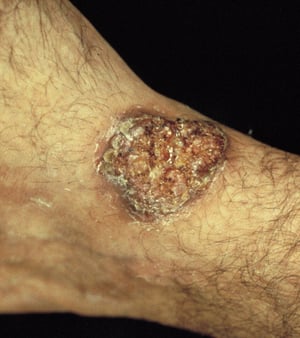
© Springer Science+Business Media

Image courtesy of the Public Health Image Library of the Centers for Disease Control and Prevention.
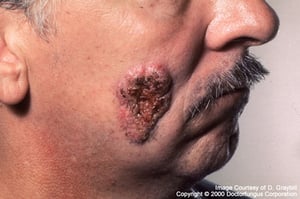
Image courtesy of www.doctorfungus.org © 2005.

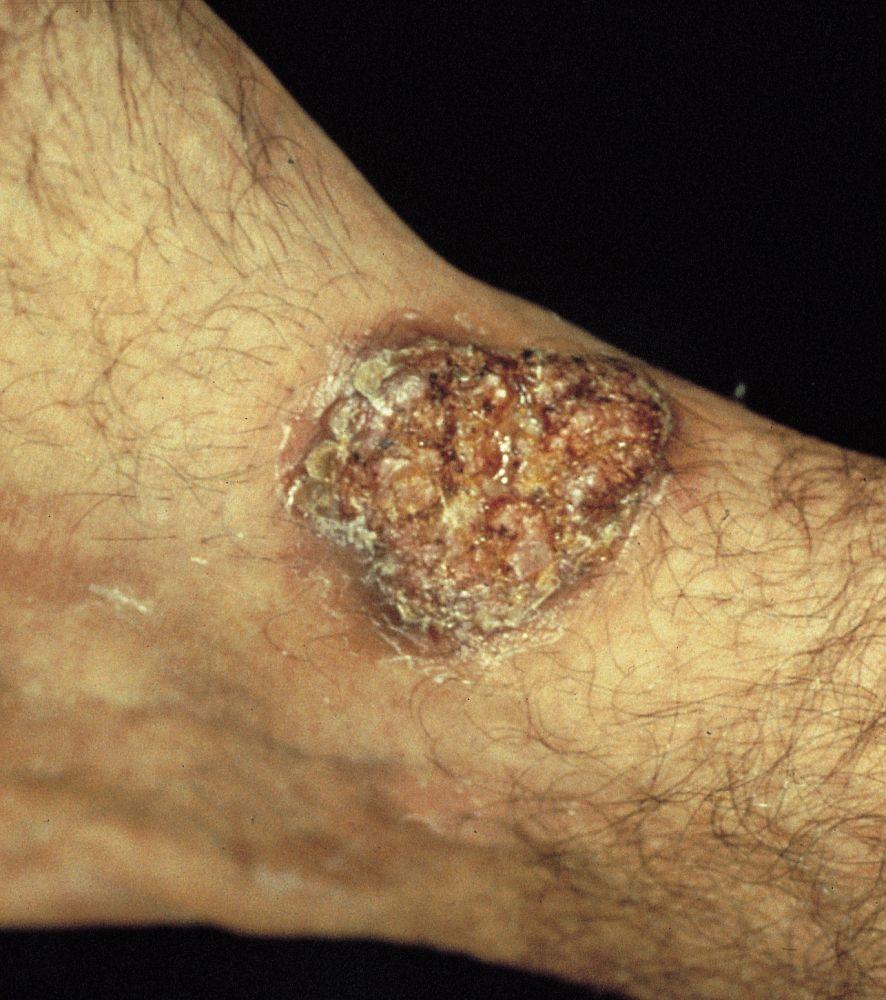
© Springer Science+Business Media

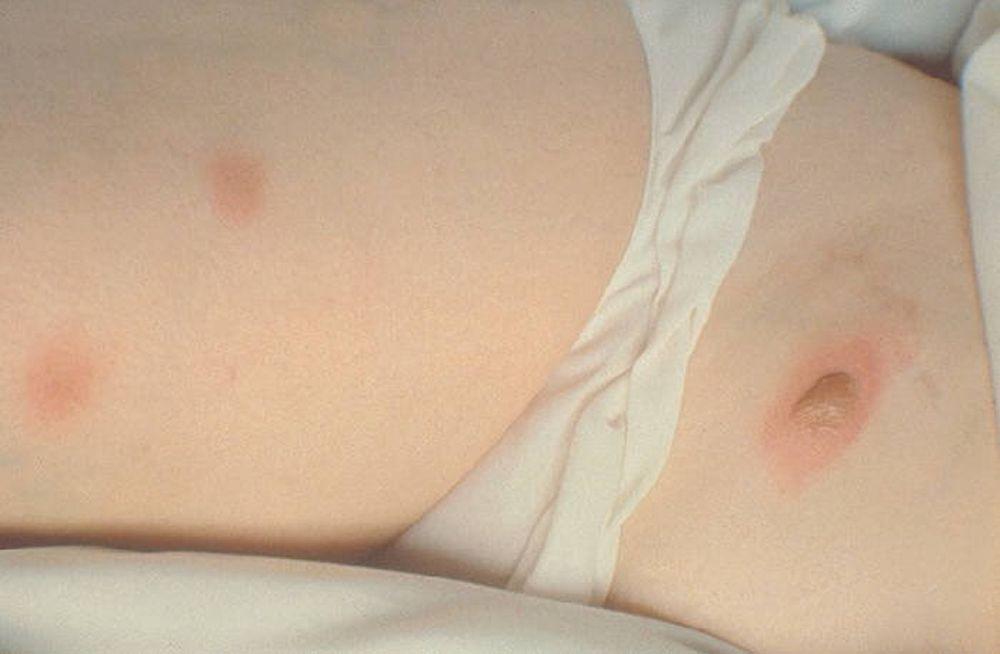
Image courtesy of the Public Health Image Library of the Centers for Disease Control and Prevention.

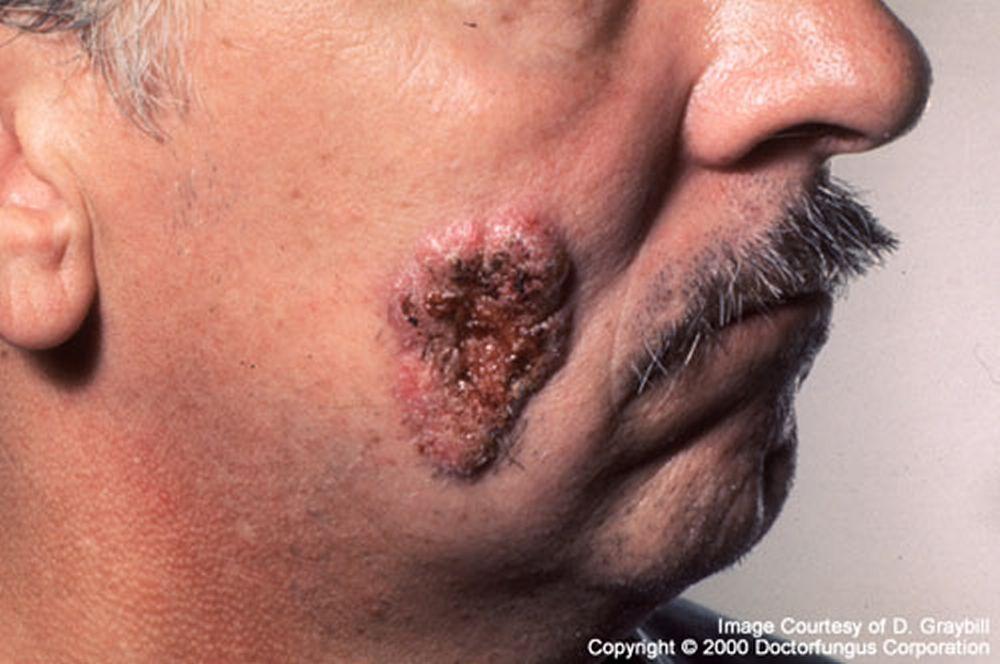
Image courtesy of www.doctorfungus.org © 2005.
If bone lesions develop, overlying areas are sometimes swollen, warm, and tender.
Genital lesions in men most commonly cause prostatitis and epididymitis associated with painful epididymal swelling, deep perineal discomfort, or prostatic tenderness detected during rectal examination. Genital lesions in women are less common and can cause tubo-ovarian abscess, endometritis, and salpingitis.
Central nervous system involvement can manifest as brain abscess, epidural abscess, or meningitis.
Diagnosis of Blastomycosis
Chest x-ray
Fungal cultures and smear
Blastomyces urine and serum antigen
If blastomycosis is suspected, a chest x-ray should be taken. Focal or diffuse infiltrates may be present, sometimes as patchy bronchopneumonia fanning out from the hilum. These findings must be distinguished from other causes of pneumonia (eg, bacteria, other mycoses, tuberculosis, tumors). The symptoms and signs of pulmonary blastomycosis may be indistinguishable from those of bacterial pneumonia, which may lead to diagnostic delays.
Skin lesions can be mistaken for sporotrichosis, tuberculosis, or basal cell carcinoma. Genital involvement may mimic tuberculosis.

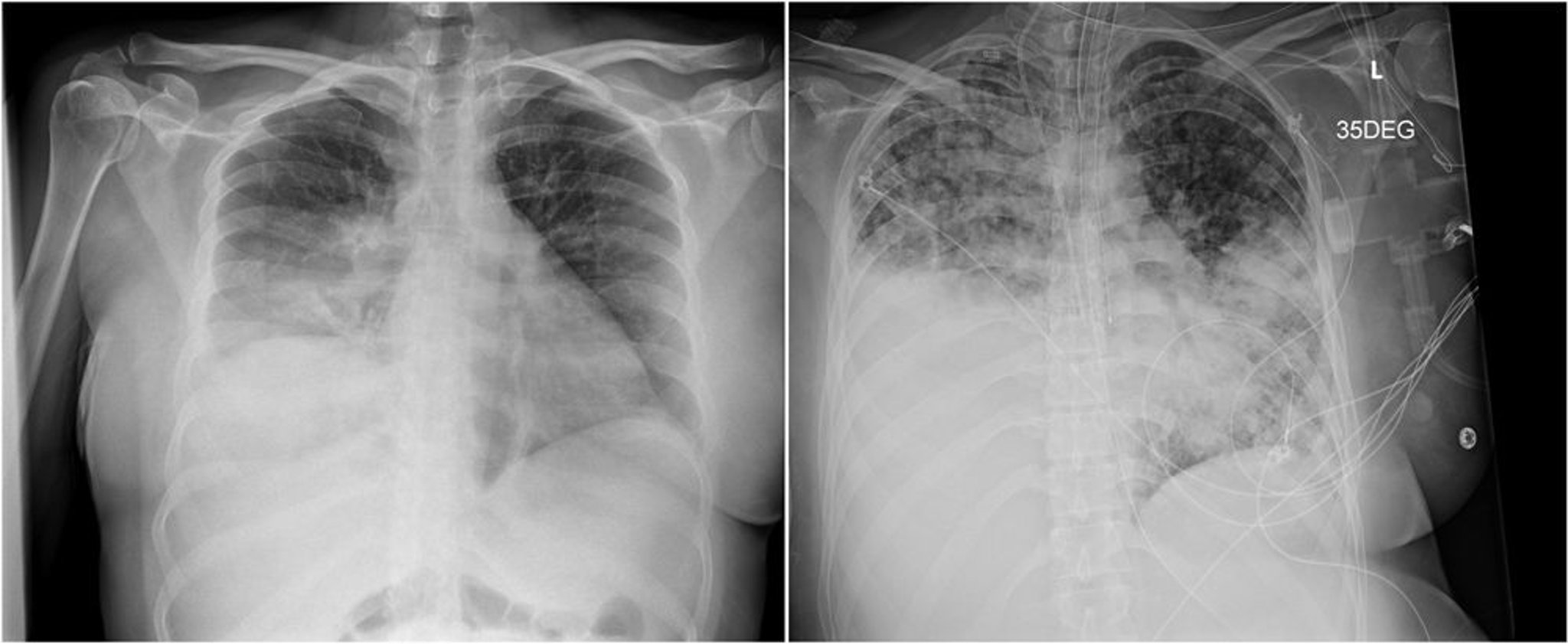
Images courtesy of Paschalis Vergidis, MD, MSc.
The diagnosis can be established by cultures of infected material. Because culturing Blastomyces can pose a severe biohazard to laboratory personnel, the laboratory should be notified of the suspected diagnosis. The organism’s characteristic appearance, seen during microscopic examination of tissues or sputum, is also frequently diagnostic.
Serologic testing is not sensitive but is useful if positive.
A urine and serum antigen test is useful, but cross-reactivity with Histoplasma is high.
Molecular diagnostic tests (eg, polymerase chain reaction [PCR]) can aid the diagnosis.
Treatment of Blastomycosis
For mild to moderate disease, itraconazole
For severe, life-threatening infection, amphotericin B
Untreated blastomycosis is usually slowly progressive and is rarely ultimately fatal.
Treatment of blastomycosis depends on severity of the infection.
For mild to moderate disease1itraconazole-intolerant patients with mild disease.
For severe, life-threatening infections,guidelines recommend a lipid formulation of amphotericin B at a dosage of 3 to 5 mg/kg once a day or amphotericin B deoxycholate 0.7 to 1.0 mg/kg once a day for 1 to 2 weeks or until improvement is noted.
amphotericin B), using the same dose schedule as for life-threatening infection.
B. dermatitidis, but clinical data are limited, and the role of these medications has not yet been defined.
Treatment reference
1. Chapman SW, Dismukes WE, Proia LA, et al: Clinical practice guidelines for the management of blastomycosis: 2008 update by the Infectious Diseases Society of America. Clin Infect Dis 46(12):1801-1812, 2008. doi: 10.1086/588300
Key Points
Inhaling spores of the dimorphic fungus Blastomyces can cause pulmonary disease and, less commonly, disseminated infection (particularly to the skin).
In North America, blastomycosis is endemic in the regions around the Great Lakes and the Ohio–Mississippi River valleys (extending into the middle Atlantic and southeastern states).
Diagnose using cultures of infected material; serologic testing is specific but not very sensitive.
More Information
The following English-language resource may be useful. Please note that THE MANUAL is not responsible for the content of this resource.
Infectious Diseases Society of America: Practice Guidelines for the Management of Blastomycosis (2008)