Search
SectionsIndexSymptoms
  • Cardiovascular Disorders
  • Clinical Pharmacology
  • Critical Care Medicine
  • Dental Disorders
  • Dermatologic Disorders
  • Ear, Nose, and Throat Disorders
  • Endocrine and Metabolic Disorders
  • Eye Disorders
  • Gastrointestinal Disorders
  • Genitourinary Disorders
  • Geriatrics
  • Gynecology and Obstetrics
  • Hematology and Oncology
  • Hepatic and Biliary Disorders
  • Immunology; Allergic Disorders
  • Infectious Diseases
  • Injuries; Poisoning
  • Musculoskeletal and Connective Tissue Disorders
  • Neurologic Disorders
  • Nutritional Disorders
  • Pediatrics
  • Psychiatric Disorders
  • Pulmonary Disorders
  • Special Subjects
ABCDEFGHI
JKLMNOPQR
STUVWXYZ
  • Abdominal Pain, Acute
  • Abdominal pain, Chronic
  • Alopecia
  • Amenorrhea
  • Amnesia
  • Anosmia
  • Bleeding, Excessive
  • Breast Lumps
  • Chest Pain
  • Constipation in Adults
  • Constipation in Children
  • Cough in Adults
  • Cough in Children
  • Crying
  • Diarrhea in Adults
  • Diarrhea in Children
  • Diplopia
  • Dizziness
  • Dry Mouth
  • Dysmenorrhea
  • Dyspepsia
  • Dysphagia
  • Dyspnea
  • Dysuria
  • Earache
  • Ear Discharge
  • Edema
  • Edema During Late Pregnancy
  • Epistaxis
  • Erectile dysfunction
  • Eyelid Swelling
  • Eye Pain
  • Fever
  • Fever, Acute, in Adults
  • Fever, Chronic (FUO)
  • Fever in Infants and Children
  • Floaters
  • Gas
  • Gastrointestinal Bleeding
  • Halitosis
  • Headache
  • Hearing Loss
  • Hearing Loss: Sudden Deafness
  • Hematospermia
  • Hematuria
  • Hemoptysis
  • Hiccups
  • Hirsutism
  • Insomnia and Excessive Daytime Sleepiness
  • Itching
  • Itching, Anal
  • Jaundice in Adults
  • Jaundice in Neonates
  • Joint Pain, Monarticular
  • Joint Pain, Polyarticular
  • Knee pain
  • Lump in Throat
  • Nasal Congestion and Rhinorrhea
  • Nausea and Vomiting During Early pPregnancy
  • Nausea and Vomiting in Adults
  • Nausea and Vomiting in Infants and Children
  • Neck and Back Pain
  • Neck Mass
  • Nipple Discharge
  • Orthostatis Hypotension
  • Pain
  • Pain, Chronic
  • Palpitations
  • Pelvic Pain
  • Pelvic Pain During Early Pregnancy
  • Polyuria
  • Priapism
  • Red Eye
  • Scrotal Pain
  • Sore Throat
  • Stomatitis
  • Stridor
  • Syncope
  • Tearing
  • Tinnitus
  • Toothache
  • Tremor
  • Urinary Frequency
  • Urinary Incontinence in Adults
  • Urinary Incontinence in Children
  • Urinary Retention
  • Urticaria
  • Vaginal Bleeding
  • Vaginal Bleeding During Early Pregnancy
  • Vaginal Bleeding During Late Pregnancy
  • Vaginal Itching and Discharge
  • Vision, Blurred
  • Vision Loss, Acute
  • Weakness, Generalized
  • Wheezing
In This Topic
Infectious Diseases
Rickettsiae and Related Organisms
Other Spotted Fever Rickettsioses
Symptoms and Signs
Diagnosis
Treatment
Back to Top
Resources
  • About The Merck Manual
  • Ready Reference Guides
  • Trade Names of Some Commonly Used Drugs
  • Normal Laboratory Values
  • Clinical Calculators
  • Multimedia
  • Selected Links
Manuals available online
'/home/index.html' + bookPageLink
 
'/professional/index.html'
These and other Manuals available
in print, online, and as mobile applications.

See more at MerckManuals.com
Sections in Health Care Professionals
  • Cardiovascular Disorders
  • Clinical Pharmacology
  • Critical Care Medicine
  • Dental Disorders
  • Dermatologic Disorders
  • Ear, Nose, and Throat Disorders
  • Endocrine and Metabolic Disorders
  • Eye Disorders
  • Gastrointestinal Disorders
  • Genitourinary Disorders
  • Geriatrics
  • Gynecology and Obstetrics
  • Hematology and Oncology
  • Hepatic and Biliary Disorders
  • Immunology; Allergic Disorders
  • Infectious Diseases
  • Injuries; Poisoning
  • Musculoskeletal and Connective Tissue Disorders
  • Neurologic Disorders
  • Nutritional Disorders
  • Pediatrics
  • Psychiatric Disorders
  • Pulmonary Disorders
  • Special Subjects
Chapters in Infectious Diseases
  • Biology of Infectious Disease
  • Laboratory Diagnosis of Infectious Disease
  • Immunization
  • Bacteria and Antibacterial Drugs
  • Gram-Positive Cocci
  • Gram-Positive Bacilli
  • Gram-Negative Bacilli
  • Spirochetes
  • Neisseriaceae
  • Chlamydia and Mycoplasmas
  • Rickettsiae and Related Organisms
  • Anaerobic Bacteria
  • Mycobacteria
  • Fungi
  • Approach to Parasitic Infections
  • Nematodes (Roundworms)
  • Trematodes (Flukes)
  • Cestodes (Tapeworms)
  • Intestinal Protozoa
  • Extraintestinal Protozoa
  • Viruses
  • Respiratory Viruses
  • Herpesviruses
  • Pox Viruses
  • Enteroviruses
  • Arboviridae, Arenaviridae, and Filoviridae
  • Human Immunodeficiency Virus (HIV)
  • Other Viruses
  • Sexually Transmitted Diseases (STDs)
Topics in Rickettsiae and Related Organisms
  • Overview of Rickettsial Infections
  • Other Spotted Fever Rickettsioses
  • Epidemic Typhus
  • Murine (Endemic) Typhus
  • Rickettsialpox
  • Rocky Mountain Spotted Fever (RMSF)
  • Scrub Typhus
  • Ehrlichiosis and Anaplasmosis
  • Q Fever
     
    • Merck Manual
    • >
    • Health Care Professionals
    • >
    • Infectious Diseases
    • >
    • Rickettsiae and Related Organisms
    • 4
     
    Other Spotted Fever Rickettsioses

    Share This

    Various rickettsiae transmitted by ixodid ticks cause spotted fever rickettsioses similar to but milder than Rocky Mountain spotted fever. Symptoms are an initial skin lesion, satellite adenopathy, and an erythematous maculopapular rash.

    Spotted fever rickettsioses include North Asian tick-borne rickettsiosis, Queensland tick typhus, African tick typhus, and Mediterranean spotted fever (boutonneuse fever). The causative agents belong to the spotted fever group of rickettsiae.

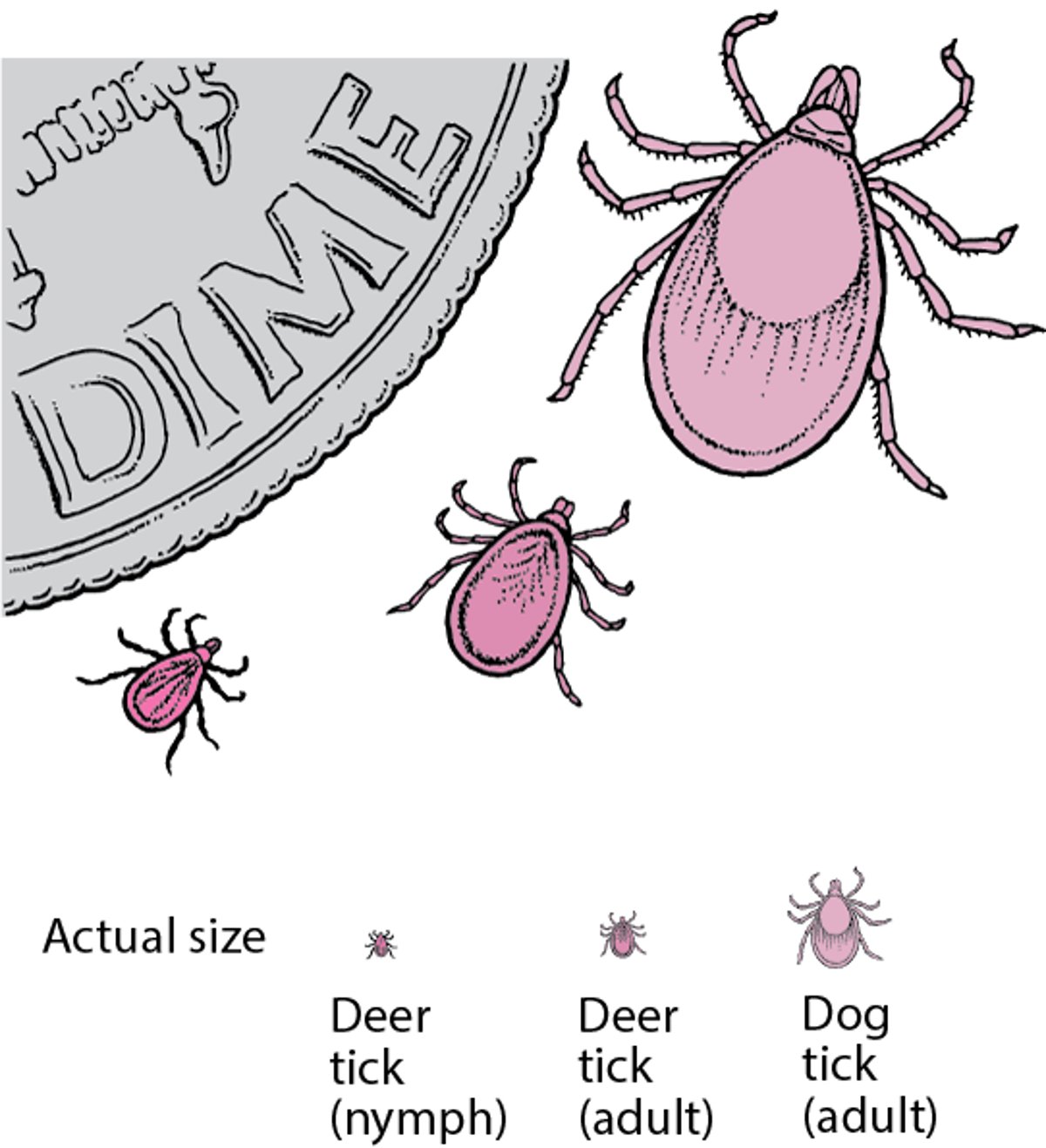
    The epidemiology of these tick-borne rickettsioses resembles that of Rocky Mountain spotted fever (RMSF) in the Western Hemisphere. Ixodid ticks and wild animals maintain the rickettsiae in nature. If humans intrude accidentally into the cycle, they become infected. In certain areas, the cycle of boutonneuse fever involves domiciliary environments, with the brown dog tick, Rhipicephalus sanguineus, as the dominant vector.

    Symptoms and Signs

    The symptoms and signs are similar for all spotted fever rickettsioses and generally milder than with RMSF. After an incubation period of 5 to 7 days, fever, malaise, headache, and conjunctival injection develop. With the onset of fever, a small buttonlike ulcer 2 to 5 mm in diameter with a black center appears (an eschar or, in boutonneuse fever, tache noire). Usually, the regional or satellite lymph nodes are enlarged. On about the 4th day of fever, a red maculopapular rash appears on the forearms and extends to most of the body, including the palms and soles. Fever lasts into the 2nd wk.

    Complications and death are rare except among elderly or debilitated patients. However, the disease should not be ignored; a fulminant form of vasculitis can occur.

    Diagnosis

    For diagnosis, see Rickettsiae and Related Organisms: Diagnosis.

    Treatment

    • DoxycyclineSome Trade Names
      PERIOSTAT
      VIBRAMYCIN
      Click for Drug Monograph
      or ciprofloxacinSome Trade Names
      CILOXAN
      CIPRO
      Click for Drug Monograph

    Treatment is doxycyclineSome Trade Names
    PERIOSTAT
    VIBRAMYCIN
    Click for Drug Monograph
    100 mg po bid for 5 days or ciprofloxacinSome Trade Names
    CILOXAN
    CIPRO
    Click for Drug Monograph
    500 to 750 mg po bid for 5 days. Measures can be taken to prevent tick bites (see Sidebar 1: Rickettsiae and Related Organisms: Tick Bite PreventionSidebars).

    Sidebar 1

    Tick Bite Prevention

    Preventing tick access to skin includes

    • Staying on paths and trails
    • Tucking trousers into boots or socks
    • Wearing long-sleeved shirts
    • Applying repellents with diethyltoluamide (DEET) to skin surfaces

    DEET should be used cautiously in very young children because toxic reactions have been reported. PermethrinSome Trade Names
    ELIMITE
    NIX
    RID SPRAY
    Click for Drug Monograph
    on clothing effectively kills ticks. Frequent searches for ticks, particularly in hairy areas and on children, are essential in endemic areas.

    Engorged ticks should be removed with care and not crushed between the fingers because crushing the tick may result in disease transmission. The tick's body should not be grasped or squeezed. Gradual traction on the head with a small forceps dislodges the tick. The point of attachment should be swabbed with alcohol. Petroleum jelly, alcohol, lit matches, and other irritants are not effective ways to remove ticks and should not be used.

    No practical means are available to rid entire areas of ticks, but tick populations may be reduced in endemic areas by controlling small-animal populations.

    Last full review/revision November 2012 by William A. Petri, Jr., MD, PhD

    Content last modified December 2012

    Buy the Book

    Mobile Versions

    Back to Top

    Previous: Overview of Rickettsial Infections

    Next: Epidemic Typhus

    Audio
    Figures
    Photographs
    Sidebars
    Tables
    Videos

    Copyright     © 2010-2013 Merck Sharp & Dohme Corp., a subsidiary of Merck & Co., Inc., Whitehouse Station, N.J., U.S.A.    Privacy    Terms of Use