Frostbite is injury due to freezing of tissue. Initial manifestations may be deceptively benign. Skin may appear white or blistered and is numb; rewarming causes substantial pain. Gangrene may develop. Severely damaged tissue may autoamputate. Treatment is rewarming in warm (37 to 40° C) water and local care. Surgical amputation is occasionally necessary, but a decision, often guided by imaging results, should usually be delayed until after definitive demarcation of necrotic tissue.
(See also Overview of Cold Injury.)
Frostbite usually occurs in extreme cold, especially at high altitude, and is aggravated by hypothermia. Distal extremities and exposed skin are affected most often.

© Springer Science+Business Media

© Springer Science+Business Media
Ice crystals form within or between tissue cells, essentially freezing the tissue and causing cell death. Adjacent unfrozen areas are at risk because local vasoconstriction and thrombosis can cause endothelial and ischemic damage. With reperfusion during rewarming, inflammatory cytokines (eg, thromboxanes, prostaglandins) are released, exacerbating tissue injury. Depth of tissue loss depends on duration and depth of freezing.
General reference
1. Dow J, Giesbrecht GG, Danzl DF, et al: Wilderness Medical Society Clinical Practice Guidelines for the Out-of-Hospital Evaluation and Treatment of Accidental Hypothermia: 2019 Update. Wilderness Environ Med 30(4S):S47-S69, 2019. doi: 10.1016/j.wem.2019.10.002
Symptoms and Signs of Frostbite
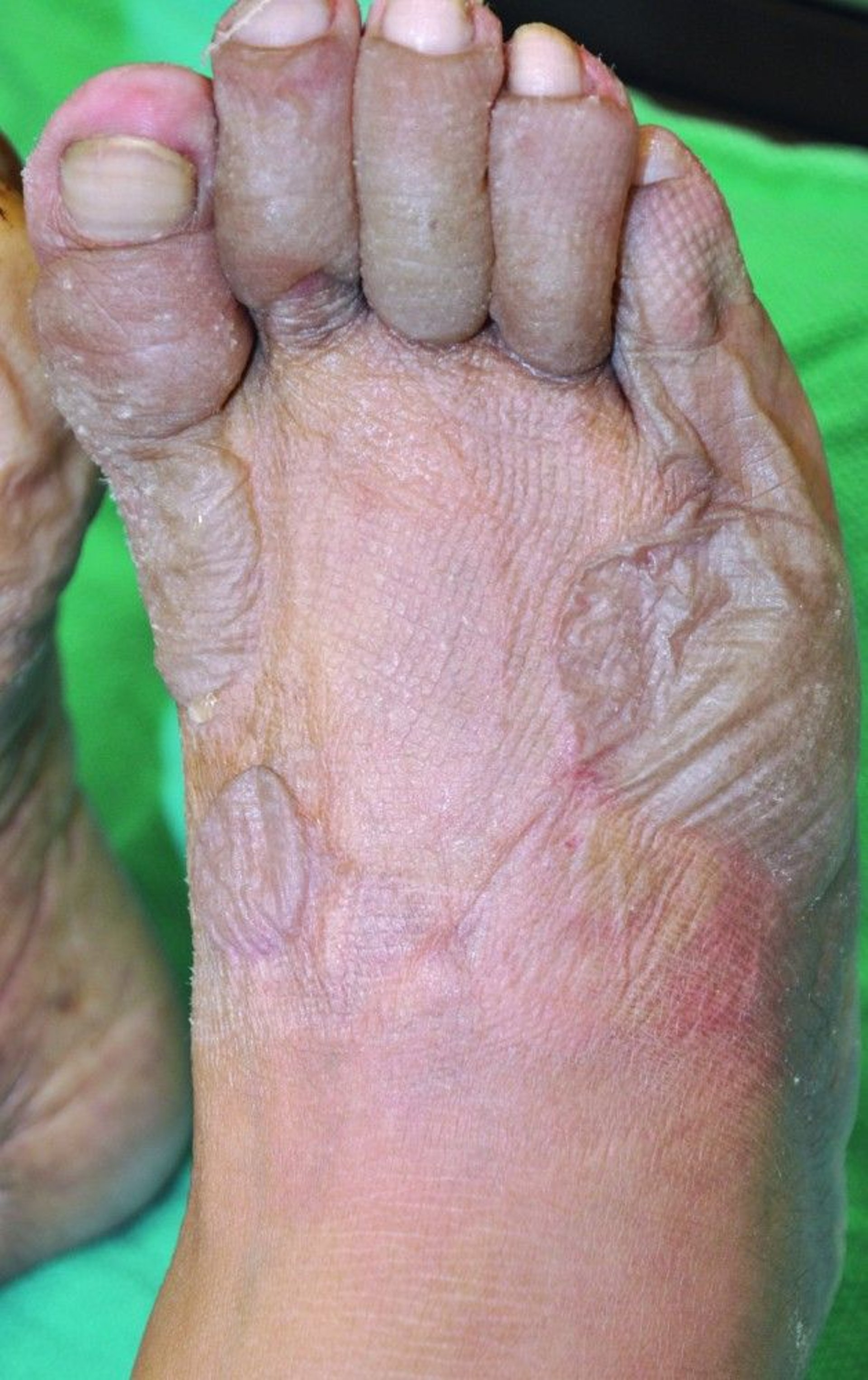
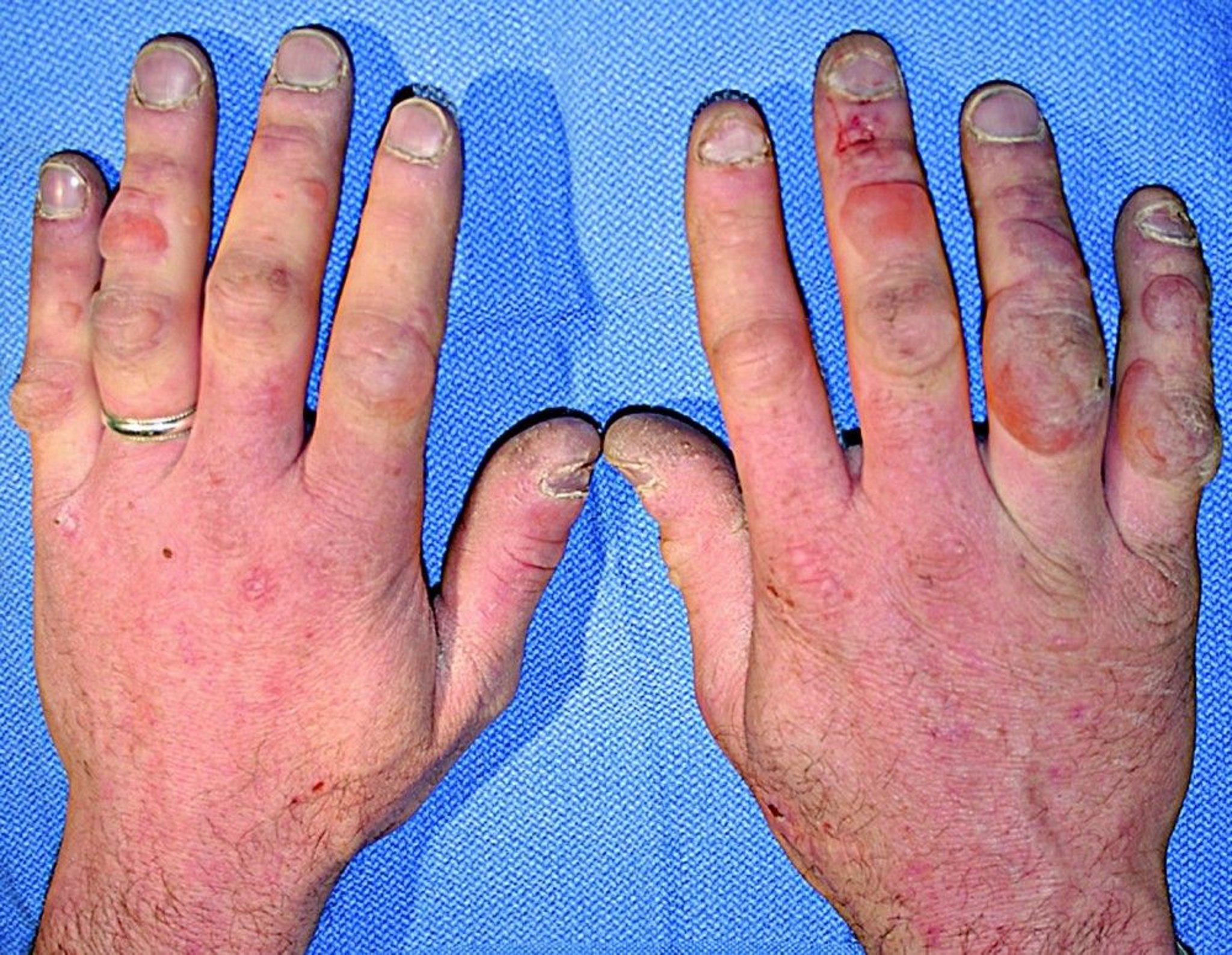
The affected area is cold, hard, white, and numb. When warmed, the area becomes blotchy red, swollen, and painful. Blisters form within 4 to 6 hours, but the full extent of injury may not be apparent for several days.
Blisters filled with clear serum indicate superficial damage; superficial damage heals without residual tissue loss.
Blood-filled, proximal blisters indicate deep damage and likely tissue loss.
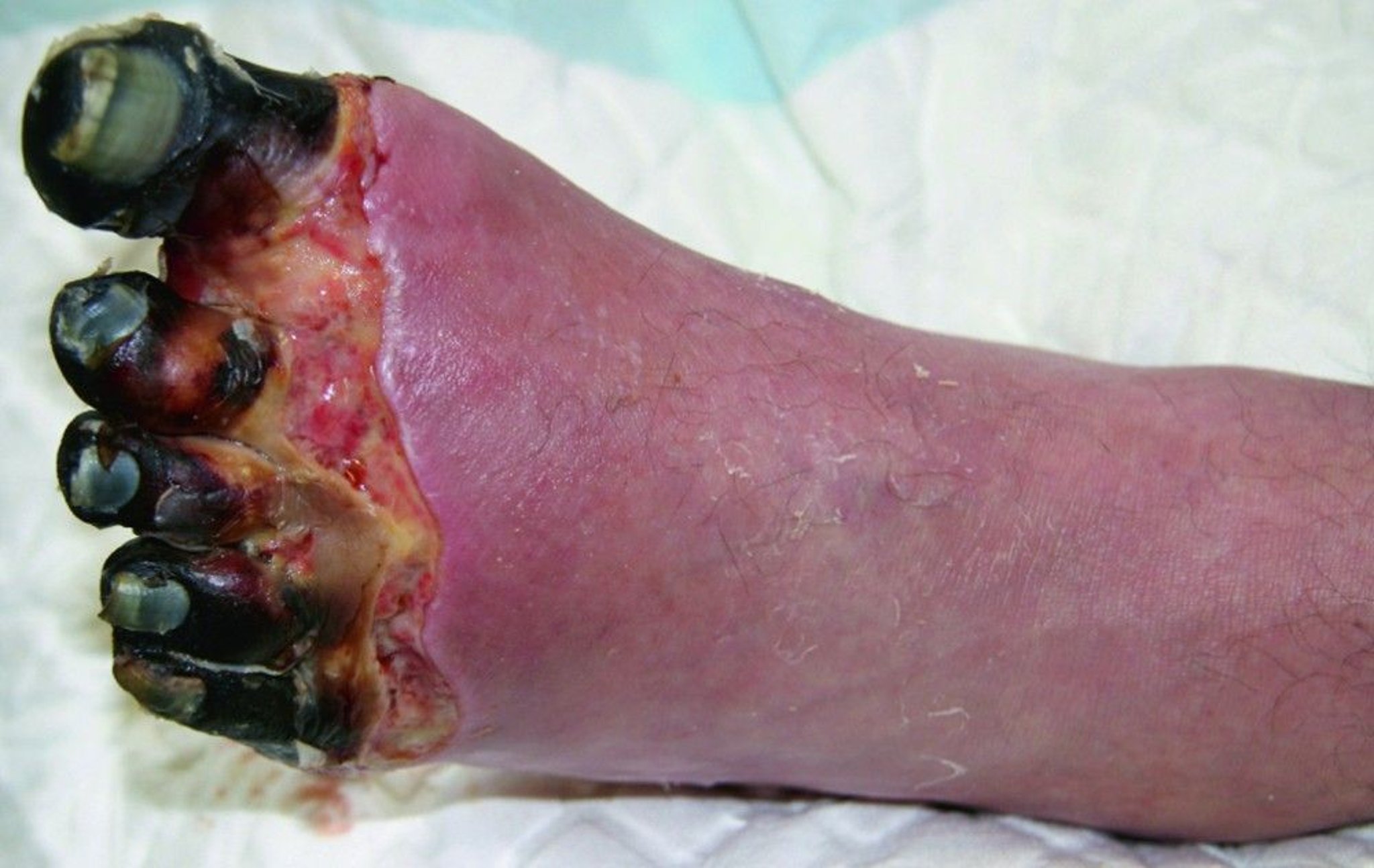
Freezing of deep tissue causes dry gangrene with a hard black carapace over healthy tissue. Wet gangrene, which is gray, edematous, and soft, is less common. Wet gangrene is characterized by infection, but dry gangrene is less likely to become infected.

© Springer Science+Business Media
Severely damaged tissue may autoamputate. Compartment syndrome may develop. All degrees of frostbite may cause faulty nail growth and long-term neuropathic symptoms: sensitivity to cold, excessive sweating, and numbness (symptoms resembling those of complex regional pain syndrome).
Diagnosis of Frostbite
Clinical evaluation
Diagnosis is based on clinical findings. However, because many of the early characteristics of frostbite (eg, coldness, numbness, white or red color, blisters) are also characteristic of nonfreezing cold injuries, differentiation of frostbite may require repeated observation until more specific characteristics (eg, black carapace) develop.
Treatment of Frostbite
Rewarming in warm (37 to 39° C) water
Supportive measures
Local wound care
Sometimes delayed surgery
Prehospital care
In the field, frostbitten extremities should be rewarmed rapidly by totally immersing the affected area in water that is tolerably warm to the touch (37 to 39° C). Because the area is numb, rewarming with an uncontrolled dry heat source (eg, fire, heating pad) risks burns. Rubbing may further damage tissue and is avoided.
The longer an area remains frozen, the greater the ultimate damage may be. However, thawing the feet is inadvisable if a patient must walk any distance to receive care because thawed tissue is particularly sensitive to the trauma of walking and, if refrozen, will be more severely damaged than if left frozen. If thawing must be delayed, the frozen area is gently cleansed, dried, and protected in sterile compresses. Patients are given analgesics, if available, and the whole body is kept warm.
Acute care
Once the patient is in the hospital, core temperature is stabilized and extremities are rapidly rewarmed in large containers of circulating water kept at about 37 to 39° C; 15 to 30 minutes is usually adequate. Thawing is often mistakenly ended prematurely because pain may be severe during rewarming. Parenteral analgesics, including opioids, may be used.
Preventing infection is fundamental; streptococcal prophylaxis (eg, with penicillin) should be considered, especially if there is gross contamination or crush injury. If wet gangrene is present, broad-spectrum antibiotics are used. Tetanus toxoid is given if vaccination is not up to date. If tissue damage is severe, tissue pressure is monitored (see Compartment Syndrome: Diagnosis, How To Measure Compartment Pressure in a Forearm, and How To Measure Compartment Pressure in the Lower Leg ).
Ongoing care
Adequate nutrition is important to sustain metabolic heat production. Pre-thaw, consider using Doppler ultrasonography to assess pulses and tissue appearance.
Other imaging tests include radionuclide scanning, MRI, microwave thermography, and laser-Doppler flowmetry to help assess circulation, determine tissue viability, and thus guide treatment. MRI and particularly magnetic resonance angiography may establish the line of demarcation before clinical demarcation and thus make earlier surgical debridement or amputation possible. However, whether earlier surgery improves long-term outcome is unclear. Usually, surgery is delayed as long as possible because the black carapace is often shed, leaving viable tissue. Patients with severe frostbite are warned that many weeks of observation may be required before demarcation and the extent of tissue loss become apparent.
Whirlpool baths at 37° C 3 times a day followed by gentle drying, rest, and time are the best long-term management. No totally effective treatment for the long-lasting symptoms of frostbite (eg, numbness, hypersensitivity to cold) is known, although chemical or surgical sympathectomy may be useful for late neuropathic symptoms.
Treatment reference
1. Hickey S, Whitson A, Jones L, et al: Guidelines for Thrombolytic Therapy for Frostbite. Journal of Burn Care & Research, 41:1, 2020.
Key Points
Depth of injury is difficult to recognize initially, although blood-filled blisters indicate deeper damage.
Thaw frostbitten tissue as soon as possible using water that is tolerably warm to the touch (37 to 39° C); analgesia is usually required.
Avoid thawing and refreezing.
Keep affected areas uncovered, clean, dry, and elevated.
Black tissue may represent a black carapace that will be shed or gangrene that will require amputation; surgery may be delayed until the demarcation is clear.
Neuropathic symptoms (eg, sensitivity to cold, numbness) may persist indefinitely.