Birth defects of the genitals in girls can involve the labia (vulva), vagina, cervix, or uterus.
Genital birth defects may be caused by abnormal levels of sex hormones during fetal development, chromosome abnormalities, environmental factors, or inherited factors.
Most birth defects of the vagina are rare.
The diagnosis depends on the defect and may include imaging tests and blood tests.
Many genital defects require surgery.
(See also Overview of Kidney and Urinary Tract Birth Defects.)
Causes of Female Genital Birth Defects
Male and female sex organs develop from similar tissue in the embryo. Whether this tissue develops into male or female sex organs depends on a number of factors. One factor is the sex chromosomes, which are called X and Y. Normal males have 1 X and 1 Y chromosome. Normal females have 2 X chromosomes. Early in development, a fetus with a Y chromosome begins developing testes, which secrete the male hormone testosterone. Testosterone activates pathways that cause development of the scrotum, penis, and penile urethra (the urine passage through the penis). Without testosterone (as in a normal female fetus), the genitals become the clitoris, labia majora, and separate vaginal and urethral canals. In addition to testosterone, there are other substances made by the developing fetus that help control genital development.
External Female Reproductive Anatomy

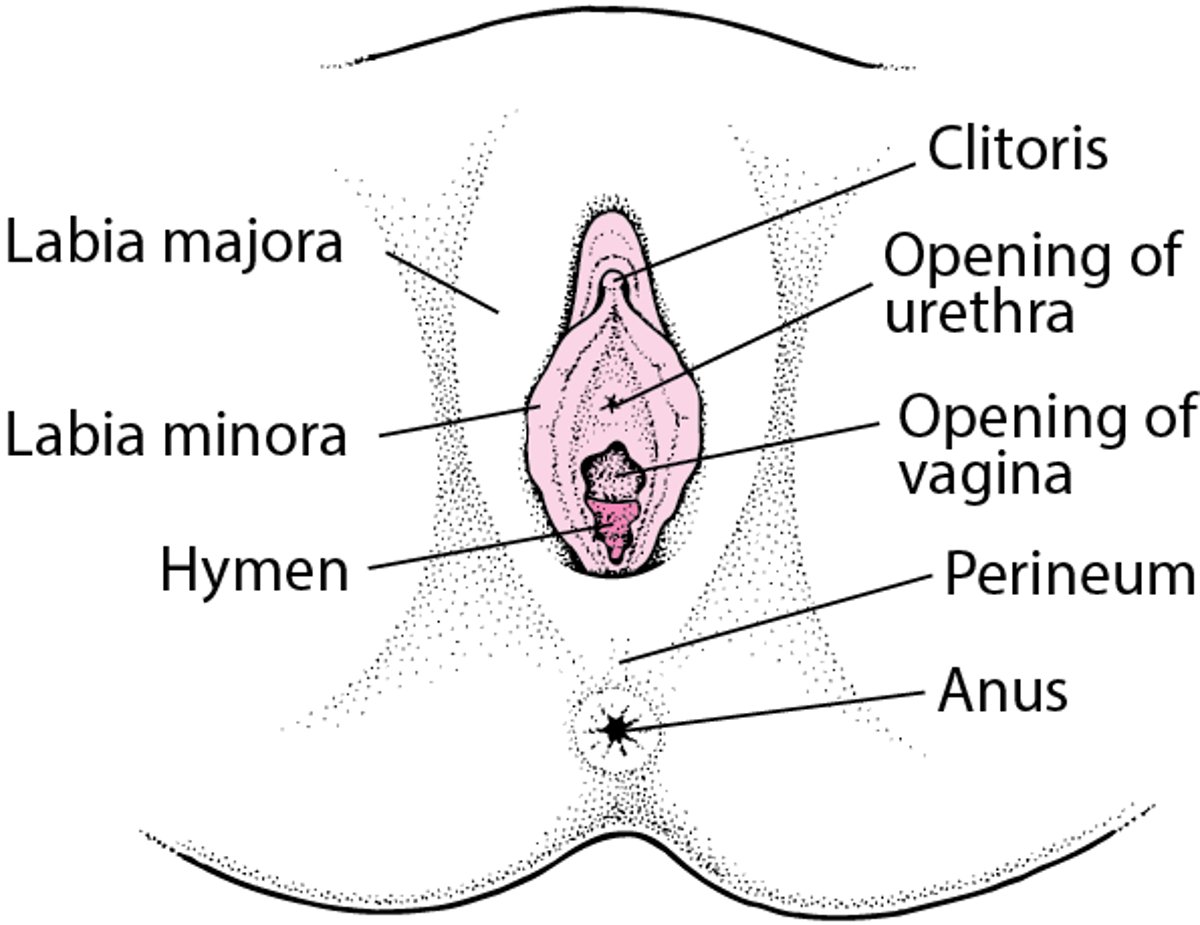
There are several factors that cause female genital birth defects, but most involve abnormal levels of sex hormones in the fetus before birth, particularly having too much testosterone (or testosterone-like substances).
Other factors that can interfere with normal development of the genitals include:
Abnormal or missing genes (the DNA code of instructions for how the body works)
Exposure of the fetus to substances, such as certain medications, drugs, and hormones, that interfere with genital development
Sometimes, the factor that causes a genital defect also results in a defect in another organ.
Children who have genital defects may have problems urinating. Later in life, they may have difficulties engaging in sexual intercourse, impaired fertility, social and psychological problems, or a combination.
Types of Female Genital Birth Defects
Some genital birth defects in girls include:
Imperforate hymen
The hymen is the thin membrane at the opening of the vagina. Usually, the hymen covers only part of the opening. However, some girls are born with a hymen that completely closes the vaginal opening. This defect is called an imperforate hymen. Because the vaginal opening is closed, vaginal secretions cannot go out. Sometimes the problem is not detected and repaired when girls are young, so when girls begin having menstrual periods, the blood cannot go out. In such cases, girls may have abdominal pain because menstrual blood is trapped in their vagina.
Girls who have an imperforate hymen have a minor surgical procedure to open the hymen.
Extra genital organs (duplication abnormalities)
Rarely, girls are born with extra (duplicated) genital organs. That is, they may have 2 vaginas, 2 cervixes, or 2 uteruses instead of 1. In some girls, an organ such as the vagina or uterus is not fully duplicated but rather is fully divided in half or partially divided by extra tissue called a septum. Sometimes, these defects are noticed at birth, but, because the vagina, uterus, and cervix are internal organs, they are often not discovered until later in life when there are menstrual, fertility, or pregnancy problems.

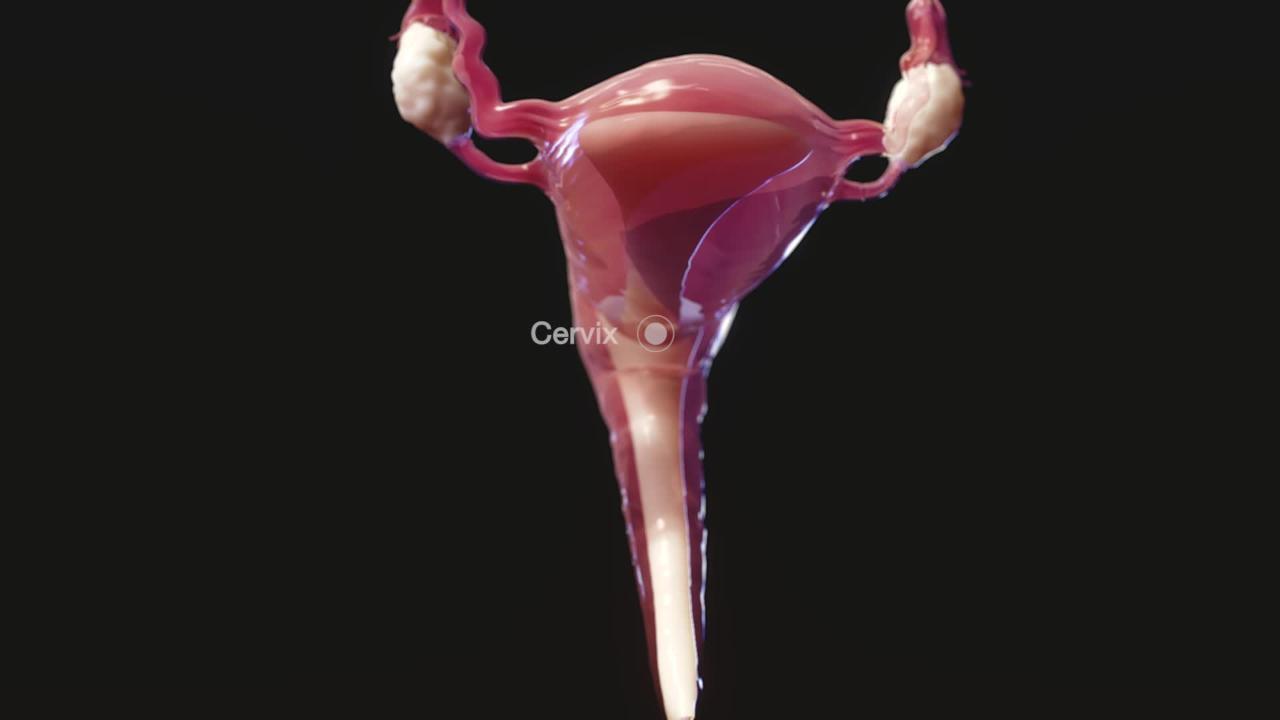
Some duplication abnormalities do not require treatment, but others need to be corrected with surgery.
Genital organs joined together (fusion abnormalities)
Rarely, girls' genital organs are joined together (fused) at birth. That is, their anus, vagina, and urethra may be joined together as 1 structure.
Minor fusion abnormalities may not require treatment, but severe abnormalities need to be corrected with surgery.
Internal Female Reproductive Anatomy

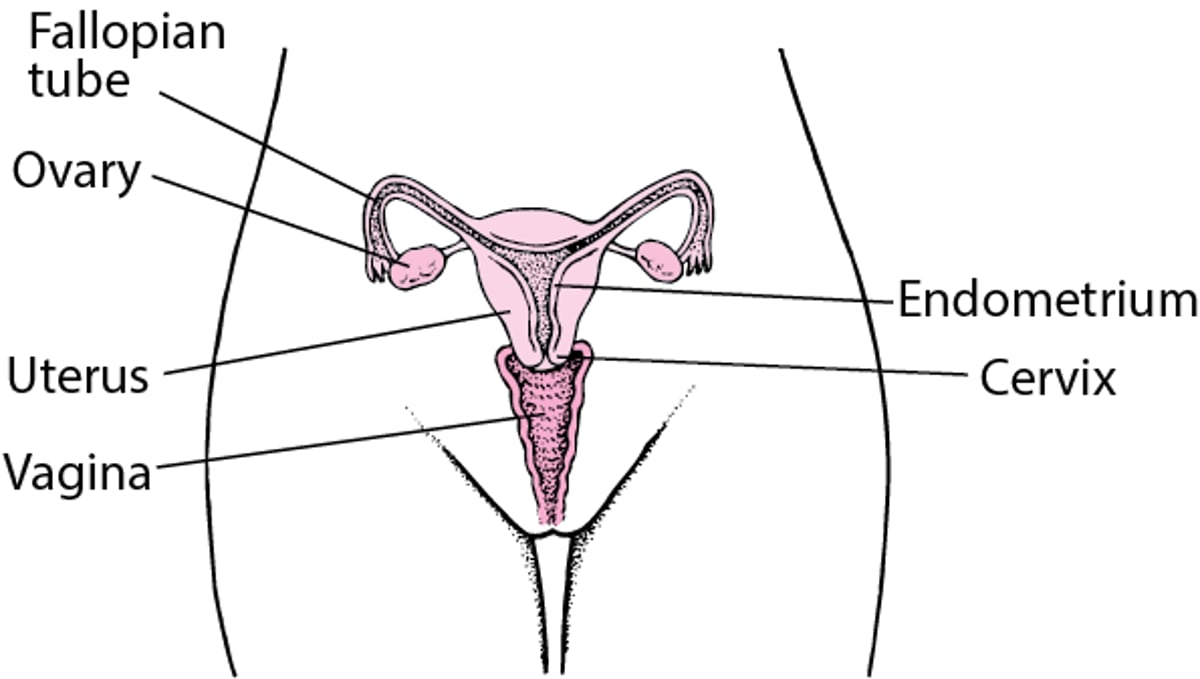
Missing or shortened vagina (vaginal agenesis)
During pregnancy, the internal reproductive system of a female fetus may not fully develop. A female infant may be born without a vagina or with a partially formed vagina (the lower vagina forms, but the upper vagina is missing). Sometimes other internal reproductive organs, such as the cervix and uterus, may also not develop. These conditions are called vaginal agenesis, mullerian agenesis, or Mayer-Rokitansky-Küster-Hauser (MRKH) syndrome.
Vaginal agenesis or abnormalities in the development of the cervix or uterus may not be noticed during the physical examination doctors do at birth because the external reproductive structures, such as the labia and lower vagina, usually develop normally. Often, girls are not diagnosed until puberty because, although they develop breasts and underarm and pubic hair, they do not have periods (amenorrhea). Sometimes a uterus has formed and produces menstrual blood but is small or the vagina has tissue blocking it (vaginal septum), so the blood is not able to drain, causing pain.
Girls who have vaginal agenesis also may have kidney abnormalities. For example, they may be missing a kidney. They may also have problems with bones or abdominal wall abnormalities.
No immediate treatment is needed unless girls have pain due to blocked flow of menstrual blood. Once girls are ready to begin treatment, they use vaginal dilators to stretch their vaginal canal. A vaginal dilator is a smooth, rod-shaped device. Girls insert a small dilator at first and gradually move on to the next sizes as their vagina stretches.
Surgery is sometimes needed to correct other abnormalities.
Labial adhesions
Labial adhesions are not a birth defect, but sometimes they do occur in babies. The labia are the fleshy lips at the opening of the vagina. Labial adhesions are when the lips of the vagina stick together. These adhesions typically occur in childhood, usually when girls are around 2 years of age, but may develop later.
Labial adhesions usually do not cause symptoms and frequently go away spontaneously. When they do cause symptoms, it is usually because some urine collects in the vagina, which may lead to irritation, infections, or dribbling.
Adhesions that do cause symptoms are treated with a cream that contains estrogen. Alternatively, doctors may surgically open the adhesions either in the office or in the operating room.
Adhesions that do not cause symptoms should still be surgically opened before puberty so that menstrual blood can properly drain.
Labial adhesions commonly return. To help prevent their return, girls apply another cream several times a day to protect the area from irritation that can cause the adhesions to return.
Diagnosis of Female Genital Birth Defects
Physical examination
Sometimes imaging tests, such as ultrasound and magnetic resonance imaging
Sometimes blood tests to analyze chromosomes and hormone levels
Before birth, doctors can see some abnormalities during routine prenatal ultrasound of the fetus, but other abnormalities are not seen well with this imaging test.
After birth, doctors do a physical examination of the newborn's genitals and also look for other birth defects.


This illustration shows a cystoscope. A cystoscope is a small, thin tube with light and a camera on the end of it that doctors use to look for abnormalities in the bladder and other organs of the urinary tract. In this illustration, the device is inserted into the female bladder through the urethra. The inside of the bladder is illuminated by the light at the end of the device.
Image Copyright © Nucleus Medical Media. All rights reserved.
Often, doctors do an ultrasound scan or sometimes a magnetic resonance imaging (MRI) scan to identify the presence of a vagina, cervix, uterus, and ovaries. They may insert a small, thin tube with a light and a camera on the end into the urethra to look for abnormalities in the bladder and other organs of the urinary tract (cystoscope) or into the vagina to look for abnormalities in the uterus and cervix (hysteroscope). If the results of these tests are unclear, doctors may do laparoscopy, in which they look inside the abdominal cavity using an endoscope.
Doctors may do blood tests to see what sex chromosomes the infant has and to measure hormone levels.
Treatment of Female Genital Birth Defects
Surgery
Children who have genital defects may need surgery to correct the defects. Some minor defects do not need to be treated with surgery.