Chondromalacia patellae is softening, swelling, and breakdown of the cartilage under the kneecap (patella), causing knee pain.
Chondromalacia patellae typically develops in adolescents.
Chondromalacia patellae can occur when the cartilage on the underside of the kneecap breaks down and allows the kneecap to rub against other bones in the knee joint when the knee bends. The break down probably results from abnormal positioning (misalignment) of the kneecap. Misalignment can result from minor, repetitive injury to the kneecap, such as running with the kneecap too far to one side or with other abnormal movement patterns, or from a major injury.
Dull, aching pain is felt all around and behind the knee. There is usually no swelling. Climbing up or down the stairs, playing certain sports, sitting for a long time, and running usually worsen the pain.
Inside the Knee (Side View)

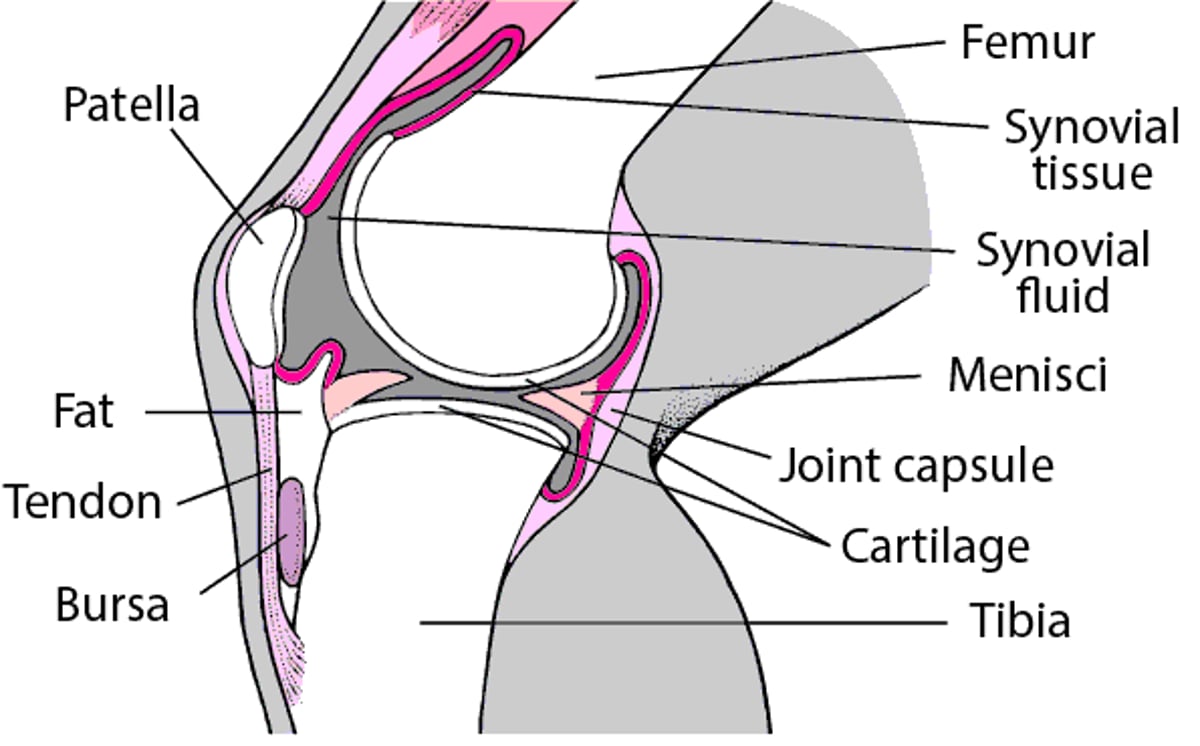
A doctor bases the diagnosis of chondromalacia patellae on the symptoms and a physical examination. Sometimes doctors may take an x-ray of the knee to see the bones or may do a magnetic resonance imaging (MRI) of the knee to see the cartilage.
Treatment of Chondromalacia Patellae
Strengthening and stretching exercises
Anti-inflammatory drugs
Sometimes arthroscopic procedures
The doctor may recommend exercises to strengthen the quadriceps muscles, which straighten or extend the knee joint. Increasing knee flexibility with stretching and strengthening exercises helps. Activities that worsen the pain (typically those that involve bending the knee) should be avoided for several days. (See also Pain in the Front of the Knee.)
Ice and nonsteroidal anti-inflammatory drugs (NSAIDs), such as ibuprofen or naproxen, can help relieve the symptoms.
Occasionally, the undersurface of the kneecap must be smoothed with a small (about the diameter of a pencil) fiberoptic scope called an arthroscope, which allows the doctor to look inside the joint.

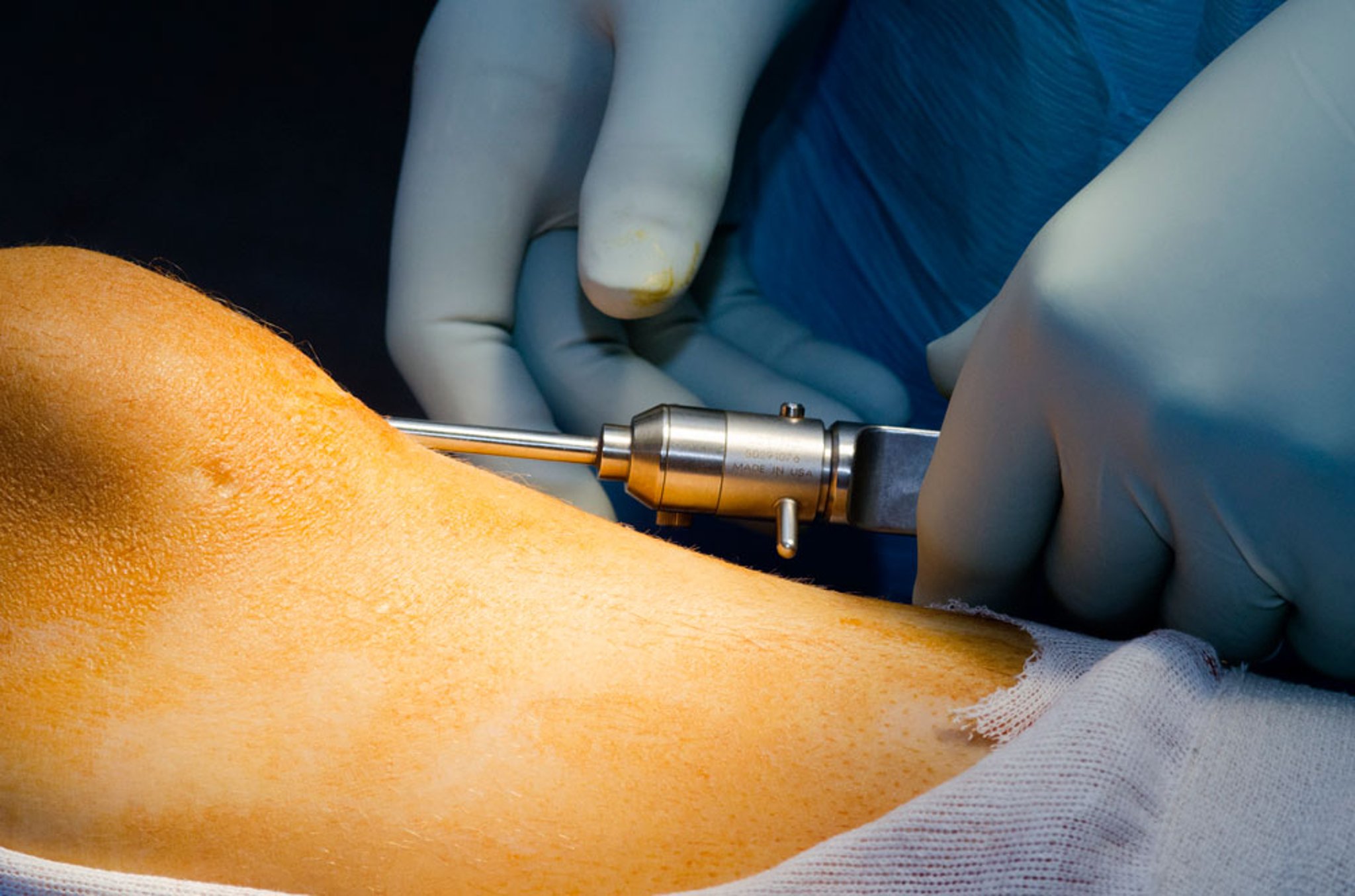
This photo shows a fiberoptic scope called an arthroscope, which allows the doctor to look inside the knee joint.
DR P. MARAZZI/SCIENCE PHOTO LIBRARY
Drug Information for the Topic