Heart failure is a condition in which the heart is unable to keep up with the demands of the body, leading to reduced blood flow, back-up (congestion) of blood in the veins and lungs, and/or other changes that may further weaken or stiffen the heart.
Heart failure can occur in people of any age, even in young children (especially those born with heart disease). However, it is much more common among older adults, because older adults are more likely to have disorders that cause to heart failure (such as coronary artery disease, which damages the heart muscle), or disorders of the heart valves. Age-related changes in the heart also tend to make the heart work less efficiently.
About 6.7 million people in the United States have heart failure, and there are approximately 1 million new cases per year. Worldwide, more than 64 million people have heart failure,. The disorder is likely to become more common because people are living longer and because, in some countries, certain risk factors for heart disease (such as obesity, diabetes, smoking, and high blood pressure) are affecting more people.
Heart failure does not mean that the heart has stopped. It means that the heart cannot keep up with the work required to pump blood adequately to all parts of the body. However, heart failure is complex, and no simple definition can encompass its many causes, aspects, forms, and consequences.

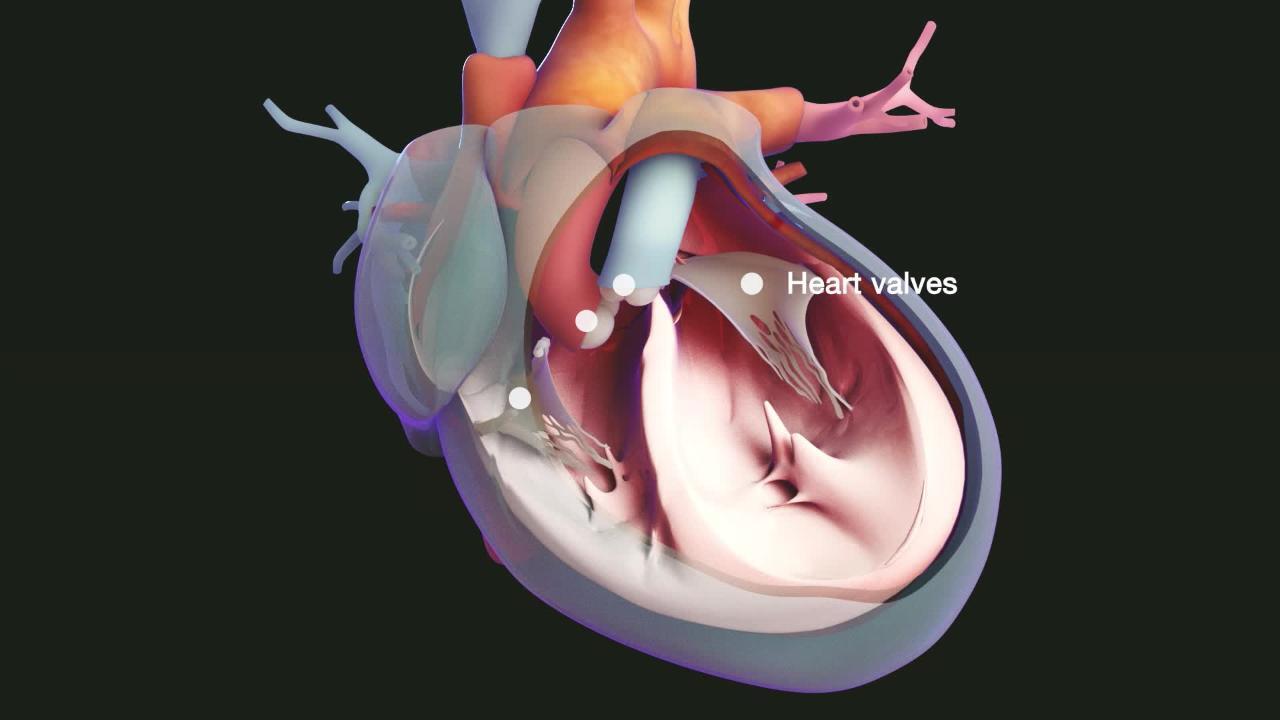
The main function of the heart is to pump blood. A pump moves fluid out of one place and into another. Within the heart:
The right side of the heart pumps blood from the veins into the lungs
The left side of the heart pumps blood from the lungs out through the arteries to the rest of the body
Blood goes out of the heart when the heart muscle contracts (called systole) and comes into the heart when the heart muscle relaxes (called diastole). Heart failure develops when the contracting or the relaxing action of the heart is inadequate, typically because the heart muscle is weak, stiff, or both. As a result, blood may not flow out in adequate amounts. Blood may also build up in the tissues, causing congestion. That is why heart failure is sometimes called congestive heart failure.
Did You Know...
|
In heart failure, the heart may not pump enough blood to meet the body’s need for oxygen and nutrients, which are supplied by the blood. As a result, arm and leg muscles may tire more quickly, and the kidneys may not function normally. The kidneys filter fluid and waste products from the blood into the urine, but when the heart cannot pump adequately, the kidneys malfunction and cannot remove excess fluid from the blood. As a result, the amount of fluid in the bloodstream increases, and the workload of the failing heart increases, creating a vicious circle. Thus, heart failure becomes even worse.
Types of heart failure
Heart failure can be classified in several ways.
First, heart failure may be classified based on the part of the heart that is affected. Although heart failure usually affects both the right and left sides of the heart to some degree, one side is often affected by disease more than the other. Thus, heart failure can be described as right-sided (or right ventricular) heart failure or left-sided (or left ventricular) heart failure. In right-sided heart failure, accumulation of blood coming into the right side of the heart causes swelling, congestion, and fluid accumulation in other parts of the body, such as the legs and the liver. In left-sided heart failure, accumulation of blood coming into the left side of the heart causes congestion in the lungs, making breathing difficult.
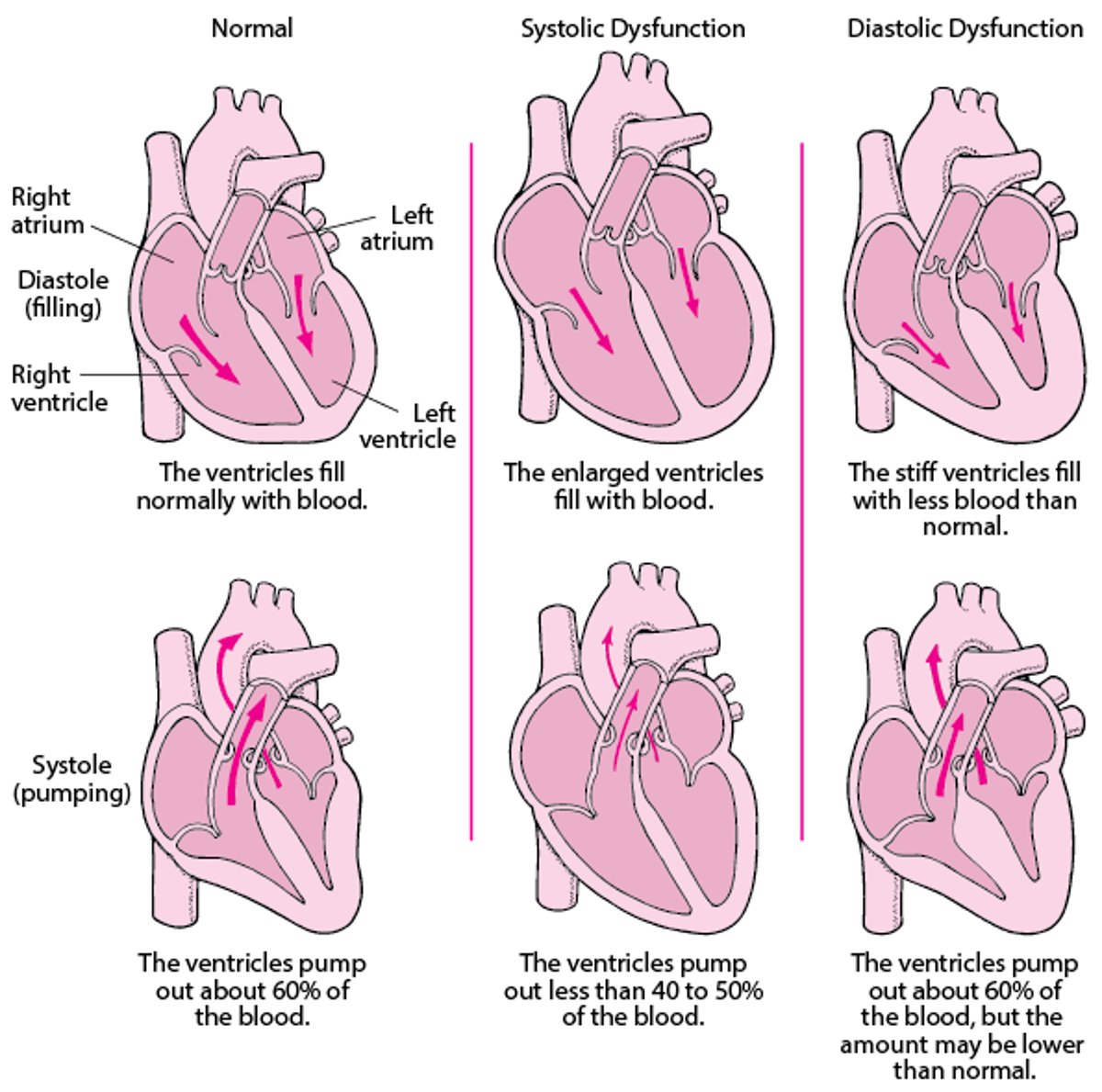
Second, heart failure can be classified by how poorly or well the left ventricle is pumping blood. This is measured by the ejection fraction (EF), which is the percentage of blood pumped out by the heart with each beat. A normal left ventricle ejects (pumps) about 55 to 70% of the blood in it with each beat.
In heart failure with reduced ejection fraction (HFrEF—sometimes called systolic heart failure):
The heart contracts less forcefully and pumps out a lower percentage of the blood that is returned to it. As a result, more blood remains in the heart. Blood then accumulates in the lungs, veins, or both.
In heart failure with preserved ejection fraction (HFpEF—sometimes called diastolic heart failure):
The heart is stiff and does not relax normally after contracting, which impairs its ability to fill with blood. The heart contracts normally, so it is able to pump a normal proportion of blood out of the ventricles, but the total amount pumped with each contraction may be less. Sometimes the stiff heart compensates for its poor filling by pumping out an even higher proportion of the blood than it normally does. However, eventually, as in systolic heart failure, the blood returning to the heart accumulates in the lungs or veins.
Heart failure with mildly reduced ejection fraction (HFmrEF) includes people whose ejection fraction is somewhere between preserved and reduced ejection fraction.
Heart failure with improved ejection fraction (HFimpEF) includes people with heart failure whose left ventricular ejection fraction has improved from a prior value, to the point that it is either normal or mildly reduced.
Heart Failure: Pumping and Filling Problems
Normally, the heart stretches as it fills with blood (during diastole), then contracts to pump out the blood (during systole). The main pumping chambers in the heart are the ventricles. Systolic heart failure (with reduced ejection fraction) usually develops because the heart cannot contract normally. It may fill with blood, but the heart cannot pump out as much of the blood it contains because the muscle is weaker or because a heart valve malfunctions. As a result, the amount of blood pumped to the body and to the lungs is reduced, and the ventricle usually enlarges. Diastolic heart failure (preserved ejection fraction) develops because the heart muscle stiffens (particularly the left ventricle) and may thicken so that the heart cannot fill normally with blood. Consequently, blood backs up in the left atrium and lung (pulmonary) blood vessels and causes congestion. With diastolic dysfunction, the heart may be able to pump out a normal percentage of the blood it receives, but the total amount pumped out may be less because it has not filled normally. The heart chambers always contain some blood, but different amounts of blood may enter or leave the chambers with each heartbeat as indicated by the thickness of the arrows. |

Third, heart failure can be classified based on the severity of the symptoms that it is causing. One such classification system is the New York Heart Association system, which uses different levels of activity to understand the effect of symptoms on a person with heart failure.
New York Heart Association Classification of Heart Failure
Class | Symptoms |
|---|---|
I No limitation | Ordinary physical activity does not cause undue tiredness, shortness of breath, or awareness of heartbeats (palpitations). |
II Mild | Ordinary physical activity causes tiredness, shortness of breath, palpitations, or chest discomfort (angina). |
III Moderate | The person is comfortable at rest, but ordinary physical activity causes tiredness, shortness of breath, and palpitations or chest discomfort (angina). |
IV Severe | Symptoms occur at rest, and any physical activity increases symptoms. |
Finally, heart failure can be classified as acute (new-onset, or a short-term worsening of existing heart failure) and chronic (long-term).
The Body's Response to Heart Failure
The body has several mechanisms to compensate for heart failure.
Hormonal responses
The body’s first response to stress, including that due to heart failure, is to release the fight-or-flight hormones, epinephrine (adrenaline) and norepinephrine (noradrenaline). For example, these hormones may be released immediately after a heart attack damages the heart. Epinephrine and norepinephrine cause the heart to pump faster and more forcefully. They help the heart increase the amount of blood pumped out (cardiac output), sometimes to a normal amount, and thus initially help compensate for the heart’s impaired pumping ability.
People who do not have heart disease usually benefit from release of these hormones when more work is temporarily required of the heart. However, for people who have chronic heart failure, this sustained response increases demands on an already damaged heart. Over time, the heart stops responding as well to the hormones, and the increased demands lead to further deterioration of heart function.
Kidney responses
Another of the body’s main compensatory mechanisms for the reduced blood flow in heart failure is to increase the amount of salt and water retained by the kidneys. Retaining salt and water instead of excreting them into urine increases the volume of blood in the bloodstream and helps maintain blood pressure. However, the larger volume of blood also stretches the heart muscle, enlarging the heart chambers, particularly the ventricles. At first, the more the heart muscle is stretched, the more forcefully it contracts, which improves heart function. However, after a certain amount of stretching, stretching no longer helps but instead weakens the heart’s contractions (as when a rubber band is overstretched). Consequently, heart failure worsens. In addition, salt and water retention increase fluid congestion in organs such as the lungs, leading to worsening symptoms of heart failure.
Enlargement of the heart
Another important compensatory mechanism is enlargement of the muscular walls of the ventricles (ventricular hypertrophy). When the heart must work harder, the heart’s walls enlarge and thicken, as biceps muscles enlarge after months of weight training. At first, the enlargement allows the heart to maintain the amount of blood it pumps out (cardiac output). However, the enlarged and/or thickened heart eventually becomes stiff, causing or worsening heart failure. Also, the enlargement can stretch the heart valve openings, causing them to leak or otherwise malfunction (regurgitation), which causes more pumping problems.