Human papillomavirus infection is a sexually transmitted infection caused by certain types of the human papillomavirus. It causes changes in cells that can lead to genital warts and cancer of the cervix, vagina, vulva, anus, or throat.
Human papillomavirus (HPV) infection is most commonly spread through vaginal or anal sex but also may be spread through other types of sexual and skin-to-skin contact.
Genital warts are visible skin growths that sometimes cause burning pain, and genital or anal precancer or cancer may cause bleeding or a mass or have no symptoms.
Doctors identify warts based on their appearance.
Cervical cancer is screened for with Pap tests or HPV testing, and some people at high risk are screened for anal cancer.
Genital warts are usually treated with freezing (cryotherapy) or medication applied to the warts.
Vaccines can prevent most types of HPV infection that can cause genital warts or cancer.
(See also Overview of Sexually Transmitted Infections.)
HPV infection is the most common sexually transmitted infection (STI). HPV is so common that over 80% of all sexually active people who have not been vaccinated are infected with the virus at some point in their life.
In the United States, about 13 million people become newly infected with HPV each year. Before the HPV vaccine became available, each year roughly 340,000 to 360,000 people sought care for genital warts caused by HPV. As more and more people are being vaccinated against HPV, the percentage of people with HPV infection has been decreasing.
Most HPV infections go away on their own within 1 to 2 years, but some do not. Persistent infection caused by some types of HPV can cause certain types of cancer.
There are over 100 known types of HPV. Some types cause common skin warts. Other types cause different genital or anal warts or certain cancers:
Genital or anal warts: These warts are most often caused by HPV types 6 and 11. Types 6 and 11 are unlikely to cause cancer. These warts are easily visible and are usually noticed by the person with warts or by a health care professional.
Precancer (intraepithelial neoplasia) or cancer: Other HPV types, especially types 16 and 18, infect the anogenital area (the anus and genital organs) but usually do not cause easily visible warts. These less visible warts can lead to precancer or cancer and usually cause no symptoms. Various HPV types can infect and cause changes to cells that then become precancerous or cancerous. In the anogenital area, these changes occur most commonly in the cervix, vulva, vagina, penis, or anus. Many throat cancers are also caused by HPV. People who have a weakened immune system (immunosuppression), for example human immunodeficiency virus (HIV) infection, are at increased risk of developing HPV-related cancer.
The types of HPV that affect the genital and rectal areas are usually spread during vaginal or anal intercourse but may also be spread through other types of sexual contact, such as oral sex, causing infections of the mouth and increasing the risk of throat cancer. HPV also can be spread by skin-to-skin contact.
Did You Know...
|
Symptoms of HPV Infection
In women, genital warts can occur on the vulva (the area around the opening to the vagina), vagina, cervix, and/or skin in the groin area. In men, warts usually occur on the penis, especially under the foreskin in uncircumcised men, or in the urethra (the tube that runs through the penis and drains urine from the bladder out of the body).
In all people, genital warts may develop in the area around and inside the anus, especially in people who engage in anal sex. Genital warts are usually caused by types of HPV that are unlikely to cause cancer.
Warts cause no symptoms in many people but cause occasional burning pain, itching, or discomfort in some.
Genital warts are easily visible and are often noticed by the person with the warts. The warts usually appear 1 to 6 months after infection with HPV, beginning as small, soft growths. They grow rapidly and become rough, irregular bumps, which sometimes grow out from the skin on narrow stalks. Their rough surfaces make them look like a small cauliflower. They may be skin-colored or the raised surface may be whitened. Warts often grow in clusters.

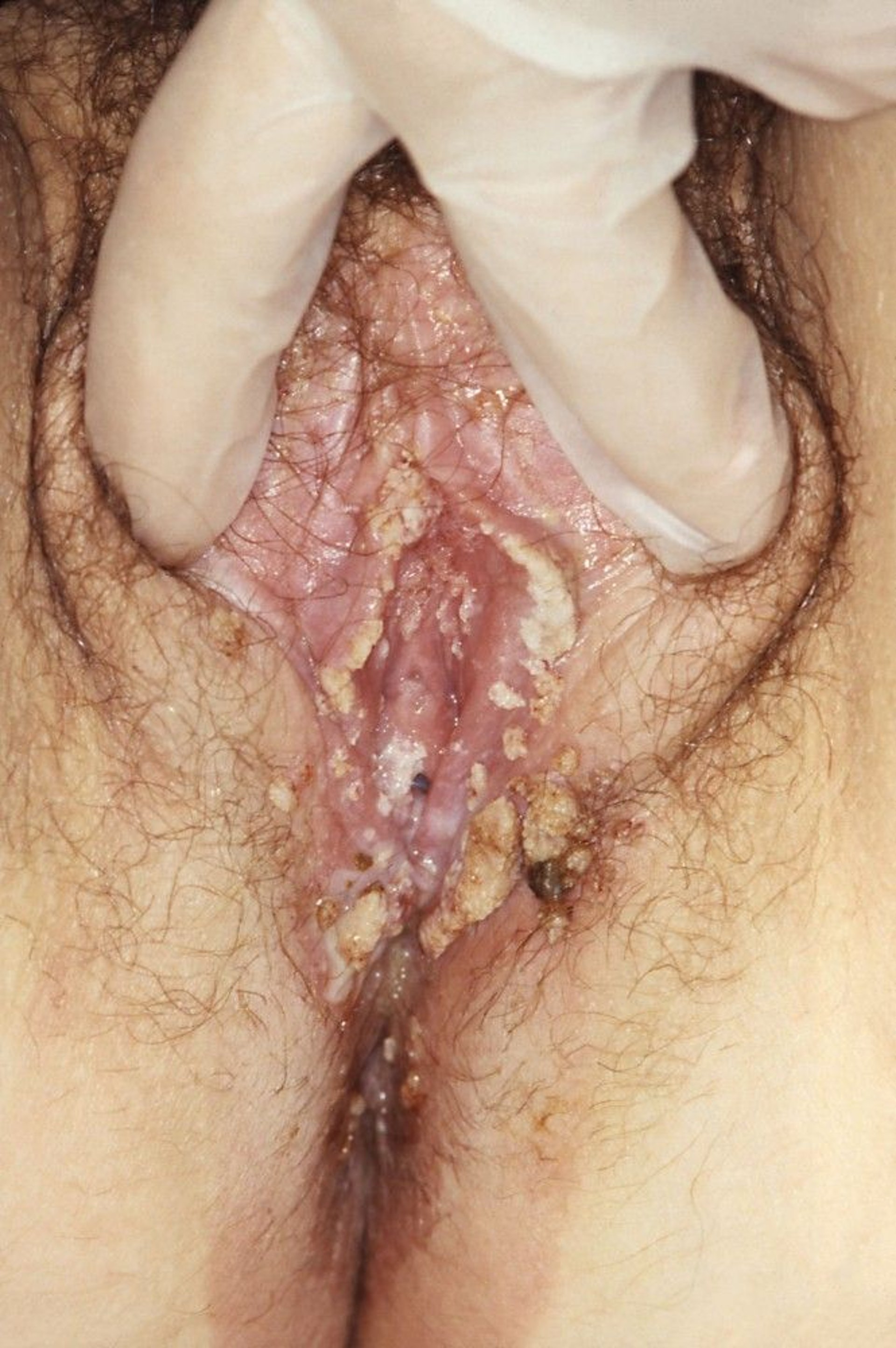
Genital warts on the vulva (the area around the opening to the vagina) may be raised and light-colored and have an irregular surface.
CDC/ Joe Millar

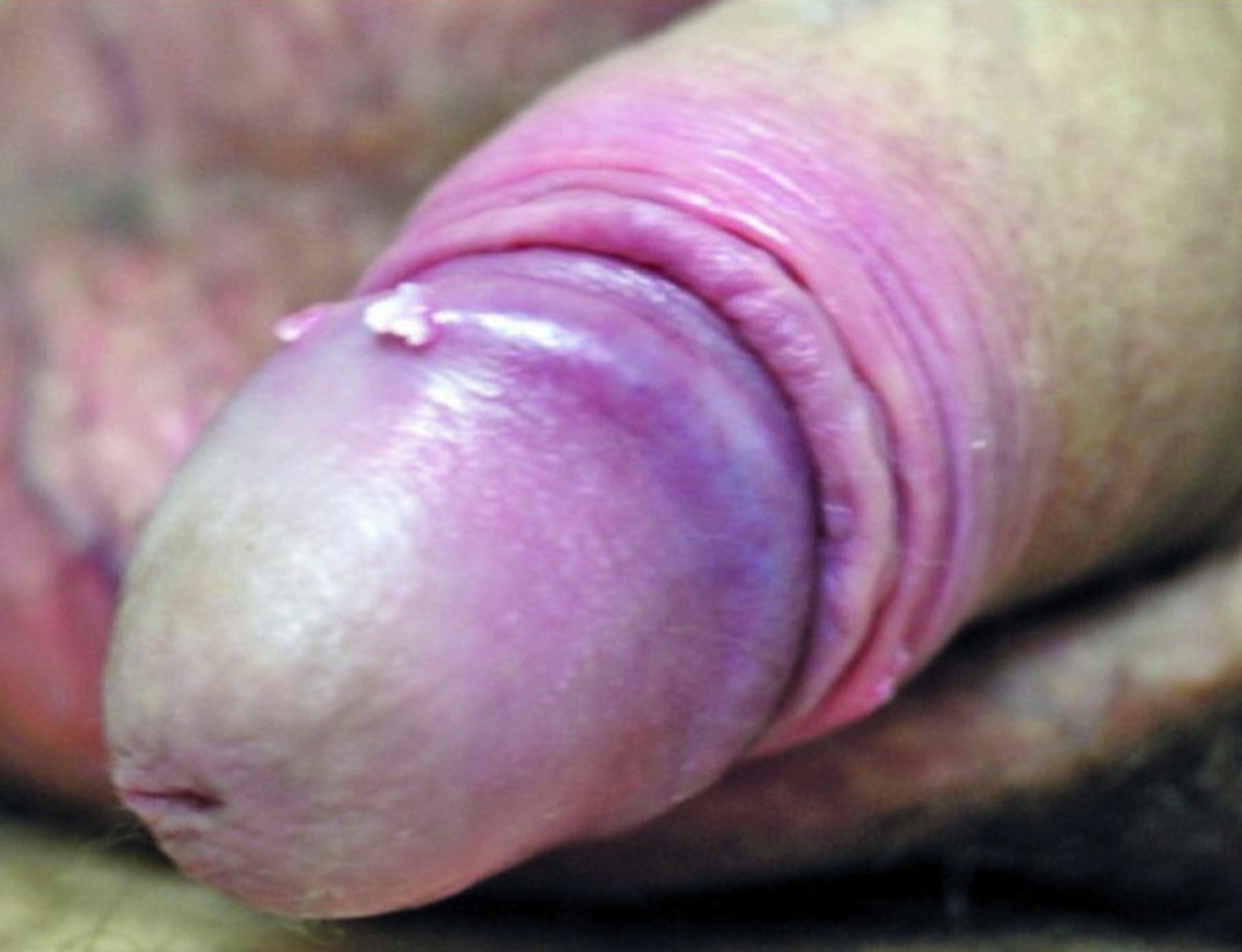
Genital warts on the head of the penis may be raised and have a rough, irregular surface.
© Springer Science+Business Media
Warts may grow more rapidly and spread more widely in pregnant people and in people who have a weakened immune system, such as those who have HIV infection.
If HPV causes precancer or cancer, it may cause no symptoms, or the infection can cause bleeding or a visible wart or mass. Advanced cancer may cause other symptoms (see also Symptoms of Cervical Cancer, Mouth, Nose, and Throat Cancers, and Anal Cancer).
Diagnosis of HPV Infection
For genital warts, a doctor's evaluation
For cervical cancer screening, a cervical Pap test and/or nucleic acid amplification tests (NAATs)
Sometimes anal cytology (Pap test)
For abnormal HPV or Pap test results, sometimes colposcopy, anoscopy, and/or biopsy
For warts or cancer in the throat, a doctor's examination and sometimes laryngoscopy
Genital warts can usually be diagnosed based on their appearance. If warts look unusual, bleed, become open sores (ulcerate), or do not go away after treatment, a doctor should take a sample (biopsy) and examine it under a microscope to check for precancer or cancer.
For cervical cancer screening, a Pap test and/or HPV testing is done. Doctors usually use the first HPV test to check for any one of a group of HPV types that have a high risk of causing cervical cancer. The result is positive or negative, but the HPV type is not specified. Often, doctors do a follow-up test to check for the specific HPV types that are the most likely to cause cancer (16 and 18), a process called genotyping. Genotyping is done using nucleic acid amplification tests (NAATs). NAATs produce many copies of a gene, which may enable doctors to identify a specific type of HPV’s unique genetic material (DNA). If a cervical Pap test or HPV testing is abnormal (positive), the doctor may do a colposcopy (use of a magnifying lens to examine the cervix) to check for cervical precancer or cancer.


In low-resource settings where there is no access to routine Pap tests or colposcopy, screening and evaluation for cervical cancer include NAATs and/or visual inspection of the cervix using a type of vinegar (acetic acid) or iodine.
Anoscopy (use of a viewing tube to examine the interior of the anus) is done to check for precancer or cancer in the anus.
During colposcopy or anoscopy, a type of vinegar may be applied to the area so that warts can be seen more easily. If a wart is seen, a biopsy is done.
If doctors suspect a person has warts or an HPV-related cancer in their throat, they do a physical examination of the throat and sometimes laryngoscopy. Laryngoscopy is examination of the voice box (larynx), with a thin, flexible viewing tube.
Treatment of HPV Infection
Usually, treating lesions with topical medications or freezing (cryotherapy)
Sometimes, treating or removing lesions with laser, electrocautery, or surgery
If the immune system is healthy, it often eventually controls and eliminates the virus within 1 to 2 years. Sometimes genital warts go away, even without treatment. If people with genital warts have a weakened immune system, treatment is required. Warts often return.
For genital warts, medications applied directly to the warts (topically) include podophyllin toxin, imiquimod, trichloroacetic acid, or sinecatechins (an ointment made from extracts of green tea). These medications usually require many applications over weeks to months, may burn the surrounding skin, and are less effective than a laser. The warts may return after apparently successful treatment.
If topical medications are not effective, warts may be removed with a laser or an electric current (electrocautery) or by freezing (cryotherapy) or surgery. A local or general anesthetic is used, depending on the number and size of the warts to be removed.
For warts in the urethra, a viewing tube (endoscope) with surgical attachments may be the most effective way to remove them, but this procedure requires a general anesthetic. Medications, such as thiotepa inserted into the urethra or the chemotherapy drug 5-fluorouracil injected into the wart, are often effective.
Interferon-alpha injections into the wart or into a muscle have been found to be somewhat effective for warts on the skin and genitals.
Precancerous lesions of the cervix (cervical intraepithelial neoplasia, or CIN) are managed based on how severe the changes are, with either more frequent Pap tests, often with HPV testing, or a large cervical biopsy (called a cone biopsy or a loop electrocautery excision procedure, or LEEP).
All sex partners should be examined for warts and other STIs and treated, if necessary. Sex partners should also have regular examinations to check for HPV infection.
Prevention of HPV Infection
The HPV vaccine is a routine childhood vaccination. There are 3 HPV vaccines:
Human papillomavirus 9-valent vaccine: Protects against 9 types of HPV
Quadrivalent: Protects against 4 types of HPV
Bivalent: Protects against 2 types of HPV
Only the 9-valent vaccine is available in the United States.
The 9-valent vaccine protects against the 2 types of HPV that cause about 70% of cervical cancers (types 16 and 18) and the 2 types that cause more than 90% of visible genital warts (types 6 and 11). It also protects against 5 other types of HPV that cause about 10 to 20% of cervical cancers (types 31, 33, 45, 52, and 58).
The quadrivalent vaccine includes protection against types 6, 11, 16, and 18.
The bivalent vaccine protects against types 16 and 18.
HPV vaccine is given by injection into a muscle, usually in the upper arm. The vaccine is given at age 11 or 12 years to all males and females, but it can be started as early as 9 years. It also can be given to previously unvaccinated or not adequately vaccinated people through age 26 years. Some adults age 27 to 45 years can receive HPV vaccine after discussing with their doctor their risk of new HPV infections and the possible benefits of vaccination for them. (See also Administration of HPV Vaccine.)
Consistent and correct use of male condoms can reduce the risk of HPV infection and disorders related to HPV, such as genital warts and cervical cancer. Because HPV can be transmitted by skin-to-skin contact, condoms do not fully protect against infection.
Circumcision may reduce the risk of HPV infection in men and in their female sex partners.
People can do the following to help reduce their risk of HPV infection and other STIs:
Practice safer sex, including using a condom every time for oral, anal, or genital sex.
Reduce the number of sex partners and not have high-risk sex partners (people with many sex partners or who do not practice safer sex).
Practice mutual monogamy or abstinence.
Vaccinate (available for some STIs).
Circumcise (which can also reduce the spread of HIV infection, as well as genital herpes and HPV to men via vaginal intercourse).
Seek prompt diagnosis and treatment to prevent spread to other people.
Identify sexual contacts if infected with an STI for the purposes of counseling and treatment.
More Information
The following English-language resource may be useful. Please note that The Manual is not responsible for the content of this resource.
Centers for Disease Control and Prevention: About HPV
Drug Information for the Topic