Anxiety is part of the normal human experience. Anxiety include feelings of excessive fear, nervousness, worry, or unease, but it is a disorder when it occurs frequently and is so intense that it interferes with a person's normal activities. Anxiety disorders include generalized anxiety disorder, panic disorder, and phobias. In addition, excessive anxiety is part of other disorders like posttraumatic stress disorder. Although each of these disorders is different, they all feature significant distress and dysfunction specifically related to anxiety and fear.
When people experience anxiety, they also often have physical symptoms, including shortness of breath, dizziness, sweating, rapid heartbeat, and/or tremor.
Anxiety disorders often substantially change people's daily behavior, including leading them to avoid certain things and situations.
These disorders are diagnosed using standard medical criteria.
Medications, psychotherapy, or both can substantially help most people with anxiety disorders.
Anxiety is a normal response to a threat or to psychological stress. Normal anxiety has its root in fear and serves an important function. When someone is faced with a challenging or dangerous situation, anxiety triggers the fight-or-flight response. With this response, a variety of physical changes, such as increased blood flow to the heart and muscles, provide the body with the necessary energy and strength to deal with difficult or life-threatening situations, such as running from an aggressive animal or fighting off an attacker. Anxiety can help a person adapt to more ordinary stressors by motivating them to prepare for and rehearse practicing them. It can also prompt a person to approach potentially dangerous situations with an appropriate amount of caution.
However, anxiety is considered a disorder when it
Occurs at inappropriate times
Occurs frequently
Is so intense and long-lasting that it interferes with a person's normal activities (that is to say, it leads to maladaptive behavior)
Anxiety disorders are more common than any other category of mental health disorder and affect about one-third of adults in the United States at some point during their lifetime. Significant anxiety can persist for years and begin to feel normal to the person with the anxiety. For this and other reasons, anxiety disorders are often not diagnosed or treated. They can also be associated with suicidal thoughts and suicide attempts.
There are many anxiety disorders:
Selective mutism
Specific phobia (animal, natural environment, blood-injection-injury, situational, other situations)
Substance-induced/medication-induced anxiety disorder
Anxiety due to another medical condition
Other specified or unspecified anxiety disorder (applies when a person has significant symptoms but does not meet the full criteria for any specific anxiety disorder)
Most of these disorders develop in adulthood, but separation anxiety and selective mutism usually start during childhood. Doctors also evaluate people who present with severe anxiety for substance- or medication-induced anxiety disorder and anxiety due to another medical condition.
Other disorders that often present with prominent anxiety include acute stress disorder, adjustment disorders, and posttraumatic stress disorder (PTSD). These disorders are brought on by traumatic or stressful experiences (see Overview of Trauma- and Stressor-Related Disorders).
Anxiety disorders tend to occur with other medical and mental health conditions:
Mental health disorders: Depression, bipolar disorder, substance use disorders, personality disorders, and other anxiety disorders
Medical disorders: Coronary artery disease, asthma, migraines, and arthritis
How Anxiety Affects Performance
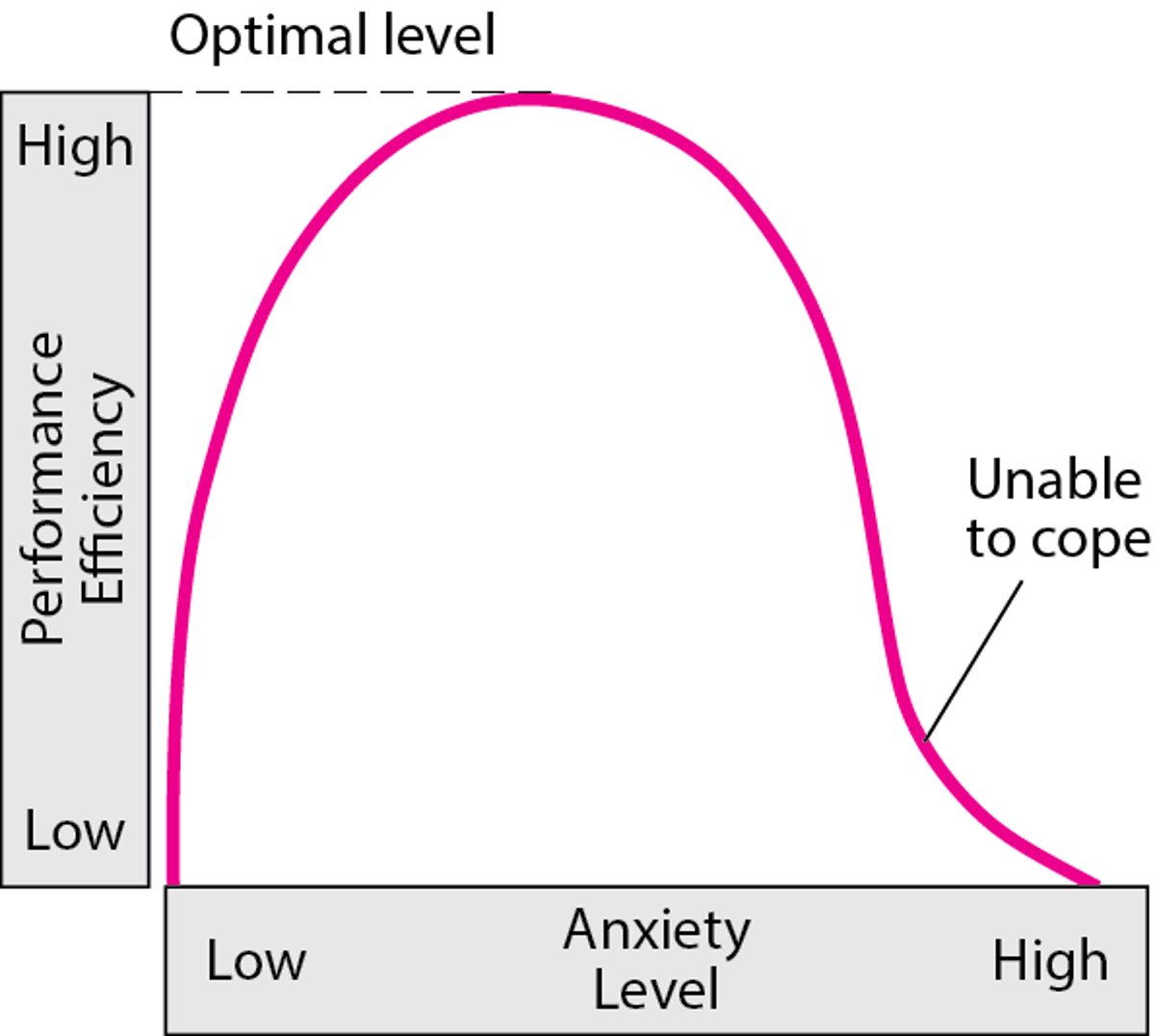
The effects of anxiety on performance can be shown on a curve. As the level of anxiety increases, performance efficiency increases proportionately, but only up to a point. As anxiety increases further, performance efficiency decreases. Before the peak of the curve, anxiety is considered adaptive because it helps people prepare for a crisis and improve their functioning. Beyond the peak of the curve, anxiety is considered maladaptive because it produces distress and impairs functioning. |

Causes of Anxiety Disorders
The causes of anxiety disorders are not fully known, but the following may be involved:
Environmental factors (such as experiencing a traumatic event or stress)
Genetic factors (inheriting factors contributing to anxiety disorders directly from a biological parent)
A physical condition (for example, an overactive thyroid gland, heart failure)
Medications, illicit drugs, or other substances (for example, caffeine, steroids [sometimes called corticosteroids or glucocorticoids], cocaine)
An anxiety disorder can be triggered by environmental stresses, such as childhood trauma, the breakup of a significant relationship or exposure to a life-threatening disaster. However, many people develop an anxiety disorder in the absence of an identifiable trigger.
When a person responds strongly to stressors or a person is overwhelmed by events, an anxiety disorder can arise. For example, some people dread public speaking and become anxious with symptoms such as sweating, fear, a rapid heart rate, and tremor whenever they have to do it. Such people may avoid public speaking completely, even in a small group.
Anxiety tends to run in families. Doctors think some of this tendency may be inherited, but some is probably learned by living with anxious people. Scientists are also learning more about neurotransmitters (chemicals in the brain) and the role they play in anxiety disorders.
Did You Know...
|
Anxiety caused by a medical condition or medication
Anxiety can be caused by a medical disorder or the use or discontinuation (withdrawal) of a medication. Medical disorders that can cause anxiety include the following:
Heart disorders, such as heart failure and abnormal heart rhythms (arrhythmias)
Hormonal (endocrine) disorders, such as an overactive adrenal gland (hyperadrenocorticism) or overactive thyroid gland (hyperthyroidism) or a hormone-secreting tumor called a pheochromocytoma
Lung (respiratory) disorders, such as asthma, chronic obstructive pulmonary disease (COPD), and sleep apnea
It is normal for people to have some level of anxiety when they have a medical condition that they fear will make them ill or even cause death. Even fever can cause anxiety. There is no right answer about how much anxiety is reasonable or excessive for any individual person to feel in response to any particular disease. However, if the anxiety causes significant distress or interferes with daily functioning, the person may have an anxiety disorder, which is potentially treatable.
Drugs, medications, or other substances that can trigger anxiety include the following:
Stimulants (such as amphetamines)
Caffeine
Cannabis (marijuana) in some people
Many prescription medications, such as steroids
Some over-the-counter medications, such an antihistamines and decongestants
Some over-the-counter weight-loss products, such as those containing the herbal product guarana, caffeine, or both
Withdrawal from alcohol or sedatives, such as benzodiazepines (used to treat anxiety disorders; see the appropriate entry in the table ), can cause anxiety and other symptoms, such as insomnia and restlessness.
Many people developed anxiety and stressor-related disorders during the COVID-19 pandemic, and some people continue to have anxiety associated with the pandemic or a COVID-19 infection. Factors that caused fear and anxiety or made it worse include risk of illness or death, symptoms such as shortness of breath, treatment with steroids illness or death of a loved one, the need for preventive measures (masks, hand washing, lockdowns), and many other personal or social factors (such as major changes in daily routines, social isolation, or changes in school, work, family, or community). In addition, some experts think that COVID-19 infection induces a host immune response that leads to neuropsychiatric symptoms (for example, anxiety, mood changes, neuromuscular dysfunction). These neuropsychiatric reactions may be acute or part of a syndrome known as long COVID.
Anxiety may also occur in people with a life-threatening condition as a result of fear of death, pain, and difficulty breathing (see Symptoms During a Fatal Illness: Depression and Anxiety).
Symptoms of Anxiety Disorders
Anxiety can arise suddenly, as in panic, or gradually over minutes, hours, or days. Anxiety can last for any length of time, from a few seconds to years. It ranges in intensity from barely noticeable qualms to a full-blown panic attack, which may cause shortness of breath, dizziness, an increased heart rate, and trembling (tremor).
Anxiety disorders can induce many physical symptoms, including
Nausea, vomiting, diarrhea
Shortness of breath, choking
Dizziness, faintness, sweats, hot and cold flashes
Palpitations, accelerated heart rate
Muscle tension, chest pain or tightness
To meet criteria as a disorder, symptoms of anxiety must last for more than 6 months or more, and be excessive and uncomfortable. It can be useful for the person to keep a detailed panic or worry diary to write down descriptions of symptoms and what factors were associated with them (day, time, any known causes of the anxiety). Remembering the details after the fact can be difficult. The most successful treatment strategies often depend on addressing the specific details.
Anxiety disorders can be so distressing and interfere so much with a person's life that they can lead to depression. People who have an anxiety disorder (except for certain very specific phobias, such as fear of spiders) are at least twice as likely to have depression as those without an anxiety disorder. Sometimes people have depression first and then develop an anxiety disorder later. People may try to treat their anxiety by drinking alcohol or using drugs and develop a substance use disorder as a result.
Diagnosis of Anxiety Disorders
A doctor's evaluation, based on standard psychiatric diagnostic criteria
Deciding when anxiety is severe enough to be considered a disorder can be complicated. People's ability to tolerate anxiety varies, and determining what constitutes abnormal anxiety can be difficult. Doctors usually use the following specific established criteria:
Anxiety is very distressing.
Anxiety interferes with functioning.
Anxiety is long-lasting or keeps coming back.
Doctors look for other disorders that may be causing anxiety, such as depression or a sleep disturbance. Doctors also ask whether relatives have had similar symptoms, because anxiety disorders tend to run in families. Doctors will also ask about drug and medication use as a potential cause of anxiety.
Doctors also do a physical examination. Blood and other tests may be done to check for other medical disorders that can cause anxiety.
Treatment of Anxiety Disorders
Treatment of the cause, if a medical condition is found
Education
Relaxation techniques
Psychotherapy, including cognitive-behavioral therapy or hypnosis
Medications
Accurate diagnosis is important because treatment varies depending on the anxiety disorder. Additionally, anxiety disorders must be distinguished from anxiety that occurs in many other mental health disorders, which involve different treatment approaches.
If the cause of anxiety is another medical disorder or a medication, doctors aim to correct the cause. Anxiety should subside after the physical disorder is treated or the medication has been stopped long enough for any withdrawal symptoms to subside. If anxiety remains, antianxiety medications or psychotherapy (such as behavioral therapy) is used.
Many people with anxiety disorders self-medicate with substances such as alcohol, marijuana, and benzodiazepines (antianxiety medications). Not only might they be embarrassed to admit this to their doctor, but they may also be unwilling to give up these substances until their doctor comes up with a viable alternative. Self-medicating in this way can lead to a vicious circle of rebounding anxiety after use, followed by an urgent need to self-medicate again and again.
If an anxiety disorder is diagnosed, medications or psychotherapy, alone or in combination, can significantly relieve the distress and dysfunction for most people. Different types of psychotherapies may be used, such as behavioral therapy, mindfulness-based stress reduction, and supportive psychotherapy. Hypnosis can reduce the symptoms of anxiety enough to allow the person to learn a valuable coping skill. For example, the psychotherapist could suggest that the person being hypnotized imagine a safe, comfortable place while also visualizing engaging in stress-reduction practices such a deep breathing.
For many people, antidepressants, such as selective serotonin reuptake inhibitors (SSRIs), work as well for anxiety disorders as they do for depression. Another class of drugs called serotonin-norepinephrine reuptake inhibitors (SNRIs) may also be helpful in relieving anxiety. Benzodiazepines (such as diazepam) are also commonly prescribed.
All anxiety disorders can occur along with other mental health conditions. Doctors need to treat all conditions related to the anxiety. For example, anxiety disorders often occur along with an alcohol use disorder. Treating the alcohol use disorder without treating the anxiety is unlikely to be effective since the person may be using alcohol to decrease the anxiety. On the other hand, treating the anxiety without addressing the alcohol disorder may be unsuccessful because daily changes in the amount of alcohol in the blood can cause levels of anxiety to fluctuate.
Medications Used to Treat Anxiety Disorders
Medication | Uses | Some Side Effects | Comments |
|---|---|---|---|
Benzodiazepines | |||
Alprazolam Chlordiazepoxide Clonazepam Clorazepate Diazepam Lorazepam Oxazepam | Sleepiness, memory problems, impaired coordination, and slowed reaction time May lead to medication dependence | Commonly used type of antianxiety medication Promote mental and physical relaxation by reducing nerve activity in the brain Begin to work quickly, sometimes within an hour Should not be used with other medications that cause drowsiness | |
Antidepressants* | |||
SSRIs (such as escitalopram) SNRIs (such as venlafaxine) MAOIs TCAs (such as clomipramine) | See table | See table | |
Other antianxiety medications | |||
Buspirone | Dizziness and headache | Does not cause drowsiness or interact with alcohol Does not lead to drug dependence May take several weeks to start working | |
* Not all of the antidepressants listed work for all of the uses that are listed. MAOI = monoamine oxidase inhibitor; SNRI = selective norepinephrine-reuptake inhibitor; SSRI = selective serotonin reuptake inhibitor; TCA = tricyclic antidepressant. | |||
More Information
The following English-language resource may be useful. Please note that The Manual is not responsible for the content of this resource.
Drug Information for the Topic