Hyperplasia of gingival tissues without inflammation may occur in response to various medications.
Medications that particularly cause gingival hyperplasia include the following (1):
Phenytoin
Valproate
Cyclosporine
Nifedipine and other calcium channel blockers
High-dose oral contraceptives
Hyperplasia is characterized by diffuse, relatively avascular smooth or nodular enlargement of the gingiva, which may almost cover some teeth. The hypertrophied tissue can often be excised. If possible, substitutions are made for the offending medications. Scrupulous oral hygiene may minimize recurrence.

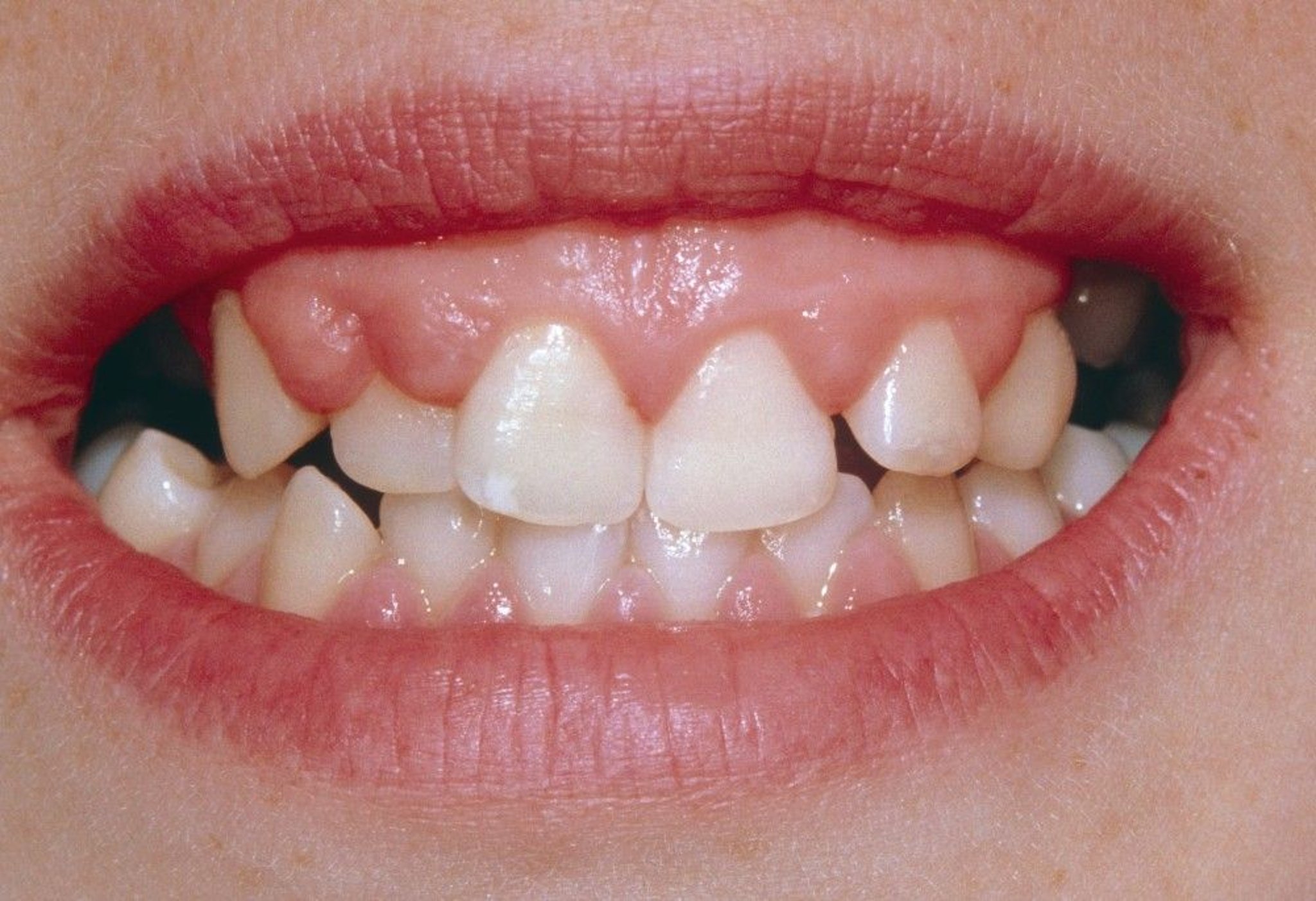
This photo shows hyperplasia of the gingiva of the upper teeth, a consequence of long-term use of phenytoin in treating epilepsy.
SCIENCE PHOTO LIBRARY
Oral squamous cell carcinoma can also originate in the gingiva, causing apparent enlargement of gum tissue.
General reference
1. Hassell TM, Hefti AF: Drug-induced gingival overgrowth: Old problem, new problem. Crit Rev Oral Biol Med 2(1):103-37, 1991. doi: 10.1177/10454411910020010201
Drug Information for the Topic