Epidermal inclusion cysts are the most common cutaneous cysts. Milia are small epidermal inclusion cysts. Pilar cysts are usually on the scalp and may be familial.
Cutaneous cysts are skin lesions characterized by an enclosed sac-like structure lined by epithelium. They are typically filled with fluid, keratin, sebum, or other material and can vary in size. They are generally nonmalignant and only of concern cosmetically or if they are large enough to cause discomfort. They are classified according to histologic features. On palpation, a cyst is nodular or dome shaped and mobile. Cysts are typically not painful unless inflamed. They can vary in size from a few millimeters to several centimeters in diameter. There are several types of benign cutaneous cysts:
Epidermal inclusion cysts
Milia
Pilar cysts (trichilemmal cysts)
Epidermal inclusion cysts (epidermoid cysts) are common benign skin lesions that arise from the epidermis that are typically filled with keratinous material. They seldom cause discomfort unless they have ruptured internally, causing a rapidly enlarging, painful foreign body reaction that appears similar to an abscess. Epidermal inclusion cysts are often associated with a visible punctum or pore; their contents are white, cheesy, and malodorous.

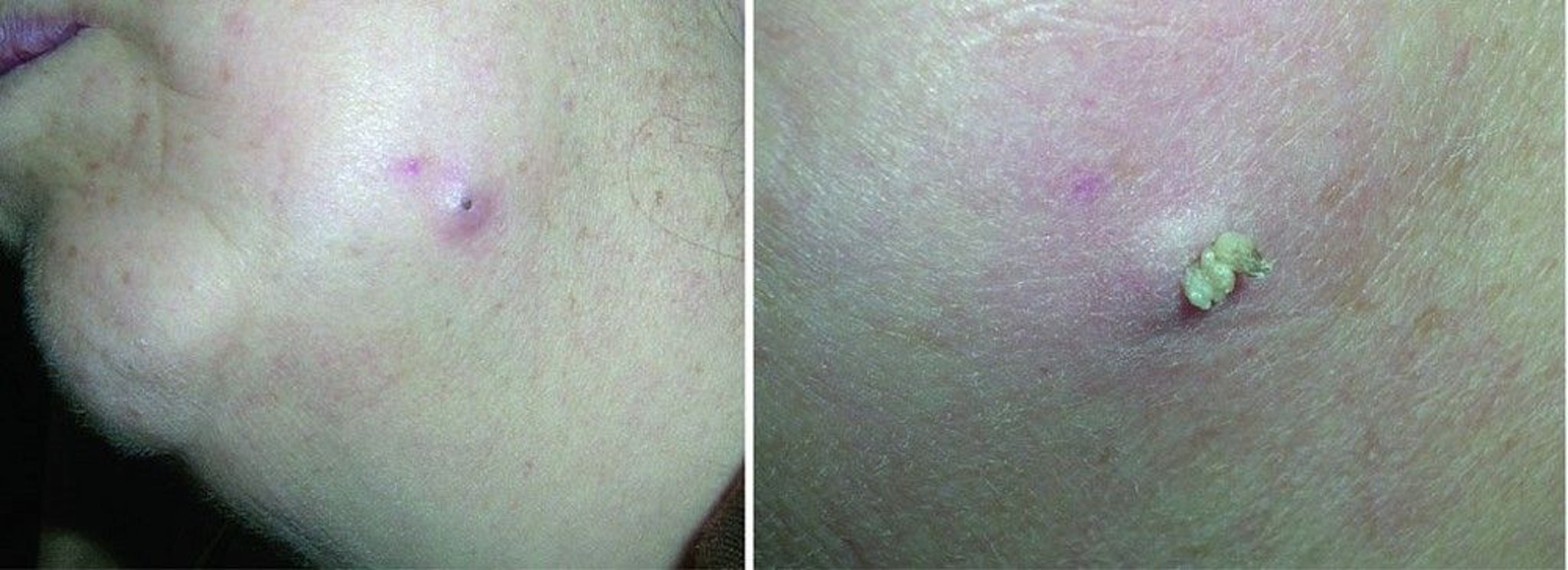
The photo at left shows a blackhead-like punctum on an epidermal inclusion cyst on the chin of a patient. The photo at right shows a protrusion of cheese-like material from the cyst after compression.
© Springer Science+Business Media
Milia are minute superficial epidermal inclusion cysts that are most often on the face and scalp.

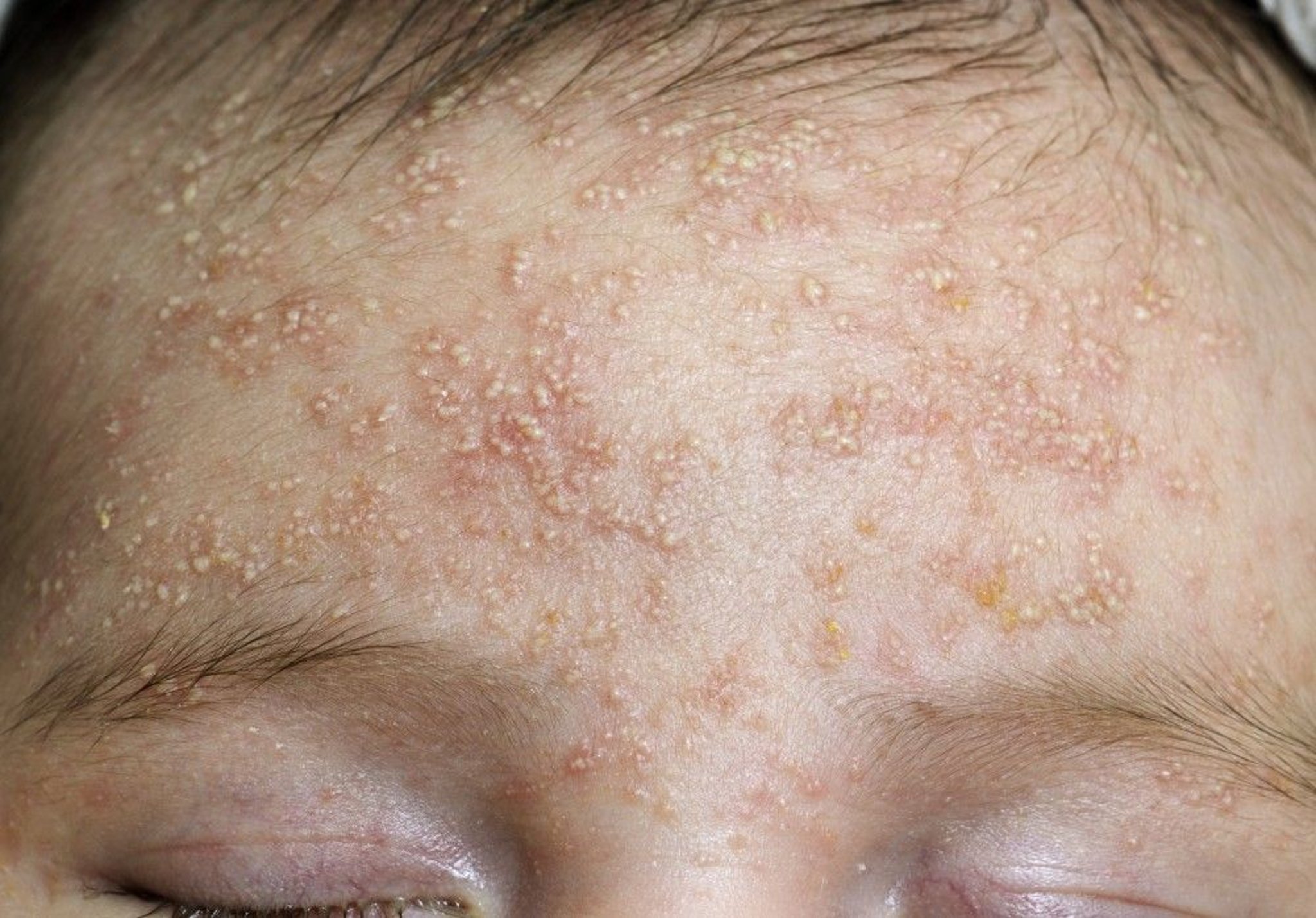
This photo shows small, pearl-colored cysts commonly seen on the face of neonates.
SCIENCE PHOTO LIBRARY

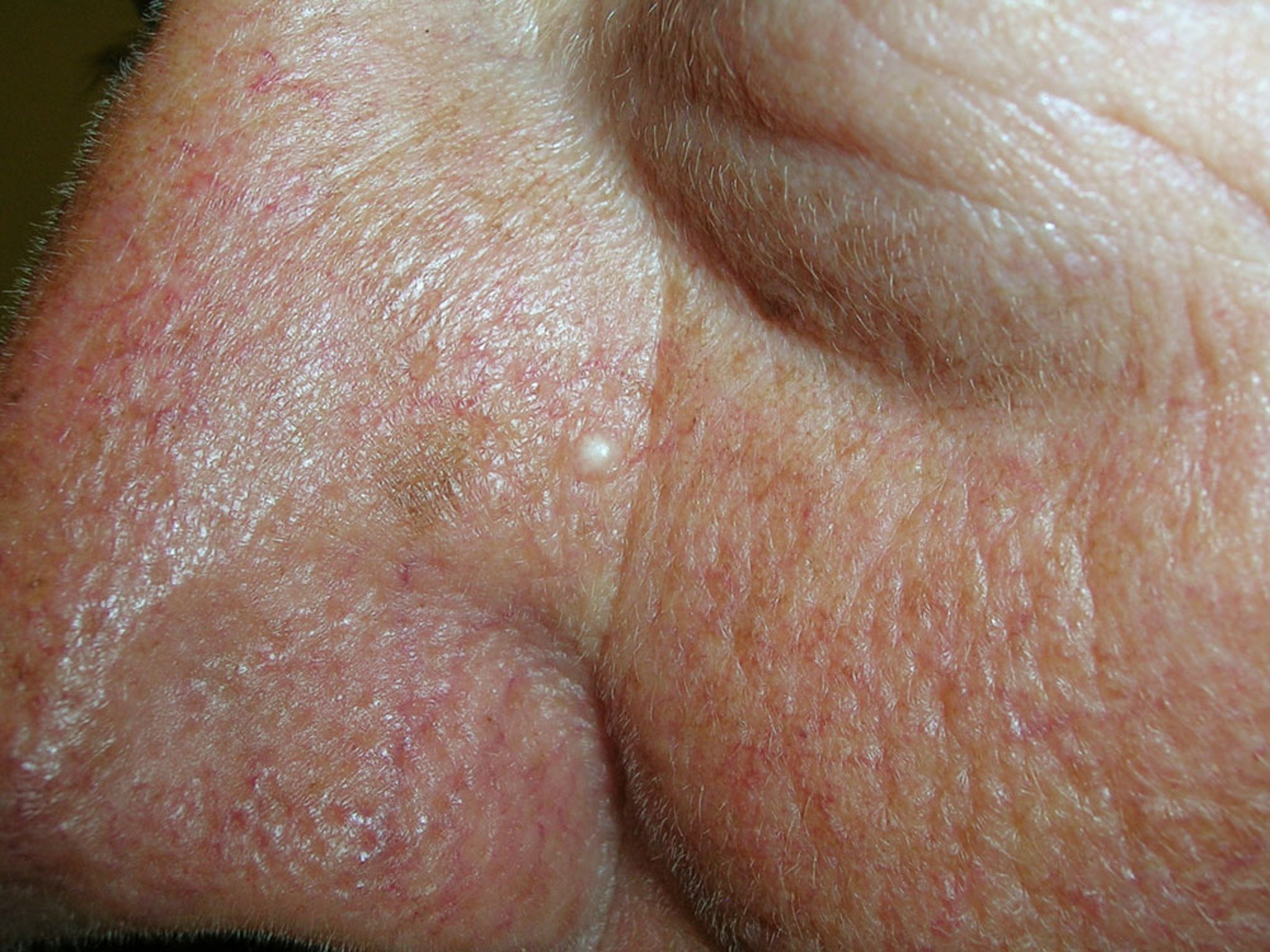
This photo shows a single milium near a person's nose.
Milia are small, keratin-filled cysts that commonly occur in clusters on the upper cheeks and around the eyes.
RICHARD USATINE MD / SCIENCE PHOTO LIBRARY
Pilar cysts (trichilemmal cysts, also sometimes called wen) may appear identical to epidermal inclusion cysts; approximately 80% are located on the scalp (1). There is often a family history of pilar cysts; inheritance is autosomal dominant (2). Although most commonly benign, they may be associated with a very rare risk of malignant transformation.

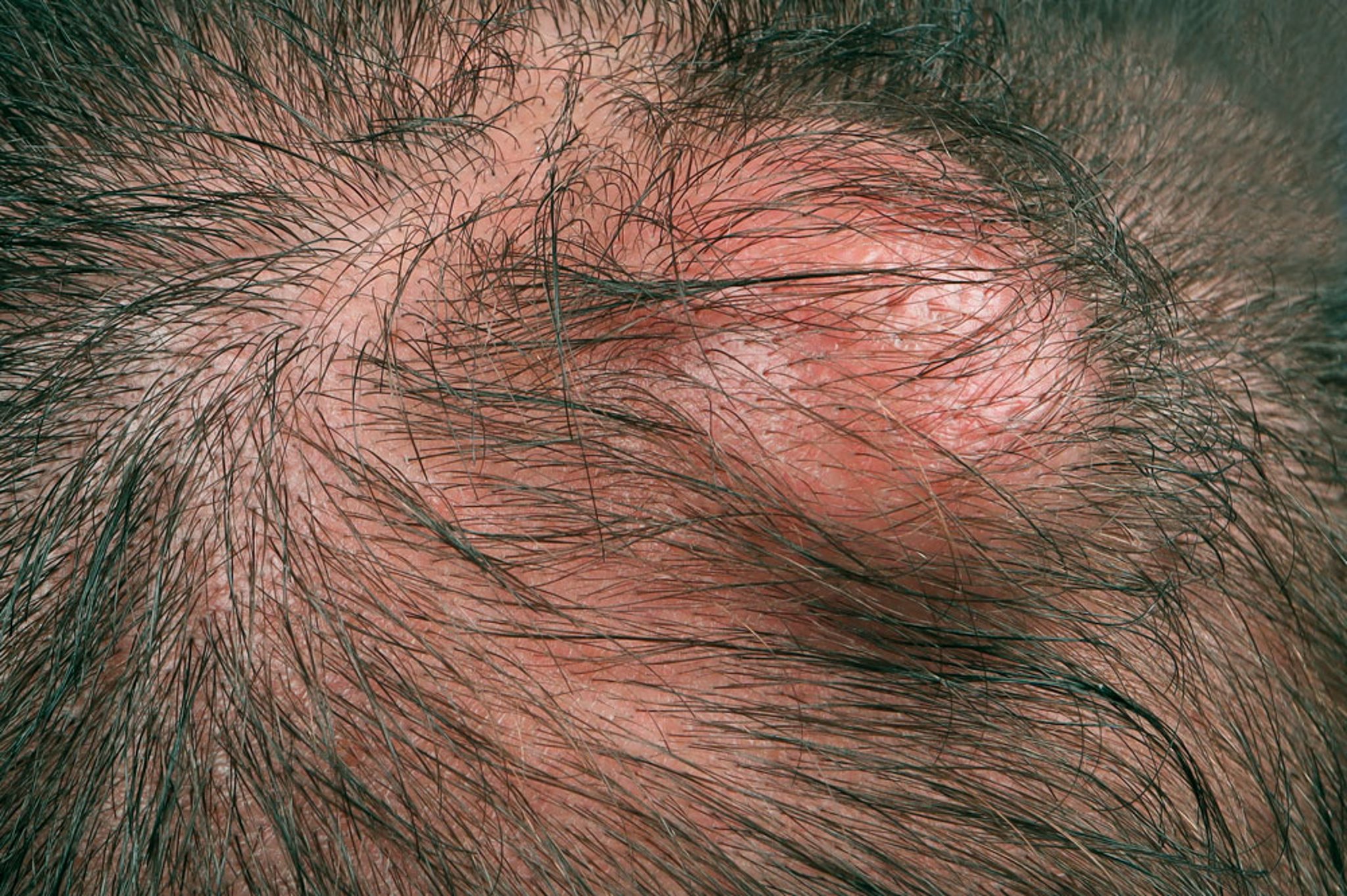
This photo shows a trichilemmal (pilar) cyst on the scalp. These cysts typically manifest as firm, painless nodules on the scalp.
BSIP, GIRAND/SCIENCE PHOTO LIBRARY
References
1. He P, Cui LG, Wang JR, et al. Trichilemmal Cyst: Clinical and Sonographic Features. J Ultrasound Med. 2019;38(1):91-96. doi:10.1002/jum.14666
2. Hörer S, Marrakchi S, Radner FPW, et al: A monoallelic two-hit mechanism in PLCD1 explains the genetic pathogenesis of hereditary trichilemmal cyst formation. J Invest Dermatol139(10):2154-2163.e5, 2019. doi: 10.1016/j.jid.2019.04.015
Treatment of Cutaneous Cysts
Cyst excision or dissection, if desired
Milia evacuation
For ruptured or inflamed cysts, intralesional glucocorticoids
Cysts that are bothersome (ie, tender because of location/pressure, conspicuous, or cosmetically disfiguring) can be removed. To prevent recurrence, the entire cyst and its wall should be removed. Ruptured cysts can be incised and drained but may recur if the wall is not eventually removed. Oral antibiotics such as doxycycline are sometimes used as an adjuvant for their anti-inflammatory properties.
An intralesional glucocorticoid injection (eg, triamcinolone acetonide) may be appropriate for an inflamed or ruptured cyst when there is no evidence of infection (1).
Milia may be evacuated by incising superficially with a #11 blade followed by extraction of contents with a comedone extractor.
Treatment reference
1. Jakhar D, Kaur I. Intralesional drainage injection of triamcinolone acetonide for epidermal cyst. J Am Acad Dermatol. 2018;78(6):e149-e150. doi:10.1016/j.jaad.2017.12.008
Drug Information for the Topic